


Legal Action by Players Should Be the Next Step for Online Abuse

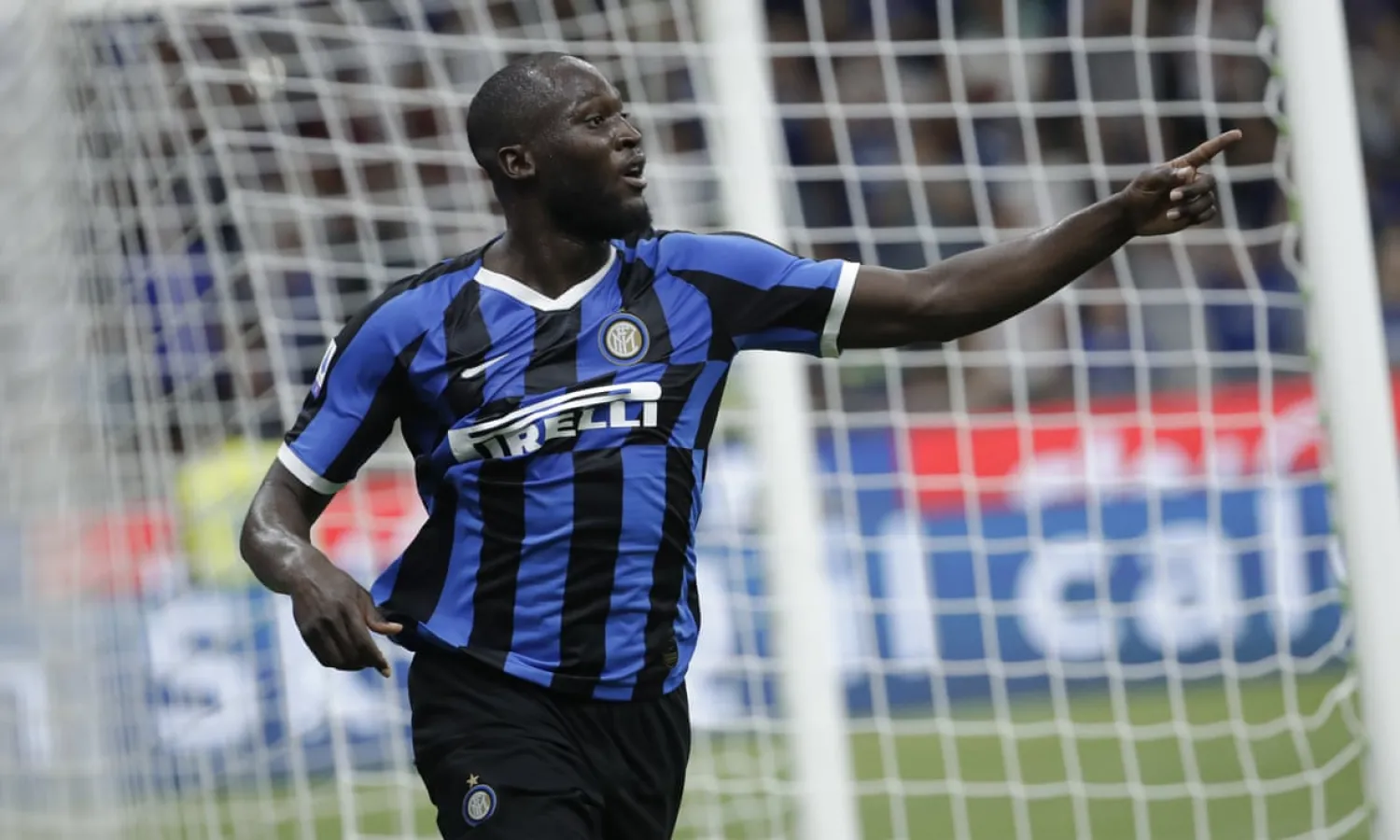
Romelu Lukaku was subject to racist abuse inside the ground during Internazionale’s recent game at Cagliari. Photograph: Luca Bruno/AP
TT

Legal Action by Players Should Be the Next Step for Online Abuse

Romelu Lukaku was subject to racist abuse inside the ground during Internazionale’s recent game at Cagliari. Photograph: Luca Bruno/AP

At the end of last week the bookmaker Paddy Power published a tweet which contrasted the £10,000 fine given by the Football Association to Millwall in August for their fans’ racist chanting with the £50,000 fine imposed on Huddersfield Town for wearing an oversized sponsor’s logo on their kit in a pre-season friendly. I retweeted it, suggesting that Millwall’s minuscule fine would make no impact on the behavior of fans at a club already synonymous with racism.

What followed was a barrage of personal abuse from Millwall fans, some insisting I was unfair to suggest they all behaved as unpleasantly as the club’s stereotype would suggest, and others absolutely reinforcing that stereotype. My tweets are now protected to avoid further abuse, which means people can’t see or reply to my tweets unless I have approved their request to follow me; within hours I had about 100 follow requests from people identifying as Millwall fans, who expected me to give them the approval they needed to send me their abuse. For these people it was not enough to write abusive comments about me, they wanted to make sure I saw the abuse – and they expected me to volunteer for it.

At the end of last month I published a book, They Don’t Teach This, the product of a year of effort not just by me but by my ghostwriter and publishers. Within 48 hours of my tweet Amazon had received and duly published dozens of one-star reviews by people who had neither bought nor read the book, reviews that were mostly not themselves racist but whose authors were clearly motivated by tribalism, bitterness and hatred.

I have worked too hard on my book just to sit back and accept that these people, who can’t take the truth about their own club or who themselves embody it, can destroy its chances of success by spewing their hate while hiding behind the cloak of anonymity. Some of what has been written about myself and my book is defamatory; it is intended to put people off buying my book, and I intend to make sure they understand the consequences of such hatred.

I don’t want to earn a reputation for litigiousness, but sometimes the law is the only solution. In 2017, having exhausted every avenue possible within the FA’s internal structures without finding anyone who would take my case seriously, I took them to an employment tribunal. They had no choice but to take me seriously then. Whistleblowing procedures were put in place, UK Sport acted, and the FA was forced into a very public and humiliating apology. Everything shifted once I took a legal route. It wasn’t a fun thing to live through, but sometimes it is what needs to happen.

It is time to take action over online abuse. Black footballers occasionally retweet examples of the racism directed at them on social media, but Twitter and Facebook aren’t doing enough to stop it. If anything Twitter actually needs it: fury and controversy are what draws people to the site. But we can find out who these people are. All it takes is a court order to release their names, and they’re in trouble. There are laws in place to stop this stuff, and people who don’t understand the moral argument against racism have to understand that there will be legal consequences.

Perhaps the most effective solution would be for black, female and BAME-background athletes to take collective action. If the Professional Footballers’ Association is committed to protecting players’ interests, they should also be looking at this issue. Perhaps they could assemble a legal team specifically to take on the likes of Twitter and force them to identify the individuals who racially abuse their members so they can be pursued by police or the courts. Footballers need to step up and make sure that even if the FA or Twitter aren’t going to do anything, we are.

Millwall’s trivial fine shows that the FA still isn’t taking the issue seriously enough, and clubs are very obviously failing to police themselves. In Italy, Cagliari recently insisted they intend to “identify, isolate and ban” those fans who abused Internazionale’s Romelu Lukaku, but this is a club where black visiting players have been consistently abused for years. Maybe they will go on to punish one or two people, but when you hear racist chanting it’s not because a couple of people are doing it. No club ever bans 100 people or more, not when these are the very people who are there every week, the hardcore fans on whom the club depends. They want the ultras to come, whatever they do once they are there. But close their stadium or sections of it, show them they will lose money and, in time, sponsors if they don’t act on racism, and it will happen soon enough. When Uefa wants to act on financial fair play or on match-fixing, it does it and does it well. It needs to apply the same kinds of solutions to this problem.

Deterrents can change culture. Just look at Chelsea, where a transfer ban has transformed the club into one where a young English manager is appointed to help young English players such as Mason Mount and Tammy Abraham, who wouldn’t have had a sniff otherwise, find a path to the first team. The club have been forced to reassess how they work; they have brought in Petr Cech, Frank Lampard, Jody Morris, and Claude Makelele, a group of people who used to play for the club, and completely changed how they go about their business. That’s what rules do in the game.

In the case of racism, the culture of fans thinking it’s OK to abuse players at games or online can and must be changed. If people, when they hear fans around them racially abusing players, understand as a result some or all of the ground will be closed the following week and none of them will be able to watch their team, they will self-police.

It is up to national associations to regulate behavior at grounds, but online it is not clear whose job it is. It’s time to bring players together and start talking about our options. People are being abused like dogs on the street, and it needs to stop. There isn’t really a culture in Britain of leaping into legal action, but that must be our next step. Once players understand their rights and act to protect them, they’ll discover how much power they actually hold. And maybe then, at last, people will start to listen and change.

(The Guardian)


Shakhtar Boss Pays Ukrainian Racer $200,000 After Games Disqualification

Ukrainian President Volodymyr Zelenskiy holds helmet as he meets with a Ukrainian skeleton racer Vladyslav Heraskevych , who was disqualified from the Olympic skeleton competition over his "helmet of remembrance" depicting athletes killed since Russia's invasion and his father and coach, Mykhailo Heraskevych, amid Russia's attack on Ukraine, in Munich, Germany February 13, 2026. (Ukrainian Presidential Press Service/Handout via Reuters)
TT

Shakhtar Boss Pays Ukrainian Racer $200,000 After Games Disqualification

Ukrainian President Volodymyr Zelenskiy holds helmet as he meets with a Ukrainian skeleton racer Vladyslav Heraskevych , who was disqualified from the Olympic skeleton competition over his "helmet of remembrance" depicting athletes killed since Russia's invasion and his father and coach, Mykhailo Heraskevych, amid Russia's attack on Ukraine, in Munich, Germany February 13, 2026. (Ukrainian Presidential Press Service/Handout via Reuters)

The owner of ‌Ukrainian football club Shakhtar Donetsk has donated more than $200,000 to skeleton racer Vladyslav Heraskevych after the athlete was disqualified from the Milano Cortina Winter Games before competing over the use of a helmet depicting Ukrainian athletes killed in the war with Russia, the club said on Tuesday.

The 27-year-old Heraskevych was disqualified last week when the International Bobsleigh and Skeleton Federation jury ruled that imagery on the helmet — depicting athletes killed since Russia invaded Ukraine in 2022 — breached rules on athletes' expression at ‌the Games.

He ‌then lost an appeal at the Court ‌of ⁠Arbitration for Sport hours ⁠before the final two runs of his competition, having missed the first two runs due to his disqualification.

Heraskevych had been allowed to train with the helmet that displayed the faces of 24 dead Ukrainian athletes for several days in Cortina d'Ampezzo where the sliding center is, but the International Olympic Committee then ⁠warned him a day before his competition ‌started that he could not wear ‌it there.

“Vlad Heraskevych was denied the opportunity to compete for victory ‌at the Olympic Games, yet he returns to Ukraine a ‌true winner," Shakhtar President Rinat Akhmetov said in a club statement.

"The respect and pride he has earned among Ukrainians through his actions are the highest reward. At the same time, I want him to ‌have enough energy and resources to continue his sporting career, as well as to fight ⁠for truth, freedom ⁠and the remembrance of those who gave their lives for Ukraine," he said.

The amount is equal to the prize money Ukraine pays athletes who win a gold medal at the Games.

The case dominated headlines early on at the Olympics, with IOC President Kirsty Coventry meeting Heraskevych on Thursday morning at the sliding venue in a failed last-minute attempt to broker a compromise.

The IOC suggested he wear a black armband and display the helmet before and after the race, but said using it in competition breached rules on keeping politics off fields of play. Heraskevych also earned praise from Ukraine President Volodymyr Zelenskiy.


Speed Skating-Italy Clinch Shock Men’s Team Pursuit Gold, Canada Successfully Defend Women’s Title

 Team Italy with Davide Ghiotto, Andrea Giovannini, Michele Malfatti, celebrate winning the gold medal on the podium of the men's team pursuit speed skating race at the 2026 Winter Olympics, in Milan, Italy, Tuesday, Feb. 17, 2026. (AP)
Team Italy with Davide Ghiotto, Andrea Giovannini, Michele Malfatti, celebrate winning the gold medal on the podium of the men's team pursuit speed skating race at the 2026 Winter Olympics, in Milan, Italy, Tuesday, Feb. 17, 2026. (AP)
TT

Speed Skating-Italy Clinch Shock Men’s Team Pursuit Gold, Canada Successfully Defend Women’s Title

 Team Italy with Davide Ghiotto, Andrea Giovannini, Michele Malfatti, celebrate winning the gold medal on the podium of the men's team pursuit speed skating race at the 2026 Winter Olympics, in Milan, Italy, Tuesday, Feb. 17, 2026. (AP)
Team Italy with Davide Ghiotto, Andrea Giovannini, Michele Malfatti, celebrate winning the gold medal on the podium of the men's team pursuit speed skating race at the 2026 Winter Olympics, in Milan, Italy, Tuesday, Feb. 17, 2026. (AP)

An inspired Italy delighted the home crowd with a stunning victory in the Olympic men's team pursuit final as

Canada's Ivanie Blondin, Valerie Maltais and Isabelle Weidemann delivered another seamless performance to beat the Netherlands in the women's event and retain their title ‌on Tuesday.

Italy's ‌men upset the US who ‌arrived ⁠at the Games ⁠as world champions and gold medal favorites.

Spurred on by double Olympic champion Francesca Lollobrigida, the Italian team of Davide Ghiotto, Andrea Giovannini and Michele Malfatti electrified a frenzied arena as they stormed ⁠to a time of three ‌minutes 39.20 seconds - ‌a commanding 4.51 seconds clear of the ‌Americans with China taking bronze.

The roar inside ‌the venue as Italy powered home was thunderous as the crowd rose to their feet, cheering the host nation to one ‌of their most special golds of a highly successful Games.

Canada's women ⁠crossed ⁠the line 0.96 seconds ahead of the Netherlands, stopping the clock at two minutes 55.81 seconds, and

Japan rounded out the women's podium by beating the US in the Final B.

It was only Canada's third gold medal of the Games, following Mikael Kingsbury's win in men's dual moguls and Megan Oldham's victory in women's freeski big air.


Lindsey Vonn Back in US Following Crash in Olympic Downhill 

Milano Cortina 2026 Olympics - Alpine Skiing - Women's Downhill 3rd Official Training - Tofane Alpine Skiing Centre, Belluno, Italy - February 07, 2026. Lindsey Vonn of United States in action during training. (Reuters)
TT

Lindsey Vonn Back in US Following Crash in Olympic Downhill 

Milano Cortina 2026 Olympics - Alpine Skiing - Women's Downhill 3rd Official Training - Tofane Alpine Skiing Centre, Belluno, Italy - February 07, 2026. Lindsey Vonn of United States in action during training. (Reuters)

Lindsey Vonn is back home in the US following a week of treatment at a hospital in Italy after breaking her left leg in the Olympic downhill at the Milan Cortina Games.

“Haven’t stood on my feet in over a week... been in a hospital bed immobile since my race. And although I’m not yet able to stand, being back on home soil feels amazing,” Vonn posted on X with an American flag emoji. “Huge thank you to everyone in Italy for taking good care of me.”

The 41-year-old Vonn suffered a complex tibia fracture that has already been operated on multiple times following her Feb. 8 crash. She has said she'll need more surgery in the US.

Nine days before her fall in Cortina d'Ampezzo, Italy, Vonn ruptured the ACL in her left knee in another crash in Switzerland.

Even before then, all eyes had been on her as the feel-good story heading into the Olympics for her comeback after nearly six years of retirement.
