


Sanctions-Hit Iran Props up Economy with Bartering, Secret Deals

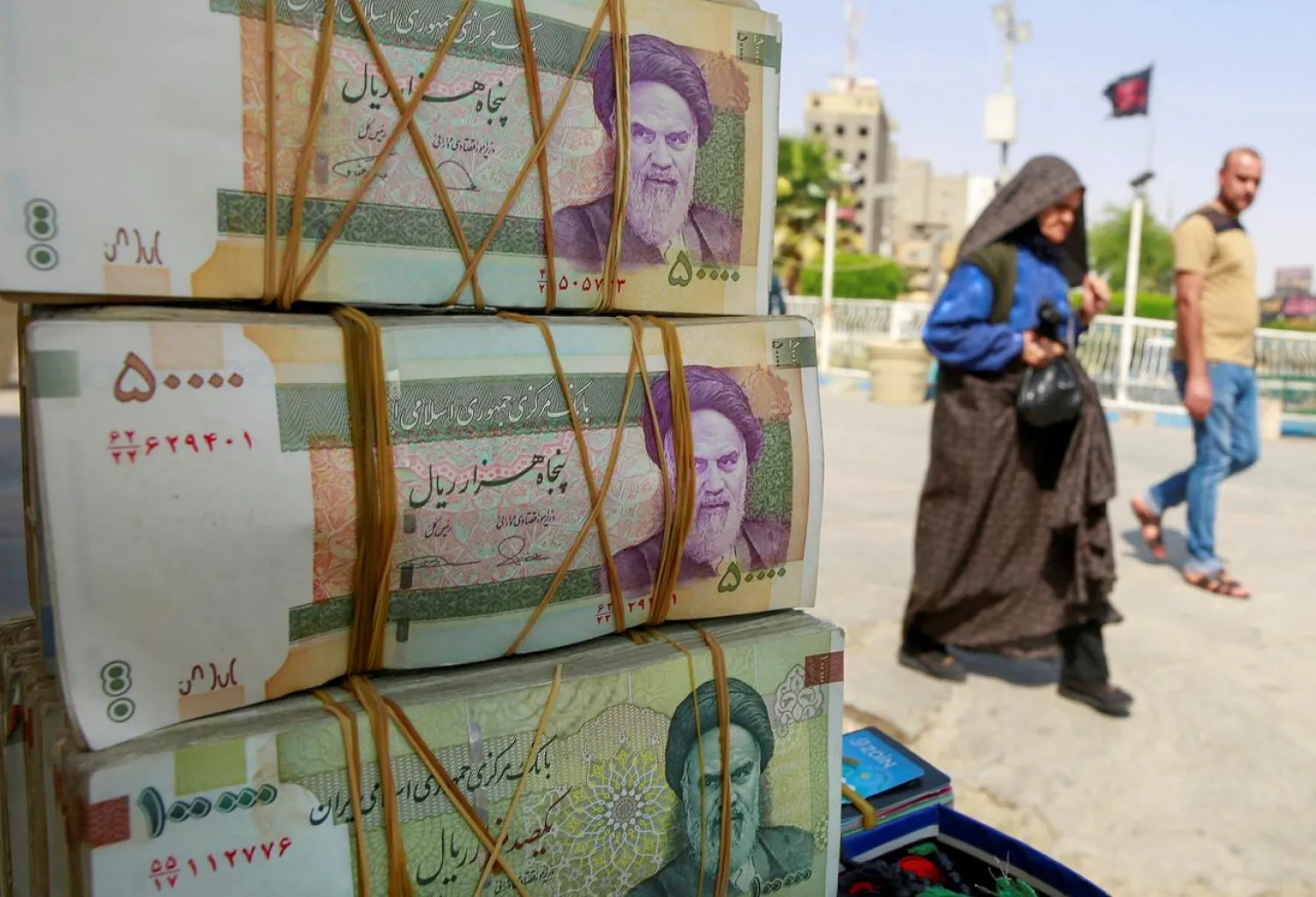
Iranian rial currency notes are seen at a market in the city of Najaf, Iraq September 22, 2019. (Reuters)
TT

Sanctions-Hit Iran Props up Economy with Bartering, Secret Deals

Iranian rial currency notes are seen at a market in the city of Najaf, Iraq September 22, 2019. (Reuters)

Washington’s policy of applying “maximum pressure” on Iran with wide-ranging sanctions has shredded the country’s oil revenues, sent its economy into recession and devalued its national currency.

Yet Iran remains defiant in the face of US efforts to compel it to accept tougher restrictions on its nuclear program and scale back support for proxy wars across the Middle East.

Iranian officials, business people and analysts say the country is staying on its feet by stepping up exports of non-oil goods and increasing tax revenues, but most importantly resorting to bartering, smuggling and back-room deals.

To circumvent US banking and financial sanctions, Iran’s rulers have built up a network of traders, companies, exchange offices, and money collectors in different countries, they say.

“America cannot isolate Iran,” said one senior Iranian official, who like other officials asked not to be named.

Ali Vaez, Iran Project Director at the International Crisis Group, said although the Iranian economy was in dire straits, it was far from being overwhelmed.

“Iran is quite experienced in living under economic duress ... In the past few years, its non-oil exports have grown significantly and so has their trade with neighboring countries like Iraq and Afghanistan,” Vaez said, according to Reuters. “Iran can also smuggle oil and generate some revenue.”

Tough sanctions

Western companies raced back to Iran’s market and its oil income surged a year after a 2015 nuclear pact agreed with six major powers ended the sanctions regime imposed in 2012 over its disputed nuclear program.

New sanctions brought in after President Donald Trump withdrew from that agreement last May are the most painful ever imposed by Washington, targeting nearly all sectors of Iran’s economy including how it finances its international trade.

The OPEC member’s crude exports have been slashed by more than 80 percent since last year, against 2012 when exports plummeted to less than 1.3 million barrels per day (bpd) from about 2.5 million bpd.

Although food and medicine are exempt, lack of access to the global financial system has given rise to a humanitarian crisis with shortages of specialized medicine.

The International Monetary Fund has forecast that Iran’s economy will contract in 2019 by 3.6 percent because of dwindling oil revenues. The World Bank anticipates inflation jumping to 31.2 percent in 2019-20 from 23.8 percent in 2018-19 and 9.6 percent the year before that. Some economists believe inflation has actually topped 40 percent.

Iranian officials repeatedly contend that the country can weather the storm, but the reality on the ground is harsh.

The sharp devaluation of Iran’s national currency and difficulty paying for urgent import needs have led to spikes in the prices of bread, rice and other staples.

“It is easy for officials to talk about resisting America’s pressure. They don’t have to be worried about the rent or increasing prices of goods,” said Ali Kamali, a 63-year-old retired teacher in Tehran. “Prices are going up every day.”

An end to sanctions is not in sight anytime soon, with Trump saying on Tuesday that pressure will intensify on Iran. Iranian President Hassan Rouhani will give a speech at a UN General Assembly on Wednesday that will likely determine whether Tehran will re-engage with the United States.

Tensions have been further raised by September 14 attacks on Saudi Arabia’s oil sites that Washington, Riyadh and the European Union blame on Iran. Tehran denies involvement in the attacks, which were claimed by Iran-aligned Houthi militias in Yemen.

“Iran doesn’t have many other sources of income, beyond oil, so their economy is in a tailspin ... They do have considerable budgetary reserves ... to get them past the next few months, but the situation is not tenable,” said Chuck Freilich, senior fellow at the Belfer Center for Science and International Affairs.

Finance has dried up

The financial sanctions have hit banks, institutions, individuals and front companies in several countries like Turkey and Qatar.

Iran has used the barter system to evade such sanctions in the past, but the scale is bigger this time, especially with neighboring countries, including Iraq, Pakistan and Afghanistan.

“We are a rich country with long borders with so many countries. If you sell anything below its market price, you can find dozens of buyers ... And transfer the cash by land, sea or even through a third country,” said another Iranian official.

The majority of Iran’s non-oil exports are from the petrochemical industry, whose output reached 44.8 million tons in the first ten months of the last Iranian year that ended in March. Exports generated over $9.7 billion.

Iran is still managing to export cargoes of petrochemical products and liquefied petroleum gas to Asia, including to China and Malaysia.

“Our customers come to Iran or we meet them in a neighboring country. This is business and when the price is lower than the market price, you can find many buyers,” said a third official.

On a recent visit to Istanbul, Reuters was invited to a meeting of three young Iranians with a small group of foreign traders to discuss non-oil export deals.

After hours of discussions and several calls to Tehran to get guidance on the price and location of delivery, two deals worth around two billion dollars were finalized.

“No insurance, no banks ... just cash,” said one of the Iranians, who ran a government-linked import-export company.



Türkiye TPAO, Shell Sign Deal to Carry out Exploration Work offshore Bulgaria

A Shell logo is seen at a gas station in Buenos Aires, Argentina, March 12, 2018. (Reuters)
TT

Türkiye TPAO, Shell Sign Deal to Carry out Exploration Work offshore Bulgaria

A Shell logo is seen at a gas station in Buenos Aires, Argentina, March 12, 2018. (Reuters)

Türkiye Petrolleri (TPAO) has signed a partnership agreement with Shell to carry out exploration work in Bulgaria's maritime zone, the Turkish energy ministry and British oil major said on Wednesday.

European Union member Bulgaria, which had been totally dependent on Russian gas until 2022, has been seeking to diversify its gas supplies and find cheaper sources, Reuters reported.

TPAO and Shell will jointly explore the Khan Tervel block, located near Türkiye's Sakarya gas field, and will hold a five-year licence in Bulgaria's exclusive economic zone, Minister Alparslan Bayraktar said.

Shell will continue as operator of the block, while TPAO will take a 33% interest in the licence, a Shell spokesperson said.

Since the start of this year, TPAO has signed energy cooperation agreements with ExxonMobil, Chevron and BP for possible exploration work in the Black Sea and the Mediterranean.

In April, Shell signed a contract with Bulgaria's government to allow the oil major to explore 4,000 square metres in the block.


Saudia Signs Strategic Partnership Agreement with Six Flags and Aquarabia Qiddiya City

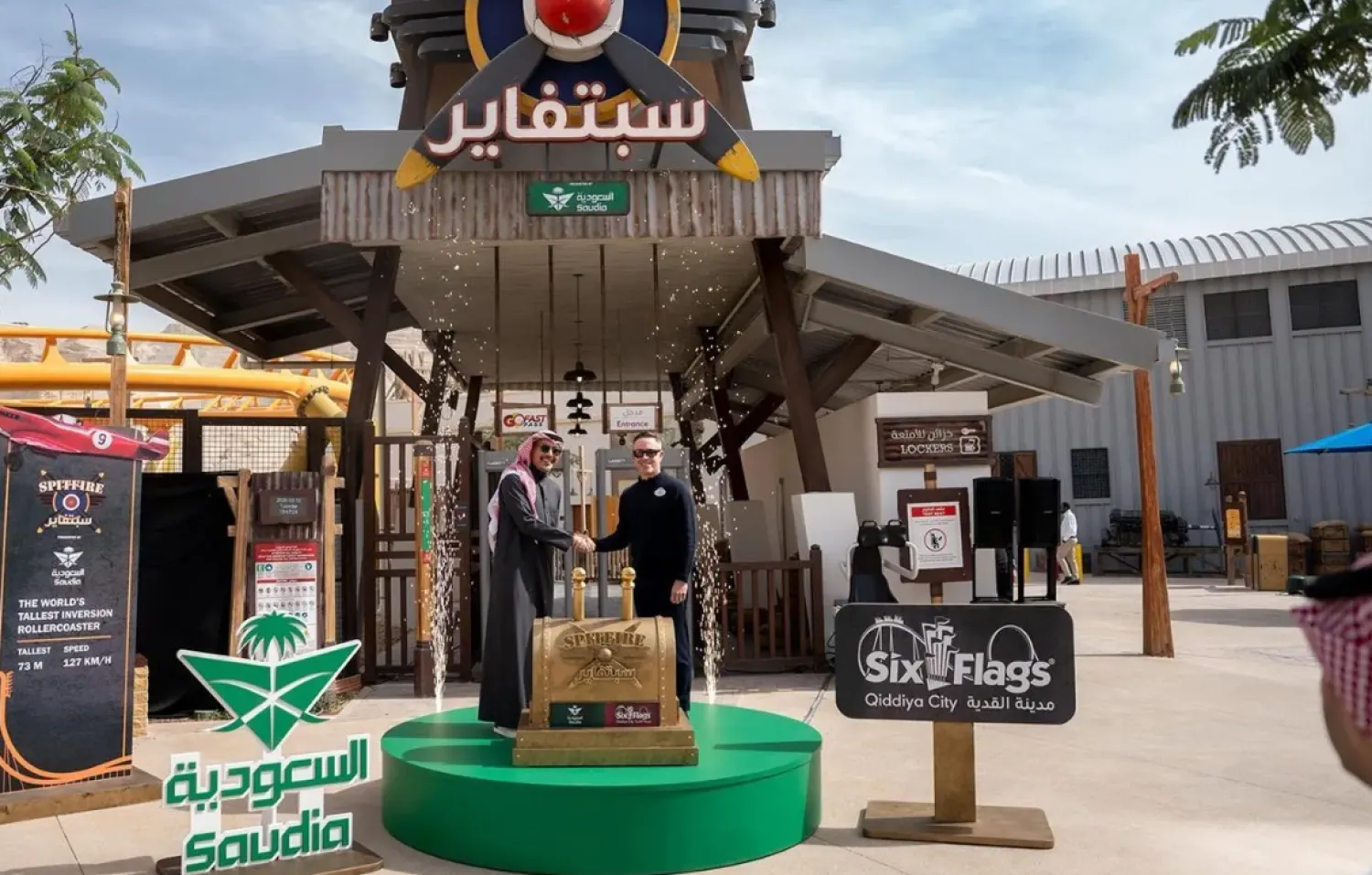
udia will develop special travel packages designed to enable visitors to experience world-class attractions - SPA
TT

Saudia Signs Strategic Partnership Agreement with Six Flags and Aquarabia Qiddiya City

udia will develop special travel packages designed to enable visitors to experience world-class attractions - SPA

Saudia Airlines has signed a five-year strategic partnership with Six Flags and Aquarabia Qiddiya City, becoming the official premier partner exclusively in the airline category.

As part of the partnership, Saudia will develop special travel packages designed to enable visitors to experience world-class attractions. The collaboration also brings the spirit of Six Flags and Aquarabia Qiddiya City to the skies through special aircraft branding across Saudia’s fleet, SPA reported. 

Chief Marketing Officer of Saudia Group Khaled Tash said in a press release: "Saudia is committed to supporting national development projects as part of its contribution to Vision 2030, aligned with our strategy to bring the world to the Kingdom. Partnerships of this scale with national partners play a key role in positioning Saudi Arabia as a leading global destination for entertainment and tourism."

Park President of Six Flags and Aquarabia Qiddiya City Brian Machamer added: "Our partnership with Saudia not only reflects a shared ambition to connect the Kingdom to the world through world-class entertainment experiences, but strengthens our ability to attract visitors from around the world and realize our vision of setting a new global benchmark for immersive, world-class theme park entertainment and reinforcing Saudi Arabia’s growing presence on the global tourism stage."

Six Flags Qiddiya City sets a new benchmark for exceptional entertainment regionally and globally. Spanning six iconic themed lands, the theme park takes visitors on an immersive journey across 28 rides and attractions designed to world-class standards. Beyond the scale and diversity of its offerings, Six Flags Qiddiya City stands out for pushing the boundaries of engineering and entertainment, featuring five exclusive, record-breaking rides that have redefined global benchmarks. Leading these innovations is Falcons Flight, the roller coaster that has captured global attention as the fastest, tallest, and longest in the world.

Aquarabia Qiddiya City delivers a distinctive aquatic entertainment experience, offering 22 rides and water attractions, along with a man-made river designed for both relaxation and family-friendly water fun. For guests seeking privacy and elevated comfort, Aquarabia features 91 luxury cabanas, positioning the destination as a fully integrated leisure offering that redefines water-based entertainment to the highest international standards.

Located in the Tuwaiq Mountains near Riyadh, Qiddiya City is an emerging destination bringing together entertainment, sports, and culture. Six Flags and Aquarabia Qiddiya City form part of its entertainment offering.


Moody’s Establishes Regional HQ in Riyadh, Deepening Presence in Region

(FILES) Signage for Moody's Corporation is displayed at their headquarters at 7 World Trade Center on March 18, 2025 in New York City. (Photo by ANGELA WEISS / AFP)
TT

Moody’s Establishes Regional HQ in Riyadh, Deepening Presence in Region

(FILES) Signage for Moody's Corporation is displayed at their headquarters at 7 World Trade Center on March 18, 2025 in New York City. (Photo by ANGELA WEISS / AFP)

Moody’s Corporation announced that it has established its regional headquarters in Riyadh, reflecting ongoing commitment to support the development of the Kingdom’s capital markets and economy.

“This investment aligns to the Kingdom's Vision 2030 initiative and underscores its dynamism and growth,” Moody’s said in a statement this week.

The new regional headquarters marks an expansion of Moody’s presence in Saudi Arabia, where the company first opened an office in 2018, and reflects its longstanding commitment to the Middle East.

“The headquarters will strengthen Moody’s engagement with Saudi institutions and enable broader access to Moody’s decision grade data, analytics and insights,” said the statement.

“Our decision to establish a regional headquarters in Riyadh reflects our confidence in Saudi Arabia’s strong economic momentum, as well as our commitment to helping domestic and international investors unlock opportunities with our expertise and insights,” said President and Chief Executive Officer of Moody’s Rob Fauber.

“We are well positioned to provide the analytical capabilities and market intelligence that investors and institutions need to navigate evolving markets across the Middle East,” the statement quoted him as saying.

Mahmoud Totonji will lead the regional headquarters as General Manager.