


Saudi Arabia: SIDF Allocates $3.6 Bn to Develop Industrial Sector

During SIDF’s ceremony “Empowering the Private Sector” (Yazid al-Samrani)
TT

Saudi Arabia: SIDF Allocates $3.6 Bn to Develop Industrial Sector

During SIDF’s ceremony “Empowering the Private Sector” (Yazid al-Samrani)

Saudi Industrial Development Fund (SIDF) unveiled a new set of financial services and products that will enable the Saudi private sector to play its role in industrial development and logistics.

SIDF launched the new financial services and products under the slogan “Empowering the Private Sector” at the presence of a number of senior officials in government agencies and industry leaders from the private sector.

During the ceremony, it was revealed that $2.6 billion had been used to boost the industrial sector out of $3.6 billion allocated for 2019.

Minister of Industry and Mineral Resources, and SIDF Chairman Bandar al-Khorayef announced the amendment of the Fund's Articles, noting that this will enable it to expand its financing activity to include a number of promising new sectors.

In the past 20 years, the Fund approved 2,186 loans, with a total value of over $3.7 billion, while the proportion of small and medium-sized enterprises (SMEs) reached 81 percent of the total number of loans approved.

The total number of direct jobs provided by projects funded by the SIDF in the same period was more than 187,000 jobs, and the value of the contribution of projects funded by the Fund in Saudi Arabia’s industrial GDP reached $50 billion, said Khorayef.

The Minister added that the new financing products launched by the SIDF will assist the ministry in supporting the industrial and mining sectors.

Speaking on the sidelines of the ceremony, Khorayef indicated that the expansion of acquisitions to include new companies comes from new products, noting that for the first time, Saudi companies will be able to acquire companies characterized by creativity and research and development of new products to bring to the Saudi market.

The Minister said the industry and logistics development program is the largest of Vision 2030's programs.

Empowering its subsidiaries through the provision of financing instruments is consistent with the new system, which allows the Fund to be innovative without any limitations on new products.

Regarding National Industrial Development and Logistics Vision Realization Program (NIDLP), Khorayef said that the program targets $453.3 billion, adding that all programs will be constantly revised, considering the Vision has been set with certain data, especially as the economy changes.

For his part, SIDF CEO Ibrahim Saad al-Mojel announced the new package of financial services and products, which will help meet the needs and support the industrial sector.

Mojel said that the Fund has redesigned its internal procedures to reduce the processing time of existing and new loan applications to an average of 4 to 5 months, while maintaining the quality of provided studies and consultations.


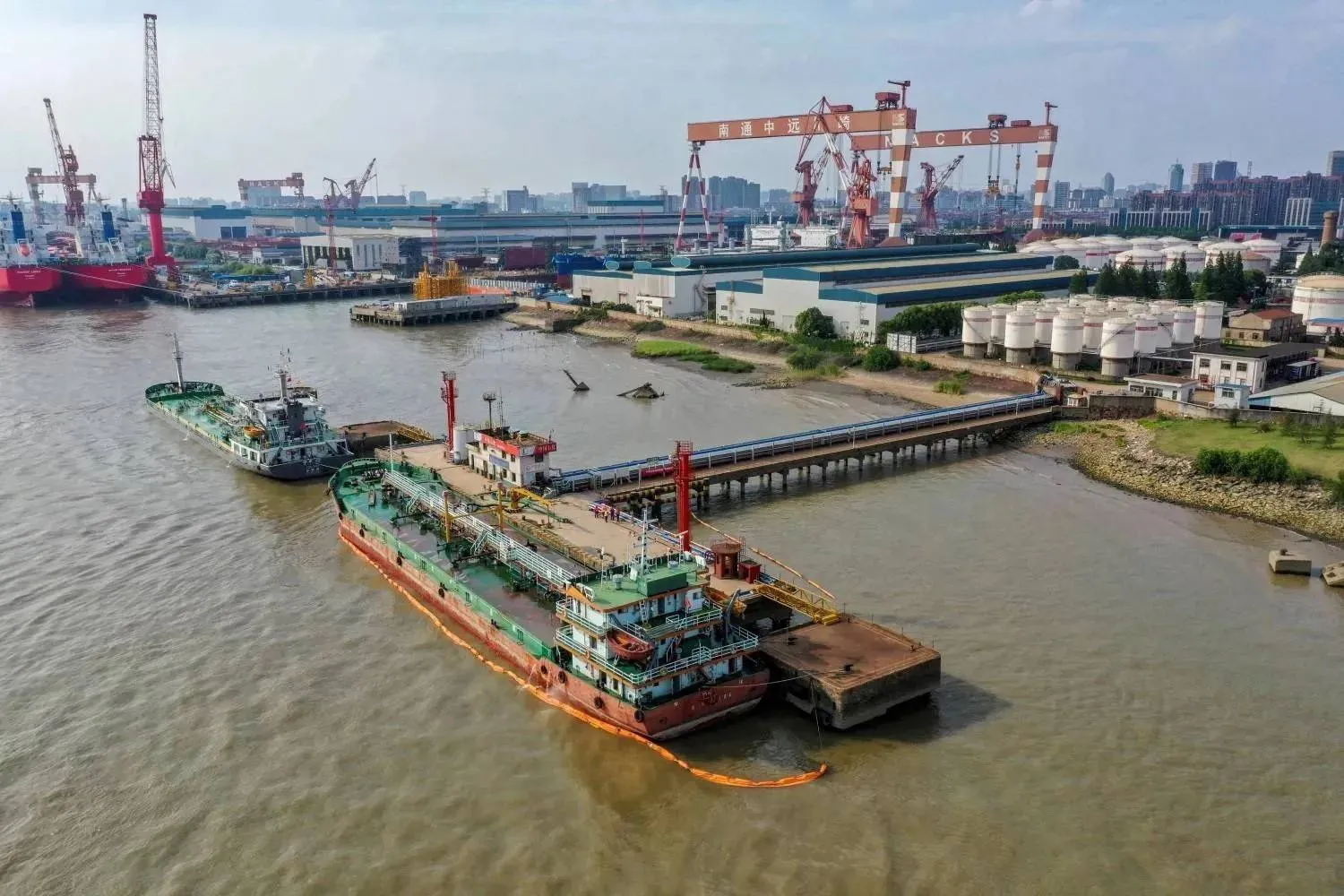

Oil Rises as Investors Weigh Outcome of Trump–Zelenskiy Meeting

Vehicles drive past the El Palito refinery in Puerto Cabello, Venezuela, Sunday, Dec. 21, 2025. (AP)
TT

Oil Rises as Investors Weigh Outcome of Trump–Zelenskiy Meeting

Vehicles drive past the El Palito refinery in Puerto Cabello, Venezuela, Sunday, Dec. 21, 2025. (AP)

Oil prices rose on Monday as investors weighed the outcome of talks between the US and Ukrainian presidents on a potential ​deal to end the war in Ukraine, as well as Middle East tensions that could disrupt supply.

Brent crude futures rose 67 cents, or 1.1%, to $61.31 per barrel at 0751 GMT, while US West Texas Intermediate crude was up 65 cents, or 1.15%, to $57.39.

Both benchmark prices fell more than 2% on Friday as investors weighed a looming global supply glut and ‌the possibility of a ‌Ukraine peace deal ahead of weekend ‌talks between ⁠Ukrainian ​President ‌Volodymyr Zelenskiy and US President Donald Trump.

Trump said on Sunday that he and Zelenskiy were "getting a lot closer, maybe very close" to an agreement to end the war in Ukraine, while acknowledging that the fate of the disputed Donbas region remains a key unresolved issue.

The two leaders spoke at a ⁠joint press conference late Sunday afternoon after meeting at Trump's Mar-a-Lago resort in Florida. ‌Trump said it will be clear "in ‍a few weeks" whether negotiations to ‍end the war will succeed.

The peace talks did not ‍reach an agreement on territorial issues, so a Russia–Ukraine peace deal may remain deadlocked with no quick breakthrough, said Mingyu Gao, energy and chemical chief researcher at China Futures.

The reason prices are rising also includes ​that geopolitical tensions remain elevated, as Russia and Ukraine continued striking each other's energy infrastructure over the weekend, said Yang ⁠An, a China-based analyst at Haitong Futures.

"The Middle East has also been unsettled recently, in Yemen and Iran saying the country is in a 'full-scale war' with the US, Europe, and Israel. This may be what's driving market concerns about potential supply disruptions," Yang added.

WTI is expected to trade within a $55-$60 range with an eye also on US enforcement actions against Venezuelan oil shipments and any fallout from the US military strike against ISIS targets in Nigeria, which produces about 1.5 million barrels ‌per day, IG analyst Tony Sycamore said in a note.


China's Finance Ministry: Fiscal Policies Will be More 'Proactive' in 2026

A man walks on a street in Beijing, China, 24 December 2025. EPA/WU HAO
TT

China's Finance Ministry: Fiscal Policies Will be More 'Proactive' in 2026

A man walks on a street in Beijing, China, 24 December 2025. EPA/WU HAO

China's finance ministry on Sunday said fiscal policies will be more proactive next year, reiterating its focus on domestic demand, technological innovation and a social safety net.

The statement comes as trading partners urge the world's second-biggest economy to reduce its reliance on exports, underscoring the urgency to revive confidence at home where a prolonged property crisis has rippled ⁠through the economy, weighing on sentiment.

China will boost consumption and actively expand investment in new productive forces and people's overall development, the ministry said in a statement after a two-day meeting at which it set ⁠2026 goals.

In addition, Reuters quoted the ministry as saying that it will support innovation to foster new growth engines, and improve the social security system by providing better healthcare and education services.

Other tasks for next year include promoting integration between urban and rural areas, and propelling China's transformation into a greener society.

China is likely to stick to ⁠its annual economic growth target of around 5% in 2026, government advisers and analysts told Reuters, a goal that would require authorities to keep fiscal and monetary spigots open as they seek to snap a deflationary spell.

Leaders this month promised to maintain a "proactive" fiscal policy next year that would stimulate both consumption and investment to maintain high economic growth.


Bulgaria Adopts Euro Amid Fear and Uncertainty

Customers shop in a grocery store in the village of Chuprene, northwestern Bulgaria on December 7, 2025. (Photo by Nikolay DOYCHINOV / AFP)
TT

Bulgaria Adopts Euro Amid Fear and Uncertainty

Customers shop in a grocery store in the village of Chuprene, northwestern Bulgaria on December 7, 2025. (Photo by Nikolay DOYCHINOV / AFP)

Bulgaria will become the 21st country to adopt the euro on Thursday, but some believe the move could bring higher prices and add to instability in the European Union's poorest country.

A protest campaign emerged this year to "keep the Bulgarian lev", playing on public fears of price rises and a generally negative view of the euro among much of the population.

But successive governments have pushed to join the eurozone and supporters insist it will boost the economy, reinforce ties to the West and protect against Russia's influence.

The single currency first rolled out in 12 countries on January 1, 2002, and has since regularly extended its influence, with Croatia the last country to join in 2023.

But Bulgaria faces unique challenges, including anti-corruption protests that recently swept a conservative-led government from office, leaving the country on the verge of its eighth election in five years.

Boryana Dimitrova of the Alpha Research polling institute, which has tracked public opinion on the euro for a year, told AFP any problems with euro adoption would be seized on by anti-EU politicians.

Any issues will become "part of the political campaign, which creates a basis for rhetoric directed against the EU", she said.

While far-right and pro-Russia parties have been behind several anti-euro protests, many people, especially in poor rural areas, worry about the new currency.

"Prices will go up. That's what friends of mine who live in Western Europe told me," Bilyana Nikolova, 53, who runs a grocery store in the village of Chuprene in northwestern Bulgaria, told AFP.

The latest survey by the EU's polling agency Eurobarometer suggested 49 percent of Bulgarians were against the single currency.

After hyperinflation in the 1990s, Bulgaria pegged its currency to the German mark and then to the euro, making the country dependent on the European Central Bank (ECB).

"It will now finally be able to take part in decision making within this monetary union," Georgi Angelov, senior economist at the Open Society Institute in Sofia, told AFP.

An EU member since 2007, Bulgaria joined the so-called "waiting room" to the single currency in 2020, at the same time as Croatia.

The gains of joining the euro are "substantial", ECB president Christine Lagarde said last month in Sofia, citing "smoother trade, lower financing costs and more stable prices".

Small and medium-sized enterprises stand to save an equivalent of some 500 million euros ($580 million) in exchange fees, she added.

One sector expected to benefit in the Black Sea nation is tourism, which this year generated around eight percent of the country's GDP.

Lagarde predicted the impact on consumer prices would be "modest and short-lived", saying in earlier euro changeovers, the impact was between 0.2 and 0.4 percentage points.

But consumers -- already struggling with inflation -- fear they will not be able to make ends meet, according to Dimitrova.

Food prices in November were up five percent year-on-year, according to the National Statistical Institute, more than double the eurozone average.

Parliament this year adopted empowered oversight bodies to investigate sharp price hikes and curb "unjustified" surges linked to the euro changeover.

But analysts fear wider political uncertainty risks delaying much needed anti-corruption reforms, which could have a knock-on effect on the wider economy.

"The challenge will be to have a stable government for at least one to two years, so we can fully reap the benefits of joining the euro area," Angelov said.