


Syrian Ex-Refugee Shares Dangers of Being Smuggled in a Truck

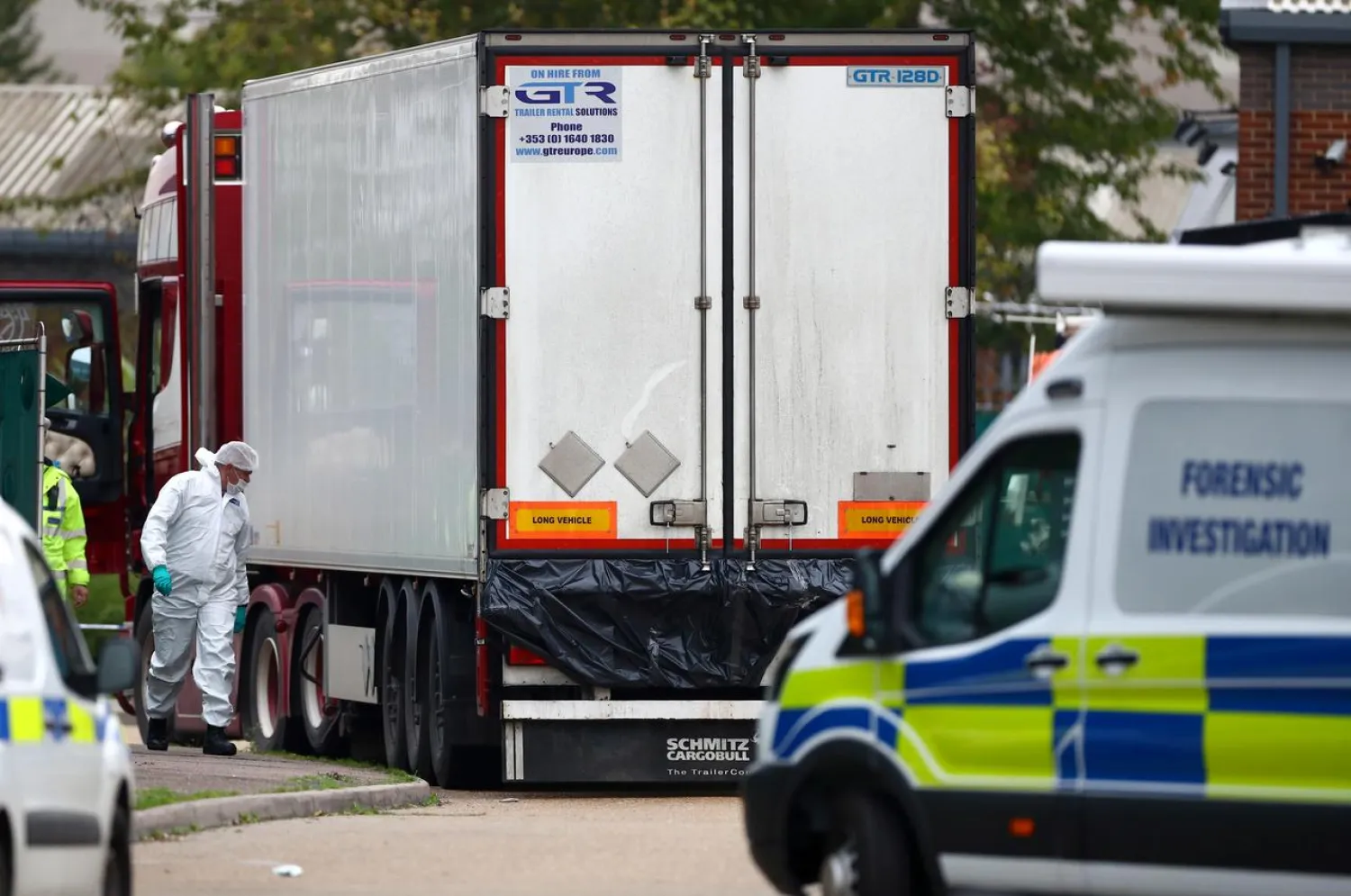
Police are seen at the scene where bodies were discovered in a lorry container, in Grays, Essex, Britain October 23, 2019. REUTERS/Hannah McKay
TT

Syrian Ex-Refugee Shares Dangers of Being Smuggled in a Truck

Police are seen at the scene where bodies were discovered in a lorry container, in Grays, Essex, Britain October 23, 2019. REUTERS/Hannah McKay

Ahmad Al-Rashid knows what it was like for the 39 people who were found dead in the back of a truck in southeastern England this week. He's been there.

The 29-year-old Syrian refugee found himself gasping for breath inside a refrigerated shipping container with a group of migrants and a load of frozen chicken when a planned trip across the English Channel turned into hours of terror in 2015, The Associated Press reported.

The truck hadn't even left the French port of Calais when someone heard the cries of the desperate migrants and opened the doors, it said.

"I was in their shoes. I knew the desperation of their last moments," he said of the people who died this week. "In my case, someone came to help me. (For them), all their screams were in vain."

Authorities are calling Wednesday's truck container discovery in a town near London one of Britain's worst-ever human smuggling cases. Rashid said it brought his journey to the UK, and its terrors, back in stark relief.

Rashid fled Aleppo in 2013, thinking he would return to his wife and two children in a few weeks. He first went to northern Iraq, where he taught English to other refugees. But the shooting and bombs followed him "from one hell to another," so he finally decided to pay smugglers to help him get to Europe.

The journey took Rashid from Iraq to Turkey and Greece, where Rashid said the smugglers opened a suitcase full of passports and gave him one from Bulgaria. From Greece, he traveled to Marseille in southern France, then on to "The Jungle," a notorious camp outside Calais where migrants gathered in hopes of hitching rides to the UK until it was closed down in 2016.

Even after he almost suffocated in the back of the shipping container, Rashid recalled trying to get across the Channel until he finally succeeded, hiding in the back of a truck — but just a regular one that wasn't airtight.

He was eventually granted asylum, allowing him to start a new life and bring his wife and children to Britain, AP said.

In contrast to his own arrival, Rashid met his family at Heathrow Airport and drove them back to his apartment in the central English city of Derby.

"They could fly, you know, safely with dignity," Rashid said. "And this was the whole point for me making this journey, because it was for the sake of my family."

Now Rashid works with other refugees and migrants, helping them get on their feet in a new land. And he has a message for anyone thinking of traveling to Europe: Don't trust the people smugglers.

"They don't see you as a human being. They see you as a commodity, as money, as an object, and this is it," he said. "Never, ever, trust them. I mean, I had to put my faith in them and I regretted it."

This week's tragedy brought the terror of his own experiences flooding back, he said.

Rashid told his story to the AP so people understand that migrants and refugees gamble their lives in sealed trucks and leaky rafts because safer routes have been closed to them. They take risks because, he said, they feel like they have no other choice.

"No one puts their life in danger for no reason," Rashid said. "People do this out of desperation."



Iran's Supreme Leader Briefs Military Chief on 'New Guiding Measures'

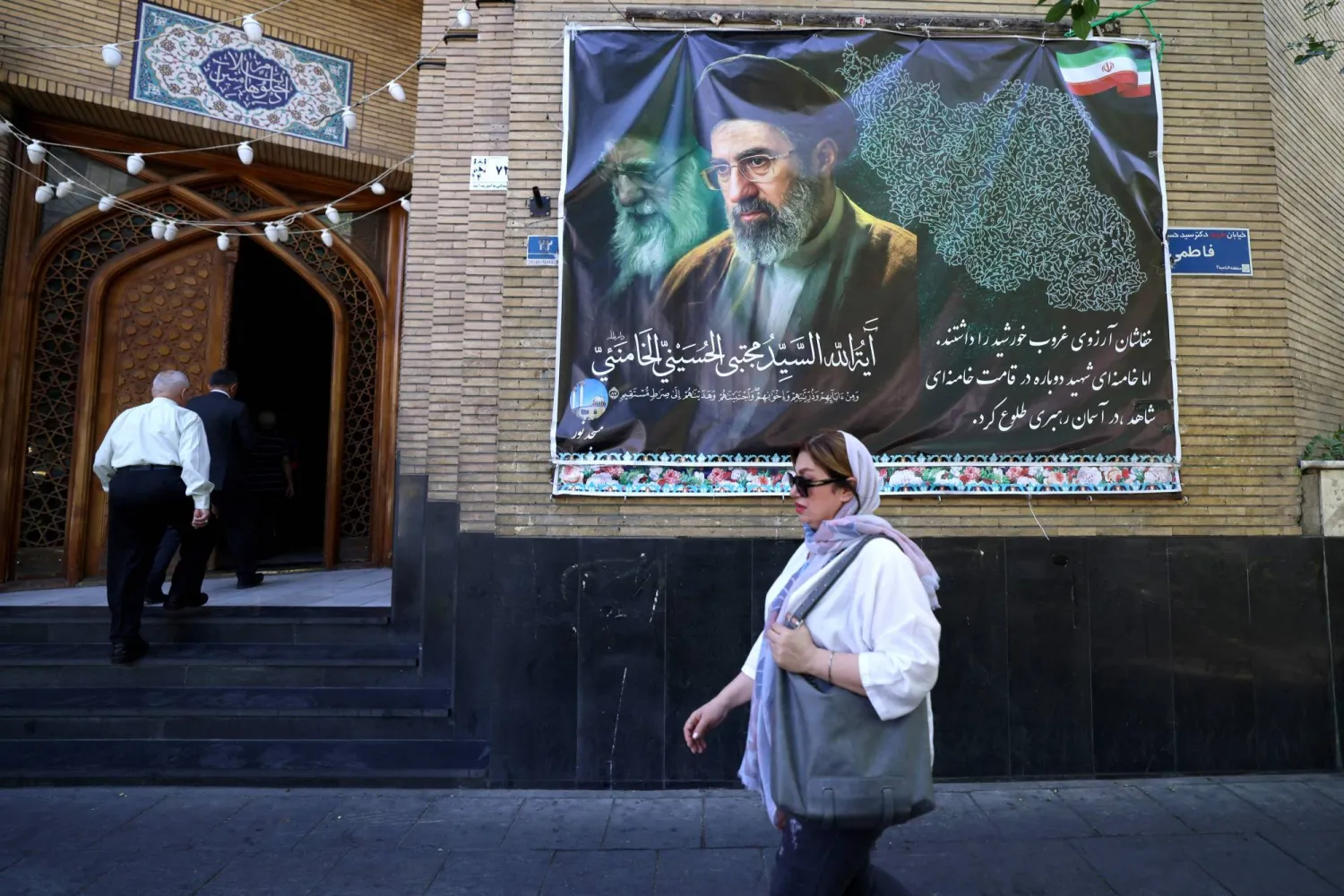
An Iranian woman walks a mosque decorated with a banner depicting Iran's current leader Mojtaba Khamenei, in the capital Tehran on May 9, 2026. (Photo by ATTA KENARE / AFP) /
TT

Iran's Supreme Leader Briefs Military Chief on 'New Guiding Measures'

An Iranian woman walks a mosque decorated with a banner depicting Iran's current leader Mojtaba Khamenei, in the capital Tehran on May 9, 2026. (Photo by ATTA KENARE / AFP) /

The head of Iran's armed forces unified command met Supreme Leader Mojtaba Khamenei and received from him "new guiding measures to pursue military operations and ‌firmly confront ‌adversaries", the ‌semi-official Fars ⁠news reported on ⁠Sunday.

The Fars report said that Ali Abdollahi, who commands the Khatam al-Anbiya Central ⁠Headquarters, had briefed ‌Khamenei ‌on the readiness of ‌the country’s armed ‌forces. It did not say when their meeting took place, Reuters said.

"The ‌armed forces are ready to confront any ⁠action ⁠by the American-Zionist (Israeli) enemies. In case of any error by the enemy, Iran's response will be swift, severe, and decisive," Abdollahi was reported as saying.


Iran Ceasefire Tested as Cargo Ship Catches Fire and Kuwait Reports Drone Attack

Vessels in the Strait of Hormuz, Musandam, Oman, May 8, 2026. REUTERS/Stringer
TT

Iran Ceasefire Tested as Cargo Ship Catches Fire and Kuwait Reports Drone Attack

Vessels in the Strait of Hormuz, Musandam, Oman, May 8, 2026. REUTERS/Stringer

The shaky ceasefire in the Iran war was tested again on Sunday when a cargo ship caught fire after being hit by an unknown projectile off Qatar’s coast, and Kuwait's military reported an attack by drones, without specifying where they came from.

The attacks were the latest threats to a month-old ceasefire, which the Trump administration says remains in effect. It has faced difficulties, with Iran restricting traffic through the Strait of Hormuz, a strategic waterway key to the global flow of oil, and the US imposing a blockade of Iranian ports.

Washington has been awaiting Iran’s response to a new proposal for a deal to end the war, reopen the strait to shipping and roll back Iran’s nuclear program.

One of the main sticking points in the negotiations is the fate of Iran’s stockpile of highly enriched uranium. The UN nuclear agency says Iran has more than 440 kilograms (970 pounds) of uranium that is enriched up to 60% purity, a short, technical step from weapons-grade levels.

In an interview with Iranian state media, a spokesman for the Iranian military said that forces were on “full readiness” to protect nuclear sites where the uranium is stored.

“We considered it possible that they might intend to steal it through infiltration operations or heliborne operations,” Brig. Gen. Akrami Nia told the IRNA news agency late Saturday. He didn’t offer further details.

The majority of Iran’s highly enriched uranium is likely still at its Isfahan nuclear complex, International Atomic Energy Agency Director-General Rafael Mariano Grossi told The Associated Press last month.

The Isfahan facility was bombarded by US-Israeli airstrikes in the 12-day war last year, and faced less intense attacks in this year’s war.

In Sunday’s naval attack, the United Kingdom Maritime Trade Operations Center said that the strike caused a small fire on the ship, which was extinguished. The attack happened 23 nautical miles (43 kilometers) northeast of Qatar’s capital, Doha, the UKMTO said.

There were no reported casualties, it said. It gave no details on the owner or origin of the ship, and there was no claim of responsibility.

But there have been several attacks against ships in the Arabian Gulf over the past week. On Friday, the US struck two Iranian oil tankers after it said that the vessels were trying to breach its blockade of Iran’s ports.

Iran’s Revolutionary Guard navy on Sunday reiterated its warning that any attack on Iranian oil tankers or commercial vessels would be met with a “heavy assault” on one of the US bases in the region and enemy ships.

In Kuwait, Defense Ministry spokesman Brig. Gen. Saud Abdulaziz Al Otaibi said that hostile drones entered Kuwait’s airspace early Sunday, and that forces responded “in accordance with established procedures.” There were no immediate reports of casualties.

US President Donald Trump has reiterated threats to resume full-scale bombing, if Iran doesn’t accept an agreement to reopen the strait and roll back its nuclear program. Iran has mostly blocked the critical waterway for global energy since joint strikes on Feb. 28 by the US and Israel launched the war, which has caused a global spike in fuel prices and rattled world markets.


Ukraine Reports Battlefield Clashes, Drone Strikes Despite Ceasefire

In this photo provided by Ukraine's 93rd Kholodnyi Yar Separate Mechanized Brigade press service, a Ukrainian soldier prepares an FPV drone to fire towards Russian positions in Druzhkivka, Donetsk region, Ukraine, Thursday, May 7, 2026. (Iryna Rybakova/Ukraine's 93rd Mechanized Brigade via AP)
TT

Ukraine Reports Battlefield Clashes, Drone Strikes Despite Ceasefire

In this photo provided by Ukraine's 93rd Kholodnyi Yar Separate Mechanized Brigade press service, a Ukrainian soldier prepares an FPV drone to fire towards Russian positions in Druzhkivka, Donetsk region, Ukraine, Thursday, May 7, 2026. (Iryna Rybakova/Ukraine's 93rd Mechanized Brigade via AP)

Ukrainian officials reported ‌on Sunday Russian drone strikes and nearly 150 battlefield clashes over the past 24 hours despite a US-brokered ceasefire between Kyiv and Moscow.

US President Donald Trump said on Friday that Russia and Ukraine had agreed to a three-day ceasefire from May 9 to May 11, as a broader peace effort to end the more than four-year-old war has stalled.

One person was killed ‌and three ‌people were wounded in Russian strikes ‌on ⁠Ukraine's southeastern Zaporizhzhia ⁠region, governor Ivan Fedorov said on Sunday morning.

In the northeastern Kharkiv region, governor Oleh Syniehubov said eight people, including two children, were wounded in drone attacks on the regional capital and nearby settlements.

Seven people including a child were ⁠wounded in the southern Kherson region ‌by Russian drone ‌and artillery strikes since early Saturday, regional governor Oleksandr Prokudin ‌said on Sunday.

A child was also wounded ‌and infrastructure damaged in Russian attacks on the southeastern Dnipropetrovsk region, said regional head Oleksandr Hanzha.

Separately, Kyiv's air force said Russia had launched 27 long-range drones ‌at Ukraine overnight - a lower number than usual - but that air defenses had ⁠downed ⁠all of them.

In its morning report, Ukraine's General Staff said 147 clashes had taken place along the front line.

Despite the reports, Ukrainian officials have not publicly commented on any violations of the US-brokered ceasefire, which was also meant to include a swap of 1,000 prisoners of war from each side.

Earlier this week, Russia and Ukraine had each announced separate ceasefires - starting on Friday and Wednesday respectively - but quickly accused one another of breaking them.