
Miracle of Burnley: Inside the Premier League’s Most Unlikely Success Story

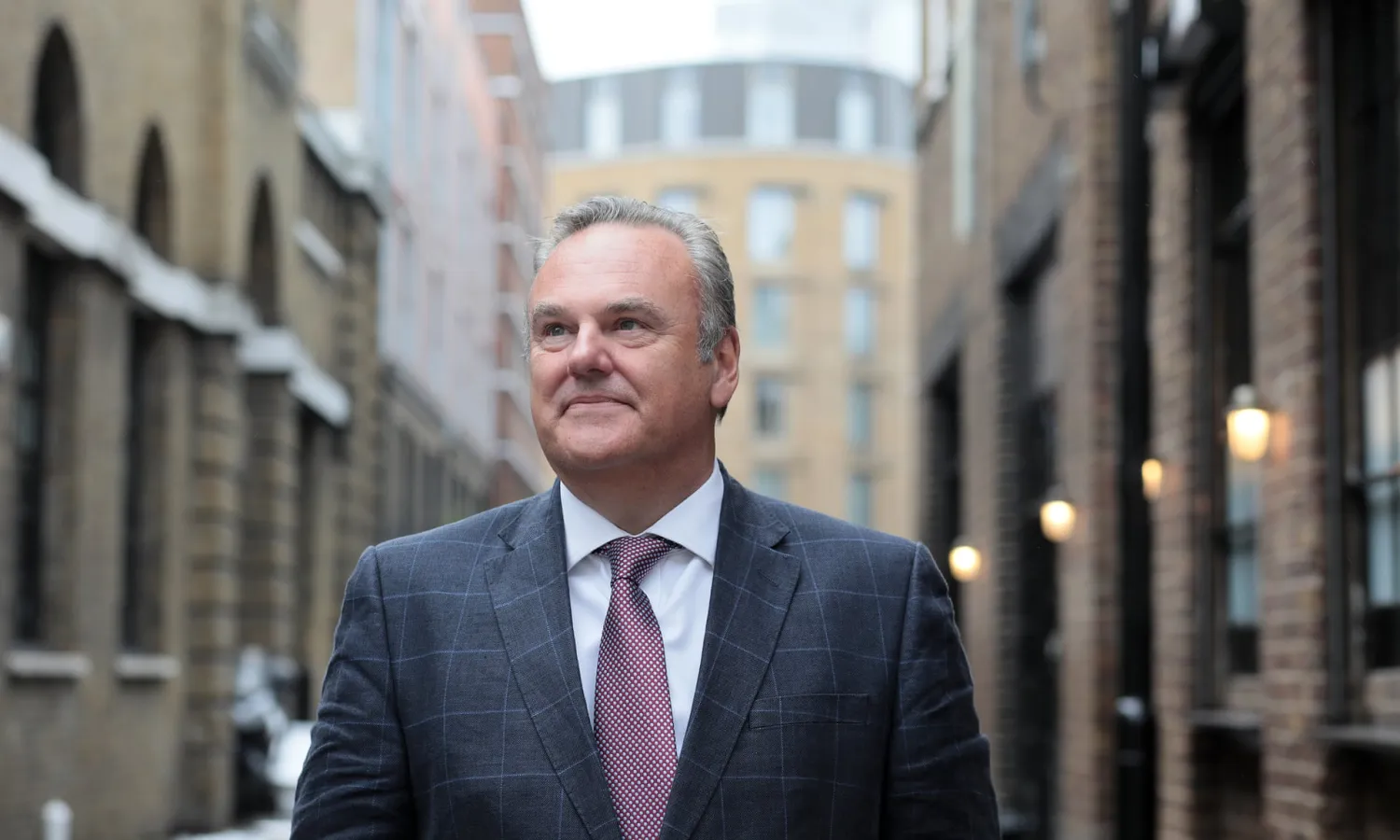
Burnley’s chairman Mike Garlick. ‘We have to have value in everything we do,’ he says. Photograph: Martin Godwin/The Guardian
TT

Miracle of Burnley: Inside the Premier League’s Most Unlikely Success Story

Burnley’s chairman Mike Garlick. ‘We have to have value in everything we do,’ he says. Photograph: Martin Godwin/The Guardian

A Frenchman, a Spaniard and two Belgians walk into a pub in Burnley. There is no punchline. The four are drinking in the Royal Dyche before Burnley’s win over Everton and their presence gives a little demonstration of the impact close to four years of Premier League football and seven years of Sean Dyche have had on a club that takes neither for granted. Whether others outside Turf Moor recognize the scale of achievement is open to question.

“A number of years ago I used to think: ‘Does anyone recognise the enormity of where this club was to where it is now?’” says Dyche, who will mark seven years as the Burnley manager on Wednesday. “But I’m really not that precious about it now. The staff, the players, the board and chief exec know what we do and I think the fans do too. They are the important parties. We work authentically and honestly.” Qualities that may appear unfashionable amid the glitz of the Premier League have made Burnley something of a role model.

Stéphane Blach, Camilo Guerra, Bernard Brasseur and Laurent Titeux are the overseas visitors for the Everton game. Work colleagues in Luxembourg, the four take in two Premier League matches over one weekend every year and have chosen Burnley for the second season running because, they insist, the atmosphere at Turf Moor is superior to most other stadiums visited. And because they love the Royal Dyche, renamed last year after a joke about celebrating the Burnley manager if he took the club into Europe became a promise.

There can be no greater honour for the man whose face adorns the claret-and-sky-blue walls, the Henry VIII-style sign above the door and has even been carved into a tree stump in the beer garden.

“I don’t think we would have heard of Burnley if it wasn’t for the club being in the Premier League,” Guerra says. “We went to London for a few years, then Manchester and from there we discovered Burnley. It is amazing here. The people are super friendly.”

The four were staying in Manchester, where they watch City’s defeat by Wolves the day after Jeff Hendrick’s winner against Everton lifted Burnley briefly into fourth place in the richest league on the planet. Burnley cannot compete with Manchester or Liverpool as a draw for football tourists, nor does it measure itself that way, and the town center is relatively quiet – numerous empty shops on St James’s Street reflecting problems nationwide – considering a Premier League game is an hour from kicking off nearby. Yet its football club continues to thrive, not merely survive.

Burnley’s Barnfield training ground, its pitches once prone to flooding, has been rebuilt and brought into the 21st century at a cost of more than £10m. The club’s last published accounts, for 2017-18, showed a record profit of £45m and no outstanding bank or directors’ loans. A turnover of £139m was the joint 13th highest in the Premier League and only two clubs had a smaller wage bill than Burnley’s £82m. Wages have since increased but to progress in a league where Manchester United’s turnover and wage bills were £590m and £296m respectively that same season, and to do so for four seasons (one season more than Jimmy Adamson’s team enjoyed in the top flight in the 1970s), is testament to the meticulous planning and decision-making of Dyche and the Burnley board.

“The main thing you have to get right as a chairman is to pick the right manager,” says Mike Garlick, the Burnley chairman. “If you do that you are halfway there at least. Sean has been key. We had Eddie Howe before that but location-wise it just didn’t suit Eddie and his family, so it didn’t quite work out. Another great manager.”

Garlick is speaking in the London office of Michael Bailey Associates, the workforce project management and consulting company he founded in 1989 and now heads as its chief executive officer. His roots are unmistakably Burnley, however, and most of his fellow directors are from the area. The club’s success has been homegrown.

“I was born in the town, about 400 yards from the club,” the chairman says. “I went to school there, then went to uni and came to London to seek my fortune. When I was 18 I told my dad I wanted to be chairman of Burnley one day. He said: ‘You must be bloody crackers son.’ It was a lifelong ambition to do this. I think one of the reasons we do so well is that myself and the other directors are all fairly local and we all really care. We are not there to pick up a wage. No director gets paid. You get a night in a hotel paid for but that’s it.

“I proudly state that I am the Premier League’s poorest owner. Everyone else is a billionaire, virtually. But I am proud of that and what we have achieved because we have had to sweat every asset both on and off the pitch to get the best from it.

“That means working really cleverly in the transfer market, looking for value – and if we don’t see that value we don’t buy. Sometimes that drives the fans up the wall but we have to have value in everything we do.

“It could be a young player that we think could do well for us and we could sell on for a profit or an older player we think could add value to the squad now. All we can do is live within our means. We don’t have the lowest budget in the Premier League any more – other clubs who have come up have a lower budget this season – but it is certainly not top half. I can’t go into real detail but we probably have the most aggressive bonus scheme in the league in terms of staying up and finishing higher up the Premier League. We stretch our players as much as we can on the pitch to achieve the best and if they do that they get the rewards.”

Garlick recoils at the suggestion that Burnley have established themselves in the Premier League. “No such thing,” he says but chairman and manager are clearly aligned on what Dyche described as the “incremental improvements” that must be made in a fiercely competitive field.

“Priority number one was the training ground,” the chairman says. “Priority number two is probably to expand the corporate facilities because there is a long waiting list. One of the plans in the medium term is to build more executive boxes because we just haven’t got enough to meet demand. We are selling out every game … maybe refurb or rebuild some of the stands because some of them are quite ageing now but we will do it slowly. It has to be when the time is right for us but things will happen slowly but surely.”

One of the criticisms leveled at the Burnley board by supporters is their spending in the transfer market – or indeed, lack of – with Chris Wood and Ben Gibson the club’s joint record signings at £15m apiece.

“There are still challenges because we have to look at flexing the financial model because the game is outrunning us financially,” Dyche admits. “It is an ongoing challenge but if you looked at it on a piece of paper, about how to plan out a possible successful period, then I think we are a good model for how to build something.”

Garlick says: “We have seen so many clubs locally who have fallen on hard times – Bolton, Bury, even Blackburn to a degree. The fans don’t want that to happen to our club, so I think they appreciate the sensible approach. But ultimately fans want to win things. I’m a fan, too. Managers always want to spend too because they are ambitious for themselves and for the club. We just have to be realistic, that’s all.

“We are a solid club now. We are profitable, financially healthy.

“Why can’t anyone else do it? I think it’s just sticking to your core principles and not wavering from them and getting all the key decisions, such as the manager, right. Getting the right players to fit in with the team. Sheffield United, I think, have done very well over the last few years. Norwich, they haven’t spent a lot of money. Huddersfield did it as well. It is possible.”

Back at the Royal Dyche, Justine Lorriman, the owner responsible for the pub’s transformation from the Princess Royal, is preparing for her regular 2.55pm sprint to Turf Moor for the Everton game. Lorriman, a lifelong Clarets fan who traveled to all three away Europa League qualifiers in 2018, will be back behind the bar before 5pm but measures the impact of four years in the Premier League on a much wider scale.

“If Burnley are winning and doing well it has a big impact on the morale of the town,” she says. “Little Burnley are doing well in the Premier League and people recognize that now when you go away. I wore my Burnley shirt in the Philippines and several people recognized it. Beating big teams like Chelsea [who they host on Saturday evening] helps you get recognized abroad.

“We had a few Norwich fans in here recently who loved what we have done. They were saying that we are role models to them, that we are the club they are looking to be like and it’s really nice. We get the cliche of ‘you’re just a long-ball team’, or they don’t like Sean Dyche, but the point is we are still here four years later. We are definitely doing something right. We are an example for small-town clubs.”

(The Guardian)


Salah Steers Egypt into Africa Cup Knockout Stages After VAR Denies South Africa Late Penalty

 Egypt's forward #10 Mohamed Salah shoots from the penalty spot to score the team's first goal during the Africa Cup of Nations (CAN) Group B football match between Egypt and South Africa at Adrar Stadium in Agadir on December 26, 2025. (AFP)
Egypt's forward #10 Mohamed Salah shoots from the penalty spot to score the team's first goal during the Africa Cup of Nations (CAN) Group B football match between Egypt and South Africa at Adrar Stadium in Agadir on December 26, 2025. (AFP)
TT

Salah Steers Egypt into Africa Cup Knockout Stages After VAR Denies South Africa Late Penalty

 Egypt's forward #10 Mohamed Salah shoots from the penalty spot to score the team's first goal during the Africa Cup of Nations (CAN) Group B football match between Egypt and South Africa at Adrar Stadium in Agadir on December 26, 2025. (AFP)
Egypt's forward #10 Mohamed Salah shoots from the penalty spot to score the team's first goal during the Africa Cup of Nations (CAN) Group B football match between Egypt and South Africa at Adrar Stadium in Agadir on December 26, 2025. (AFP)

Mohamed Salah scored again on Friday as Egypt's 10 men held on to beat South Africa 1-0 to reach the knockout stages of the Africa Cup of Nations.

Salah, who secured the Pharaohs’ opening win with a stoppage-time strike against Zimbabwe on Monday, did it again in Agadir and his penalty before the break secured progression from Group B.

But South Africa should arguably have been given a penalty in stoppage time when Yasser Ibrahim blocked a shot with his arm. After a long delay, the referee decided against awarding the spot kick after consulting video replays and Ibrahim sank to the ground in relief.

“We didn’t have much luck. We also had several refereeing decisions go against us,” South Africa coach Hugo Broos said.

Salah converted his penalty after he was struck in the face by the hand of the retreating South Africa forward Lyle Foster. Salah showed no ill effects from the blow and sent his shot straight down the middle while goalkeeper Ronwen Williams dived to his right.

There was still time before the break for Egypt defender Mohamed Hany to get sent off, after receiving a second yellow card for a foul on Teboho Mokoena.

Goalkeeper Mohamed El Shenawy was Egypt’s key player in the second half.

“We gave our all in this match right until the end, and we also hope for the best for what comes next,” the 37-year-old El Shenawy said.

Earlier, Angola and Zimbabwe drew 1-1 in the other group game, a result that suited neither side after opening losses.

Egypt leads with 6 points from two games followed by South Africa on 3. Angola and Zimbabwe have a point each. The top two progress from each group, along with the best third-place finishers.

Zambia drew 1-1 with Comoros in the early Group A fixture after both lost their opening games, meaning the winner of the late match could be sure of progressing.


Draper to Miss Australian Open Due to Injury

 Jack Draper, of Great Britain, reacts after defeating Federico Agustin Gomez, of Argentina, during the first round of the US Open tennis championships, Aug. 25, 2025, in New York. (AP)
Jack Draper, of Great Britain, reacts after defeating Federico Agustin Gomez, of Argentina, during the first round of the US Open tennis championships, Aug. 25, 2025, in New York. (AP)
TT

Draper to Miss Australian Open Due to Injury

 Jack Draper, of Great Britain, reacts after defeating Federico Agustin Gomez, of Argentina, during the first round of the US Open tennis championships, Aug. 25, 2025, in New York. (AP)
Jack Draper, of Great Britain, reacts after defeating Federico Agustin Gomez, of Argentina, during the first round of the US Open tennis championships, Aug. 25, 2025, in New York. (AP)

Briton Jack Draper said on Friday he will not compete in next month's Australian Open, citing ongoing recovery from an injury.

Draper, 10th in the world rankings, was forced to withdraw from the second round of ‌the US Open ‌in August ‌due ⁠to bone ‌bruising in his left arm.

"Unfortunately, me and my team have decided not to head out to Australia this year. It's a really, ⁠really tough decision," the British ‌number one said in ‍a video ‍posted on X.

The 24-year-old ‍is targeting a February return alongside preparation for the defense of his Indian Wells title in March.

"This injury has been the most difficult ⁠and complex of my career," Draper added. "It's weird, it always seems to make me more resilient. I'm looking forward to getting back out there in 2026 and competing."

The Australian Open begins on January 18 in ‌Melbourne.


Morocco Forced to Wait for AFCON Knockout Place After Mali Draw

Football - CAF Africa Cup of Nations - Morocco 2025 - Group A - Morocco v Mali - Prince Moulay Abdellah Stadium, Rabat, Morocco - December 26, 2025 Morocco's Ismael Saibari reacts after Mali's Lassine Sinayoko scored their first goal. (Reuters)
TT

Morocco Forced to Wait for AFCON Knockout Place After Mali Draw

Football - CAF Africa Cup of Nations - Morocco 2025 - Group A - Morocco v Mali - Prince Moulay Abdellah Stadium, Rabat, Morocco - December 26, 2025 Morocco's Ismael Saibari reacts after Mali's Lassine Sinayoko scored their first goal. (Reuters)

Morocco missed the chance to guarantee their spot in the last 16 of the Africa Cup of Nations after Lassine Sinayoko's second-half penalty earned Mali a 1-1 draw with the hosts on Friday.

The match was a tale of two spot-kicks, with Brahim Diaz giving Morocco the lead from a penalty deep in first-half injury time and Sinayoko replying on 64 minutes.

The stalemate at the Prince Moulay Abdellah Stadium in the capital Rabat ended Morocco's world record winning run which had been taken to 19 matches with their 2-0 victory over Comoros in the tournament's opening game.

It also means Morocco have not yet confirmed their place in the knockout phase, although they are on top of Group A with four points from two games.

Mali come next on two points alongside Zambia, who drew 0-0 with minnows Comoros earlier in Casablanca.

Morocco next face Zambia on Monday and a victory in that match against the 2012 champions will ensure that the hosts go through as group winners.

"We'll look back at the second half and see what the problem was but we didn't play the way we did in the first half. We didn't impose our game and had to drop off. The penalty changed the game a bit," Morocco midfielder Azzedine Ounahi told broadcaster beIN Sports.

"We go into the third game with the same approach, to win the game and finish top of the group."

Morocco captain Achraf Hakimi, the African player of the year, was again an unused substitute as he continues his recovery from an ankle injury suffered playing for Paris Saint-Germain at the start of November.

- Mbappe watches on -

His former PSG teammate Kylian Mbappe, the current Real Madrid superstar and France skipper, was among the spectators in the crowd of 63,844 and appeared to be wearing a Morocco shirt with Hakimi's number two on it.

With Hakimi on the sidelines, Mbappe's Real Madrid teammate Diaz was the main attraction on the pitch -- the little number 10 forced a good save from Mali goalkeeper Djigui Diarra on 17 minutes and then played a key part in the penalty which led to the opening goal just before the interval.

Mali defender Nathan Gassama brushed the ball with his hand as he tried to stop Diaz dribbling past him inside the box, and the referee eventually awarded a spot-kick following a lengthy look at the pitchside VAR monitor.

Morocco's Soufiane Rahimi had a spot-kick saved against Comoros but this time Diaz sent the goalkeeper the wrong way for his second goal of the tournament.

However, Walid Regragui's side, the best team in Africa according to the FIFA rankings, could not build on that as Mali won a penalty of their own just after the hour mark.

Sinayoko went down under a clumsy challenge by Jawad El Yamiq and 29-year-old Cameroonian referee Abdoul Abdel Mefire awarded the penalty after eventually being called over to check his screen.

Auxerre striker Sinayoko, having been booked apparently for something he said to the referee, kept his cool to stroke in the reward and restore parity.

Morocco substitute Youssef En-Nesyri was denied by a good Diarra save and Mali then held on through 10 minutes of stoppage time for a point, as the final whistle was greeted with jeers from the home fans.