


The Making of Roberto Firmino, By His Earliest Mentors in Brazil

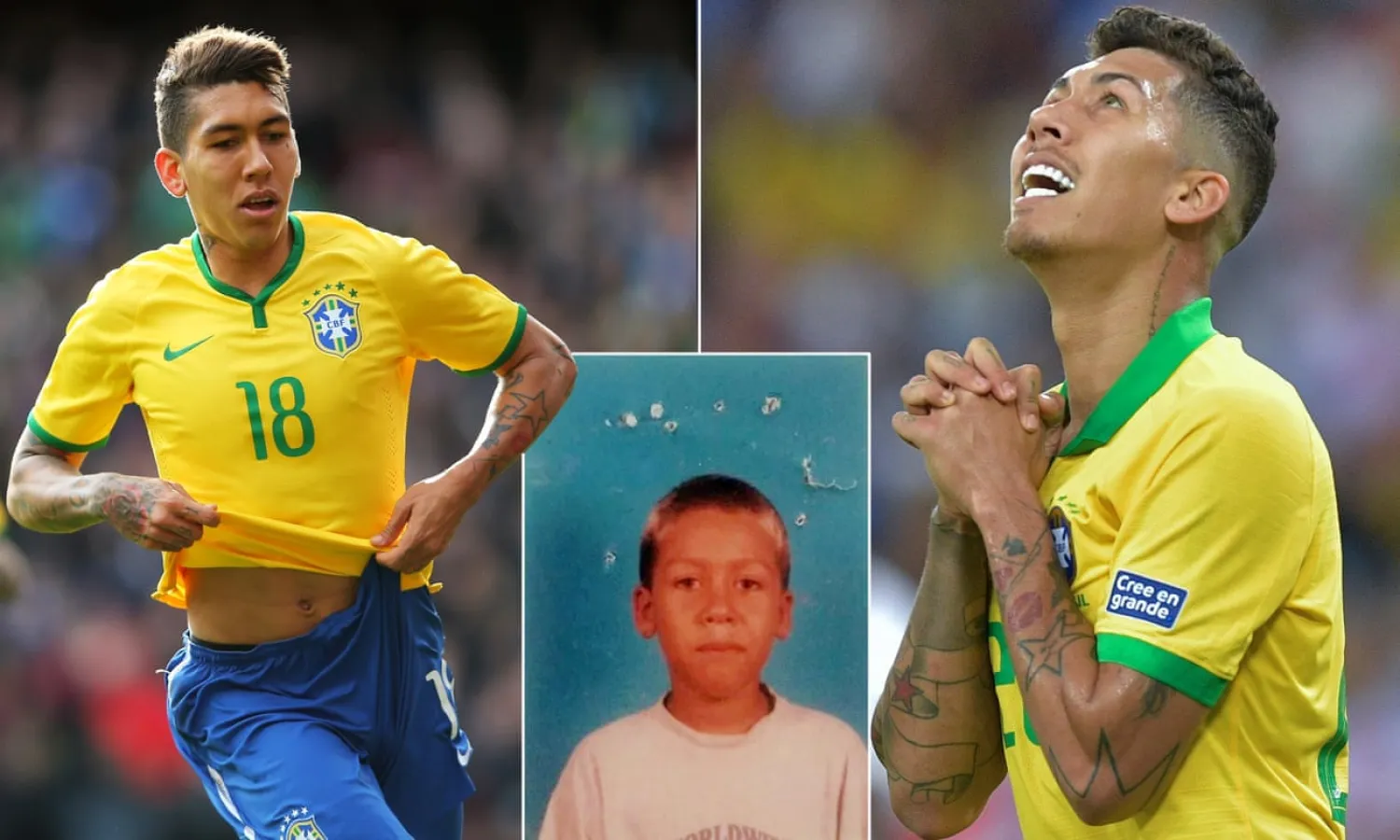
 Roberto Firmino playing for Brazil in 2015 (left), 2019 (right) and as a schoolboy.
Roberto Firmino playing for Brazil in 2015 (left), 2019 (right) and as a schoolboy.
TT

The Making of Roberto Firmino, By His Earliest Mentors in Brazil

 Roberto Firmino playing for Brazil in 2015 (left), 2019 (right) and as a schoolboy.
Roberto Firmino playing for Brazil in 2015 (left), 2019 (right) and as a schoolboy.

On a mundane Monday in 2001, Adriana Leite was sitting in her classroom in Maceió, a city on Brazil’s northeast coast. As usual, there was a timid but pleasant boy called Roberto at the desk nearest to hers. She asked him how his weekend had been. When he said that the electricity in his home had been off all weekend, she was worried and asked the 10-year-old what had happened to his family’s food.

Smiling, as if it was normal, he said there was nothing in the fridge, so nothing could go off. “When he told me that he had nothing in his fridge at home, it made me very sad,” Leite recalls. “He was so young, always so shy and his answer surprised me. What did he mean there was nothing in the fridge? I always remembered Roberto because of that – that skinny little lad who sat next to my desk and talked about football.”

Leite, who is still a teacher, had no idea she would be telling this story nearly 20 years later. Her routine that year was to talk to that shy boy about football and his studies. She always asked him to focus on his education, but sometimes he would disobey her, bunking off to play football on the little dirt pitches dotted around the neighbourhood of Trapiche.

That truancy, though ill-advised, paid off. At 13, Firmino joined the youth team of one of the two local clubs, CRB, who currently play in Brazil’s second tier. He initially wore the No 5 shirt, which in Brazil is reserved for the most defensive midfielder. When required, he even played as a defender.

Firmino stood out immediately for the way he struck the ball, but he was very quiet and rarely opened up to his colleagues. “Firmino was a very humble boy but very talented,” says his former coach, Guilherme Farias. “As soon as I saw him play, I made him sign a contract because I knew we had an ace on our hands. He was very dedicated. He listened to all the instructions. Everyone liked him. His family had some financial difficulties at the time and we pulled together, helping him to train and travel with the team.”

The young Firmino travelled the northeast of Brazil playing in interstate championships and went to São Paulo for an important national tournament. There is one story from their travels together that Farias likes to recount, because, for him, it shows the innocence of the boy. “We were all playing football at the hotel, playing keepie-uppie, and the ball dropped to the feet of Firmino, who made a mistake. He broke a window, but he said they would buy a new window and put it in. You have to be like that. If you make a mistake, correct it. Firmino bought a window, we installed it and off we went.”

Firmino was given a big break in 2008, when another CRB youth coach, Toninho Almeida, rang his friend – the Atlético Mineiro player Bilú – and told him he needed to see the youngster play. Toninho sent a DVD of Firmino in action and the clips caught Bilú’s eye. Through his contacts, Bilú arranged a trial at São Paulo, the reigning league champions at the time.

Firmino didn’t make it at São Paulo, but he struck up a friendship with Bilú, who managed to organise a trial at another of his former clubs, Figueirense. This time Firmino’s talent was recognised. “He was very poorly assessed by São Paulo,” says Bilú. “He had too little time training with the ball. He didn’t pass the trials but, fair enough, I took him to Figueirense. I had already played there and knew people, so I managed to get him another chance. It was there that he really blossomed. He was already very talented, but the experiences in Série B helped him immensely.”

Bilú was with Firmino when he signed his first professional contract at Figueirense; they played together when Bilú returned to the club in 2010; and they remain friends to this day. “I’m the godfather to his daughters, I was the best man at his wedding and we speak practically every week. He carries on being very quiet, but he loosens up with his friends. He is a very nice guy, who has evolved a lot. He played as a defensive midfielder or defender, then in central midfield with me and today he’s a striker. He’s really intelligent. I think he’s the most interesting player to watch for Liverpool,” says Bilú, who has retired from playing and now works as a coach.

The move south to Figueirense worked out well for Firmino. The club are based in Florianópolis in the southeast of the country, an area more popular with scouts and agents then the remote northeast. After helping Figueirense earn promotion to the top flight, Firmino moved to Hoffenheim to make his name in Europe. His star has only risen since.

He lifted the first silverware of his career this year, becoming a champion of Europe with Liverpool and a champion of South America with Brazil. He is the top scoring Brazilian in the history of the Premier League and has 41 caps for the national team. For his school teacher Leite, though, it took a long time for the penny to drop. For a long time she did not realise that the man on the TV with the yellow and green shirt on his back and the broad, white grin on his face was the same Roberto who studied at the Maria Rita Lyra de Almeida school almost two decades ago. Their paths had crossed in the interim – they met at Maceió airport and he posed for photos with her kids – but Leite had no idea that he was the boy she had taught.

But last year, just before the World Cup in Russia, she received a call from the headteacher and was asked if Roberto Firmino, the footballer, had been her student. “We did some research and discovered that he was my Roberto,” she says, “My kids didn’t believe he was my student – a lot of people didn’t. I started to remember the anecdotes and it made me very happy, because he managed to get out of a very difficult reality, a dangerous one, to conquer the world through sport – as he wished.”

After that discovery, she wanted the opportunity to meet him again. A friend of Leite’s eldest son saw that Firmino was having a get-together in Maceió, so they called round. “We got there out of the blue and obviously nobody would let us in the house just to talk to Roberto,” she recalls. “But my youngest son really wanted to meet him, so [Firmino’s] cousin picked up my son and took him inside the house. He saw Roberto and wanted to cry. Roberto turned around and started to chat and joke around. After that, Roberto came out of the house, received us and took photos. He made our day.”

For Guilherme Farias, the man who first took Firmino to CRB, the desire to see his former player remains unfulfilled. Farias has worked in football for more than 30 years and feels privileged to have coached some of the most highly regarded players from the state of Alagoas – including former Real Madrid centre-back Pepe and Real Sociedad striker Willian José. But one regret remains: that he has never seen any of them again. “I’m delighted by the success of Firmino because he came through here,” says Farias. “When he does well, I thank God. He very much deserves it. I’d just like to meet him and talk a little, because things are difficult here.”

The Guardian Sport


Roberto Carlos Reportedly Undergoes Heart Surgery While on Vacation in Brazil

Roberto Carlos. (AFP)
TT

Roberto Carlos Reportedly Undergoes Heart Surgery While on Vacation in Brazil

Roberto Carlos. (AFP)

Former Brazil and Real Madrid defender Roberto Carlos has undergone surgery for a heart problem, Spanish daily sports newspaper Diario AS reported on Wednesday.

The 52-year-old former full-back, who now serves as a Madrid ambassador, was reportedly vacationing in his home country when an examination revealed a heart dysfunction.

According to AS, Roberto Carlos initially sought tests for a small blood clot in his leg. However, a full-body MRI showed his heart was not functioning properly. He was admitted to hospital for surgery to have a catheter inserted.

The procedure, which was expected to last 40 minutes, extended to almost three hours due to a complication, AS said, adding the procedure was successful.

Roberto Carlos is said to be out of danger but remains under close observation and will stay hospitalized for another 48 hours to ensure his recovery continues.

The newspaper said it contacted the former Brazil star and his entourage, quoting him as saying: “I’m fine now.”

Roberto Carlos, one of the most attacked-minded left backs of all time, won 125 Brazil caps and played for 11 years at Madrid.

He was a member of the World Cup squads which reached the final in 1998 and won in 2002. He also helped Brazil win the Copa America in 1997 and 1999 and won the Champions League three times with Madrid.

Roberto Carlos once produced a stunning “banana” free kick that seemed to defy the law of physics and was analyzed by scientists.

In what many people regard as the best free kick in the history of the game, he struck the ball with the outside of his left foot from 35 yards, bending it around France’s three-man wall during an exhibition tournament in Lyon in 1997.

The shot looked way off target, a ball boy standing 10 yards from the goal even ducked his head, but at the last moment it swerved dramatically into the net. The bewildered France goalkeeper, Fabien Barthez, had not even moved.

Roberto Carlos claimed at the time he had done it all before, against Roma when he was playing for Inter Milan, although he never quite managed to repeat his 1997 trick.


Mbappe Suffers Knee Sprain in Blow for Real Madrid

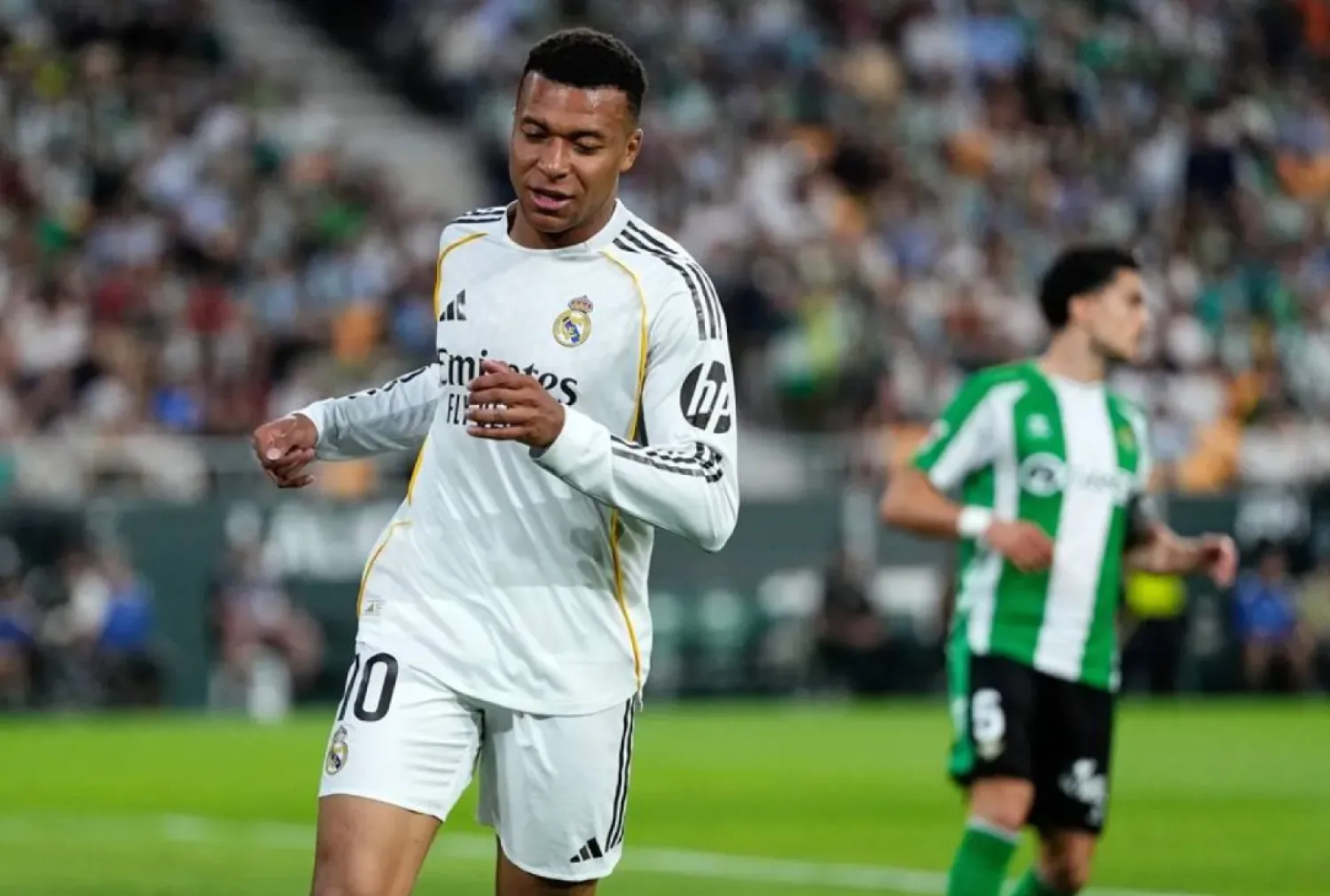
Real Madrid's French forward #10 Kylian Mbappe sits on the bench during the UEFA Champions League league phase day 6 football match between Real Madrid CF and Manchester City at Santiago Bernabeu Stadium in Madrid on December 10, 2025. (AFP)
TT

Mbappe Suffers Knee Sprain in Blow for Real Madrid

Real Madrid's French forward #10 Kylian Mbappe sits on the bench during the UEFA Champions League league phase day 6 football match between Real Madrid CF and Manchester City at Santiago Bernabeu Stadium in Madrid on December 10, 2025. (AFP)

Real Madrid on Wednesday said that Kylian Mbappe had suffered a knee sprain, delivering a blow to their bid to reel in Liga leaders Barcelona.

"After the tests carried out today on our player Kylian Mbappe by Real Madrid's medical services, he was diagnosed with a sprain in his left knee. Awaiting evolution," the club said in a statement.

Real Madrid did not indicate how long the 27-year-old striker would be out for, but a source close to the France superstar told AFP that he would be absent for at least three weeks.

Mbappe, the leading scorer in La Liga this season with 18 goals, is therefore a major doubt for Sunday's league match at home to Real Betis, Los Merengues' first after the winter break as they trail Barcelona by four points.

He could also miss the Spanish Super Cup semi-final against arch-rivals Atletico Madrid in Saudi Arabia on January 8, as well as a league fixture against Levante and a Champions League clash with former club Monaco.

Real did not say when or how Mbappe was injured, however he had trained with the team on Tuesday.

He underwent an MRI scan on Wednesday.

Mbappe has enjoyed a stellar 2025, equaling Cristiano Ronaldo's club record 59 goals in a calendar year, and has at times carried Real Madrid, relieving some pressure on under-fire coach Xabi Alonso.

He has scored 73 goals in 83 matches for Real since making a free transfer move to the Spanish giants from Paris Saint-Germain 18 months ago.

He finished top scorer in La Liga last season with 31 goals -- four more than Barcelona's Robert Lewandowski -- and is currently seven goals clear of the next best this season, Barca's Ferran Torres.

His absence adds to those of Real defenders Daniel Carvajal, Eder Militao, Trent Alexander-Arnold, midfielder Federico Valverde, and forward Brahim Diaz who is at the Africa Cup of Nations with Morocco.


Caballero Defends Maresca After Palmer Substitution Sparks Jeers

Football - Premier League - Chelsea v AFC Bournemouth - Stamford Bridge, London, Britain - December 30, 2025 Chelsea's Cole Palmer shakes hands with manager Enzo Maresca after being substituted. (Action Images via Reuters)
TT

Caballero Defends Maresca After Palmer Substitution Sparks Jeers

Football - Premier League - Chelsea v AFC Bournemouth - Stamford Bridge, London, Britain - December 30, 2025 Chelsea's Cole Palmer shakes hands with manager Enzo Maresca after being substituted. (Action Images via Reuters)

Chelsea assistant coach Willy Caballero defended Enzo Maresca's decision to replace Cole Palmer after the controversial substitution sparked jeered from angry fans during the 2-2 draw against Bournemouth on Tuesday.

Maresca was barraged with chants of "you don't know what you're doing" when Palmer was brought off in the 63rd minute as Chelsea chased a winning goal that would have ended their disappointing spell.

The Chelsea manager's move backfired, leaving them with just one win from their last seven league games and sparking more boos at the final whistle.

The pressure is growing on the Italian, with fifth-placed Chelsea having dropped 13 points at home from winning positions.

But Maresca, who was absent from his post-match media duties due to an illness, remains an "example" to everyone at the club according to Caballero.

"Any supporter wants to have the best players on the pitch," he said. "We want to have that as well. But Cole is coming from a long injury.

"In this case we need to find a way to find the right substitutions to go for the game and also to look after the health of our players.

"We want to have them for the rest of the season."

Asked why Maresca didn't face the media to explain his Palmer switch, Caballero said: "He didn't feel well the last two days. He was with a bit of a temperature two days ago.

"He did the last two sessions, he wanted to prepare the team. But after the game he went to the changing room and asked me to replace him because he didn't feel well.

"He's dealing well, he's very professional. He does a lot of hours every single day, even when the last two days feeling bad he was there. He loves to train and to coach. He's an example for me and all of the staff."

Bournemouth went ahead after six minutes when David Brooks finished at the second attempt following a Robert Sanchez save, before Chelsea levelled through Palmer's penalty.

Enzo Fernandez then fired the hosts in front but again the Blues could not hold their lead, Justin Kluivert equalizing before half-time after Chelsea failed to deal with a long throw-in from Antoine Semenyo.

Ghana forward Semenyo is reportedly set to join Manchester City and he appeared to say goodbye to Bournemouth's fans before leaving the pitch.

However, Bournemouth boss Andoni Iraola is confident he will play against leaders Arsenal on Saturday.

"It's not his last game here with us," Iraola said. "I cannot say a hundred percent but I think he will play."
