


Exclusive: Petrol Price Hike Ignites Revolt in Iran

Exclusive: Petrol Price Hike Ignites Revolt in Iran
TT

Exclusive: Petrol Price Hike Ignites Revolt in Iran

Exclusive: Petrol Price Hike Ignites Revolt in Iran

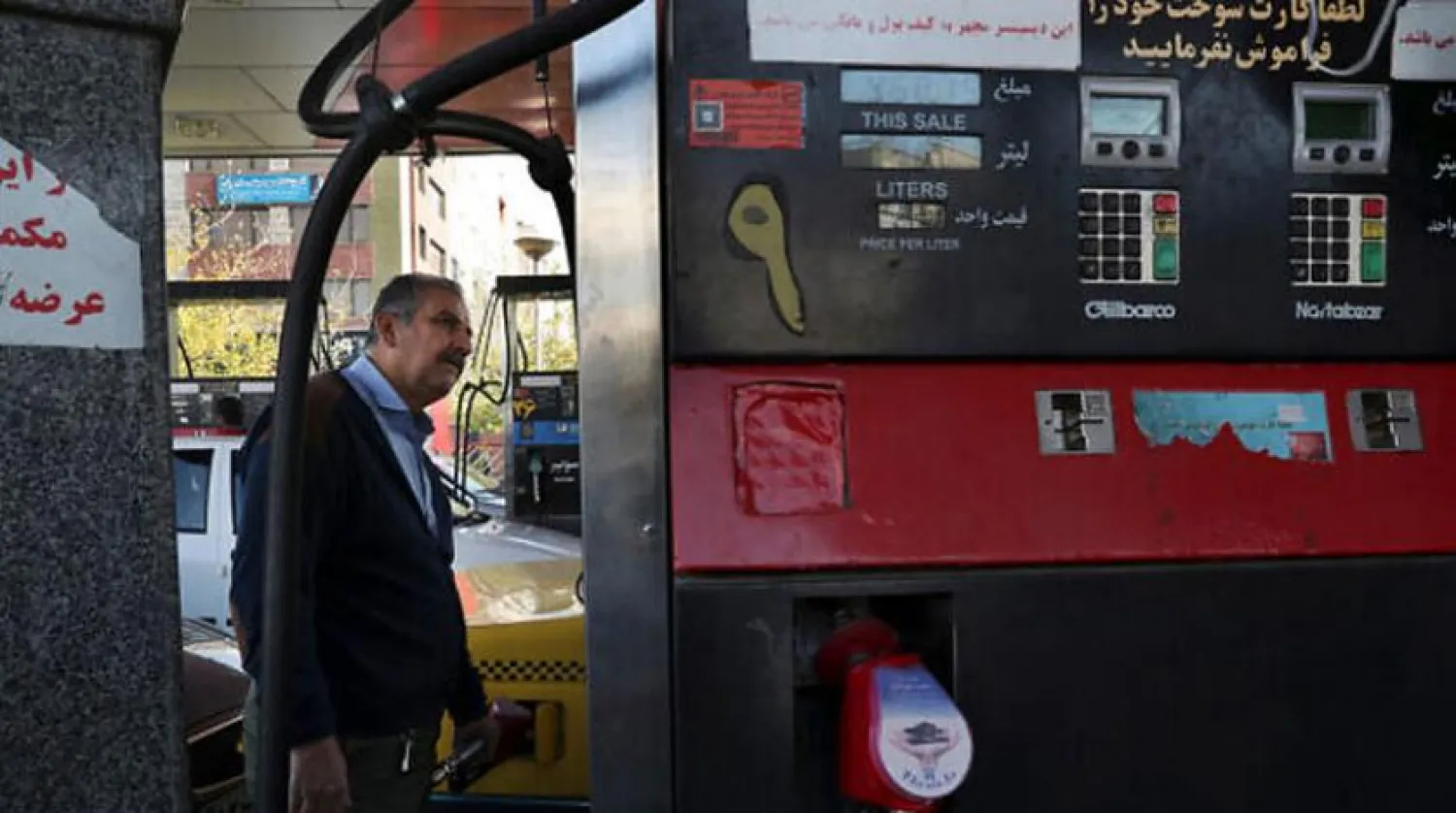
But, who took that decision? And, who is in charge? These were some of the questions raised within Iran’s ruling elite on Saturday amid reports of nationwide protests against the decision to triple the price of petrol, thus fanning the flames of rampant inflation.

The protests started in the capital Tehran where some drivers of the United Bush Company parked their vehicles in the middle of a major highway, blocking all traffic. There were also reliable reports of protests from Shiraz, Isfahan, Ahvaz, Tabriz and Mash’had. At least four people were reportedly killed in Sirjan, Behbahan and Tehran’s suburbs. Over 50 were reported injured in 11 cites, although in some places, for example in Isfahan and Mash’had there were reports of the police either showing sympathy for protesters or even protecting them against attacks by pro-regime militants.

The question “who took the decision’ was raised by Hamid-Reza Tabesh, a member of the Islamic Majlis (parliament) after Speaker Ali Ardeshir Larijani told members in private that there has been no consultation with the parliament. Tabesh called for an emergency session, implicitly calling for President Hassan Rouhani to appear in person to explain what had happened.

The question “who is in charge” came from former President Mahmoud Ahmadinejad in a speech in Zahedan, southeast Iran. “We cannot remain silent in the face of mass poverty and oppression by a handful of God-forsaken individuals,” he said. “We want to know who is in charge of this country.”

The answer isn’t easy. Rouhani’s Chief of Staff Mahmoud Va’ezi told reporters on Thursday that the decision to raise the price of petrol was taken by “the highest instances of the system”, implying that “Supreme Guide” Ali Khamenei had been involved. Khamenei’s entourage who claimed he does not intervene in routine government decisions quickly denied that.

That denial, in turn, was denied by the official agency IRNA, controlled by Rouhani’s faction, which quoted Khamenei as ordering the government to reduce domestic consumption of petrol from 105 million liters to under 65 million, presumably by raising the price.

Chief Justice Ibrahim Ra’isi has also denied his involvement, claiming that the judiciary does not intervene in economic decisions.

Two things are certain.

First, unable to make money by exporting oil, the Islamic Republic is getting desperately short of cash. Best estimates by the Central Bank of Iran indicate that the government has enough money to cover basic needs for a further 18 months. Tehran had hoped that, under a scheme proposed by French President Emmanuel Macron, it would be able to export enough oil to secure revenues of around $60 billion a year. That is, the minimum needed to cover “basic needs” including, payment of civil, military and security personnel, and financing the operations of surrogates and lobbyists abroad.

However, by last month it had become clear that the Macron “life-saver” scheme was getting nowhere and those other sources of money had to be found. The plan to raise petrol prices had been worked out in the 1990s, but shelved because there was no need for it as, thanks to help from US President Barack Obama, the Islamic Republic was able to increase oil exports and get access to some of its frozen assets.

To sugarcoat the decision, Rouhani decided to announce that the entire income from the price increase would be devoted to a special scheme for helping 60 million Iranians, or 70 percent of the population, who live below the poverty line. The problem is that the government seems to have no idea how this is going to be done. First, no one knows who will qualify as a recipient if only because living under poverty line is a flexible notion. Next, any payment in cash through bank transfers could be hit by an inevitable rise in inflation, reducing the actual purchasing power of the subsidy. Payment in the form of food and clothing baskets is also under discussion. But that, too, could open the way for mass corruption and with the state opting for mass purchases of food and other items contribute to further rises in prices of necessities for all citizens.

According to government estimates, the price rise could increase an extra $2 billion a year, which would mean just over $110 for each of the 18 million “poverty stricken” families Rouhani is talking about.

Interestingly, the total extra revenue is still lower than the estimated $2.5 billion the Islamic Republic spends annually on “exporting revolution”, including by financing the remnants of President Bashar al-Assad’s regime in Damascus (not counting the free oil he gets), Hezbollah in Lebanon, the Houthis in Yemen and a dozen other militants groups in Palestine, Afghanistan, Pakistan and even Latin America.

On Saturday, the Iranian leadership appeared divided and confused as how to cope with a situation that seems to be running out of control.



Turkish FM to Attend Trump’s Board of Peace Meeting in Washington, Italy as ‘Observer’ 

28 November 2025, Berlin: Turkish Foreign Minister Hakan Fidan during a joint press conference with German Foreign Minister Wadephul. (dpa)
TT

Turkish FM to Attend Trump’s Board of Peace Meeting in Washington, Italy as ‘Observer’ 

28 November 2025, Berlin: Turkish Foreign Minister Hakan Fidan during a joint press conference with German Foreign Minister Wadephul. (dpa)

‌Turkish Foreign Minister Hakan Fidan will travel to Washington in lieu of President Recep Tayyip Erdogan for the inaugural meeting of US President Donald Trump's "Board of Peace" on Thursday, the foreign ministry said on Wednesday.

A Turkish diplomatic source told Reuters ‌that Fidan, during the ‌talks, would call ‌for ⁠determined steps to ⁠resolve the Palestinian issue and emphasize that Israel must end actions to hinder the flow of aid into Gaza and stop its ceasefire violations.

Fidan ⁠will also reiterate Türkiye's ‌readiness ‌to contribute to Gaza's reconstruction and its ‌desire to help protect Palestinians ‌and ensure their security, the source said.

He will also call for urgent action against Israel's "illegal ‌settlement activities and settler violence in the West Bank", ⁠the ⁠source added.

According to a readout from Erdogan's office, the president separately told reporters on Wednesday that he hoped the Board of Peace would help achieve "the lasting stability, ceasefire, and eventually peace that Gaza has longed for", and would focus on bringing about a two-state solution.

The board, of which Trump is the chairman, was initially designed to oversee the Gaza truce and the territory's reconstruction after the war between Hamas and Israel.

Meanwhile, Italy will be present at the meeting as an "observer", Italian Foreign Minister Antonio Tajani said Wednesday.

"I will go to Washington to represent Italy as an observer to this first meeting of the Board of Peace, to be present when talks occur and decisions are made for the reconstruction of Gaza and the future of Palestine," Tajani said according to ANSA news agency.

Italy cannot be present as anything more than an observer as the country's constitutional rules do not allow it to join an organization led by a single foreign leader.

But Tajani said it was key for Rome to be "at the forefront, listening to what is being done".

Since Trump launched the Board of Peace at the World Economic Forum in Davos in January, at least 19 countries have signed its founding charter.


Energy Secretary: US to Stop Iran's Nuclear Ambitions 'One Way or the Other'

US Secretary of Energy Chris Wright speaks during a press conference after a meeting with Venezuela's acting president Delcy Rodriguez at the Miraflores Presidential Palace in Caracas on February 11, 2026. (Photo by Juan BARRETO / AFP)
TT

Energy Secretary: US to Stop Iran's Nuclear Ambitions 'One Way or the Other'

US Secretary of Energy Chris Wright speaks during a press conference after a meeting with Venezuela's acting president Delcy Rodriguez at the Miraflores Presidential Palace in Caracas on February 11, 2026. (Photo by Juan BARRETO / AFP)

The United States will deter Iran from acquiring nuclear weapons "one way or the other", US Energy Secretary Chris Wright warned on Wednesday.

"They've been very clear about what they would do with nuclear weapons. It's entirely unacceptable," Wright told reporters in Paris on the sidelines of meetings of the International Energy Agency.

"So one way or the other, we are going to end, deter Iran's march towards a nuclear weapon," Wright said.

US and Iranian officials held talks in Geneva on Tuesday aimed at averting the possibility of US military intervention to curb Tehran's nuclear program.

Iran said following the talks that they had agreed on "guiding principles" for a deal to avoid conflict.

US Vice President JD Vance, however, said Tehran had not yet acknowledged all of Washington's red lines.


Iran, Russia to Conduct Joint Drills in the Sea of Oman 

This handout photo released by Iran's Revolutionary Guards Corps (IRGC)'s official website Sepanews on February 17, 2026, shows boats maneuvering around a tanker vessel during a military exercise by members of the IRGC and navy in the Strait of Hormuz. (Sepahnews / AFP)
TT

Iran, Russia to Conduct Joint Drills in the Sea of Oman 

This handout photo released by Iran's Revolutionary Guards Corps (IRGC)'s official website Sepanews on February 17, 2026, shows boats maneuvering around a tanker vessel during a military exercise by members of the IRGC and navy in the Strait of Hormuz. (Sepahnews / AFP)

Iran and Russia will conduct naval maneuvers in the Sea of Oman on Thursday, following the latest round of talks between Tehran and Washington in Geneva, Iranian media reported.

On Monday, the Revolutionary Guards, the ideological arm of Iran's military, also launched exercises in the strategic Strait of Hormuz, a challenge to US naval forces deployed in the region.

"The joint naval exercise of Iran and Russia will take place tomorrow (Thursday) in the Sea of Oman and in the northern Indian Ocean," the ISNA agency reported, citing drill spokesman, Rear Admiral Hassan Maghsoudloo.

"The aim is to strengthen maritime security and to deepen relations between the navies of the two countries," he said, without specifying the duration of the drill.

The war games come as Iran struck an upbeat tone following the second round of Oman-mediated negotiations in Geneva on Tuesday.

Previous talks between the two foes collapsed following the unprecedented Israeli strike on Iran in June 2025, which sparked a 12-day war that the United States briefly joined.

US President Donald Trump has deployed a significant naval force in the region, which he has described as an "armada."

Iranian officials have repeatedly threatened to block the Strait of Hormuz, particularly during periods of tension with the United States, but it has never been closed.

A key passageway for global shipments of oil and liquefied natural gas, the Strait of Hormuz has been the scene of several incidents in the past and has returned to the spotlight as pressure has ratcheted amid the US-Iran talks.

Iran announced on Tuesday that it would partially close it for a few hours for "security" reasons during its own drills in the strait.