


Lebanon Faces Tough Path to Soft Landing or Deeper Crisis

University students light a torch and wave Lebanese flags during anti-government protest in Beirut, Lebanon, November 6, 2019. (Reuters)
TT

Lebanon Faces Tough Path to Soft Landing or Deeper Crisis

University students light a torch and wave Lebanese flags during anti-government protest in Beirut, Lebanon, November 6, 2019. (Reuters)

Lebanese politicians must agree a new government that can stabilize the economy and attract international support if the country is to stave off even deeper economic crisis.

Assuming such a government can be formed, there is still no easy way forward for a country driven toward economic collapse by years of bad governance, corruption and waste.

The least damaging scenario would be a “soft landing” guided by the International Monetary Fund (IMF), economists say, though IMF support has not been broached in public by Lebanese leaders. The economic crisis is the worst since the 1975-90 civil war.

The following scenarios sketch out what might happen in a situation where Lebanon gets a government with international backing, and in a scenario where deadlock continues.

New government agreed, emergency plan drawn up

Caretaker Prime Minister Saad Hariri and his political foes including the Iran-backed Hezbollah party agree on a government that is either led by Hariri or has his blessing.

The government would engage with Western and Gulf Arab states over emergency support. A donor meeting could be convened, probably by France. The response may well include an injection of billions of dollars into the financial system by wealthy donors.

But given the scale of the crisis, Lebanon would also need an IMF program, economists say. Aid would be tied to implementation of reforms.

“We have to bring in the IMF,” said Marwan Mikhael, head of research at Blominvest Bank. IMF support would be vital to ensuring “an orderly adjustment”, added Capital Economics Senior Economist Jason Tuvey. “At least you would ensure the banking system would not collapse and protect the poorest in society.”

“The IMF would not be able to lend to Lebanese without a debt restructuring, so that would have to happen one way or another. I suspect the IMF would also push for a currency devaluation. They estimate it (is) 50% over-valued,” he said, according to Reuters.

A negotiated debt restructuring could include “a haircut” on large bank deposits, Tuvey said. This would reduce their value while leaving the accounts of smaller depositors untouched so the wealthy would carry the burden.

A senior banker said a deposit haircut could be avoided if a stability strategy was enacted now, but could not rule it in a worst-case scenario. “You have to do a debt restructuring and the sooner the better,” the banker said.

Mikhael said a debt restructuring would lengthen maturities and reduce interest rates but not reduce the debt value.

“In the positive scenario, you might have a parallel market for a few months because the capital controls will remain in place until you see things have started to work,” added Mikhael, who believed the pound’s official value would be maintained.

Political crisis continues

Lebanon remains without a new government.

Dollars continue to leave the banks despite controls. In the near term, this leads banks to block all dollar withdrawals, Mikhael said. “The parallel market will flourish more, you will have higher inflation,” he said.

Starved of capital inflows, a sovereign debt default would become inevitable sooner or later. Tuvey said this could happen as early as March. Mikhael said the central bank had enough reserves to cover maturities for a year. “It can be more but then the forex of the central would be very thin,” he said.

The drain on currency reserves would leave the government with no choice but to devalue the pound, Tuvey said. “In this scenario it could be much messier and the currency could overshoot its fair value,” Tuvey said.

Sovereign debt default “runs the risk of banks suffering large write-downs on their balance sheets”, he said. “This is where you run a risk of the collapse in the banking sector.”

The senior banker said the banks’ fixed assets including property would help to shield them from collapse.

“If you put in place the stability strategy today, you surely don’t have to go into a deposit haircut. But the more you wait, the more painful it will be.”



Türkiye TPAO, Shell Sign Deal to Carry out Exploration Work offshore Bulgaria

A Shell logo is seen at a gas station in Buenos Aires, Argentina, March 12, 2018. (Reuters)
TT

Türkiye TPAO, Shell Sign Deal to Carry out Exploration Work offshore Bulgaria

A Shell logo is seen at a gas station in Buenos Aires, Argentina, March 12, 2018. (Reuters)

Türkiye Petrolleri (TPAO) has signed a partnership agreement with Shell to carry out exploration work in Bulgaria's maritime zone, the Turkish energy ministry and British oil major said on Wednesday.

European Union member Bulgaria, which had been totally dependent on Russian gas until 2022, has been seeking to diversify its gas supplies and find cheaper sources, Reuters reported.

TPAO and Shell will jointly explore the Khan Tervel block, located near Türkiye's Sakarya gas field, and will hold a five-year licence in Bulgaria's exclusive economic zone, Minister Alparslan Bayraktar said.

Shell will continue as operator of the block, while TPAO will take a 33% interest in the licence, a Shell spokesperson said.

Since the start of this year, TPAO has signed energy cooperation agreements with ExxonMobil, Chevron and BP for possible exploration work in the Black Sea and the Mediterranean.

In April, Shell signed a contract with Bulgaria's government to allow the oil major to explore 4,000 square metres in the block.


Saudia Signs Strategic Partnership Agreement with Six Flags and Aquarabia Qiddiya City

udia will develop special travel packages designed to enable visitors to experience world-class attractions - SPA
TT

Saudia Signs Strategic Partnership Agreement with Six Flags and Aquarabia Qiddiya City

udia will develop special travel packages designed to enable visitors to experience world-class attractions - SPA

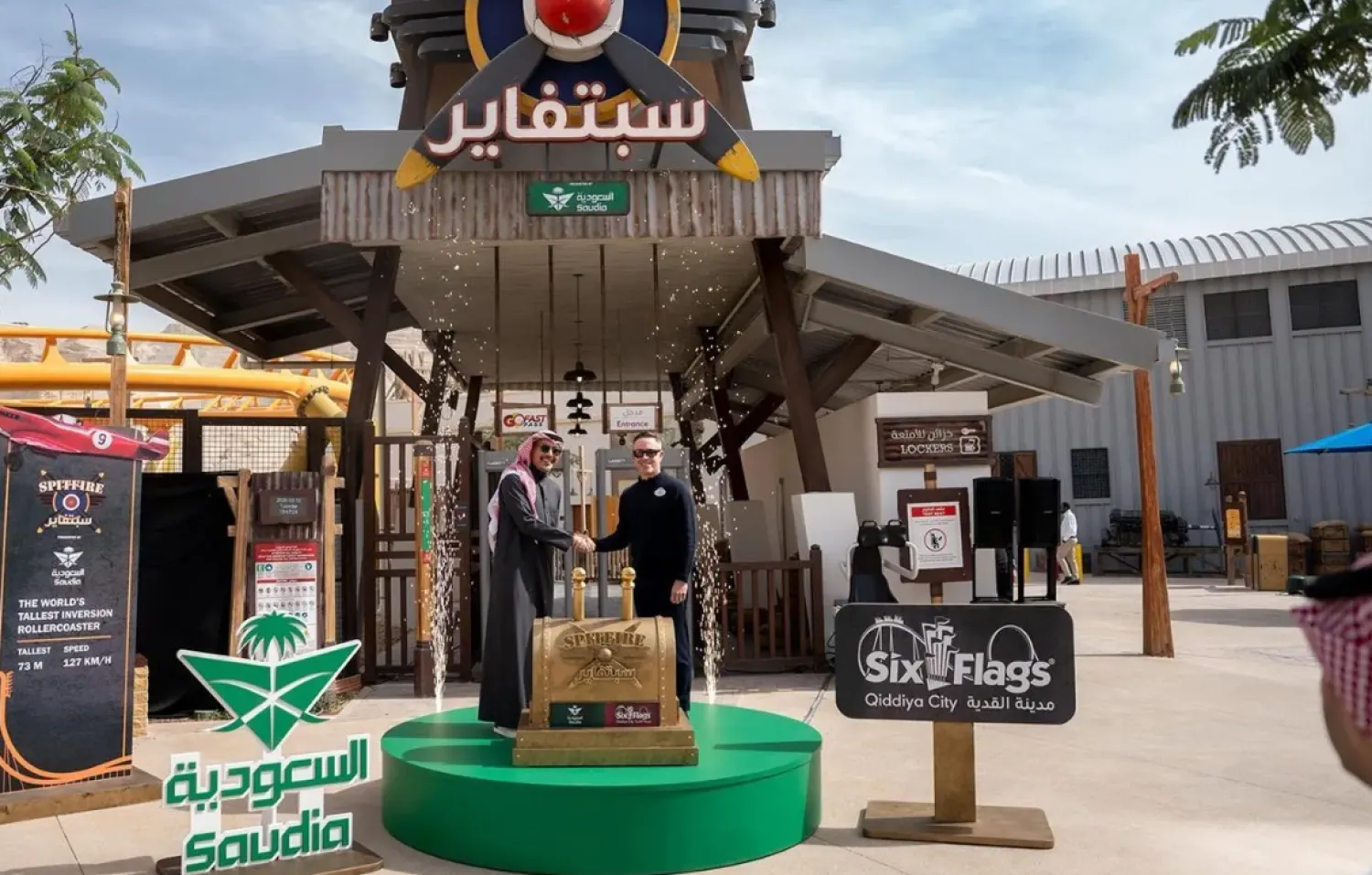
Saudia Airlines has signed a five-year strategic partnership with Six Flags and Aquarabia Qiddiya City, becoming the official premier partner exclusively in the airline category.

As part of the partnership, Saudia will develop special travel packages designed to enable visitors to experience world-class attractions. The collaboration also brings the spirit of Six Flags and Aquarabia Qiddiya City to the skies through special aircraft branding across Saudia’s fleet, SPA reported. 

Chief Marketing Officer of Saudia Group Khaled Tash said in a press release: "Saudia is committed to supporting national development projects as part of its contribution to Vision 2030, aligned with our strategy to bring the world to the Kingdom. Partnerships of this scale with national partners play a key role in positioning Saudi Arabia as a leading global destination for entertainment and tourism."

Park President of Six Flags and Aquarabia Qiddiya City Brian Machamer added: "Our partnership with Saudia not only reflects a shared ambition to connect the Kingdom to the world through world-class entertainment experiences, but strengthens our ability to attract visitors from around the world and realize our vision of setting a new global benchmark for immersive, world-class theme park entertainment and reinforcing Saudi Arabia’s growing presence on the global tourism stage."

Six Flags Qiddiya City sets a new benchmark for exceptional entertainment regionally and globally. Spanning six iconic themed lands, the theme park takes visitors on an immersive journey across 28 rides and attractions designed to world-class standards. Beyond the scale and diversity of its offerings, Six Flags Qiddiya City stands out for pushing the boundaries of engineering and entertainment, featuring five exclusive, record-breaking rides that have redefined global benchmarks. Leading these innovations is Falcons Flight, the roller coaster that has captured global attention as the fastest, tallest, and longest in the world.

Aquarabia Qiddiya City delivers a distinctive aquatic entertainment experience, offering 22 rides and water attractions, along with a man-made river designed for both relaxation and family-friendly water fun. For guests seeking privacy and elevated comfort, Aquarabia features 91 luxury cabanas, positioning the destination as a fully integrated leisure offering that redefines water-based entertainment to the highest international standards.

Located in the Tuwaiq Mountains near Riyadh, Qiddiya City is an emerging destination bringing together entertainment, sports, and culture. Six Flags and Aquarabia Qiddiya City form part of its entertainment offering.


Moody’s Establishes Regional HQ in Riyadh, Deepening Presence in Region

(FILES) Signage for Moody's Corporation is displayed at their headquarters at 7 World Trade Center on March 18, 2025 in New York City. (Photo by ANGELA WEISS / AFP)
TT

Moody’s Establishes Regional HQ in Riyadh, Deepening Presence in Region

(FILES) Signage for Moody's Corporation is displayed at their headquarters at 7 World Trade Center on March 18, 2025 in New York City. (Photo by ANGELA WEISS / AFP)

Moody’s Corporation announced that it has established its regional headquarters in Riyadh, reflecting ongoing commitment to support the development of the Kingdom’s capital markets and economy.

“This investment aligns to the Kingdom's Vision 2030 initiative and underscores its dynamism and growth,” Moody’s said in a statement this week.

The new regional headquarters marks an expansion of Moody’s presence in Saudi Arabia, where the company first opened an office in 2018, and reflects its longstanding commitment to the Middle East.

“The headquarters will strengthen Moody’s engagement with Saudi institutions and enable broader access to Moody’s decision grade data, analytics and insights,” said the statement.

“Our decision to establish a regional headquarters in Riyadh reflects our confidence in Saudi Arabia’s strong economic momentum, as well as our commitment to helping domestic and international investors unlock opportunities with our expertise and insights,” said President and Chief Executive Officer of Moody’s Rob Fauber.

“We are well positioned to provide the analytical capabilities and market intelligence that investors and institutions need to navigate evolving markets across the Middle East,” the statement quoted him as saying.

Mahmoud Totonji will lead the regional headquarters as General Manager.