


Still in Streets, Iraqis Say Problem is Poverty

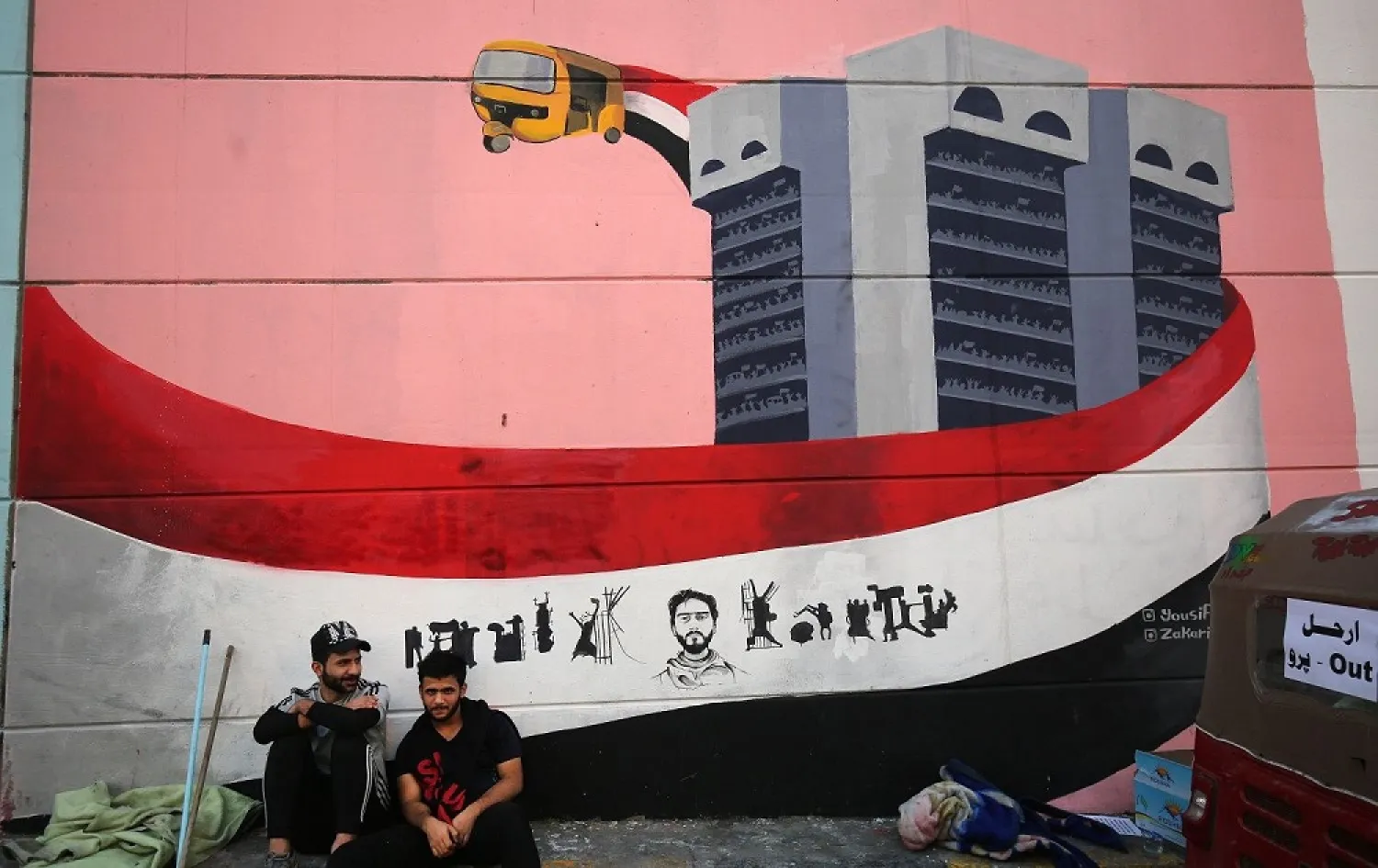
Iraqi demonstrators rest in front of a mural painting in Tahrir Square during anti-government demonstrations in Baghdad on November 8, 2019. (AFP)
TT

Still in Streets, Iraqis Say Problem is Poverty

Iraqi demonstrators rest in front of a mural painting in Tahrir Square during anti-government demonstrations in Baghdad on November 8, 2019. (AFP)

Chants demanding complete regime change have echoed across Iraq for weeks, but what first brought demonstrators onto the street was the profound poverty of one of the world's most oil-rich countries.

And that is what has kept them there, with protesters brushing off the resignation of Prime Minister Adel Abdul Mahdi as failing to root out the rampant corruption that denies them jobs and public services.

In the southern protest hotspot of Diwaniyah, one of the poorest agricultural areas in the country, Umm Salah has joined rallies every day outside the provincial council.

"I've suffered in my country, even though it's a rich country," she told AFP, carrying an Iraqi tricolor.

The 57-year-old widow has been protesting every day since October with her seven children, none of whom are employed.

They walk four kilometers (nearly three miles) to reach the protest camp as they cannot afford a taxi from the worn-down informal shelter where they live.

"My husband died four years ago because we are poor and couldn't afford medical treatment in private clinics or hospitals abroad," Umm Salah says.

Iraq suffers from an extremely dilapidated health care system, with hospitals severely under-equipped and doctors often threatened on the basis of political or tribal disputes.

A bleak future

Despite Iraq being OPEC's second-largest crude producer, one in five of its people live in poverty and youth unemployment stands at one quarter, the World Bank says.

The government has been the largest employer by far for decades but has recently struggled to provide jobs for a growing number of graduates.

Already, youths make up 60 percent of the 40 million-strong population, which is set to grow by 10 million more before 2030.

The future looks even bleaker given predictions that heavy crude exports -- which fund more than 90 percent of Iraq's state budget -- will become less profitable as the world shifts to other energy sources.

For now, protesters blame the staggering joblessness rates on a patronage system that hands out work based on bribes, family connections or party affiliation instead of merit.

Muhannad Fadel, 30, dreamed of a government post when he graduated years ago with a degree in physical education, but his diploma opened few doors for him.

After a brief stint as a university lecturer, Fadel sought other work but his monthly income didn't rise above $100.

"I started to drive a taxi but I was afraid some of my students would recognize me," he told AFP.

"Then I opened a little confectionery store on the ground floor of our home and I make around 5,000 dinars a day," or just $3, he added.

Scraping together some savings, Fadel could marry but not buy a house, so his new wife moved in with his family.

"Our whole family together earns $150 per month. How is that possible in one of the countries with the most oil in the world?" he said.

For him and many protesters, the root of the problem is a political class more interested in earning money and paying homage to regional backers than in improving Iraqi infrastructure, or people's lives.

"They're corrupt and steal the people's money to give to Iran and other parties," Fadel said bitterly.

Iraq is ranked the 12th most corrupt country in the world by watchdog group Transparency International.

A recent government probe found over $450 billion in public funds were lost to embezzlement, fake contracts or salaries for so-called ghost employees since 2003.

'They stole our oil'

"The deterioration of the economic conditions of Iraqis is the main reason for protests, as eight million Iraqis live under the poverty line," said Moussa Khalaf, an economic history professor in Diwaniyah.

A series of flare-ups before the major wave of protests erupted in October had hinted at the conflagration that was to come.

In September, local authorities began demolishing unauthorized houses in the city of Karbala, in Basra in the south and in the central city of Kut.

The settlements are home to three million Iraqis, many of them the poorest of the poor.

That same month, a young man in Kut died after desperately setting himself alight when authorities seized his mobile kiosk.

"You need an economic policy that makes use of resources based on scientific and economic facts, not on privileges or political gains," says Khalaf.

Protesters have clung on in the streets and public squares even days after Abdul Mahdi stepped down.

"Of course that's not enough," one young demonstrator in Baghdad's Tahrir Square told AFP about bringing down the head of government.

"We won't leave our barricades until the regime falls, until we get jobs, water, electricity," he said.

Another protester, 45-year-old Hussein Maneh, slammed the government for its years of failure.

"Since 2003, they've done nothing but increased poverty, destroyed agriculture and industry, impoverished schools and hospitals, created confessionalism, and stole our oil," he fumed.



Syria Starts Evacuating ISIS-linked Al-Hol Camp

TOPSHOT - Members of Syrian security forces march through the entrance of the Al-Hol camp in the desert region of Hasakeh province on January 21, 2026. (Photo by OMAR HAJ KADOUR / AFP)
TT

Syria Starts Evacuating ISIS-linked Al-Hol Camp

TOPSHOT - Members of Syrian security forces march through the entrance of the Al-Hol camp in the desert region of Hasakeh province on January 21, 2026. (Photo by OMAR HAJ KADOUR / AFP)

Syrian authorities began evacuating remaining residents of the ISIS group-linked Al-Hol camp in the country's northeast on Tuesday, as they empty the formerly Kurdish-controlled facility, two officials told AFP.

Fadi al-Qassem, the official appointed by the government with managing Al-Hol's affairs, told AFP that the camp "will be fully evacuated within a week, and nobody will remain", adding that "the evacuation started today".

A government source told AFP on condition of anonymity that "the emergencies and disaster management ministry is working now to evacuate Al-Hol camp" and take residents to a camp in Akhtarin, in the north of Aleppo province.


Protesters Block Beirut Roads after Cabinet Approves New Taxes that Raise Fuel Prices

Taxi drivers, foreground, block a main highway with their cars during a protest against the increased taxes and gasoline prices issued by the Lebanese Cabinet on Monday, in Beirut, Lebanon, Tuesday, Feb. 17, 2026. (AP Photo/Hussein Malla)
TT

Protesters Block Beirut Roads after Cabinet Approves New Taxes that Raise Fuel Prices

Taxi drivers, foreground, block a main highway with their cars during a protest against the increased taxes and gasoline prices issued by the Lebanese Cabinet on Monday, in Beirut, Lebanon, Tuesday, Feb. 17, 2026. (AP Photo/Hussein Malla)

Protesters blocked main roads in and around Beirut on Tuesday after Lebanon’s Cabinet approved new taxes that raise fuel prices and other products to fund public pay hikes.

The Cabinet approved a tax of 300,000 Lebanese pounds (about $3.30) on every 20 liters (5.3 gallons) of gasoline on Monday. Diesel fuel was exempted from the new tax, as most in Lebanon depend on it to run private generators to make up for severe shortages in state electricity.

The government also agreed to increase the value-added tax on all products already subject to the levy from 11 to 12%, which the parliament still has to approve, The Associated Press said.

The tax increases are to support raises and pension boosts of public employees, after wages lost value in the 2019 currency collapse, giving them the equivalent of an additional six months’ salary. Information Minister Paul Morcos said the pay increases were estimated to cost about $800 million.

Though the Mediterranean country sits on one of the largest gold reserves in the Middle East, it suffers ongoing inflation and widespread corruption. The cash-strapped country also suffered about $11 billion in damages in the 2024 war between Israel and the Hezbollah militant group.

Anger over fuel hike Ghayath Saadeh, one of a group of taxi drivers who blocked a main road leading into downtown Beirut, said the country’s leaders “consider us taxi drivers to be garbage.”

“Everything is getting more expensive, food and drinks, and Ramadan is coming,” he said. “We will block all the roads, God willing, if they don’t respond to us.”

When the Lebanese government proposed new taxes in 2019, including a $6 monthly fee for using internet calls through services such as WhatsApp, mass protests broke out that paralyzed the country for months. Demonstrators called for the country’s leaders to step down over widespread corruption, government paralysis and failing infrastructure, and for an end to the country’s sectarian power-sharing system.

Lebanon has been under international pressure to make financial reforms for years, but has so far made little progress.

Weapons plan discussed

Also Monday, the cabinet received a report from the Lebanese army on its progress on a plan to disarm non-state militant groups in the country, including Hezbollah.

Last month, the army announced it had completed the first phase of the plan, covering the area south of the Litani River, near the border with Israel. The second phase of the plan will cover segments of southern Lebanon between the Litani and the Awali rivers, which includes the port city of Sidon.

Morcos, the information minister, said following the cabinet session that the second stage is expected to take four months but could be extended “depending on the available resources, the continuation of Israeli attacks and the obstacles on the ground.”

The disarmament plan comes after a US-brokered ceasefire nominally ended a war between Hezbollah and Israel in November 2024. Since then, Israel has accused Hezbollah of rebuilding and has continued to launch near-daily strikes in Lebanon and to occupy several hilltop points on the Lebanese side of the border.

Hezbollah has insisted that the ceasefire deal only requires it to disarm south of the Litani and that it will not discuss disarming in the rest of the country until Israel stops its strikes and withdraws from all Lebanese territory.


Under Israeli Cover, Gaza Gangs Kill and Abduct Palestinians in Hamas-Controlled Areas 

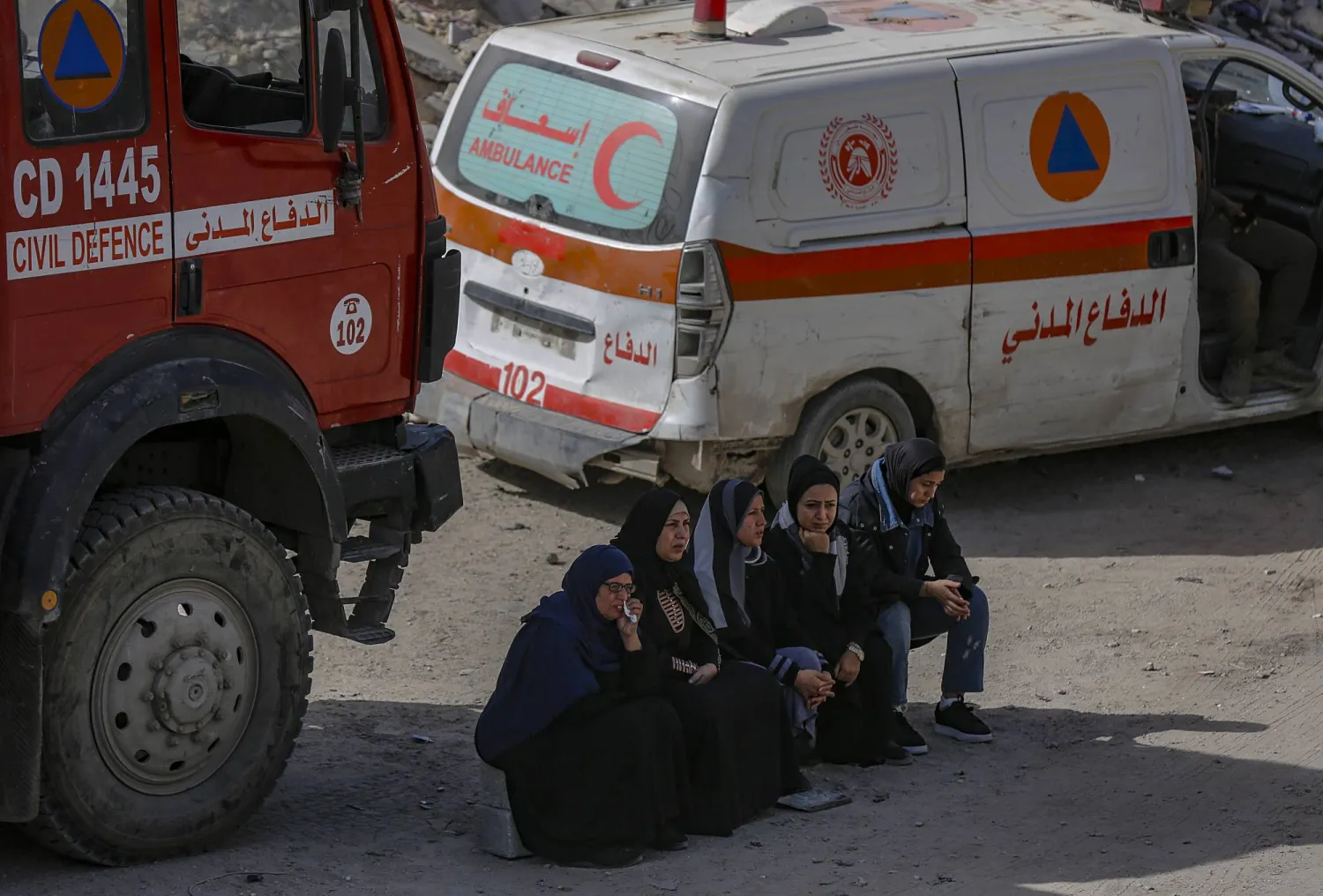
A group of women wait for news as Palestinian civil defense teams work to recover the remains of 67 members of the Abu Nasr family from beneath the rubble of their home after it was destroyed in an Israeli airstrike in Beit Lahiya, north of Gaza City, 15 February 2026. (EPA)
TT

Under Israeli Cover, Gaza Gangs Kill and Abduct Palestinians in Hamas-Controlled Areas 

A group of women wait for news as Palestinian civil defense teams work to recover the remains of 67 members of the Abu Nasr family from beneath the rubble of their home after it was destroyed in an Israeli airstrike in Beit Lahiya, north of Gaza City, 15 February 2026. (EPA)

Amid heavy Israeli airstrikes across Gaza, armed gangs carried out kidnappings and executions of Palestinians on Monday in areas controlled by Hamas, west of the so-called “yellow line” separating Israeli forces from the Palestinian movement.

According to local sources, Sunday’s strikes against Hamas and other armed factions deployed along the separating line resulted in security breaches that allowed armed gangs operating in Israeli-controlled zones to infiltrate areas west of the yellow line.

In response, Palestinian factions expanded their deployment, under what they termed “Operation Ribat”, to prevent the infiltration of collaborators with Israel into their areas. However, the Israeli strikes hit those fighters, killing several.

Before dawn on Monday, gunmen affiliated with the Rami Helles gang, which is active in eastern Gaza City, raided homes on the western outskirts of the Shujaiya neighborhood, just meters from Salah al-Din Road and more than 150 meters from the yellow line.

Field sources and affected families told Asharq Al-Awsat that the gunmen abducted several residents from their homes and interrogated them on the spot amid intense Israeli drone activity. Quad-copter drones were reportedly providing “security cover” for the attackers and opening fire in the surrounding area.

The sources said the gunmen shot and killed Hussam al-Jaabari, 31, after he refused to answer their questions. His body was left at the scene before the attackers withdrew, releasing others who had been detained. Al-Jaabari was later pronounced dead at Al-Maamadani (Al-Ahli Arab) Hospital.

In a separate incident, gunmen linked to the Ashraf al-Mansi gang, which is active in Jabalia and Beit Lahiya in northern Gaza, stormed Abu Tammam School in Beit Lahiya that shelters dozens of displaced families, also under Israeli drone surveillance.

Several young men were abducted and taken to a gang-controlled location, and they haven’t been heard of since. Three families of women and children were briefly detained and later released.

Sources in the Palestinian armed factions denied that any of the abducted individuals or the victim of the killing were members of their groups.

Meanwhile, Hamas’ Ezzedine al-Qassam Brigades froze deployments near the yellow line after Israeli airstrikes killed 10 of its members in two raids in Khan Younis and Jabalia on Sunday.

A Hamas source said the move was temporary and could be reversed once Israeli strikes subside.

Israel said it targeted Qassam fighters after gunmen emerged from a tunnel in Beit Hanoun, a claim it has used to justify strikes on faction targets and the assassination of senior operatives.

On Monday, the army announced it had killed a group of gunmen in Rafah, raising fears of further escalation.

Separately, dozens of families of missing Palestinians held a protest in Khan Younis, demanding information about relatives who disappeared during the war. UN estimates put the number of missing in Gaza at between 8,000 and 11,000, with their fate still unknown.