


Rob McCracken: ‘Anthony Joshua Knows There’s No Room for Error’

GB Boxing’s performance director, who also trains the former world heavyweight champion, has overseen major changes in the men’s and women’s games over the past 10 years

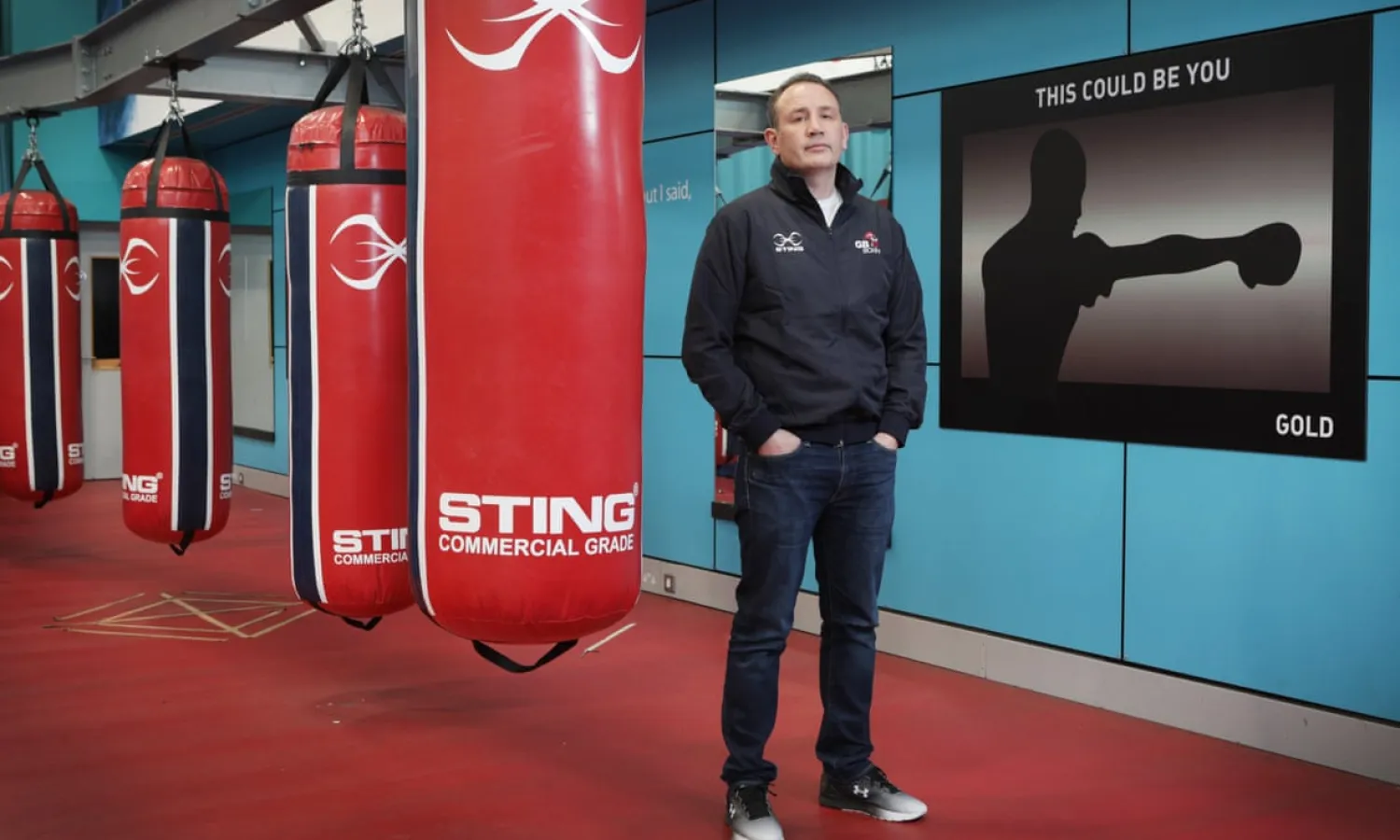
Robert McCracken, performance director of the GB Boxing amateur programme at the Sheffield Institute of Sport. has overseen a huge improvement in the men’s and women’s game over his 10 years in the job. Photograph: Gary Calton/The Guardian
TT

Rob McCracken: ‘Anthony Joshua Knows There’s No Room for Error’

Robert McCracken, performance director of the GB Boxing amateur programme at the Sheffield Institute of Sport. has overseen a huge improvement in the men’s and women’s game over his 10 years in the job. Photograph: Gary Calton/The Guardian

While Rob McCracken sits through a meeting that is partly about Anthony Joshua’s ring walk before he fights Andy Ruiz Jr in their intriguing rematch on 7 December, there is time to wander around the Sheffield dream factory where he has been the understated foreman for the past 10 years. McCracken was appointed the performance director of GB Boxing in November 2009 and the transformation over the past decade has been staggering.

When he was offered the job McCracken was best known as being Carl Froch’s trainer – just as he now comes under fierce scrutiny in Joshua’s corner. The way in which McCracken has managed to blend the contrasting worlds of amateur and professional boxing, for the benefit of all his fighters, is just one of the fascinating features in a story which reaches another milestone period.

Apart from his 10-year anniversary in Sheffield, where he runs such a successful program at the English Institute of Sport, McCracken faces a defining test in Saudi Arabia as Joshua tries to win back the WBA, IBF and WBO world heavyweight titles he lost so shockingly against Ruiz in New York during the summer.

McCracken is too modest to talk up his achievements with GB and so, while meeting a few of his current boxers in the gleaming gym and adjoining training facilities, it helps to check the bare statistics. In the past 10 years GB’s male boxers have won 52 medals at 14 major competitions. Before he took over, from 2000 to 2008 the country’s best amateur fighters had won only 12 medals in 13 major competitions. There was no female boxing program until 2010 but, since then, GB’s men and women have won 81 major medals between them.

Under McCracken’s leadership GB Boxing won eight Olympic medals at London 2012 and Rio 2016. This matches their boxing medal count at the previous eight Olympics, from Moscow in 1980 to Beijing in 2008.

The fighters he has helped to produce in Sheffield include world champions and top-10 boxers in the professional ranks – from Joshua, Josh Taylor, Callum Smith, Luke Campbell and Nicola Adams to Charlie Edwards, Khalid Yafai, Joe Joyce, Daniel Dubois, and Lawrence Okolie.

The meeting about the gaudy ring walk in Saudi breaks up and, for the next 45 minutes, McCracken talks engagingly about his decade in the job and the compelling rematch with Ruiz. We start with him being asked in 2009 by Derek Mapp, the then chairman of GB Boxing, to take charge of the country’s elite amateur boxers. “Derek was a no-nonsense businessman and the first thing he said was: ‘What do you need for the boxers? Whatever the boxer needs, that’s what we’ll do.’ That was his strategy and it worked fantastically well. It’s been run really well and I have been allowed to get on and work with the team here, the coaches, the support staff. Obviously the boxers come first and we’ve been able to get on with it.”

In his typically downbeat way, McCracken lets slip a wry smile as he enjoys a slurp of his tea before taking a bite of a chocolate bar. It’s one way of celebrating sustained success. “I always tell my boxers you’re only as good as your last tournament – and that was the world championships in Russia [last month],” McCracken adds in his familiar Birmingham accent.

What were his impressions of Joshua when they began working together in Sheffield? “He arrived here in October 2010 with Anthony Farrell. They had just won the national championships and the Commonwealth Games were on the horizon in Delhi but we felt they lacked international experience and they weren’t selected. That was my first conversation with big Josh. He accepted my decision and got on with it.

“I took him to the European Championships in 2011 in Turkey. He wasn’t super fit but I thought I’ll let him know how hard this sport is, we’ll see if he wants it. He did better than we thought and had three bouts in five days – which was more than he’d had in the previous three months. He got tired in the third bout and lost in the quarters. He said to me on the plane afterwards: ‘I’m going to get fit so that won’t happen again.’ He was really driven and, unlike your normal kid, really believed in himself.

“The thing that sticks out with Anthony is when they did the 2012 Olympic draw in London. I said to the other coaches: ‘I want him to avoid the Cuban but I know he’ll get him.’ He drew the Cuban. Luke Campbell was a little concerned about drawing a tough Italian but Josh just said: ‘What time are we eating?’ He didn’t care who he drew. That’s rare.”

Campbell and Joshua won gold in London but, as a heavyweight, the big man’s life changed fundamentally. As a world champion for three years he has earned stratospheric amounts of money and fame.

“But he’s still the same person on the inside,” McCracken says. “I know it’s difficult to get that type of exposure. I remember him boxing Joseph Parker and the crowd was full of non-boxing fans. Josh has got the crossover appeal and he’s done fantastically well but he’s been through a lot as well.”

Ruiz cut a portly figure when he stepped into the ring against Joshua as a substitute for Jarrell Miller, who had failed a drug test, and he was dismissed by most people. But McCracken argued before the fight that Ruiz was dangerous. “I was happy for Josh to box in the UK, where he feels comfortable,” he says now. “Going to the States was always a challenge. He was very motivated to fight Miller as it was personal between them. He changes five weeks before, when Ruiz comes in. Ruiz is an exceptional fighter. Yeah, he’s a tubby guy but all the Hispanic fighters, like Canelo [Álvarez], rate him highly. But people on the internet are saying: ‘Oh, this bloke is hopeless.’ The main thing for me was Miller pulling out. Until then Josh was smack on target but a change at that stage is difficult.”

Did he argue against choosing Ruiz as a replacement? “I wasn’t keen on Ruiz. I much preferred a couple of other opponents.”

McCracken was criticized vehemently as the losing trainer on social media. There were demands he should be sacked while Joshua also suffered verbal abuse. “It doesn’t matter what you’ve achieved,” McCracken says. “You get constant criticism. If you lose it really hits the fighter hard. The magical thing about the Olympic program is you see them lose a close fight. They’re very disappointed. Two days later they’re shouting for their teammates in the stand.

“The loneliness is deeper in professional boxing and social media makes it far worse. My generation can cope easily with social media because we don’t turn it on. I’m pretty robust and know that’s coming but with the younger generation it’s much harder. When you lose at Josh’s level it can be ugly.”

It will be fascinating to see whether Ruiz has been affected by his own sudden fame and wealth. If he has retained his desire then his style could once again be a nightmare for Joshua. McCracken listens when I say Josh Taylor, arguably the best fighter in Britain today and another of his former amateurs at London 2012, told me Joshua has always struggled against smaller heavyweights with fast hands.

“He’s beaten numerous small, mobile heavyweights and he’s lost to a couple of them,” McCracken says as he looks back over the nine years he has trained Joshua. “Sometimes fighters are just good. Ruiz has good technical ability. He can measure the distance. Knows how to defend. Got a half-decent jab, good timing, and speed. Ruiz is an underrated world-class fighter but if you’ve got the height and reach, like Josh, you must use it. The minute you don’t, you’re open to quick powerful hooks off these heavyweights. And Ruiz is one of the best.”

Is Joshua’s challenge against Ruiz more psychological than technical? “It’s a challenge on all fronts but he’s working hard. He’s motivated. He’s been in the best mood in camp for a while. He’s laughing and joking. He also knows that if he does everything right, he’ll win but there’s no room for error.”

When McCracken returns from Saudi to Sheffield, whatever the outcome, his more restorative work at GB Boxing will continue. He smiles when I ask if he can imagine spending another 10 years in his role? “If people want me to do it, I’ll do it. I’m passionate about it. I love it. I’ve never once felt it wasn’t a privilege to be in my position.”

(The Guardian)


Sinner Sees off Popyrin to Reach Doha Quarters

 Italy's Jannik Sinner greets the fans after defeating Australia's Alexei Popyrin in their men's singles match at the Qatar Open tennis tournament in Doha on February 18, 2026. (AFP)
Italy's Jannik Sinner greets the fans after defeating Australia's Alexei Popyrin in their men's singles match at the Qatar Open tennis tournament in Doha on February 18, 2026. (AFP)
TT

Sinner Sees off Popyrin to Reach Doha Quarters

 Italy's Jannik Sinner greets the fans after defeating Australia's Alexei Popyrin in their men's singles match at the Qatar Open tennis tournament in Doha on February 18, 2026. (AFP)
Italy's Jannik Sinner greets the fans after defeating Australia's Alexei Popyrin in their men's singles match at the Qatar Open tennis tournament in Doha on February 18, 2026. (AFP)

Jannik Sinner powered past Alexei Popyrin in straight sets on Wednesday to reach the last eight of the Qatar Open and edge closer to a possible final meeting with Carlos Alcaraz.

The Italian, playing his first tournament since losing to Novak Djokovic in the Australian Open semi-finals last month, eased to a 6-3, 7-5 second-round win in Doha.

Sinner will play Jakub Mensik in Thursday's quarter-finals.

Australian world number 53 Popyrin battled gamely but failed to create a break-point opportunity against his clinical opponent.

Sinner dropped just three points on serve in an excellent first set which he took courtesy of a break in the sixth game.

Popyrin fought hard in the second but could not force a tie-break as Sinner broke to grab a 6-5 lead before confidently serving it out.

World number one Alcaraz takes on Frenchman Valentin Royer in his second-round match later.


Ukraine's Officials to Boycott Paralympics over Russian Flag Decision

Milano Cortina 2026 Winter Olympics - Skeleton - Interview with Ukraine Youth and Sports minister Matvii Bidnyi - N H Hotel, Milan, Italy - February 12, 2026 Ukraine Youth and Sports Minister Matvii Bidnyi speaks after the disqualification of Ukrainian skeleton racer Vladyslav Heraskevych from the Winter Games. REUTERS/Kevin Coombs
TT

Ukraine's Officials to Boycott Paralympics over Russian Flag Decision

Milano Cortina 2026 Winter Olympics - Skeleton - Interview with Ukraine Youth and Sports minister Matvii Bidnyi - N H Hotel, Milan, Italy - February 12, 2026 Ukraine Youth and Sports Minister Matvii Bidnyi speaks after the disqualification of Ukrainian skeleton racer Vladyslav Heraskevych from the Winter Games. REUTERS/Kevin Coombs

Ukrainian officials will boycott the Paralympic Winter Games, Kyiv said Wednesday, after the International Paralympic Committee allowed Russian athletes to compete under their national flag.

Ukraine also urged other countries to shun next month's Opening Ceremony in Verona on March 6, in part of a growing standoff between Kyiv and international sporting federations four years after Russia invaded.

Six Russians and four Belarusians will be allowed to take part under their own flags at the Milan-Cortina Paralympics rather than as neutral athletes, the Games' governing body confirmed to AFP on Tuesday.

Russia has been mostly banned from international sport since Moscow invaded Ukraine. The IPC's decision triggered fury in Ukraine.

Ukraine's sports minister Matviy Bidny called the decision "outrageous", and accused Russia and Belarus of turning "sport into a tool of war, lies, and contempt."

"Ukrainian public officials will not attend the Paralympic Games. We will not be present at the opening ceremony," he said on social media.

"We will not take part in any other official Paralympic events," he added.

Ukrainian Foreign Minister Andriy Sybiga said he had instructed Kyiv's ambassadors to urge other countries to also shun the opening ceremony.

"Allowing the flags of aggressor states to be raised at the Paralympic Games while Russia's war against Ukraine rages on is wrong -- morally and politically," Sybiga said on social media.

The EU's sports commissioner Glenn Micallef said he would also skip the opening ceremony.

- Kyiv demands apology -

The IPC's decision comes amid already heightened tensions between Ukraine and the International Olympic Committee, overseeing the Winter Olympics currently underway.

The IOC banned Ukrainian skeleton racer Vladyslav Heraskevych for refusing to ditch a helmet depicting victims of the war with Russia.

Ukraine was further angered that the woman chosen to carry the "Ukraine" name card and lead its team out during the Opening Ceremony of the Games was revealed to be Russian.

Media reports called the woman an anti-Kremlin Russian woman living in Milan for years.

"Picking a Russian person to carry the nameplate is despicable," Kyiv's foreign ministry spokesman Georgiy Tykhy said at a briefing in response to a question by AFP.

He called it a "severe violation of the Olympic Charter" and demanded an apology.

And Kyiv also riled earlier this month at FIFA boss Gianni Infantino saying he believed it was time to reinstate Russia in international football.

- 'War, lies and contempt' -

Valeriy Sushkevych, president of the Ukrainian Paralympic Committee told AFP on Tuesday that Kyiv's athletes would not boycott the Paralympics.

Ukraine traditionally performs strongly at the Winter Paralympics, coming second in the medals table four years ago in Beijing.

"If we do not go, it would mean allowing Putin to claim a victory over Ukrainian Paralympians and over Ukraine by excluding us from the Games," said the 71-year-old in an interview.

"That will not happen!"

Russia was awarded two slots in alpine skiing, two in cross-country skiing and two in snowboarding. The four Belarusian slots are all in cross-country skiing.

The International Paralympic Committee (IPC) said earlier those athletes would be "treated like (those from) any other country".

The IPC unexpectedly lifted its suspension on Russian and Belarusian athletes at the organisation's general assembly in September.


'Not Here for Medals', Nakai Says after Leading Japanese Charge at Olympics

Ami Nakai of Japan competes during the women's short program figure skating at the 2026 Winter Olympics, in Milan, Italy, Tuesday, Feb. 17, 2026. (AP Photo/Ashley Landis)
TT

'Not Here for Medals', Nakai Says after Leading Japanese Charge at Olympics

Ami Nakai of Japan competes during the women's short program figure skating at the 2026 Winter Olympics, in Milan, Italy, Tuesday, Feb. 17, 2026. (AP Photo/Ashley Landis)

Ami Nakai entered her first Olympics insisting she was not here for medals — but after the short program at the Milano Cortina Games, the 17-year-old figure skater found herself at the top, ahead of national icon Kaori Sakamoto and rising star Mone Chiba.

Japan finished first, second, and fourth on Tuesday, cementing a formidable presence heading into the free skate on Thursday. American Alysa Liu finished third.

Nakai's clean, confident skate was anchored by a soaring triple Axel. She approached the moment with an ease unusual for an Olympic debut.

"I'm not here at this Olympics with the goal of achieving a high result, I'm really looking forward to enjoying this Olympics as much as I can, till the very last moment," she said.

"Since this is my first Olympics, I had nothing to lose, and that mindset definitely translated into my results," she said.

Her carefree confidence has unexpectedly put her in medal contention, though she cannot imagine herself surpassing Sakamoto, the three-time world champion who is skating the final chapter of her competitive career. Nakai scored 78.71 points in the short program, ahead of Sakamoto's 77.23.

"There's no way I stand a chance against Kaori right now," Nakai said. "I'm just enjoying these Olympics and trying my best."

Sakamoto, 25, who has said she will retire after these Games, is chasing the one accolade missing from her resume: Olympic gold.

Having already secured a bronze in Beijing in 2022 and team silvers in both Beijing and Milan, she now aims to cap her career with an individual title.

She delivered a polished short program to "Time to Say Goodbye," earning a standing ovation.

Sakamoto later said she managed her nerves well and felt satisfied, adding that having three Japanese skaters in the top four spots "really proves that Japan is getting stronger". She did not feel unnerved about finishing behind Nakai, who also bested her at the Grand Prix de France in October.

"I expected to be surpassed after she landed a triple Axel ... but the most important thing is how much I can concentrate on my own performance, do my best, stay focused for the free skate," she said.

Chiba placed fourth and said she felt energised heading into the free skate, especially after choosing to perform to music from the soundtrack of "Romeo and Juliet" in Italy.

"The rankings are really decided in the free program, so I'll just try to stay calm and focused in the free program and perform my own style without any mistakes," said the 20-year-old, widely regarded as the rising all-rounder whose steady ascent has made her one of Japan's most promising skaters.

All three skaters mentioned how seeing Japanese pair Riku Miura and Ryuichi Kihara deliver a stunning comeback, storming from fifth place after a shaky short program to capture Japan's first Olympic figure skating pairs gold medal, inspired them.

"I was really moved by Riku and Ryuichi last night," Chiba said. "The three of us girls talked about trying to live up to that standard."
