

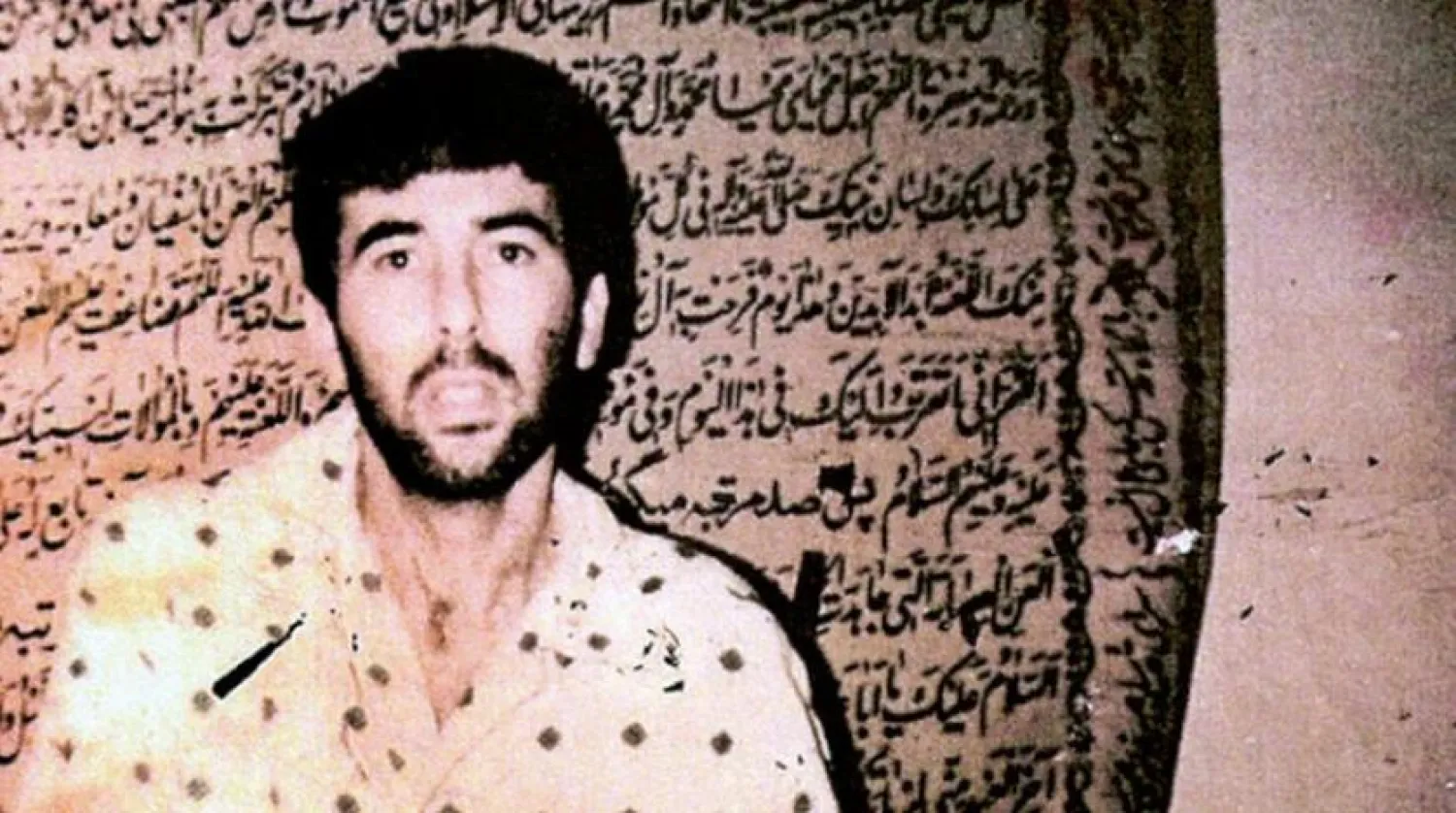

Israeli Officer: Iran Killed Co-Pilot Arad in Revenge for Assassination of Its 4 Diplomats

Ron Arad (Getty)
Ron Arad (Getty)
TT

Israeli Officer: Iran Killed Co-Pilot Arad in Revenge for Assassination of Its 4 Diplomats

Ron Arad (Getty)
Ron Arad (Getty)

A senior officer in the Military Intelligence Division of the Israeli army revealed that - contrary to information previously published in Israel - Israeli co-pilot Ron Arad who was captured by the Lebanese Amal movement in 1986, had died on Lebanese soil and was not transported to Iran.

He added that Iranian envoys killed him because they believed that Israel was behind the assassination of four Iranian diplomats by a Lebanese group led by Elie Hobeika - a former security official in the Lebanese Forces.

On Friday, the investigative journalist for security affairs in the Israeli newspaper Yedioth Ahronoth and the US New York Times, Ronen Bergman, revealed new information about the case.

He said that officer Rubin, who is considered the first and most important expert on Arad’s file, discovered during his investigations that although the co-pilot was ill, the Iranians killed him because they believed Hobeika would not have acted without Israel’s approval in a major case such as that of the four Iranian diplomats, who disappeared after being kidnapped during the 1982 Israeli invasion of Lebanon.

According to Rubin’s account, the forces of Robert Hatem, the chief of guards of the Lebanese Forces, headed by Hobeika, arrested the Iranians at a military checkpoint and transferred them to the Quarantine area in Eastern Beirut, where they were liquidated.

Bergman says that he managed to conduct a research press interview several years ago with Hatem, who admitted that before their assassination, the four diplomats had been subjected to “hellish” torture, in which “many methods” had been used.

After their killing, he added, their bodies were dumped into wells containing materials “that also eat flesh and bones.”

Bergman says that the official Israeli account, to date, describes Arad as “missing”. According to this account, Arad fell as a prisoner at the hands of Amal movement, which held him in a house in the Lebanese village of Nabi Shiit. The Iranian Revolutionary Guards then took Arad to Iran, where he was held for several years, then returned to Lebanon.

Rubin told Bergman that Israel had made a mistake, adding that Arad never left Lebanon.

He said that Arad’s disappearance was closely connected with the killing of the four Iranian diplomats.

“My conclusion is that Arad died in the fall of 1989. It appears to be a revenge for the killing of the Iranians,” he told Bergman.

As for Hatem, he told Bergman, that a month after Hobeika’s forces killed the four Iranians, Iranian investigators and members of the family of Mousavi, one of the diplomats, began arriving in Lebanon. Hobeika issued an order to clean the wells with the bodies inside, and transfer them to an area known as Wadi al-Jamajem (the valley of skulls).

The Iranians were unable to know the fate of the four diplomats. They suspected that the answer was not in Lebanon but in Israel, following reports published at the time that the Lebanese Forces militia was kidnapping Lebanese and Palestinians and transferring them to underground investigation facilities in Israel.

Israel denied at the time that it was holding the four diplomats. But the Iranians insisted that those were in Israeli prisons.

On the other hand, Israel had at that time kidnapped Mustafa Al-Dirani and Sheikh Abdul-Karim Obeid from their homes in Lebanon, and Dirani was subjected to severe torture in an Israeli attempt to know the location or fate of Arad.

During his interrogation in Israel, Dirani said that on May 4, 1988, while Arad was held in a house in Nabi Shiit, the Israeli army carried out an operation in the neighboring village of Maidoun.

As a result, guards believed that the Israeli operation was an invasion by the Israeli commando against them, and they fled the house and kept Arad alone. When they returned, Arad had disappeared, according to Dirani.

After that, the Israeli intelligence put forward a theory that Dirani handed over Arad to Iranian authorities in Lebanon. Rubin considered that the goal of the Iranians was to start negotiations with Israel to bring back the four diplomats.

Bergman wrote that it was not yet clear whether the Iranians had taken Arad on the day of the Israeli military operation in Maidoun, or whether they were surveying the house and kidnapped Arad before that. According to Rubin, there is evidence that the Iranian authorities, who took Arad, were linked to the family of diplomat Mousavi.



US Military Strikes Another Alleged Drug Boat in Eastern Pacific, Killing 3

A shot of a boat targeted by a US raid in the Caribbean (archive - Reuters)
TT

US Military Strikes Another Alleged Drug Boat in Eastern Pacific, Killing 3

A shot of a boat targeted by a US raid in the Caribbean (archive - Reuters)

The US military said Friday that it has carried out another deadly strike on a vessel accused of trafficking drugs in the Eastern Pacific Ocean.

US Southern Command said on social media that the boat “was transiting along known narco-trafficking routes in the Eastern Pacific and was engaged in narco-trafficking operations.” It said the strike killed three people. A video linked to the post shows a boat floating in the water before bursting into flames.

Friday’s attack raises the death toll from the Trump administration’s strikes on alleged drug boats to at least 148 people in at least 43 attacks carried out since early September in the Caribbean Sea and eastern Pacific Ocean.

President Donald Trump has said the US is in “armed conflict” with cartels in Latin America and has justified the attacks as a necessary escalation to stem the flow of drugs. But his administration has offered little evidence to support its claims of killing “narcoterrorists.”

Critics have questioned the overall legality of the strikes as well as their effectiveness, in part because the fentanyl behind many fatal overdoses is typically trafficked to the US over land from Mexico.


Afghanistan Quake Causes No ‘Serious’ Damage, Injuries, Says Official

Afghan men prepare meals during the holy fasting month of Ramadan in Kabul, Afghanistan, 19 February 2026. (EPA)
TT

Afghanistan Quake Causes No ‘Serious’ Damage, Injuries, Says Official

Afghan men prepare meals during the holy fasting month of Ramadan in Kabul, Afghanistan, 19 February 2026. (EPA)

A 5.8-magnitude earthquake that rocked eastern Afghanistan including the capital Kabul has resulted in only minor damage and one reported injury, a disaster official told AFP on Saturday.

The quake hit on Friday just as people in the Muslim-majority country were sitting down to break their Ramadan fast.

The epicenter was near several remote villages around 130 kilometers (80 miles) northeast of Kabul, the United States Geological Survey said.

"There aren't any serious casualties or damages after yesterday's earthquake," said Mohammad Yousuf Hamad, spokesman for the National Disaster Management Authority.

He added that one person had sustained "a minor injury in Takhar", in Afghanistan's north, "and three houses had minor damage in Laghman" province.

Zilgay Talabi, a resident of Khenj district near the epicenter, said the tremor was "very strong, it went on for almost 30 seconds".

Earthquakes are common in Afghanistan, particularly along the Hindu Kush mountain range, near where the Eurasian and Indian tectonic plates meet.

In August last year, a shallow 6.0-magnitude quake in the country's east wiped out mountainside villages and killed more than 2,200 people.

Weeks later, a 6.3-magnitude quake in northern Afghanistan killed 27 people.

Large tremors in western Herat, near the Iranian border, in 2023, and in Nangarhar province in 2022, killed hundreds and destroyed thousands of homes.

Many homes in the predominantly rural country, which has been devastated by decades of war, are shoddily built.

Poor communication networks and infrastructure in mountainous Afghanistan have hampered disaster responses in the past, preventing authorities from reaching far-flung villages for hours or even days before they could assess the extent of the damage.


Serbia Urges Citizens to Quit Iran ‘As Soon as Possible’

People walk past an anti-US billboard in Tehran, Iran, January 26, 2026. Majid Asgaripour/WANA (West Asia News Agency) via Reuters
TT

Serbia Urges Citizens to Quit Iran ‘As Soon as Possible’

People walk past an anti-US billboard in Tehran, Iran, January 26, 2026. Majid Asgaripour/WANA (West Asia News Agency) via Reuters

Serbia has urged its citizens in Iran to leave the country "as soon as possible", after US President Donald Trump threatened military action over the country's nuclear program.

The Balkan nation had already invited Serbian nationals in mid-January to leave Iran and not to travel there, as the country's clerical authorities launched a bloody crackdown on a mass protest movement.

"Due to the deteriorating security situation, citizens of the Republic of Serbia are not recommended to travel to Iran in the coming period," the foreign ministry said in a statement on its website published overnight Friday to Saturday.

"All those who are in Iran are recommended to leave the country as soon as possible."

Iran said on Friday that it was hoping for a quick deal with the United States on Tehran's nuclear program, long a source of discord between the two foes.

But Trump, after ordering a major naval build-up in the Middle East aimed at heaping pressure on Tehran, said on Friday that he was "considering" a limited military strike if the negotiations proved unfruitful.