


Playing the A-League Blame Game: Why IFAB and VAR are Timeless Diversions

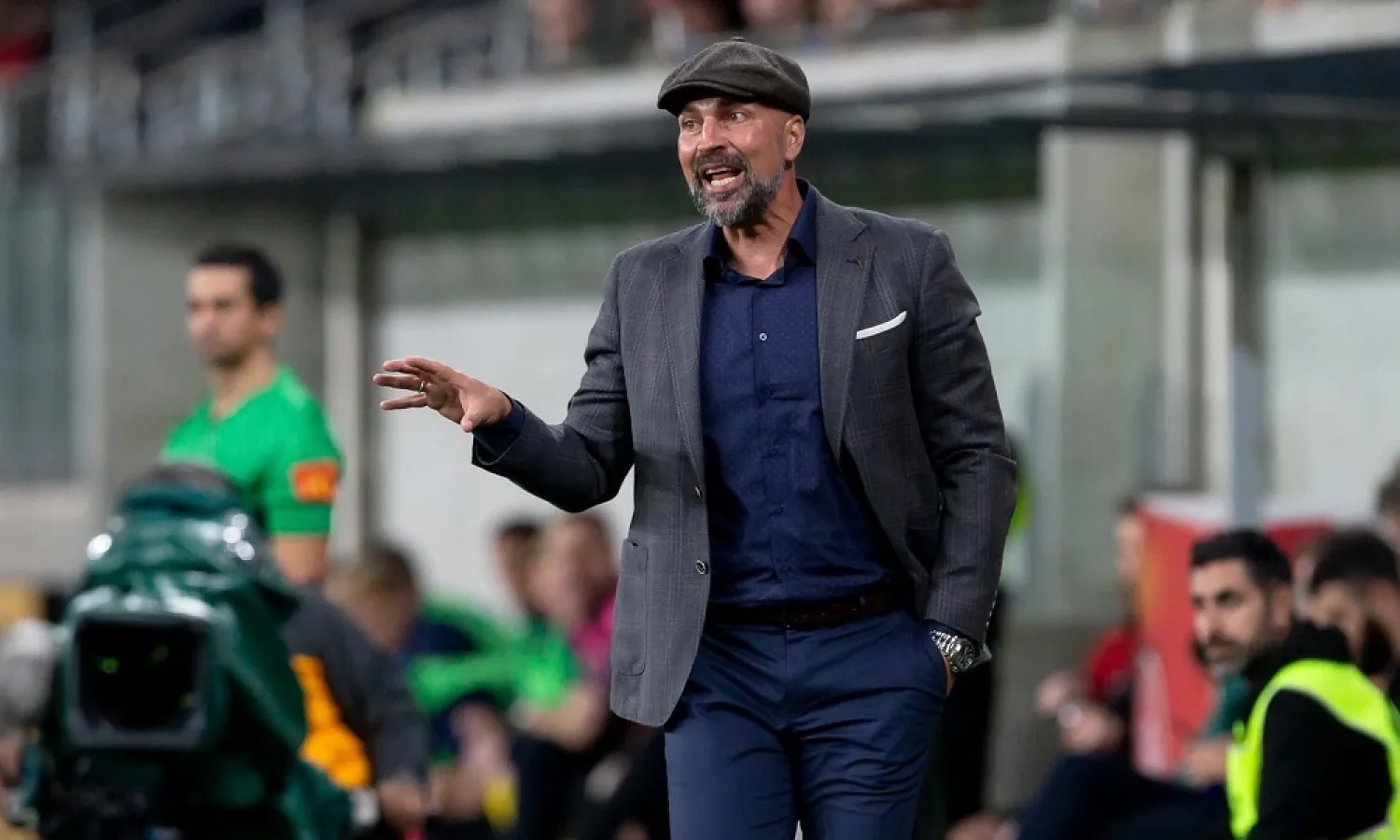
Western Sydney Wanderers coach Markus Babbel during his side’s round seven A-League loss to Melbourne City. (Shutterstock)
TT

Playing the A-League Blame Game: Why IFAB and VAR are Timeless Diversions

Western Sydney Wanderers coach Markus Babbel during his side’s round seven A-League loss to Melbourne City. (Shutterstock)

As the field of geology tells us, even spontaneous eruptions have long, often ancient, antecedents. Friction builds up inexorably. Pressure increases. It all happens seemingly unnoticed, until one day: kaboom.

That within the same weekend not one, but two, A-League coaches would spew molten magma during post-match press conferences is however entirely predictable, when the respective triggers are the mind-boggling inconsistency of VAR and the mind-boggling inconsistency of the International Football Association Board’s new handball rule.

On the available replays, it’s hard to see sufficient grounds for awarding a penalty for Pirmin Schwegler’s shirt-tug on Denis Genreau – the event that prompted an expletive-laden tirade from Western Sydney Wanderers coach Marcus Babbel post-game.

But thanks to the elegant opacity of the term “clear and obvious error” – a phrase so anchored in subjectivity Greek philosophers are still sitting under trees debating the precise limits of its outlines – we have no idea by what objective basis the VAR elected not to overrule Chris Beath’s initial decision.

It’s the great conundrum of the VAR era – it can claim rigid exactitude in ruling offsides to within a millimeter, yet simultaneously remain content to lurk amid the mists of ambiguity when it comes to cross-examining human decisions.

For Mark Rudan, having watched his Western United side denied not one, but two, arguably cast-iron penalties late on during their 1-0 loss to the Mariners it was the equally incomprehensible IFAB new handball rules in his sights.

“The advisory panels had a detailed and constructive discussion on how the handball law could be improved to clarify what constitutes handball and consequently, to ensure a more consistent application of the law,” crowed the brilliantly headlined “IFAB advisory panels make progress with handball” from 2018.

Like VAR, again weasel-words are at play, this time with the concept of a hand being in a “natural” or “unnatural” position at the center of conjecture. “What’s natural, what’s unnatural – I have no idea anymore. I just don’t get it,” fumed Rudan, like a modern day Diogenes, sans barrel.

The player at the center of the first incident, Central Coast’s Ziggy Gordon was similarly perplexed. “Thing is, you don’t know what the rules are these days, I just done my best to try and block a shot and keep my hands down.”

As Rudan rightly points out, amid such hair-tearing uncertainty, it’s hard for coaches to even know how to train defenders to defend. An unnatural hand to prevent a smack in the face last week? Fine. An unnatural hand trailing behind the body this week? Fine. But a deflection onto an unnatural hand during the opening week? Penalty.

In Hawaiian culture the goddess of volcanoes is called Pele. A name synonymous with flair and joy in football, there’s little wonder VAR and IFAB’s new handball rules are prompting coaches to erupt.

But while both these issues have their roots far beyond the humble realms of the A-League these coaches are sufficiently experienced and media-savvy enough to know precisely what they’re doing by “going large” on these topics.

“I’m not sitting here to deflect – I’ve got nothing to deflect – we played extremely well,” deflected Rudan.

While hugely improved from where they were last season, the Mariners remain a team very much there for the taking. Melbourne City demonstrated this two weeks ago; Adelaide last week. How Western United failed to break down a side on a 36-game streak without a clean sheet and with a reshuffled back four to boot is worthy of forensic investigation.

A team that has been built to be defensively solid first and foremost and then to attack in transition runs into trouble against sides that fail to proactively force the play. It’s a fair question for Rudan, especially coming off consecutive losses to the Jets and the Mariners.

Similarly, after the early season promise following their return to the custom-built Parramatta Stadium, questions are warranted of Western Sydney Wanderers’ performances during back-to-back losses.

Having taken a second-minute lead following an excellent counter-attack, Fox Sports matchday commentator Andy Harper cut an increasingly frustrated figure at the lack of attacking impetus from the home side.

“For me it’s been brewing for the Wanderers, [they’re] just courting trouble, not being able to hold onto the ball,” he opined shortly after the contentious penalty, before warming to the theme in the 75th minute. “They’ve showed no appetite, and less ability to dominate the possession at home against Melbourne City, and really, they’ve been sitting ducks.”

But rather than punditry lauding the attacking verve of Erick Mombaert’s City in contrast with Babbel’s Wanderers, the headlines surround issues plaguing the entire footballing world.

Just as the pressures that geologists examine are systemic, so too are all coaches affected by the present incongruities of world football’s twin bête noires – VAR’s “clear and obvious error” and IFAB’s new handball ruling.

The bad penalty decision or the non-penalty award becomes the excuse, but also the smokescreen. As media-savvy coaches like Babbel and Rudan well know.

The Guardian Sport


Shakhtar Boss Pays Ukrainian Racer $200,000 After Games Disqualification

Ukrainian President Volodymyr Zelenskiy holds helmet as he meets with a Ukrainian skeleton racer Vladyslav Heraskevych , who was disqualified from the Olympic skeleton competition over his "helmet of remembrance" depicting athletes killed since Russia's invasion and his father and coach, Mykhailo Heraskevych, amid Russia's attack on Ukraine, in Munich, Germany February 13, 2026. (Ukrainian Presidential Press Service/Handout via Reuters)
TT

Shakhtar Boss Pays Ukrainian Racer $200,000 After Games Disqualification

Ukrainian President Volodymyr Zelenskiy holds helmet as he meets with a Ukrainian skeleton racer Vladyslav Heraskevych , who was disqualified from the Olympic skeleton competition over his "helmet of remembrance" depicting athletes killed since Russia's invasion and his father and coach, Mykhailo Heraskevych, amid Russia's attack on Ukraine, in Munich, Germany February 13, 2026. (Ukrainian Presidential Press Service/Handout via Reuters)

The owner of ‌Ukrainian football club Shakhtar Donetsk has donated more than $200,000 to skeleton racer Vladyslav Heraskevych after the athlete was disqualified from the Milano Cortina Winter Games before competing over the use of a helmet depicting Ukrainian athletes killed in the war with Russia, the club said on Tuesday.

The 27-year-old Heraskevych was disqualified last week when the International Bobsleigh and Skeleton Federation jury ruled that imagery on the helmet — depicting athletes killed since Russia invaded Ukraine in 2022 — breached rules on athletes' expression at ‌the Games.

He ‌then lost an appeal at the Court ‌of ⁠Arbitration for Sport hours ⁠before the final two runs of his competition, having missed the first two runs due to his disqualification.

Heraskevych had been allowed to train with the helmet that displayed the faces of 24 dead Ukrainian athletes for several days in Cortina d'Ampezzo where the sliding center is, but the International Olympic Committee then ⁠warned him a day before his competition ‌started that he could not wear ‌it there.

“Vlad Heraskevych was denied the opportunity to compete for victory ‌at the Olympic Games, yet he returns to Ukraine a ‌true winner," Shakhtar President Rinat Akhmetov said in a club statement.

"The respect and pride he has earned among Ukrainians through his actions are the highest reward. At the same time, I want him to ‌have enough energy and resources to continue his sporting career, as well as to fight ⁠for truth, freedom ⁠and the remembrance of those who gave their lives for Ukraine," he said.

The amount is equal to the prize money Ukraine pays athletes who win a gold medal at the Games.

The case dominated headlines early on at the Olympics, with IOC President Kirsty Coventry meeting Heraskevych on Thursday morning at the sliding venue in a failed last-minute attempt to broker a compromise.

The IOC suggested he wear a black armband and display the helmet before and after the race, but said using it in competition breached rules on keeping politics off fields of play. Heraskevych also earned praise from Ukraine President Volodymyr Zelenskiy.


Speed Skating-Italy Clinch Shock Men’s Team Pursuit Gold, Canada Successfully Defend Women’s Title

 Team Italy with Davide Ghiotto, Andrea Giovannini, Michele Malfatti, celebrate winning the gold medal on the podium of the men's team pursuit speed skating race at the 2026 Winter Olympics, in Milan, Italy, Tuesday, Feb. 17, 2026. (AP)
Team Italy with Davide Ghiotto, Andrea Giovannini, Michele Malfatti, celebrate winning the gold medal on the podium of the men's team pursuit speed skating race at the 2026 Winter Olympics, in Milan, Italy, Tuesday, Feb. 17, 2026. (AP)
TT

Speed Skating-Italy Clinch Shock Men’s Team Pursuit Gold, Canada Successfully Defend Women’s Title

 Team Italy with Davide Ghiotto, Andrea Giovannini, Michele Malfatti, celebrate winning the gold medal on the podium of the men's team pursuit speed skating race at the 2026 Winter Olympics, in Milan, Italy, Tuesday, Feb. 17, 2026. (AP)
Team Italy with Davide Ghiotto, Andrea Giovannini, Michele Malfatti, celebrate winning the gold medal on the podium of the men's team pursuit speed skating race at the 2026 Winter Olympics, in Milan, Italy, Tuesday, Feb. 17, 2026. (AP)

An inspired Italy delighted the home crowd with a stunning victory in the Olympic men's team pursuit final as

Canada's Ivanie Blondin, Valerie Maltais and Isabelle Weidemann delivered another seamless performance to beat the Netherlands in the women's event and retain their title ‌on Tuesday.

Italy's ‌men upset the US who ‌arrived ⁠at the Games ⁠as world champions and gold medal favorites.

Spurred on by double Olympic champion Francesca Lollobrigida, the Italian team of Davide Ghiotto, Andrea Giovannini and Michele Malfatti electrified a frenzied arena as they stormed ⁠to a time of three ‌minutes 39.20 seconds - ‌a commanding 4.51 seconds clear of the ‌Americans with China taking bronze.

The roar inside ‌the venue as Italy powered home was thunderous as the crowd rose to their feet, cheering the host nation to one ‌of their most special golds of a highly successful Games.

Canada's women ⁠crossed ⁠the line 0.96 seconds ahead of the Netherlands, stopping the clock at two minutes 55.81 seconds, and

Japan rounded out the women's podium by beating the US in the Final B.

It was only Canada's third gold medal of the Games, following Mikael Kingsbury's win in men's dual moguls and Megan Oldham's victory in women's freeski big air.


Lindsey Vonn Back in US Following Crash in Olympic Downhill 

Milano Cortina 2026 Olympics - Alpine Skiing - Women's Downhill 3rd Official Training - Tofane Alpine Skiing Centre, Belluno, Italy - February 07, 2026. Lindsey Vonn of United States in action during training. (Reuters)
TT

Lindsey Vonn Back in US Following Crash in Olympic Downhill 

Milano Cortina 2026 Olympics - Alpine Skiing - Women's Downhill 3rd Official Training - Tofane Alpine Skiing Centre, Belluno, Italy - February 07, 2026. Lindsey Vonn of United States in action during training. (Reuters)

Lindsey Vonn is back home in the US following a week of treatment at a hospital in Italy after breaking her left leg in the Olympic downhill at the Milan Cortina Games.

“Haven’t stood on my feet in over a week... been in a hospital bed immobile since my race. And although I’m not yet able to stand, being back on home soil feels amazing,” Vonn posted on X with an American flag emoji. “Huge thank you to everyone in Italy for taking good care of me.”

The 41-year-old Vonn suffered a complex tibia fracture that has already been operated on multiple times following her Feb. 8 crash. She has said she'll need more surgery in the US.

Nine days before her fall in Cortina d'Ampezzo, Italy, Vonn ruptured the ACL in her left knee in another crash in Switzerland.

Even before then, all eyes had been on her as the feel-good story heading into the Olympics for her comeback after nearly six years of retirement.
