


Brian Hook to Asharq Al-Awsat: Ghaani Faces Soleimani’s Fate if he Follows Similar Path

US Special Representative for Iran Brian Hook. Reuters file photo
TT

Brian Hook to Asharq Al-Awsat: Ghaani Faces Soleimani’s Fate if he Follows Similar Path

US Special Representative for Iran Brian Hook. Reuters file photo

The US special representative for Iran, Brian Hook, has said that the successor to Iran's Quds Force commander Qassem Soleimani would suffer the same fate if he followed a similar path of killing Americans.

After Soleimani’s killing on Jan. 3, Tehran swiftly appointed Esmail Ghaani as the new head of the Quds Force. He pledged to pursue Soleimani’s course.

In an interview with Asharq Al-Awsat in Davos, Hook also said the UN Security Council should condemn the September attacks on Saudi oil facilities in Abqaiq and Khurais.

Here’s the transcript of the interview:

- The Europeans have activated the dispute mechanism with Iran, but say that they don't adhere to the US maximum pressure campaign. Doesn’t the dispute mechanism count as part of the maximum pressure campaign?

We were pleased to see the E3 initiate the dispute resolution mechanism. The regime has now violated the deal so many times that there isn't much left to preserve in the deal. British Prime Minister (Boris) Johnson called for a replacement of the deal with the Trump deal. We think that is the best path to deny Iran a nuclear weapon. It's a better path than the Iran nuclear deal.

By getting out of the deal, it puts countries in a position of strength to ensure that Iran never gets a nuclear weapon, but it also allows countries to, as we have, not address Iran's threats in a silo. You need to take a comprehensive approach to this problem set. And that's the nuclear program, the missile program, the regional aggression, the expansionist foreign policy, the hostage taking.

We aren't going to make a difference in the Middle East unless we take a comprehensive approach, and the big mistake of the Iran nuclear deal, among many, is that it was very narrow.

- After the strike on Soleimani, there was a feeling that Washington was disappointed with the European’s response. There were also news reports about the US pressuring the EU and threatening to impose tariffs. Is that true?

I don't have any comment on bilateral discussions with Europeans, but we did enjoy wide support for the defensive actions we took, to both protect American diplomats and soldiers, and to prevent an imminent large-scale attack on American diplomats and soldiers in the region, that Soleimani was plotting. We took the world's most dangerous terrorists off the battlefield ... And as a consequence, the region is going to be safer because Solemani was the glue that held together the proxies, and his death will create a void that the regime will not be able to fill.

- The JCPOA is entering its fifth year and there's one particular issue that you mentioned many times before which has to do with the arms embargo that’s going to be lifted in October 2020. What do you intend to do before that date?

This is really a collective problem. The world's leading state sponsor of terrorism will have the UN arms embargo lifted in 9 or 10 months, and the only way to stop it is for either the deal to collapse, or for the UN Security Council to pass a resolution renewing the arms embargo, and it is hard to know what is going to come first. But it is the case that the council needs to act before October.

We've been raising the issue for well over a year. It's one of the great deficiencies of this deal, that in year 5 it lifts the UN arms embargo. I don't know who thought this was a good idea. Perhaps the theory was five years into the deal, the moderates would be in charge. That's foolish. This is a regime that does not have moderates. The supreme leader is in charge. He's called the supreme leader for a reason, and he's not a moderate. He's a hardliner. He makes the decisions and we judge the regime by what it does, not by what (Foreign Minister Mohammed Javad) Zarif says.

- You mentioned the Trump deal, what does it look like it?

It ensures that Iran has no path to a nuclear weapon by restoring no enrichment. That was the UN Security Council standard prior to the deal, and they gave it away. Another huge deficiency in this deal, was that it ended a unanimously passed resolution prohibiting Iran from enriching. Well more than half of the nations in the world that have peaceful nuclear power don't enrich. So if Iran wants peaceful nuclear power, it can have that, look no farther than then UAE … That's the right standard, not just for Iran, but for the whole region given its volatility.

Also (…) Iran's ballistic missile testing was prohibited by the UN Security Council, that ended under the (nuclear) deal. We need to restore it.

Iran also needs to stop funding these terrorist proxies, and it needs to stop supplying them with rockets and missiles. And then they need to end the hostage taking, It has been a tool of statecraft for 40 years, and it's got to end.

- There is a new leader of the Quds Force. What do we know about him? Is he going to follow a similar path to that of Soleimani? and have you been threatened by him?

If he follows a similar path of killing Americans, he will meet the same fate, because the President has made clear for years that any attacks against American Personnel or interests in the region will be met with a decisive response, and the President demonstrated that on January 2nd. So this is not a new threat. The president has always said that he will act decisively in defense of American interests. And I think the regime now understands that they cannot attack America at will, and expect to get away with it. So we will hold the regime and its proxies accountable for any attacks on Americans, or on American interests in the region.

- Only American interests, what about the allies?

No, we've also talked about our partners in the region. And we work very closely with our partners, so it's not limited to that.

- What are the updates regarding the investigation into the attack on Saudi oil facilities?

There is a role for the UN Security Council to play, to condemn Iran for violating the sovereignty of Saudi Arabia. That was an unprovoked attack by the regime against Saudi Arabia on September 14th, and the council needs to condemn it. And we continue to work with the Council on that. I believe Saudi Arabia is close to concluding its investigation and doing all the site exploitation, so that we can present the facts and demonstrate that this was an attack that came from Iran.

- If all diplomatic efforts and the maximum pressure campaign fail to change the regime’s behavior, will regime change become an option?

Well, we already have changed the behavior of the regime by denying them the money they need to execute attacks, and by denying their proxies many of their operations because we have enhanced our troop presence. We have enhanced our intelligence surveillance and reconnaissance. We have now an international Maritime Force patrolling the waters in the Strait of Hormuz.

So, Iran is not able to get away with the kind of terrorist attacks that they used to. That doesn't mean that we've eliminated Iran's ability to conduct asymmetric attacks, but our new policy is making a difference. The regime has never been weaker financially in its 40-year history, and it has never been under more domestic political unrest than it is now. And this is a consequence of the President's new approach to Iran.

- The US has voiced support for Iranian protesters. Do you think they welcome the support?

We know they welcome it. The President's recent tweet in Farsi broke Twitter records. And when you look at the November protests as we have, you see brave Iranian women climbing poles to tear down “death to America” banners. You also see brave protesters burning the image of the supreme leader, and tearing down posters of Qassem Soleimani. The global media does a very bad job of conveying the true beliefs of the Iranian people. They hate this regime and they love America, and they would like to see greater cooperation between Iran and the United States. The American people and the Iranian people have so much in common. And this regime has kept us apart for 40 years.

So we're going to continue to stand with Iranian people. Nations around the world are not doing enough to stand with the people of Iran who are the longest suffering victims of the Iranian regime, and we would like to see more people follow our example and stand with the people (of Iran) and stand up to the regime.

- Are you working with Canadians and Ukrainians and other countries to ensure there is a fair investigation into the Ukrainian plane incident?

Iranians did admit that they shot down the plane. It defies explanation why the regime would not shut down its commercial airport, at a time when it is launching missiles into another country. And the regime has been killing a lot of innocent Iranians, whether it's protesters in November, or innocent lives on the Ukrainian jet, innocent Iranians. We would like to see the supreme leader start making better decisions for the Iranian people.

The Treasury Department has granted exemptions to our sanctions on Iran for anybody to help with the investigation of the jet crash. We have many times offered the hand of assistance to the Iranian people in times of crisis. We'll see if the regime accepts it.
Obeidat to Asharq Al-Awsat: Gaddafi Tried to Assassinate King Hussein with Missile Given to Wadie Haddad

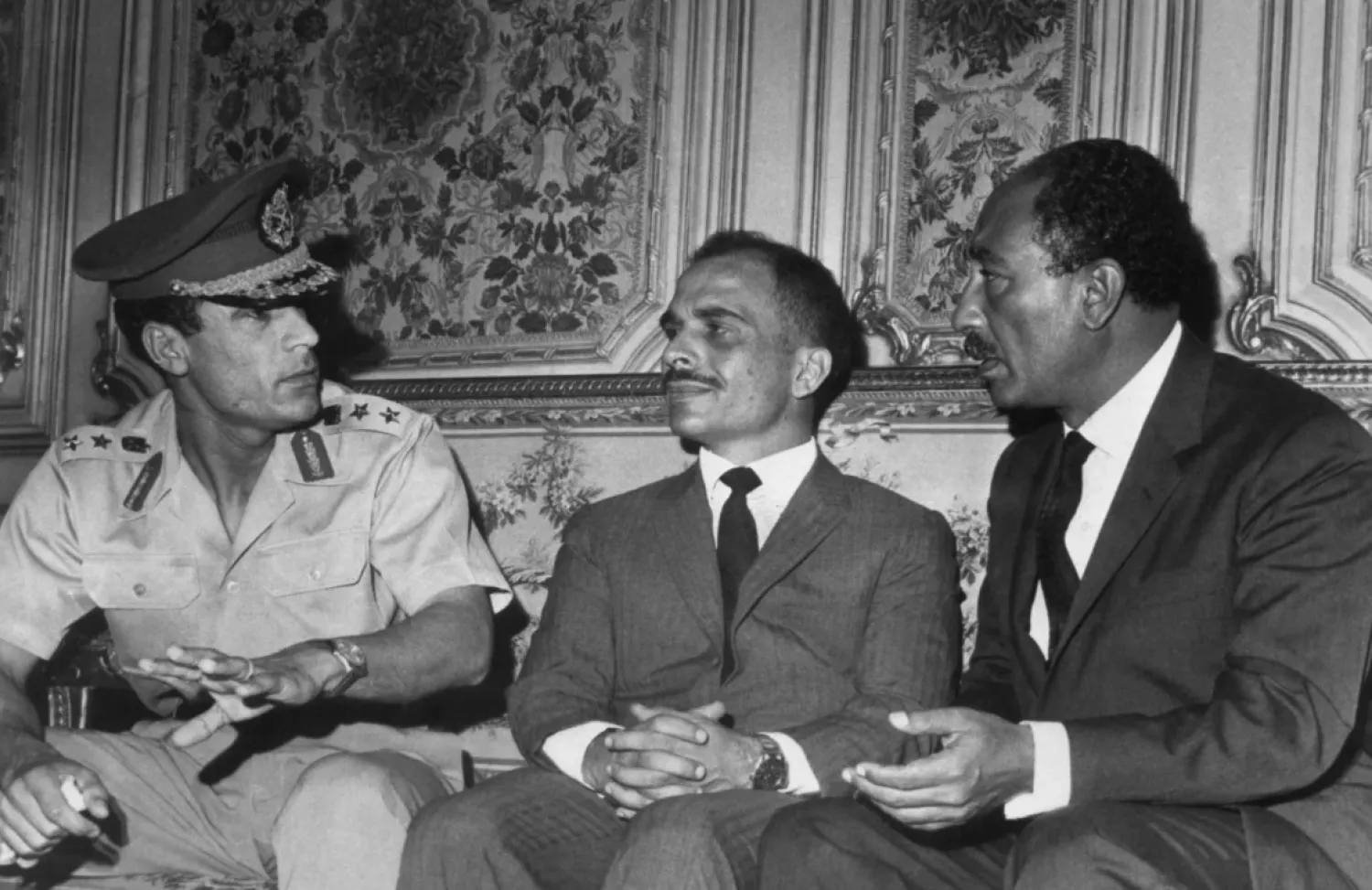
King Hussein and Moammar Gaddafi holding talks on the sidelines of an Arab summit in Cairo in 1970 (AFP).
TT

Obeidat to Asharq Al-Awsat: Gaddafi Tried to Assassinate King Hussein with Missile Given to Wadie Haddad

King Hussein and Moammar Gaddafi holding talks on the sidelines of an Arab summit in Cairo in 1970 (AFP).

In the second installment of his interview with Asharq Al-Awsat, former Jordanian prime minister and intelligence chief Ahmad Obeidat recounts details of a missile plot to assassinate King Hussein, which he says was backed by Muammar Gaddafi and carried out through operatives linked to Wadie Haddad, head of the external operations arm of the Popular Front for the Liberation of Palestine.

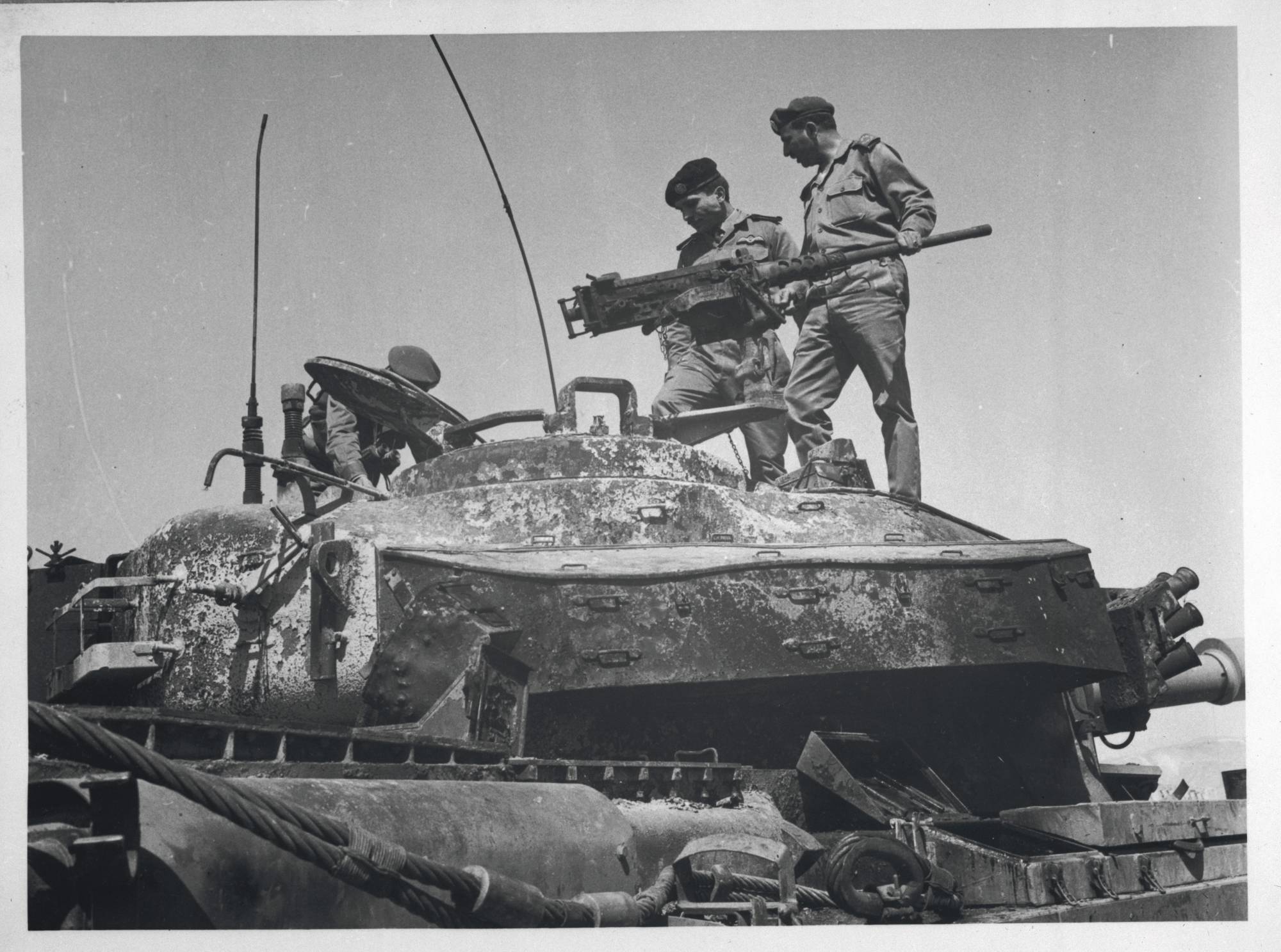
Obeidat, who also served as head of intelligence and as minister of interior and defense, revisits the confrontation between Israeli forces, the Jordanian army, and Palestinian guerrillas (fedayeen) in the border town of Karameh in March 1968, asserting that the Jordanian army “decided the battle,” but suffered a “moral defeat amid the fedayeen’s claims of victory.”

Obeidat died earlier this month. The interview was recorded before the “Al-Aqsa Flood,” whose aftermath delayed its publication. Below is the text of the second installment.
 

King Hussein inspects an Israeli tank left behind by occupying forces during the Battle of Karameh (Getty)

“Battle of Karameh”

Obeidat calls Karameh “a pivotal point of utmost importance,” especially for an army still reeling from the 1967 defeat and its withdrawal from the West Bank.

“The army lived the bitterness of that defeat,” he says. “It felt a moral, national, and pan-Arab responsibility.”

Karameh, he argues, offered a chance to restore the army’s fighting morale and reclaim some of its lost dignity.

“It was the army that settled the battle,” Obeidat says.

He credits Jordanian forces with thwarting Israeli attempts to build crossing bridges, destroying their vehicles on Jordanian soil and forcing, for the first time in Israel’s history, a request for a ceasefire. “The late King Hussein refused,” he adds.

Israel, he says, did not acknowledge a fifth of its casualties. Helicopters were evacuating the wounded who were “dripping with blood.”

He singles out artillery observation officers who advanced to the closest possible positions, relaying precise coordinates even as they effectively marked their own locations for shelling.

“The Jordanian soldier would identify his position near the Israeli army to be shelled,” he says, describing a willingness to die in order to restore dignity after the 1967 setback.

He says the declaration of “armed struggle” effectively erased the army’s role, presenting Palestinian fedayeen as the victors over Israel. “They monopolized the victory and ignored the army’s role entirely,” Obeidat says. “We emerged with a moral defeat in the face of their claims.”

He alleges that hundreds of millions of dollars in donations collected afterward, much of it going to Fatah, did not reach the Palestinian people but went to organizations and their leaders.

When the army entered Amman in September 1970, Obeidat says, it aimed to end what he describes as chaos: armed displays, roadblocks, arrests of soldiers on leave and interference in courts.

"When the army entered and began expelling the fedayeen from Amman, it swept through everything in its path. Even my own home, which I had recently rented after my abduction incident and which was close to the army’s command headquarters, was entered by the Jordanian army to search for fedayeen, while my family was inside the house at the time of the raid. My wife told them that her husband was an intelligence officer, but the Jordanian soldier replied, “Don’t lie.”

Obeidat says they did not leave the house until she contacted him, at which point he assigned one of his officers, the commander of an intelligence company, to speak with the army.

"Only then did they leave the house. The point is that the army swept areas without distinguishing between Jordanian and Palestinian; it wanted only to restore control over security. All of this forced me to send my family to my parents’ home in Irbid, in the north of the Kingdom."

He later describes what he calls a “state within a state,” extending from the Jordan Valley to Amman, after armed groups asserted authority over courts, roads, and civilian life.

On Syria’s intervention, Obeidat says Syrian forces entered northern Jordan flying Palestine Liberation Organization flags.

He later learned the decision was political, taken by the Baath Party, and that then-Defense Minister Hafez al-Assad complied reluctantly before Syrian tanks withdrew.

Iraq, he says, did not intervene. Obeidat affirms that he was told by Iraqi officials that neither the Iraqi state nor its forces intended to participate in any operation aimed at ending the Hashemite monarchy in Jordan.

According to one account, Iraqi leaders did not want to shoulder the political and diplomatic burden of the Palestinian issue or risk an uncalculated adventure.

He recounts another account, which he says he cannot adopt, according to which the operations command in the army was handled by a Pakistani figure. Under this account, Zia ul-Haq was receiving operational communications and sending messages that caused confusion among Iraqi and other forces, leading them to believe they would confront powerful strike units, prompting them to remain in a state of alert rather than engage.

He also recalls a meeting in which Palestinian figures, including Abu Iyad, reproached Iraqi President Ahmed Hassan al-Bakr. Al-Bakr replied: “We are a state with one life. If we make a fundamental mistake, we end. You are like cats with seven lives.”

As director of intelligence, Obeidat says he dealt directly with operations attributed to Haddad.

Between 1975 and 1977, he says, a missile was sent to Jordan with a group led by a Jordanian, Brik al-Hadid, affiliated with the PFLP. The target was King Hussein’s aircraft.

“The intention was to strike the plane, with Gaddafi’s knowledge and approval,” Obeidat says.

Jordanian intelligence monitored the group from the outset and later arrested its members. The king’s aircraft departed Marka military airport as scheduled but flew in the opposite direction to its planned route as a precaution, using jamming devices against any incoming missiles.

When confronted by Mudar Badran, then head of the Royal Court, Gaddafi denied knowledge. “I have no information,” Obeidat quotes him as saying.

Obeidat describes the aircraft hijackings orchestrated by Haddad as “the straw that broke the camel’s back,” contributing to the army’s intervention.

He says Jordanian intelligence had infiltrated Fatah and monitored its leaders, including Abu Iyad and Abu Yusuf al-Najjar.

In mid-1972, intelligence learned that Abu Dawood and a group were planning to enter Jordan from Baghdad to seize the Jordanian cabinet during a session and hold ministers hostage in exchange for the release of detained Fatah members.

The group crossed in three Mercedes cars, dressed in traditional Arab attire, with weapons concealed inside the seats and forged passports in hand. They were arrested at the border after a thorough search.

Obeidat rejects claims by Abu Iyad that Abu Dawood was tortured, insisting that “not a single hair on his head was touched,” and says Abu Dawood confessed only after realizing the operation had been fully uncovered.

Later, King Hussein met Abu Dawood’s parents, who pleaded for clemency. The king read the full confession and then met Abu Dawood himself. He ultimately ordered his release, honoring a promise he had made to Abu Dawood’s parents.

In Obeidat’s view, Abu Dawood was affected by the king’s treatment of his parents and “did not pose any future threat to Jordan.”

Obeidat describes a direct relationship between King Hussein and the General Intelligence Department.

The king met with officers regularly, not only to hear briefings but also to hear their personal views. 

Obeidat says he would submit reports to the prime minister and also meet with the king. When addressing the king, however, it was sometimes necessary to elaborate verbally on certain issues so that such information would not circulate among staff. 

When he was asked to present a security briefing before the king, the late King Hussein would summon Crown Prince Hassan. The king’s advisers would also attend, along with senior army commanders, the public security leadership, the head of the Royal Court, and the prime minister. The briefing of the security report would include an explanation of the security situation and any external or internal challenges.


Obeidat to Asharq Al-Awsat: Mystery Sniper Killed Wasfi Tal

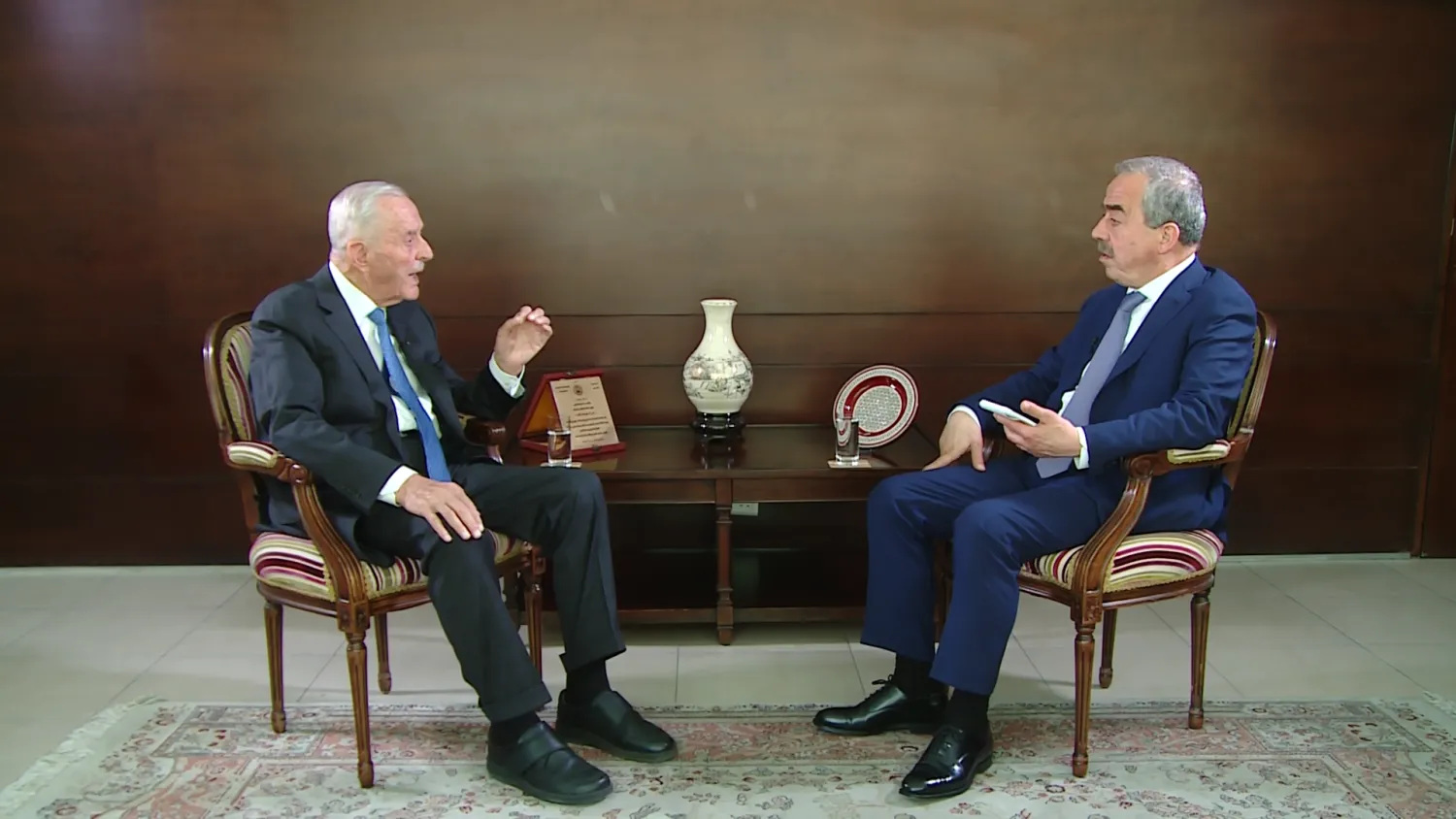
Ahmad Obeidat during the interview with Asharq Al-Awsat's Editor-in-Chief Ghassan Charbel in Amman. (Asharq Al-Awsat)
TT

Obeidat to Asharq Al-Awsat: Mystery Sniper Killed Wasfi Tal

Ahmad Obeidat during the interview with Asharq Al-Awsat's Editor-in-Chief Ghassan Charbel in Amman. (Asharq Al-Awsat)

Former Jordanian Prime Minister Ahmad Obeidat, who died earlier this month, was both a key player and a witness to sensitive chapters in his country’s history.

Obeidat began his career in the 1970s as an assistant director of intelligence, later serving as head of the General Intelligence Department until 1982. At the height of the Palestinian-Jordanian confrontation, he was abducted by the Popular Front for the Liberation of Palestine before the events of September 1970.

He also served for two years as interior minister before King Hussein appointed him prime minister in early 1984, a post he held until April 1985, concurrently serving as defense minister.

For more than 15 years, Obeidat remained at the center of decision-making. He later took on roles drawing on his legal background, from chairing the Royal Commission that drafted the National Charter in the early 1990s to serving in human rights and judicial positions, most recently as head of the board of trustees of the National Center for Human Rights until 2008.

Weeks before Oct. 7, 2023, the day of the Al-Aqsa Flood Operation, Asharq Al-Awsat met Obeidat in Amman. The interview had been scheduled for publication in October 2023, but the major developments that followed led to its postponement, particularly as Obeidat addressed contentious issues, notably Jordanian-Palestinian relations.

In the first part of the interview, Obeidat revisits his formative years, when his political and professional journey began as a law student in Baghdad on the eve of the July 14, 1958 revolution, before returning to Iraq after the fall of the monarchy amid sweeping regional transformations.

The account moves to his early professional life in Jordan, from a brief stint in legal practice to joining the Public Security Directorate, then serving in the Political Investigations Office, which formed the nucleus of organized intelligence work. It concludes with a detailed narrative of the establishment of the General Intelligence Department in 1964, its early structure and founding members, at a time when the Jordanian state was rebuilding its institutions in an intensely turbulent region.

Asked where he was when the 1958 revolution broke out in Iraq, Obeidat said he had completed his first year in law studies and returned to Jordan for the summer break.

“While I was in Irbid, news arrived of the July 14 revolution in Iraq that overthrew the monarchy. After the summer break ended, I went back to Baghdad, where a republican government under Abdul Karim Qassem had taken power,” he recalled.

The return was not easy. “We faced difficulties on the road. The border between Jordan and Iraq was nearly closed, so we had to return via Damascus and then through desert routes to Baghdad. It was an exhausting journey,” he added.

Obeidat left Baghdad in 1961 after completing his final exams. “On the last day of exams in the fourth year, I went home, packed and returned to Jordan the same day. The border between Baghdad and Amman had reopened.”

Among his contemporaries at law school was Saddam Hussein, who studied in the evening section. Obeidat said he saw him only once by chance. “He was with others, one of whom later became a governor,” he revealed.

He returned to Baghdad again in 1983 as Jordan’s interior minister to attend a conference of Arab interior ministers, more than two decades after graduating. There, he met his Iraqi counterpart, Saadoun Shaker. “It was an ordinary relationship,” Obeidat said, describing the ties as largely ceremonial.

From customs to intelligence

After returning to Jordan in 1961, Obeidat initially considered practicing law. But limited opportunities in Irbid and his family’s financial constraints led him to seek public employment.

He was appointed to the Customs Department in Amman, where he worked for several months before joining the Public Security Directorate in April 1962 as a first lieutenant following three months of training at the police academy.

At the time, there was no separate intelligence agency. Public Security included a branch handling general investigations. Soon after, the Political Investigations Office was formed, staffed by legal officers from the army and Public Security, including Mudar Badran and Adeeb Tahaoub from military justice, alongside Obeidat and Tariq Alaaeddin from Public Security.

The office handled cases referred by security and official bodies, including military intelligence and the Royal Court. After reviewing its work, the late King Hussein ordered the establishment of a legally grounded intelligence body. The General Intelligence Law was issued in 1964, formally creating the department, explained Obeidat.

Mohammad Rasoul Al-Kilani became its first director, followed by Mudar Badran, then Nadhir Rashid. Al-Kilani briefly returned before Obeidat assumed the post, succeeded later by Tariq Alaaeddin.

The shock of 1967

Recalling the 1967 war, Obeidat described it as “a defeat, not a setback. A military, political, psychological, and social defeat in every sense.”

He said there was no institutional intelligence view on Jordan’s participation. “The political opinion of a figure of Wasfi Tal’s stature was that entering the 1967 war was a mistake. He was not in office, but he remained close to the king and influential,” said Obeidat.

According to Obeidat, King Hussein believed Israel would occupy the West Bank whether Jordan participated or not.

“Participation was a gamble that might succeed or fail. The catastrophe was discovering that the Egyptian air force had been destroyed within half an hour,” he added.

Despite the bitterness, he said: “We did not fear for the regime, but we sought to contain public anger and absorb the shock.”

September and the assassination of Wasfi Tal

Obeidat first met Yasser Arafat after the events of September 1970. He confirmed that Arafat left Amman with an official Arab delegation to attend the Cairo summit and returned immediately afterward.

He recalled being informed mid-flight of the death of Egyptian President Gamal Abdel Nasser. “King Hussein was deeply affected.”

On the assassination of Prime Minister Wasfi Tal in Cairo, Obeidat said the gunmen who confronted Tal at the hotel entrance were not responsible for the fatal shot. “The fatal bullet came from behind, from a sniper in another unseen location. To this day, the sniper has not been identified,” he added.

He rejected the notion that Tal had been reckless. “Wasfi was not a gambler. He had a distinct political project,” he stressed.

Obeidat said the Black September Organization accused Tal of ordering the expulsion of fedayeen from forested areas in Jerash and Ajloun. He denied that Tal was directly responsible, saying the clashes began after fedayeen attacked a police station and killed officers, prompting a spontaneous army response.

Abduction without interrogation

Before September 1970, Obeidat was abducted by the Popular Front for the Liberation of Palestine while serving as assistant intelligence director.

Armed vehicles stopped his car as he was leaving his home in Jabal Al-Taj with his family. He and his brother-in-law were taken to the Wehdat camp. “We were treated politely. We drank tea. No one asked me a single question,” he recalled.

After several hours, he was driven to another house in Amman and later returned home. The next morning, members of Fatah took him briefly to one of their offices, only to release him on foot without explanation.

“Not a single question was asked,” Obeidat said. “It was bewildering.”

He resumed his duties after ensuring his family’s safety. “At the time, intelligence, like any official institution, was threatened and targeted,” he said, reflecting on one of the most volatile periods in Jordan’s modern history.


Microsoft Saudi Head Affirms Kingdom Entering AI Execution Phase

Saudi Arabia shifts from AI pilots to live deployment in key sectors (Shutterstock)
TT

Microsoft Saudi Head Affirms Kingdom Entering AI Execution Phase

Saudi Arabia shifts from AI pilots to live deployment in key sectors (Shutterstock)

Riyadh’s hosting of the Microsoft AI Tour this week delivered a headline with concrete weight: customers will be able to run cloud workloads from a local Azure data center region starting in the fourth quarter of 2026.

The announcement was more than a technical update. It marked a shift in posture. Saudi Arabia is no longer testing artificial intelligence at the margins. It is moving decisively into execution, where infrastructure, governance, skills development, and enterprise adoption align in a single direction.

For Turki Badhris, president of Microsoft Saudi Arabia, the timing reflects years of groundwork rather than a sudden push.

“Confirming that customers will be able to run cloud workloads from the Azure data center region in the fourth quarter of 2026 gives organizations clarity and confidence as they plan their digital and AI journeys,” Badhris told Asharq Al-Awsat on the sidelines of the event.

“Clarity and confidence” may sound procedural, but they are strategic variables. Government entities and large corporations do not scale AI based solely on pilot projects.

They move when they are assured that local infrastructure is available, regulatory requirements are aligned, and long-term operational continuity is secured. The announcement of the new Azure region signals that the infrastructure layer is no longer a plan, but a scheduled commitment nearing implementation.

From pilots to production

Saudi Arabia’s AI story has unfolded in phases. The first focused on expanding digital infrastructure, developing regulatory frameworks, and strengthening cloud readiness. That phase built capacity. The current phase centers on activation and use.

Badhris said the conversation has already shifted. “We are working closely across the Kingdom with government entities, enterprises, and partners to support readiness, from data modernization and governance to skills development so that customers can move from experimentation to production with confidence.”

The distinction is fundamental. Pilots test potential. Production environments reshape workflows.

Companies such as Qiddiya Investment Company and ACWA Power illustrate that transition. Rather than treating AI as isolated pilot initiatives, these organizations are embedding it into daily operations.

ACWA Power is using Azure AI services and the Intelligent Data Platform to optimize energy and water operations globally, with a strong focus on sustainability and resource efficiency through predictive maintenance and AI-driven optimization.

Qiddiya has expanded its use of Microsoft 365 Copilot to enable employees to summarize communications, analyze data, and interact with dashboards across hundreds of assets and contractors.

AI is no longer operating at the margins of the enterprise. It is becoming part of the operating core, a sign of institutional maturity. The technology is shifting from showcase tool to productivity engine.

Infrastructure as strategic signal

The Azure data center region in eastern Saudi Arabia offers advantages that go beyond lower latency. It strengthens data residency, supports compliance requirements, and reinforces digital sovereignty frameworks.

In highly regulated sectors such as finance, health care, energy, and government services, alignment with regulatory requirements is not optional; it is essential.

Badhris described the milestone as part of a long-term commitment. “This achievement represents an important milestone in our long-term commitment to enable real and scalable impact for the public and private sectors in the Kingdom,” he said.

The emphasis on scalable impact reflects a more profound understanding: infrastructure does not create value on its own, but enables the conditions for value creation. Saudi Arabia is treating AI as core economic infrastructure, comparable to energy or transport networks, and is using it to form the foundation for productivity gains.

Governance as accelerator

Globally, AI regulation is often seen as a constraint. In the Saudi case, governance appears embedded in the acceleration strategy. Adoption in sensitive sectors requires clear trust frameworks. Compliance cannot be an afterthought; it must be built into design.

Aligning cloud services with national digital sovereignty requirements reduces friction at scale. When organizations trust that compliance is integrated into the platform itself, expansion decisions move faster. In that sense, governance becomes an enabler.

The invisible constraint

While generative AI dominates headlines, the larger institutional challenge often lies in data architecture. Fragmented systems, organizational silos, and the absence of unified governance can hinder scaling.

Saudi Arabia's strategy focuses on data modernization as a foundation. A structured and integrated data environment is a prerequisite for effective AI use. Without it, AI remains superficial.

Another global challenge is the skills gap. Saudi Arabia has committed to training three million people by 2030. The focus extends beyond awareness to practical application. Transformation cannot succeed without human capital capable of integrating AI into workflows.

Badhris underscored that skills development is part of a broader readiness ecosystem. Competitiveness in the AI era, he said, is measured not only by model capability but by the workforce’s ability to deploy it.

Sector transformation as economic strategy

The Riyadh AI Tour highlighted sector use cases in energy, giga projects, and government services. These are not peripheral applications but pillars of Vision 2030. AI’s role in optimizing energy management supports sustainability. In major projects, it enhances execution efficiency. In government services, it improves the citizen experience.

AI here is not a standalone industry but a horizontal productivity driver.

Positioning in the global landscape

Global AI leadership is typically measured across four pillars: compute capacity, governance, ecosystem integration, and skills readiness. Saudi Arabia is moving to align these elements simultaneously.

The new Azure region provides computing. Regulatory frameworks strengthen trust. Partnerships support ecosystem integration. Training programs raise skills readiness.

Saudi Arabia is entering a decisive stage in its AI trajectory. Infrastructure is confirmed. Enterprise use cases are expanding. Governance is embedded. Skills are advancing.

Badhris said the announcement gives institutions “clarity and confidence” to plan their journey. That clarity may mark the difference between ambition and execution. In that sense, the Microsoft tour in Riyadh signaled that infrastructure is no longer the objective, but the platform on which transformation is built.
