Lebanon’s Living Costs Set to Soar Higher

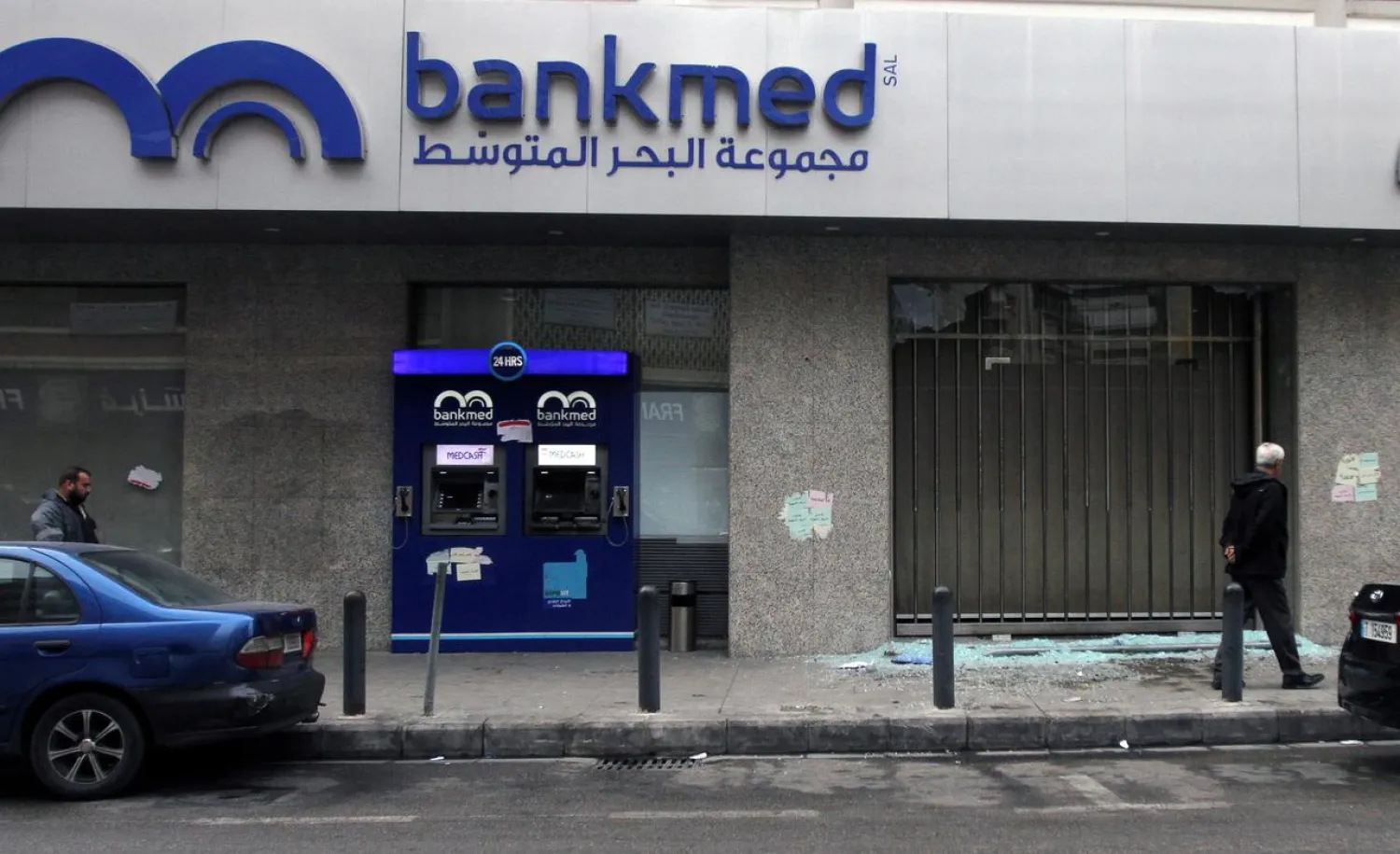
Men walk near broken glass from a damaged Bankmed branch in Tripoli, Lebanon November 27, 2019. REUTERS/Omar Ibrahim
TT

Lebanon’s Living Costs Set to Soar Higher

Men walk near broken glass from a damaged Bankmed branch in Tripoli, Lebanon November 27, 2019. REUTERS/Omar Ibrahim

Lebanese consumers feeling the pinch from rising living costs amid an economic crisis are likely to be squeezed even tighter as more local pounds and less US dollars come into circulation, pushing up inflation.

Lebanon has long relied on a steady flow of dollars from its overseas diaspora to help fund its financial system. But that has been choked off as faith in the political elite crumbled.

People have been hit by what economists estimate is a 30 percent annual rise in inflation during the crisis that escalated in October. The pound has collapsed against the US dollar in the parallel market and a liquidity crunch has bitten.

That slashed consumer purchasing power and prompted some to withdraw pounds from banks as unofficial capital controls shattered confidence in the banking system and restricted access to dollars.

While the pound, pegged against the dollar for 22 years, is the official currency, the greenback has long been used as an alternative for transactions. Some consumers who were buying with dollars say they now use pounds.

"Today you know the most important thing is food, it is necessary for one to live, so this affected all Lebanese families," said a beautician and mother of two who asked only to be identified by her surname, Boutros.

She had tightened spending on goods like cleaning products. The Lebanese economy relies on imports.

Hani Bohsali, president of the Syndicate of Importers of Foodstuffs, Consumer Products and Drinks, estimates the costs its members pay overseas suppliers have risen around 40 percent since October mainly because of the exchange rate depreciation. Higher costs have been passed on to retailers.

"It's dreadful," Bohsali told Reuters. "There are no trade facilities with banks anymore, so liquidity is tight. What is in your pocket today is what you have, so it's hard for us to do business."

Lebanon on Tuesday finally formed a government under Prime Minister Hassan Diab after three months of political paralysis and street protests, but it still must resolve the crisis and win over investors and foreign donors.

While it is not in the grip of the hyperinflation besetting Venezuela and a decade ago in Zimbabwe, economists warn that Lebanon risks sliding closer towards that plight without a resolution to the crisis.

This week the central bank announced newly printed 50,000 pound notes would enter circulation. M1, encompassing currency in circulation and demand deposits in pounds, swelled 45 percent at the start of January from a year earlier.

Flooding the market with pounds while rationing dollars, risks exacerbating inflation and widening the pound's depreciation in the parallel market, Nafez Zouk at Oxford Economics told Reuters.

"Net-net there'll be more inflation," he said. "Let's assume that 50 percent goes under the mattress and 50 percent goes into circulation that will still weaken the exchange rate and that's still inflationary."



SABIC Returns to Profitability in Q3 as Revenues and Earnings Improved

The headquarters of Saudi Basic Industries Corp (SABIC) is seen in Riyadh, Saudi Arabia (File photo: Reuters) 
TT

SABIC Returns to Profitability in Q3 as Revenues and Earnings Improved

The headquarters of Saudi Basic Industries Corp (SABIC) is seen in Riyadh, Saudi Arabia (File photo: Reuters) 

The Saudi Basic Industries Corporation (SABIC) returned to profitability in the third quarter of 2026, reporting a net profit of $133 million (SAR 499 million), compared to $116 million (SAR 434 million) in the same period last year.

The improvement was driven by higher selling prices for its products and stronger results from investments in affiliates and joint ventures, despite ongoing geopolitical challenges and pressure on supply chains.

Financial results for the third quarter of 2026, showed that revenue increased 14% quarter on quarter to $7.51 billion (SAR 28.17 billion), up 13.5% compared to the second quarter, when revenue totaled $6.62 billion (SAR 24.81 billion).

However, it reported a 3.1% year-over-year revenue decline, from $7.75 billion (SAR 29.08 billion) in the third quarter of 2025.

Improved Adjusted EBITDA

SABIC highlighted an Adjusted EBITDA (Earnings Before Interest, Taxes, Depreciation, and Amortization) of $1.27 billion (SAR 4.75 billion), an increase of 40% Q-o-Q.

Meanwhile, the company registered an Adjusted EBIT (Earnings Before Interest and Taxes) of $579 million (SAR 2.17 billion), an increase of 434% Q-o-Q, in addition to an Adjusted Net Income of $222 million (SAR 840 million).

SABIC attributed the improvement in its Q3 results to a $153 million (SAR 575 million) increase in gross profit, in addition to a $432 million (SAR 1.62 billion) improvement in results from non-integrated joint ventures and associates mainly due to the reversal of impairment losses on listed equity investments in Europe following an increase in share prices.

These positive factors were partially offset by losses related to discontinued operations amounting to around $263 billion (SAR 985 million) in relation to the reclassification of foreign currency translation from equity to the income statement following the successful completion of the sale of SABIC's thermoplastics engineering businesses in North America, South America and Europe as part of the company's portfolio optimization program.

Also, net financial results declined by around $95 million (SAR 358 million,) mainly due to the fair-value valuation of derivative instruments recognized in equity in the corresponding quarter of the previous year, which are non-cash in nature.

9-Month Losses Narrow

The net loss for the nine months of 2026 narrowed to around $85 million (SAR 320 million), compared with a net loss of $1.29 billion (SAR 4.84 billion) for the corresponding period of 2025.

SABIC recorded a revenue of $21.10 billion (SAR 79.13 billion) for the first nine months of 2026, marking a 10.7% decrease compared to the $23.62 billion (SAR 88.57 billion) reported during the same period in 2025.

It also reported year-on-year declines in gross profit to $4.24 billion (SAR 15.91 billion), compared with $4.57 billion (SAR 17.12 billion) a year earlier.

Operating profit fell to $1.13 billion (SAR 4.22 billion), from $1.40 billion (SAR 5.25 billion).

SABIC said the narrower net loss was primarily attributable to an $819 million (SAR 3.07 billion) reduction in losses from discontinued operations, alongside a $648 million (SAR 2.43 billion) improvement in results from joint ventures and associates.

It then reported an increase of a $333 million (SAR 1.25 billion) in selling and distribution expenses during the first nine months of 2026 compared to the same period in the previous year, as well as a $323 million (SAR 1.21 billion) decline in gross profit, driven by lower sales volumes.

Focus on Operational Efficiency

SABIC reaffirmed its commitment to operational efficiency, portfolio optimization and selective growth, while maintaining the operational flexibility needed to navigate geopolitical and logistical challenges, according to its earnings statement.

“In Q3 2026, Sabic demonstrated exceptional resilience, despite geopolitical developments and market headwinds, coupled with a clear and robust forward-looking vision and continued focus on strategic objectives, namely portfolio optimization, transformation and selective growth, in efforts to support the company’s long-term profitability and value creation for shareholders, building on its historic journey of more than five decades,” said Sabic chief executive Faisal M Alfaqeer.

In terms of cash flow, net cash generated from operating activities after capital expenditure reached approximately $1.50 billion (SAR 5.61 billion) in the first nine months of the year, compared with around $1.05 billion (SAR 3.94 billion) in the same period in 2025.

The company cut its full-year capital expenditure guidance to between $3 billion and $3.3 billion from its previous estimate of $3.5 billion and $4 billion, according to its latest presentation.


Dar Global CEO: Now Is the Best Time to Invest in Gulf Real Estate

An artist’s rendering of the Wadi Safar project in Diriyah, Saudi Arabia (Asharq Al-Awsat). 
TT

Dar Global CEO: Now Is the Best Time to Invest in Gulf Real Estate

An artist’s rendering of the Wadi Safar project in Diriyah, Saudi Arabia (Asharq Al-Awsat). 

Dar Global aims to leverage its investor network spanning nearly 120 nationalities to attract more foreign capital to Saudi Arabia’s property market, CEO Ziad El Chaar told Asharq Al-Awsat.

The London-listed developer has attracted buyers from 57 foreign nationalities to a Jeddah project and plans three more Saudi developments — two in Diriyah and one in Jeddah — in partnership with new international brands. Saudi Arabia now represents roughly half its portfolio.

Dar Global’s net profit surged 149% in the first half of 2026, while revenue rose 66%, driven by earlier sales and construction progress.

El Chaar explained that property sales are reflected in earnings as developments advance. Now in its fifth year, the company has pursued geographic diversification to offset slowdowns in individual markets.

Earnings were partly supported by a Riyadh project launched about 18 months ago with Mouawad Jewelry and an Aston Martin-branded development in Ras Al Khaimah.

Saudi Arabia Drives Growth

Expansion into Saudi Arabia has helped double Dar Global’s portfolio development value, particularly through major projects in Diriyah and Jeddah.

Its Wadi Safar development in Diriyah spans approximately 3 million square meters and includes around 500 palaces in a gated community overlooking golf courses, green spaces and valleys.

Prices range from SAR 15 million ($4 million) to SAR 160 million ($42.6 million).

Despite weakness in parts of the regional property market, the project has recorded strong sales among Saudi buyers, reflecting its exclusivity, according to El Chaar.

In Jeddah, a development on King Abdulaziz Road has attracted buyers from 58 nationalities, including Saudis.

“We are no longer just property developers. We have become part of attracting foreign investment to the Kingdom,” he declared.

Reducing Execution Risks

To address a shortage of available contractors, many of whom are occupied with major government projects, Dar Global established a contracting company and acquired a project management firm.

The moves brought project management, supervision and cost control in-house.

“With major expansion, you need to keep the development chain in your own hands to reduce execution risks,” El Chaar explained.

The company finances projects through equity, local and international bank loans, off-plan sales and partnerships with landowners, developers and investors.

These arrangements support expansion without substantial land purchases, while its London listing provides governance and transparency that strengthen partner confidence.

Company equity is approaching $500 million, with return on equity reaching approximately 25% in 2025.

Partnerships with international brands, including Trump, Aston Martin, Lamborghini, Fendi and Versace, remain central to its strategy.

El Chaar emphasized their global marketing reach and the confidence they inspire through rigorous checks before allowing developers to use their names.

Costs and Supply Chains

Rising construction costs and supply chain disruptions continue to pressure the sector, particularly fluctuations in energy, steel, concrete and transportation prices.

Projects in Saudi Arabia, Oman and Qatar have experienced no major disruptions, although Dubai developments faced some delays before alternative materials were sourced, including through Jeddah.

Most projects remain on schedule, but certain major construction contracts for more complex developments have moved from the third to the fourth quarter, with some potentially extending into early 2027.

Customer delivery commitments remain on track, El Chaar maintained.

The company plans launches in Diriyah in October and November, followed by Jeddah in December.

He ruled out a Saudi stock market listing for now, citing possible duplication with its London listing, but disclosed plans to issue additional shares in London when market conditions improve.

Gulf Investment Outlook

El Chaar argued that geopolitical developments should not obscure the Gulf’s long-term property fundamentals.

“When I speak to investors, I don’t talk about Riyadh alone, or Dubai or Ras Al Khaimah. I talk about the Gulf,” he remarked.

Unlike some European and Asian markets raising taxes or restricting foreign investors, Gulf countries are easing property ownership, residency and banking requirements to attract capital.

Annual population growth of 2.5% to 3% in some regional markets also supports demand, he observed.

Saudi Arabia’s foreign ownership reforms represent a major turning point.

“We are not talking about opening a small market, but a market in a G20 economy,” he emphasized.

El Chaar estimated annual Saudi domestic demand at around $600 billion, arguing that its scale provides stability even before foreign investors enter.

He also highlighted economic growth, stronger governance, transparency and major initiatives such as Expo 2030 as long-term attractions.

Saudi Arabia accounts for approximately 50% of Dar Global’s portfolio, while the Gulf represents around 80%.

Beyond substantial investments in southern Spain, the company plans to expand in Britain, particularly London, and Spain, while exploring opportunities in Greece, provided its tax environment remains attractive to foreign investors.

El Chaar considers Saudi Arabia and the wider Gulf among the most appealing long-term destinations for domestic and international property investment.


Netanyahu Rebuked for Plan to Use Crypto to Bypass Economic Sanctions

Supporters of Israeli Prime Minister Benjamin Netanyahu's Likud Party drive in a car adorned with campaign posters in Tel Aviv on October 25, 2026, ahead of Israel's legislative election. (AFP)
TT

Netanyahu Rebuked for Plan to Use Crypto to Bypass Economic Sanctions

Supporters of Israeli Prime Minister Benjamin Netanyahu's Likud Party drive in a car adorned with campaign posters in Tel Aviv on October 25, 2026, ahead of Israel's legislative election. (AFP)

Prime Minister Benjamin Netanyahu, who faces re-election this week, is drawing criticism from economists and political rivals after suggesting Israel could use cryptocurrency to help shield its economy from potential international sanctions.

In an interview with Israel's Channel 10 on Friday, Netanyahu said he was preparing for a scenario in which broader sanctions were imposed on Israel.

Last month, Britain, France and Canada said they would block imports from Israeli settlements in the West Bank in what was the latest in a series of actions targeting Israel's settlement policy, underscoring its growing diplomatic isolation among some of its traditional allies.

"There could be sanctions, and sanctions ‌on banks so ‌you need to set up a bypass economy," Netanyahu said. "You ‌know, there ⁠are currencies that ⁠can bypass (sanctions). We are also working on that."

Asked whether he was referring to cryptocurrency, Netanyahu replied: "Very true, very true," adding that blockchain technology was another possibility.

The comments drew a rare rebuke by the Bank of Israel, which said crypto currencies cannot serve as a route to bypass sanctions and that political leaders should focus on policy that would render such measures unnecessary.

"The right course for Israel's economy is to preserve our economic relations with our main trading ⁠partners, and to focus on preventing sanctions and their negative impact ‌on the economy," it said.

Netanyahu on Sunday continued to ‌defend his record, urging voters to back him and saying he and US President Donald Trump had ‌two years left to work together to topple Iran's rulers.

PLAN DRAWS CRITICISM

On Sunday, ‌more than 100 economists, including former Bank of Israel officials, ex-central bank governor Jacob Frenkel and several Nobel laureates, signed a letter expressing alarm over Netanyahu's proposal. They said it would lead to higher unemployment, a fall in foreign investment and the collapse of Israel's economic standing in the world.

"As ‌we have seen in countries that have suffered similar sanctions, such as South Africa, Iran, and Russia, the living standards of ⁠Israeli citizens would ⁠plummet dramatically, and the state's ability to finance its security and defend itself against its enemies would be severely damaged," the letter read.

"Netanyahu is knowingly leading the State of Israel toward boycott and international economic isolation, and all he has to offer the Israeli economy is a puzzling solution, one accepted in criminal organizations, that will not help in the slightest."

Netanyahu's main rival in Tuesday's election, Gadi Eisenkot, called the crypto plan "madness" and said he feared that the "BibiCoin policy" would drive companies abroad and undermine national security.

Opposition leader Yair Lapid said: "Netanyahu has gone off the rails ... He promises the citizens of Israel before these elections that they'll be standing in line for an hour and a half for bread, like in Russia and Iran."

Opinion polls point to a potential stalemate in the election with neither Netanyahu's ruling coalition nor an opposition alliance securing a governing majority in parliament.