


Social Media and Video Games Really Can Hurt Footballers' Decision-Making

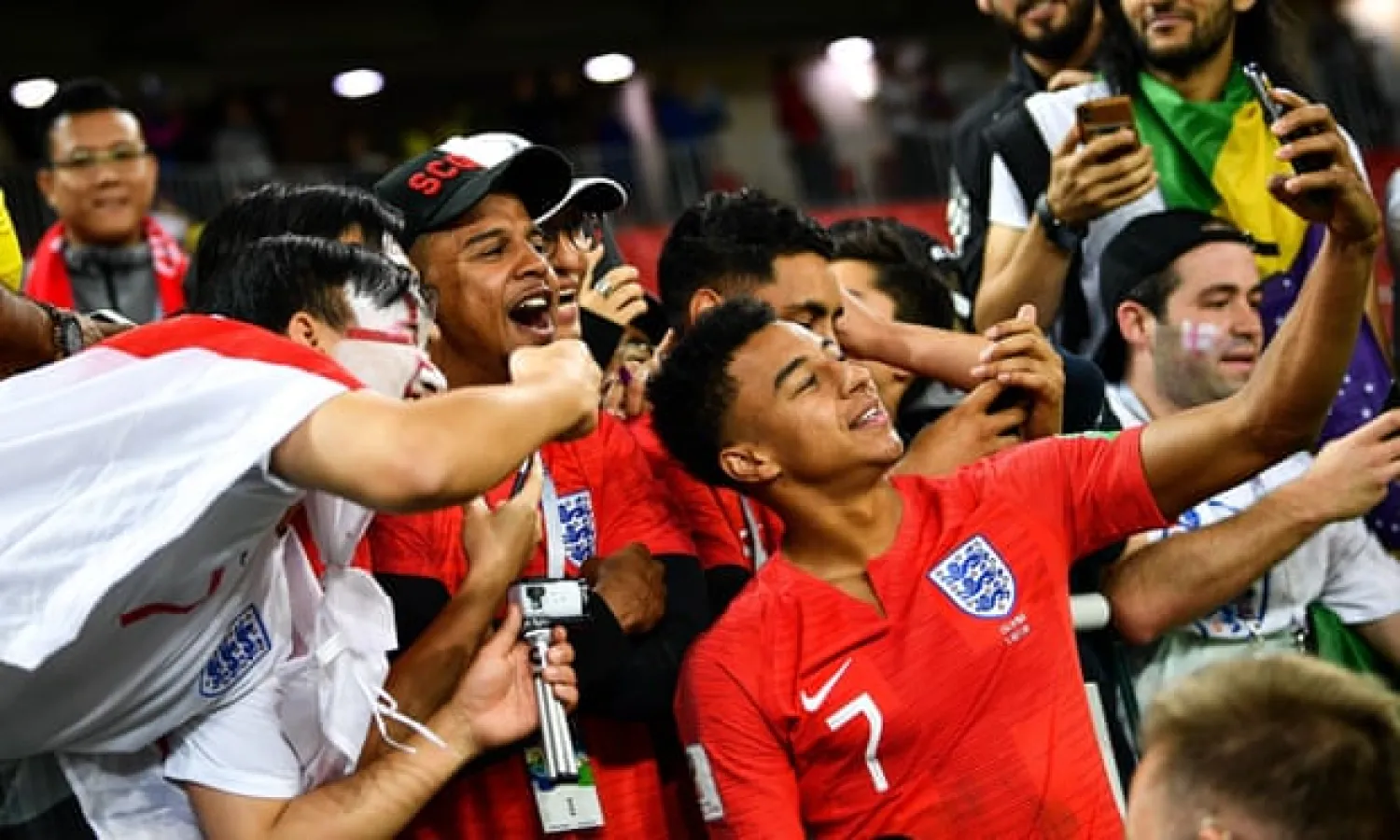
 Jesse Lingard takes a selfie with his family and friends after England beat Colombia in the 2018 World Cup. Photograph: Imaginechina/REX/Shutterstock
Jesse Lingard takes a selfie with his family and friends after England beat Colombia in the 2018 World Cup. Photograph: Imaginechina/REX/Shutterstock
TT

Social Media and Video Games Really Can Hurt Footballers' Decision-Making

 Jesse Lingard takes a selfie with his family and friends after England beat Colombia in the 2018 World Cup. Photograph: Imaginechina/REX/Shutterstock
Jesse Lingard takes a selfie with his family and friends after England beat Colombia in the 2018 World Cup. Photograph: Imaginechina/REX/Shutterstock

Could spending too much time on Twitter, Facebook or Instagram affect a footballer’s performance? Manchester United appear to think so. One report before their trip to Anfield claimed the club were “consulting leading experts” about how to help their stars deal with the negative mental effects of social media and also suggested there were concerns that players were suffering dips in form as a result of being abused online.

Some may suggest the players should just “man up”. But scientists are increasingly scrutinising how mental fatigue – the lack of energy we feel from long periods of purely cognitive activity – can influence sporting performance, often with startling results.

Only last week a study by academics on Brazilian professional footballers, published in the prestigious Journal of Sports Sciences, came to an eye-opening conclusion. Being on “social networks on smartphones and/or playing video games for at least 30 minutes before official matches impairs the passing decision-making performance in professional soccer athletes”. The researchers’ advice for managers was also as crisp as a Zico free-kick. “Coaches should evaluate the use of social networks on smartphones and/or playing video games before official matches in soccer athletes.”

It is easy to imagine many old-school managers rolling their eyes and saying “tell us something we didn’t know 10 years ago”.

However, the snappily titled article, “The effect of smartphones and playing video games on decision‑making in soccer players: A crossover and randomised study”, is significant because it backs up that instinct with hard science.

The academics’ research was based on a series of pre‑season matches played by professional players from two teams in Brazil – only with a twist. Before each game they split players into three groups. The first control group watched videos for 30 minutes. The second looked at social media on their phone for the same period. The third played Fifa 18. The footballers also did the Stroop task, a well-established psychological test, before and after these activities to assess their mental fatigue. They then warmed up and played a 90-minute match which was filmed and analysed.

Three or four days later the players switched their pre-match activity and played another 90 minutes. Six matches were played in total and to keep the players motivated they were told the games would be used to select the team once the season started.

The due diligence did not end there. The academics asked the participants to rate their levels of energy before each game to assess recovery from the previous match. Afterwards players had their blood lactate levels analysed and were required to give their perceived rate of exertion during the game.

As well as all that, two experienced analysts watched each game. Their task was simple: assess every pass made by every player and assess whether it was a good decision. After the numbers had been crunched the scientists found that, while each of the three groups – video watchers, social media viewers and Fifa 18 players – made a similar number of passes overall, the quality of passing decision-making decreased in the players who had used social media or played Fifa beforehand when compared with the passive video watchers.

So what might be going on? We all know football is an extremely dynamic and tactical sport, which places high mental demands on decision-making. However, the academics suggest being on social media and playing Fifa 18 leads to a prolonged period of electrical impulses in certain areas of the brain, reducing the speed of information processing – thus leading to less successful decision‑making accuracy.

“When mentally fatigued, athletes usually demonstrate longer fixation time on opponents and shorter fixation time on their teammates,” they point out. “Mentally fatigued athletes may not adequately interpret (sports perception) or anticipate (frontal cortex) opponent’s actions, which affects the decision-making accuracy. Thus, it seems that mental fatigue negatively affects the way players choose their tactical actions during matches.”

This is a small study, one of the veryfew that have looked at concrete evidence of the link between smartphones and video game use on elite performance on the pitch. However, other studies based on non-elite athletes have found mental fatigue has led to slower and less accurate reactions, poorer visual perception and even a reduction in the collective movement of a team in small‑sided games.

Elsewhere laboratory studies have also found some evidence of a decline in endurance performance following a mentally challenging task. One study, for instance, found a significant decline in power output in a 20-minute cycling time trial when athletes are already mentally fatigued.

Other research, based on interviews with elite Australian athletes, found mental fatigue can negatively influence player performance in other ways – including decreased motivation and enthusiasm and less attention to details.

Perhaps most of this comes as no surprise. Even so, after years when academics have focused largely on the physical nature of fatigue as opposed to its mental aspects, the focus on potential mental stressors and their relation to mental fatigue in elite sport is surely overdue.

At any rate the message from the Brazilian academics seems clear enough: staying off social media immediately before a match will not just help you to avoid the trolls; it might help you to perform better.

The Guardian Sport


Jota’s Sons to Join Mascots When Liverpool Face Wolves at Anfield

 Jota died ‌in ⁠a ​car ‌crash alongside his younger brother in July in northwestern Spain. (AFP)
Jota died ‌in ⁠a ​car ‌crash alongside his younger brother in July in northwestern Spain. (AFP)
TT

Jota’s Sons to Join Mascots When Liverpool Face Wolves at Anfield

 Jota died ‌in ⁠a ​car ‌crash alongside his younger brother in July in northwestern Spain. (AFP)
Jota died ‌in ⁠a ​car ‌crash alongside his younger brother in July in northwestern Spain. (AFP)

Diogo Jota's two sons will join ​the mascots at Anfield when Liverpool face Wolverhampton Wanderers in the Premier League on Saturday, the club confirmed on Friday.

Portuguese forward Jota, who played for both ‌Premier League ‌clubs, died ‌in ⁠a ​car ‌crash alongside his younger brother in July in northwestern Spain. He was 28.

Jota joined Wolves on loan from Atletico Madrid in 2017 and made ⁠a permanent move to the club ‌the following year. ‍He then ‍signed a five-year deal in ‍2020 with Liverpool, where he won the league title earlier this year.

Saturday's match marks the ​first time Liverpool and Wolves have met since Jota's ⁠death.

Jota's wife Rute Cardoso and her two sons, Dinis and Duarte, were present for the Premier League home openers for both Liverpool and Wolves in August.

Liverpool also permanently retired his jersey number 20 following his death.


Too Hot to Handle? Searing Heat Looming Over 2026 World Cup

A view of the field is seen from the stands at SoFi Stadium in Inglewood, California, on December 9, 2025. (AFP)
TT

Too Hot to Handle? Searing Heat Looming Over 2026 World Cup

A view of the field is seen from the stands at SoFi Stadium in Inglewood, California, on December 9, 2025. (AFP)

With less than six months to go before the 2026 World Cup kicks off, organizers are bracing for what could be their most challenging opponent yet: extreme heat.

Soaring temperatures across the United States, Mexico and Canada pose safety issues for players and fans and a host of logistical issues that remain far from settled.

In the depths of the $5.5 billion SoFi Stadium in Los Angeles, which will host eight World cup matches, around 15 industrial misting fans more than two meters sit in storage, waiting to be deployed. If temperatures climb above 80F (26.7C), the fans will be rolled out around the stadium.

A roof suspended some 45 meters above the SoFi Stadium pitch offers some shade for spectators, while large openings along the sides of the stadium allow for breezes from the nearby Pacific Ocean to provide a form of natural air conditioning.

"Knowing that you can put 70,000 people into a building, the energy, the excitement, the activity that comes with that, and the higher temperature, that's where we want to make sure we respond," Otto Benedict, vice president of operations for the company that manages the stadium, told AFP.

Not all of the World Cup's 16 stadiums are as modern. And Southern California is not considered to be among the highest-risk areas for a competition scheduled from June 11 to July 19, three and a half years after a winter World Cup in Qatar.

- Automatic cooling breaks -

A study published in the International Journal of Biometeorology in January warned of "serious concern" for the health of players and match officials at the 2026 World Cup due to extreme heat.

The study identified six "high-risk" host cities: Monterrey, Miami, Kansas City, Boston, New York and Philadelphia.

The "Pitches in Peril" report by the Football for Future non-profit noted that in 2025 those cities each recorded at least one day above 35C on the wet-bulb globe temperature (WBGT) scale, which factors in humidity and is considered the upper limit of human heat tolerance.

The issue of heat featured prominently at this year's FIFA Club World Cup in the United States, which drew complaints from players and coaches.

Extreme heat also marked the 1994 World Cup, the last men's edition held in the United States.

FIFA has responded by mandating cooling breaks in the 22nd and 67th minutes of all matches at the World Cup, regardless of conditions.

The World Cup match schedule released after December's draw in Washington shows daytime games largely assigned to air-conditioned stadiums in Dallas, Houston and Atlanta, while higher-risk venues are set to host evening kickoffs.

"You can clearly see an effort to align the competition schedule planning and venue selection with the concerns around player health, but also player performance," a spokesperson for the FIFPro players union told AFP. "This is a clear outcome, which we welcome, and a lesson learned from the Club World Cup."

- 'High-risk matches' -

FIFPRO says the biggest takeaway is that heat will play an increasingly central role in organizing competitions on a warming planet.

The union believes though that several World Cup fixtures remain "high-risk" and recommends postponements when WBGT readings exceed 28C.

Among those fixtures causing FIFPro concern: group-stage matches scheduled for mid-afternoon in New York, Boston and Philadelphia, as well as the final, set for a 3:00 p.m. kickoff in New York.

While teams and players work to mitigate effects of the conditions, some officials say the risks to spectators both inside stadiums and in fan zones have been underestimated.

"There is a risk and importantly, we feel like it's an underappreciated risk," said Chris Fuhrmann, deputy director of the Southeast Regional Center of the US National Oceanic and Atmospheric Administration.

"When you're cheering, you're actually generating a lot of metabolic heat and your heart rate's going up. Spectators obviously compared to professional athletes are generally not in as good physical health.

"They have a lot of comorbidities that increase the likelihood that they would have a negative health outcome or succumb to heat stress."

Stadium temperatures are also amplified by the "urban heat island" effect of concrete, asphalt and metal.

Adequate air circulation, plenty of shaded areas and access to hydration are crucial, Fuhrmann said.

FIFA has yet to clarify whether fans will be allowed to bring refillable water bottles into venues or whether water will be sold inside. FIFA did not respond to requests for comment.

- Prevention -

For National Weather Service meteorologist Benjamin Schott, who has advised FIFA and its World Cup task force, the priority is prevention, particularly for foreign visitors unfamiliar with local climates.

Another lesson from the Club World Cup, he said, is the need for multilingual messaging to ensure heat-safety warnings are clearly understood.

"The lesson learned is just trying to maybe better educate fans as they come to the United States to have a better understanding of what the weather could be like during those two months," Schott said.


Palladino’s Atalanta on the up as Serie A Leaders Inter Visit

Atalanta's Italian head coach Raffaele Palladino looks on during the Italian Serie A soccer match between Genoa Cfc and Atalanta BC at Luigi Ferraris stadium in Genoa, Italy, 21 December 2025. (EPA)
TT

Palladino’s Atalanta on the up as Serie A Leaders Inter Visit

Atalanta's Italian head coach Raffaele Palladino looks on during the Italian Serie A soccer match between Genoa Cfc and Atalanta BC at Luigi Ferraris stadium in Genoa, Italy, 21 December 2025. (EPA)

Atalanta are on the comeback trail ahead of Sunday night's visit of Serie A leaders Inter Milan, with coach Raffaele Palladino leading the charge for the revitalized Bergamo club.

Since Palladino replaced Ivan Juric last month Atalanta have rediscovered their groove, as witnessed by the way they dealt with Eintracht Frankfurt and Chelsea in the Champions League.

Atalanta sit fifth in the Champions League, level on points with mega-bucks Paris Saint-Germain and Manchester City, and now they're heading back up the Serie A table.

A last-gasp win at Genoa last weekend put Atalanta back in the top half of Italy's top flight and only three points off the European spots.

"It wasn't one of our better performances but today winning was what counted," said Palladino after the victory over Genoa.

"Those three points were hugely important for us to keep our run going and get us up the right end of the table."

Sunday's clash in Bergamo is the first of three fixtures against direct rivals for Champions League football.

Fourth-placed Roma, who are eight points clear of Atalanta, travel north at the turn of the year before the short journey to Bologna, who sit in the Conference League spot.

Atalanta have won six of their eight matches in all competitions under Palladino, who already looks more like the right replacement for Gian Piero Gasperini than Juric ever did.

However, Palladino will be without key attacker Ademola Lookman and defender Odilon Kossounou who are representing Nigeria and Ivory Coast at the Africa Cup of Nations.

"We keep scaling a mountain that a month ago seemed impossible," said Palladino.

"Let's enjoy the moment because we've got three big matches coming up and we can take them on in the right spirit."

Inter lead local rivals AC Milan -- who host Verona -- by a single point at the top of the table with champions Napoli a further point back in third ahead of their tricky trip to Jamie Vardy's Cremonese.

But Inter have been on a trip to Saudi Arabia for a failed attempt to win the Italian Super Cup, a tournament won by Napoli which has further clogged up their schedule and left them, Milan, Napoli and Bologna with a game in hand on Roma and fifth-placed Juventus.

The first two weeks of January each have midweek rounds of matches in store for the Super Cup clubs, with the following two weeks containing the decisive final fixtures of the Champions League's expanded league phase.

Inter coach Cristian Chivu has lost Ange-Yoan Bonny to a knee injury picked up in training, the Frenchman joining Denzel Dumfries, Franceco Acerbi and Hakan Calhanoglu on the treatment table.

Man to watch: Daniele De Rossi

De Rossi will make an emotional return to the Stadio Olimpico on Monday night when his Genoa team travel to the Italian capital hoping to bounce back after two unfortunate defeats to Inter and Atalanta.

The Roma icon and World Cup-winning midfielder took his boyhood club to the 2024 Europa League semi-final but was fired after a poor start last season.

He was sacked following a draw at Genoa in September last year, sparking furious protests from Roma fans, and he will be given a hero's welcome from home supporters.

Genoa sit two points above the drop zone while Roma are three points behind Inter having played a game more.
