Saudi Citizen Account Program Deposits 2.6 Billion Riyals in Beneficiaries' Accounts

Saudi Citizen Account Program Deposits 2.6 Billion Riyals in Beneficiaries' Accounts
TT

Saudi Citizen Account Program Deposits 2.6 Billion Riyals in Beneficiaries' Accounts

Saudi Citizen Account Program Deposits 2.6 Billion Riyals in Beneficiaries' Accounts

Saudi Arabia’s Citizen Account Program has announced the deposit of (2.6) billion riyals in the accounts of citizens benefiting from the program for the month of February 2020.

The total number of beneficiaries of this installment exceeded 12.6 million.

Since the start of Citizen Account Program, the total disbursed payments amounted to more than 66 billion riyals.

The program revealed in a statement that the total number of heads of households benefiting from the program exceeded 2.3 million beneficiaries.


US Treasury Chief Claims Successes in Isolating Iran

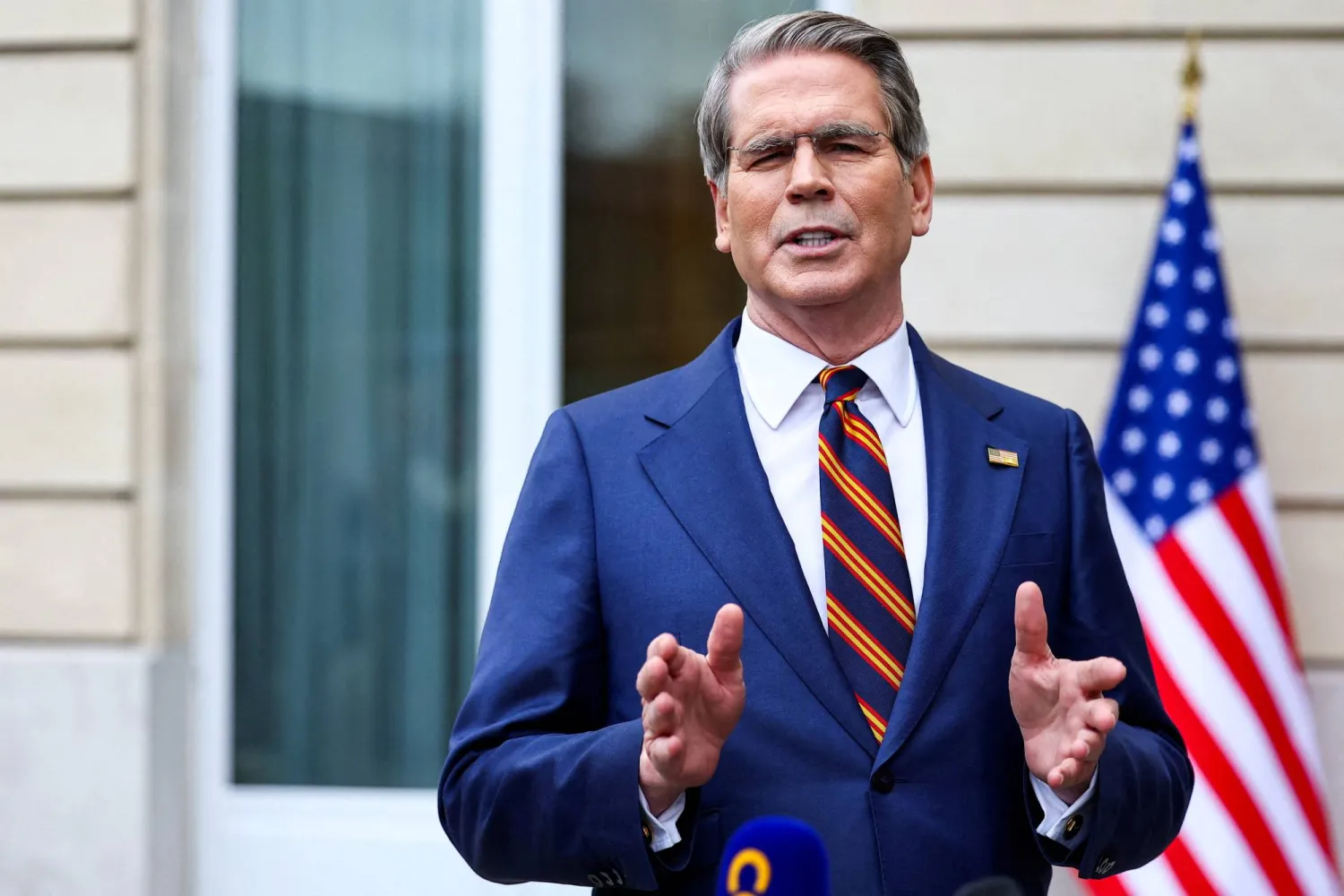
FILE PHOTO: US Treasury Secretary Scott Bessent speaks to the media after two days of meetings with a Chinese delegation, in Paris, France March 16, 2026. REUTERS/Abdul Saboor/File Photo
TT

US Treasury Chief Claims Successes in Isolating Iran

FILE PHOTO: US Treasury Secretary Scott Bessent speaks to the media after two days of meetings with a Chinese delegation, in Paris, France March 16, 2026. REUTERS/Abdul Saboor/File Photo

US Treasury Secretary Scott Bessent said on Saturday that he had sent envoys around the world to pressure countries to economically isolate Iran, hailing new restrictions targeting the country's airlines and banks.

"At my direction, teams were dispatched across the globe to engage with countries and demand action against the Iranian regime," he said on X. "These efforts are delivering results."

Bessent noted that Türkiye and Oman have halted incoming flights from private carrier Mahan Air, while the United Arab Emirates has stopped all flights by Iranian airlines.

Dubai, the UAE's commercial hub, is a major destination for Iran's carriers, with multiple daily flights, a large Iranian community and close business links.

Iran's ISNA news agency, citing officials, reported that five countries had revoked the Iranian republic's flight permits: Azerbaijan, Georgia, Iraq, Oman and the UAE.

But it said flights were still operating to China -- which is refusing to yield to US pressure -- and Russia via the two main airlines, national carrier Iran Air and Mahan.

Mahan had announced that it would no longer serve Türkiye at the request of the Turkish authorities, but flights continue several times a day in both directions, via Iran Air or smaller Iranian carriers, according to the Tehran and Istanbul airport websites.

ISNA said Afghanistan, Armenia, Belarus, Malaysia, Pakistan and Tajikistan were still also being served.

Bessent had said on Monday that all Iranian airlines "will be shut down around the world".

He also highlighted new banking restrictions.

On Wednesday, the UAE central bank blocked transactions to and from Iran by branches of Iran's Bank Melli, accusing it of violating laws on money laundering, terrorism and arms proliferation.

Last week, Türkiye revoked the license of Iran's Bank Mellat, a semi-private financial entity that has been subject to Western sanctions for years.

A Wall Street Journal article shared by Bessent said Jonathan Burke, the Treasury's assistant secretary for terrorist financing, traveled across the Middle East and Europe over two weeks to push the plan to impose what Bessent called "economic D-Day" on Tehran.

The US Treasury has held discussions with more than 50 countries, the Journal reported.


China, US Agree to $30 Billion Tariff Cut, AI Dialogue

WASHINGTON, DC - SEPTEMBER 25: US President Donald Trump (R) and President of China Xi Jinping (L) speak as they depart following a tour of the National Archives Museum on September 25, 2026 in Washington, DC. Win McNamee/Getty Images/AFP
TT

China, US Agree to $30 Billion Tariff Cut, AI Dialogue

WASHINGTON, DC - SEPTEMBER 25: US President Donald Trump (R) and President of China Xi Jinping (L) speak as they depart following a tour of the National Archives Museum on September 25, 2026 in Washington, DC. Win McNamee/Getty Images/AFP

China and the US have agreed to a $30 billion reciprocal tariff-reduction arrangement and to launch dialogue on AI, under an eight-point consensus reached during Chinese President Xi Jinping's visit to the US, China's Ministry of Foreign Affairs said.

The two sides recognized the work of their economic teams and endorsed steps including the establishment of a trade council, the tariff-reduction arrangement and an extension of outcomes from earlier talks in Kuala Lumpur, the ministry said.

The United ⁠States and China ⁠had earlier agreed to extend by two months a trade truce that was due to expire on November 10, allowing more time to work on a potentially bigger trade deal, US Treasury Secretary Scott Bessent said on Wednesday.

The leaders of ⁠the world's two largest economies ended a three-day summit that showcased personal diplomacy rather than big public breakthroughs. Xi has since landed in Beijing, Chinese state media Xinhua reported on Saturday.

On artificial intelligence, the two sides agreed to establish a dialogue to discuss the technology's risks and benefits, with the next round of discussion set for November, and to set up a communication channel for AI-related incidents, according to the ⁠ministry.

They ⁠also agreed to support each other in hosting the Asia-Pacific Economic Cooperation leaders' meeting and the Group of Twenty summit, with both leaders signaling their intention to attend the gatherings hosted by the other, Reuters reported.

On foreign policy, the leaders agreed that Iran should fulfil its commitment not to develop nuclear weapons, and that no country or entity should impose transit tolls on international waterways, the ministry said. They also recalled that China and the United States fought as allies in World War Two.


Gold Rises, but on Track for Weekly Loss as Fed Rate Hike Expectations Build

FILE PHOTO: A raw gold bar is displayed at Nigeria’s booth at the 8th China International Import Expo (CIIE) venue in Shanghai, China, November 5, 2025. REUTERS/Maxim Shemetov/File Photo
TT

Gold Rises, but on Track for Weekly Loss as Fed Rate Hike Expectations Build

FILE PHOTO: A raw gold bar is displayed at Nigeria’s booth at the 8th China International Import Expo (CIIE) venue in Shanghai, China, November 5, 2025. REUTERS/Maxim Shemetov/File Photo

Gold prices rose on Friday but was on track for a weekly loss, as rising US Treasury yields and growing expectations of Federal Reserve rate hikes weighed on the metal.

Spot gold was up 0.6% at $4,303.19 per ounce by 1210 GMT, but was down about 1.7% so far this week. US gold futures rose 1% to $4,339.

US and Iranian negotiators in New York are seeking a deal that would involve Tehran reopening the Strait of Hormuz and Washington lifting its economic blockade of Iran, sources close to the talks said.

"Gold finds support today as oil prices pull back on renewed hopes for a US-Iran deal," said Nikos Tzabouras, a senior market analyst at Jefferies-owned Tradu.com.

"That said, the precious metal is heading for weekly losses, as higher Fed rates and bond yields raise the opportunity cost of holding gold."

The Fed raised interest rates by a quarter-point last week, its first hike in three years, and flagged more hikes follow. Traders are pricing in a 71% chance of an October hike and a 95% chance of an increase in December, according to the CME FedWatch Tool.

Although gold is traditionally seen as a hedge against inflation, higher rates dampen demand as investors shift to yield-bearing assets.

Gold demand in India picked up modestly this week as lower prices drew in buyers ahead of the festive season.

Oil prices fell, and the dollar eased about 0.3%, making greenback-priced bullion more affordable for holders of other currencies.

"Lingering deficit fears could revive the debasement trend that drives investors toward hard assets like gold. Alongside persistent central bank demand, the precious metal has a credible case for a strong fourth-quarter recovery, should the macro winds begin to shift," said Tzabouras.

Spot silver gained 1.4% to $64.82 per ounce, platinum added 1.7% to $1,777.38 and palladium fell 0.4% to $1,269.77. All three metals were poised for weekly losses.