


Algeria’s PM Accuses Bouteflika of Mismanaging Economic Institutions

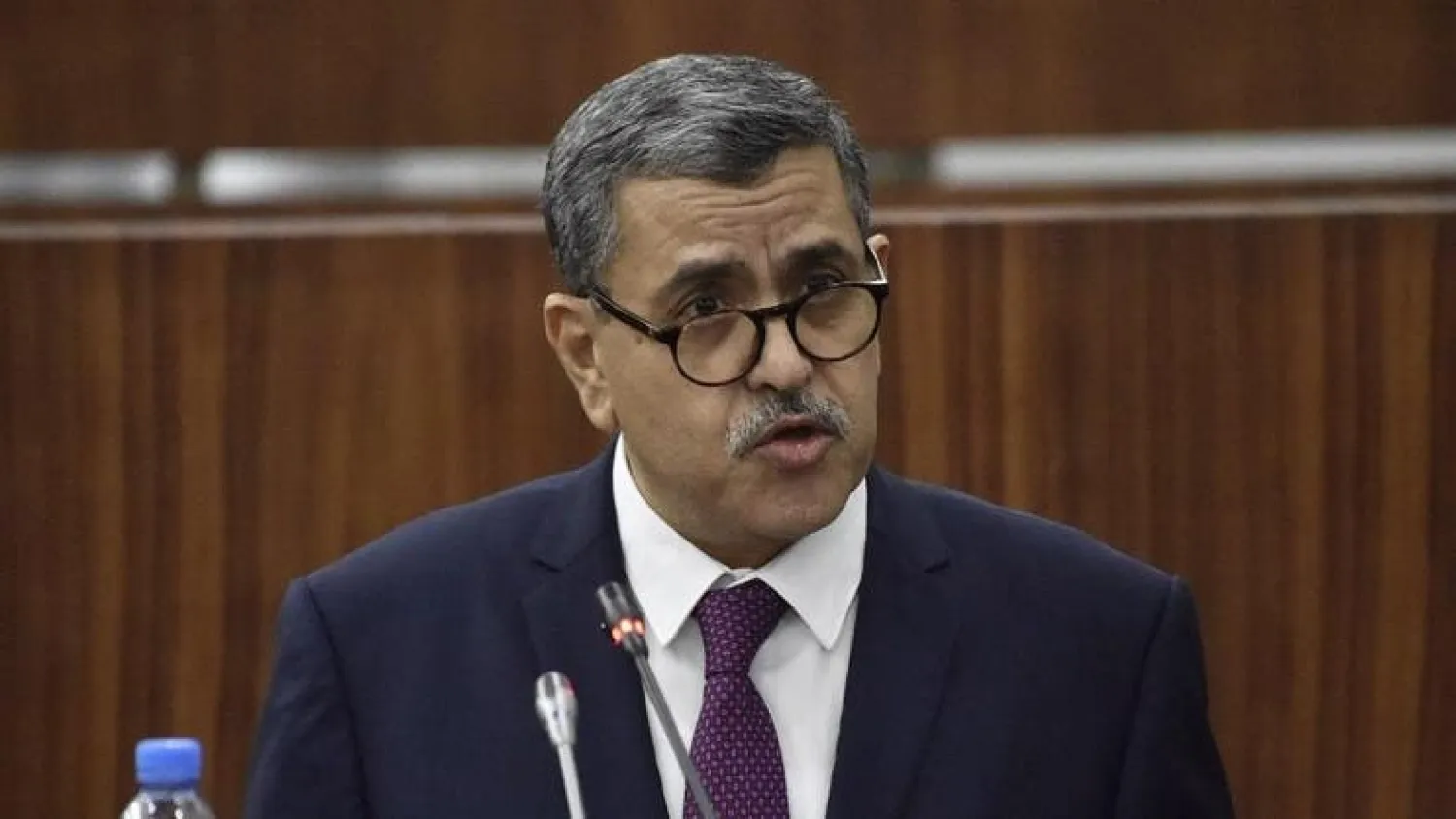
Algerian Prime Minister Abdelaziz Djerad. (File photo: AFP)
TT

Algeria’s PM Accuses Bouteflika of Mismanaging Economic Institutions

Algerian Prime Minister Abdelaziz Djerad. (File photo: AFP)

Algerian Prime Minister Abdelaziz Djerad has pledged to "clean up the disastrous legacy" of governance in previous years that devastated economic institutions.

He was referring to former president Abdelaziz Bouteflika’s 20-year rule.

Djerad made his remarks during the presentation of his government's plan of action to the People's National Assembly (lower house of the parliament) in a plenary session.

He affirmed that the fragile financial situation will be confronted by the government steadily and responsibly. He promised to eliminate the "unconstitutional" meddling in political and economic decision-making.

According to observers, his remarks were a reference to politicians ruling on Bouteflika's behalf and taking unconstitutional decisions.

Bouteflika resigned in April last year, succumbing to six weeks of largely peaceful mass protests driven by youth and pressure from the powerful army.

Djerad confirmed that the country is financially fragile, noting that the general budget still depends on the volatility of the oil market.

The budget's deficit aggravated in 2019, and the trade deficit reached USD10 million end of the year. Expenditure reserves dropped by more than USD17 billion, compared to 2018.

Djerad slammed Noureddine Bedoui’s government, underscoring the giant financial impact resulting from decisions and pledges made in 2019 despite the lack of funds.

He affirmed that the government will not give up despite this complex situation. The PM hailed the thorough economic, political, and social reforms brought by the presidential program.

“Our country has experienced catastrophic mismanagement in recent years which led to the squandering of its wealth,” Djerad said. The government will carry out “deep reforms to get the country out of this critical political and economic situation,” he said.

The government plan includes boosting dialogue with the opposition and seeking alternative funding sources for the economy such as issuing sukuk and developing the country’s tiny stock exchange.

Undoubtedly, the majority – backers of Bouteflika – will approve the plan of action. Then it would be referred to the National Assembly for final approval.

Meanwhile, hundreds of university students took to the streets for the second month, demanding 'A civilian, not military state', which is the slogan of the popular movement since Feb. 22 2019. They also called for releasing prisoners of conscience.



Israel Military Opens Probe into West Bank Baby’s Killing

Fahd Abou Haikal, a Palestinian man comforts his elder son Kinan Abou Haikal after burying his seven-month-old baby Sam Fahd Abou Haikal, in Hebron, in the occupied West Bank on June 6, 2026. (AFP)
TT

Israel Military Opens Probe into West Bank Baby’s Killing

Fahd Abou Haikal, a Palestinian man comforts his elder son Kinan Abou Haikal after burying his seven-month-old baby Sam Fahd Abou Haikal, in Hebron, in the occupied West Bank on June 6, 2026. (AFP)

The Israeli military has opened an investigation into the killing of a seven-month-old infant by Israeli gunfire in the occupied West Bank, it said Sunday.

Sam Fahd Abou Haikal died and his parents sustained light injuries when Israeli forces opened fire on the family's car in the city of Hebron, according to Palestinian sources.

Shortly after Friday's incident, the military said its forces had fired after "soldiers perceived a vehicle accelerating toward them".

However, an initial inquiry found the three Palestinians were "uninvolved civilians".

On Sunday, the military said it was opening an investigation into the incident.

"Based on the findings of the preliminary examination, it was decided to open an investigation by the Military Police Criminal Investigation Division," the military said in a statement.

"Upon its conclusion, the findings will be transferred to the Military Advocate General's Office."

Since the war in Gaza broke out in October 2023 with Hamas's attack on Israel, near-daily violence has also rocked the West Bank, which Israel has occupied since 1967.

Israeli soldiers or settlers have killed at least 1,080 Palestinians since then, including both fighters and civilians, according to an AFP tally based on Palestinian health ministry data.

Official Israeli figures show that at least 46 Israelis, both civilians and soldiers, have been killed in Palestinian attacks or during Israeli military operations in the same period.


Israel Kills Nine in Gaza as Egypt Hosts New Ceasefire Talks

Palestinians look at the wreckage of a car hit by an Israeli airstrike in Gaza City on June 7, 2026. (AFP)
TT

Israel Kills Nine in Gaza as Egypt Hosts New Ceasefire Talks

Palestinians look at the wreckage of a car hit by an Israeli airstrike in Gaza City on June 7, 2026. (AFP)

Israeli strikes on a Hamas-run police station and a vehicle in the Gaza Strip killed at least nine people and wounded 20 others, health officials said, as mediators began new efforts to salvage a fragile US-brokered ceasefire deal.

One strike hit a police post adjacent to a large tent encampment of displaced families in Khan Younis in the south of the enclave, killing five people and wounding 16 others, medics said. They did not say how many of the casualties were police.

Israel has stepped up attacks against police headquarters and personnel in the past several months, killing dozens of them, according to Hamas security officials.

Later on ‌Sunday, another Israeli ‌airstrike killed four people and wounded four others when it hit a ‌vehicle ⁠driving through the middle ⁠of Gaza City, medics said.

The Israeli military did not immediately comment on the incidents.

Major fighting has been paused since October under a ceasefire after two years of war, but no agreement has been reached to implement a further US-backed plan for Israeli troops to withdraw, Hamas to disarm and Gaza to be rebuilt.

Israeli troops still control more than half of Gaza's territory, where they have ordered residents out and destroyed remaining buildings. Nearly the entire population of 2 million now lives in a tiny strip of land along ⁠the coast, mainly in makeshift tents or damaged buildings, under Hamas control.

Hamas' ‌nearly 10,000 police officers have emerged as a sticking point ‌in talks to advance US President Donald Trump's plan for Gaza. Hamas wants them included in a new ‌police force; Israel rejects a role for any Hamas-affiliated personnel.

Egypt began hosting a new round of ‌truce talks with leaders from Hamas and other Palestinian factions, sources from Hamas and other sources close to the negotiations said. The talks are expected to last for a few days.

Israel and Hamas have repeatedly accused each other of violating the truce. Israeli strikes in Gaza have killed more than 950 Palestinians since the start of the ‌truce, while Palestinian attacks have killed four Israeli soldiers.

Last year's deal established a Board of Peace led by Trump to oversee a phased ⁠ceasefire and was ratified ⁠by the United Nations Security Council.

However, many of the toughest areas of dispute, including the disarmament of Hamas, Israeli withdrawal and make-up of a Gaza government, were postponed to later in the process. The Board of Peace negotiators have been talking to both sides on the disarmament issue.

Hamas told envoys from the Board and mediators Egypt, Qatar and Türkiye that ending Israeli attacks in Gaza was essential for any progress, sources from the group and officials close to the talks said.

Hazem Qassem, a Hamas spokesperson in Gaza, said on Sunday the group was open to ideas that would lead to ending Israeli attacks in Gaza and reaching common ground over issues of the second phase of the Trump plan. But he said the Board of Peace should stop being "biased" towards Israel.

Nearly 73,000 people in Gaza have been killed since the war started, most of them civilians, according to Gaza health authorities.

Israel launched its assault after Hamas-led fighters broke across the border, killing 1,200 people and taking 251 Israeli and foreign hostages on October 7, 2023.


Trump Urges More ‘Surgical’ Strikes Against Hezbollah

US President Donald Trump speaks with reporters while aboard Air Force One on June 5, 2026 en route to Chippewa Falls, Wisconsin. (Getty Images/AFP)
TT

Trump Urges More ‘Surgical’ Strikes Against Hezbollah

US President Donald Trump speaks with reporters while aboard Air Force One on June 5, 2026 en route to Chippewa Falls, Wisconsin. (Getty Images/AFP)

US President Donald Trump called for more "surgical" strikes against Hezbollah in Lebanon and said he is not demanding the conflict be included in a peace deal with Iran, in an interview broadcast Sunday.

"I'd like to see a more surgical attack on Hezbollah. I think it should be more surgical," Trump told NBC's "Meet the Press," according to a transcript of the interview recorded Friday.

"I'd like to see Lebanon have a better life," he added.

Israel carried out strikes on Sunday on the southern suburbs of Beirut, a stronghold of the pro-Iranian Hezbollah, saying it was retaliating for attacks targeting its territory despite a ceasefire that has not stopped the cycle of violence.

Asked whether he was demanding that Lebanon be included in the Iran deal, Trump replied: "No, no."

"Not at all. I'm not demanding," he said. "I think they'd like to see it, but I'm not demanding."

Trump has said previously he would like to "separate" the discussions on Lebanon from the negotiations on an agreement with Iran, while Tehran, on the contrary, wants to link the two conflicts.

Trump confirmed in an interview last week with The New York Post that he had a tense phone call with Israeli Prime Minister Benjamin Netanyahu during which he reportedly reprimanded his close ally about the Israeli offensive in Lebanon.

Israeli strikes on Lebanon have destroyed numerous buildings and killed more than 3,560 people since the restart of fighting on March 2, according to the latest official figures.

On the Israeli side, 29 soldiers and one civilian contractor have been killed in Lebanon, according to the army.

Hezbollah dragged Lebanon into the broader Middle East war when it began attacking Israel to avenge Iranian supreme leader Ali Khamenei, who was killed in the first wave of the US-Israel offensive.

A ceasefire that was supposed to end fighting between Israel and Hezbollah took effect on April 17, but has never been fully respected.

In the interview, Trump also said that Syrian President Ahmed al-Sharaa would "love to help" forge an agreement in the Lebanon conflict.

"We can recommend Syria. Syria's doing a very good job of cleaning up their act. They have a very good leader," he said. "And he would love to help."