


Freezing Weather Compounds Crisis for War-Weary Displaced in Syria

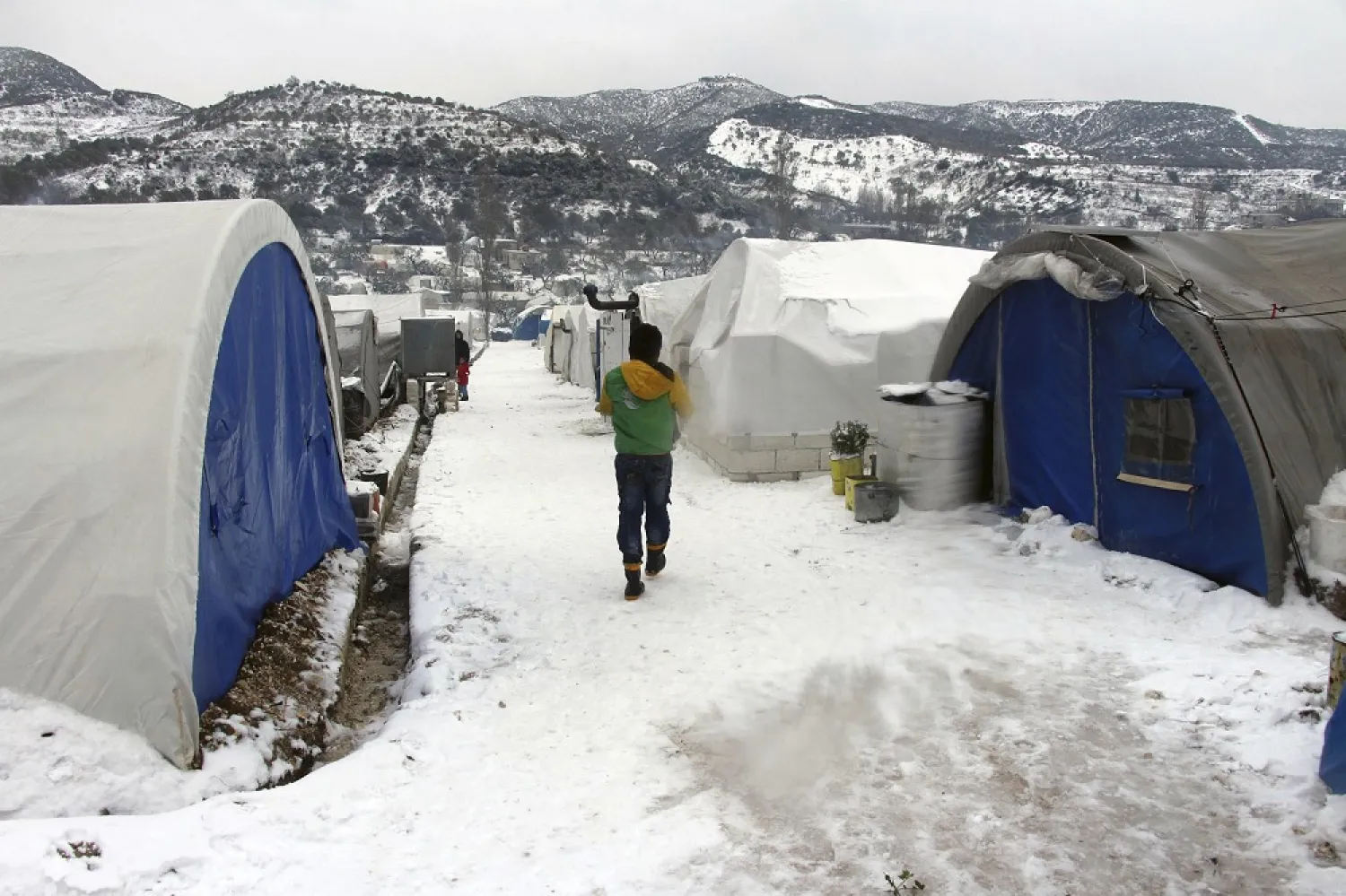
This Thursday, Feb. 13, 2020 photo released by the Syrian Civil Defense rescue group shows Syrian walking outside their tents at a displaced people camp near Turkish border, in Idlib, Syria. (AP)
TT

Freezing Weather Compounds Crisis for War-Weary Displaced in Syria

This Thursday, Feb. 13, 2020 photo released by the Syrian Civil Defense rescue group shows Syrian walking outside their tents at a displaced people camp near Turkish border, in Idlib, Syria. (AP)

A military offensive on an opposition-controlled region of northwestern Syria has created one of the worst catastrophes for civilians in the country's long-running war, sending hundreds of thousands of people fleeing, many of them sleeping in open fields and under trees in freezing temperatures.

The regime’s military campaign in Idlib province and the nearby Aleppo countryside has also killed hundreds of civilians, and a bitter winter has compounded the pain.

The weather has contributed to at least 10 deaths, including four who suffered hypothermia, a family of four that died of suffocation in their tent and two who burned to death when their tent caught fire, according to Mohammed Hallaj, a coordinator for the area’s Response Coordination Group.

Nizar Hamadi, 43, lost his brother and three other family members, including a three-year old. Their family had been displaced multiple times to escape the swift regime offensive, ending up in a settlement made up of rudimentary tents stitched together with sticks and cloth.

“It was God's destiny that it was really cold. The temperatures was no less then -8 or -9 (degrees Celsius, 15 degrees Fahrenheit) and this is rare in Syria," he said, speaking to The Associated Press from the Idlib town of Binnish.

He said his brother, Steif Abdel-Razak Hamadi, had moved north as Binnish also came under attack to set up his family's next shelter in Killi. On Tuesday, he set up a coal heater and by nightfall, as the fire died down, he moved it inside the tent and went to sleep with his family including his wife, two children and his grandchild.

“For the whole night, the heater was sucking out all the oxygen in the tent,” Hamadi said.

When the son sleeping in another tent woke up and came to their tent, he found them all dead.

The regime’s Russian-backed assault on Idlib, the Syrian opposition’s last stronghold, has uprooted more than 830,000 people since Dec. 1, most of them fleeing toward safer areas near the border with Turkey, UN spokesman Stephane Dujarric said Friday. At least 143,000 people have been displaced in the last three days.

“Humanitarian needs are increasing exponentially,” Dujarric said. “The ongoing emergency compounds the already dire humanitarian situation for people in the northwest, who have been made vulnerable by years of crisis, violence, economic downturn and, of course, multiple displacements,” he said.

Terrified families piled on trucks and vehicles, sitting on top of mattresses and blankets, clogging sludgy rural roads in harrowing scenes of exodus that have been recurrent in Syria’s conflict, now in its ninth year.

Around half the territory’s population had already been displaced from other parts of Syria, so formal camps are full.

“It’s cold, it’s snowing and our life is terrible, we can’t take this cold and neither can the kids,” said a woman, who identified herself by her nickname Um Muhammad, who recently fled and was staying at a tent camp near the Turkish border.

“This life, what can I say? We are broken now. I am an old woman with kids, no one is taking care of us,” she said, her face wrapped up in big black scarf against the cold.

The fighting has killed 1,700 people since last April, and the latest military campaign is disrupting aid operations, according to the United Nations. As of Feb. 11, at least 72 health facilities have suspended services due to insecurity or mass displacement, it says.

The UN Security Council held a closed meeting Friday on the escalating violence in Idlib at the request of its European Union members — France, Germany, Belgium and Estonia along with former member Poland.

Afterward, the five EU nations issued a statement expressing alarm at the military escalation and demanding an immediate end to the attacks.

“This is one of the worst man-made displacements that we have seen anywhere in the world in years. And it has been and continues to be entirely avoidable," the five EU nations said in the statement.

The United Nations World Food Program said it was forced to temporarily stop food distributions because the recent upsurge in hostilities disrupted the movement of trucks carrying supplies into the region from Turkey.

In the camps, refugees dig up mud from their flooded tent, others dust off the snow dumped by unusually cold spell. New trucks pull up with new arrivals, and mattresses piled on top.

Hooriya Al-Essa, a camp resident who arrived with his family last month from the Idlib countryside, said they lacked heaters, blankets, mattresses and firewood.

“Our situation is very bad. This entire camp is poor. We have nothing. We need help — money, heating, blankets, mattresses,” he said, standing next to a snow-covered tent.



Israel Court Extends Gaza Flotilla Activists’ Detention Until Sunday

 Brazil's activist Thiago Avila is escorted into court in the Israeli coastal city of Ashkelon on May 5, 2026. (AFP)
Brazil's activist Thiago Avila is escorted into court in the Israeli coastal city of Ashkelon on May 5, 2026. (AFP)
TT

Israel Court Extends Gaza Flotilla Activists’ Detention Until Sunday

 Brazil's activist Thiago Avila is escorted into court in the Israeli coastal city of Ashkelon on May 5, 2026. (AFP)
Brazil's activist Thiago Avila is escorted into court in the Israeli coastal city of Ashkelon on May 5, 2026. (AFP)

An Israeli court has extended the detention of two foreign activists from a Gaza-bound flotilla until Sunday, a rights group representing them said, as authorities continue to question the pair.

Spanish national Saif Abu Keshek and Brazilian national Thiago Avila appeared before a court in the city of Ashkelon for their second hearing on Tuesday, after they were brought to Israel for questioning last week.

The two, held in a prison in the southern Israeli city, were among dozens of activists aboard a Gaza-bound flotilla intercepted by Israeli forces off the coast of Greece early on Thursday.

At their first hearing on Sunday, the court extended their detention by two days. A second hearing was held on Tuesday, where both appeared with their legs shackled.

"The court approved their detention until Sunday morning" at Tuesday's hearing, Miriam Azem, international advocacy coordinator at the Israeli rights group Adalah told AFP.

An AFP journalist saw the two activists brought to the courtroom.

Adalah said the two activists were on hunger strike, with Tuesday their sixth day of protest.

On Monday, the rights group alleged the pair had been subjected to physical and psychological abuse in detention.

- Abuse claims -

Both Abu Keshek and Avila are being held in isolation, with "high-intensity lighting" on at all times in their cells, Adalah said, adding that Avila was being held in "extremely cold temperatures".

"They are kept blindfolded at all times whenever they are moved outside their cells, including during medical examinations," it said.

Israeli authorities have rejected the abuse claims.

At Sunday's hearing, Adalah said the state attorney had presented a list of offences the pair were accused of, including "assisting the enemy during wartime" and "membership in and providing services to a terrorist organization".

But Adalah's lawyers challenged the state's jurisdiction, arguing there had been an "unlawful abduction" of the two activists in international waters.

Israel's foreign ministry said both individuals were affiliated with the Popular Conference for Palestinians Abroad (PCPA), a group accused by Washington of "clandestinely acting on behalf of" Palestinian group Hamas.

The ministry said Abu Keshek was a leading PCPA member, and that Avila was also linked to the group and "suspected of illegal activity".

The flotilla's vessels had set sail from France, Spain and Italy with the aim of breaking Israel's blockade of Gaza and bringing humanitarian supplies to the devastated Palestinian territory.

But they were intercepted by Israeli forces off the coast of Greece.

The Global Sumud Flotilla's first voyage last year was also intercepted by Israeli forces off the coasts of Egypt and Gaza.

Israel controls all entry points into Gaza, which has been under an Israeli blockade since 2007.

Throughout the Gaza war that started in October 2023, there have been shortages of critical supplies in the territory, with Israel at times cutting off aid entirely.


With Wood Scarce, Gaza Carpenters Make Simple Beds from Pallets

 Palestinian carpenter Mohammed Wafi builds furniture from recycled wooden pallets in his workshop amid shortages of materials in Khan Younis, in the southern Gaza Strip, May 2, 2026. (Reuters)
Palestinian carpenter Mohammed Wafi builds furniture from recycled wooden pallets in his workshop amid shortages of materials in Khan Younis, in the southern Gaza Strip, May 2, 2026. (Reuters)
TT

With Wood Scarce, Gaza Carpenters Make Simple Beds from Pallets

 Palestinian carpenter Mohammed Wafi builds furniture from recycled wooden pallets in his workshop amid shortages of materials in Khan Younis, in the southern Gaza Strip, May 2, 2026. (Reuters)
Palestinian carpenter Mohammed Wafi builds furniture from recycled wooden pallets in his workshop amid shortages of materials in Khan Younis, in the southern Gaza Strip, May 2, 2026. (Reuters)

As Israeli restrictions continue to curb the entry of goods into Gaza, local carpenters are turning to scrap wood and shipping pallets to make much-needed basic beds and tables in a strip battered by two years of war between Hamas and Israel.

In a workshop in southern Gaza, carpenters dismantle used pallets to make beds, cupboards, and shelves for families displaced by fighting, after regular construction materials became scarce or prohibitively expensive.

Mohammed Wafi, 34, a carpenter in Khan Younis, said pallets became one of the few available sources of wood when limited ‌aid trucks began entering ‌Gaza.

Demand for his handiwork has grown as people living ‌in ⁠tents seek basic furniture ⁠to get by, Wafi said. Even recycled furniture has become more costly as prices for basic components soar.

"Today people say, 'I just need something to get by, something to get my clothes off the floor'... especially those (living) in tents," said Wafi, who has worked in carpentry for 16 years.

"Due to the rats and cockroaches, they need a tent or a bed to be lifted off the ground," he said.

Rats and parasites are spreading ⁠through Gaza's tent camps, biting people as they sleep, gnawing through ‌possessions, and spreading disease.

COGAT, the Israeli military agency ‌that coordinates aid into Gaza, didn't respond to a request for comment. Wood is a construction material ‌that Israel bans from entry to Gaza because it is considered a dual-use ‌item - items for civilian but also potential military use.

"We used to get a kilo of nails for 5 shekels ($1.70). Today, a kilo of nails costs around 100 or 130 shekels," Wafi said. Hinges and other fittings have also multiplied in price.

Still, furniture made from pallets remains far ‌cheaper than conventional bedroom sets, consisting of a bed, closet and dresser, he said. A pallet set sells for 4,000 to ⁠5,000 shekels compared ⁠to 18,000 for a traditional set.

Shortages of electricity and wood have slowed production, he added, leaving carpenters unable to guarantee delivery times.

The ceasefire in Gaza has been repeatedly violated, with over 830 Palestinians and four Israeli soldiers reported killed since it began in October, according to Palestinian and Israeli tallies.

Israel cites security concerns for curbs on Gaza, and COGAT has previously said it invests considerable efforts to ensure aid reaches Gaza and has denied restricting supplies.

In tent encampments near Khan Younis, Mohammed Tayseer, who has lived in a tent for two years, said he slept on the ground until recently.

"The ground is sandy and dirty, and as you can see, you find the clothes full of sand. There are rats and mice," he said.

"One's back hurts and is stiff from sleeping on the floor... now (we) have a bed," he said.


Sudan Recalls Ambassador to Ethiopia After Airport Attack

Smoke rises, following a drone attack in Khartoum airport, in Khartoum, Sudan, in this screengrab taken from social media video released on May 4, 2026. (Social media/Reuters TV via Reuters)
TT

Sudan Recalls Ambassador to Ethiopia After Airport Attack

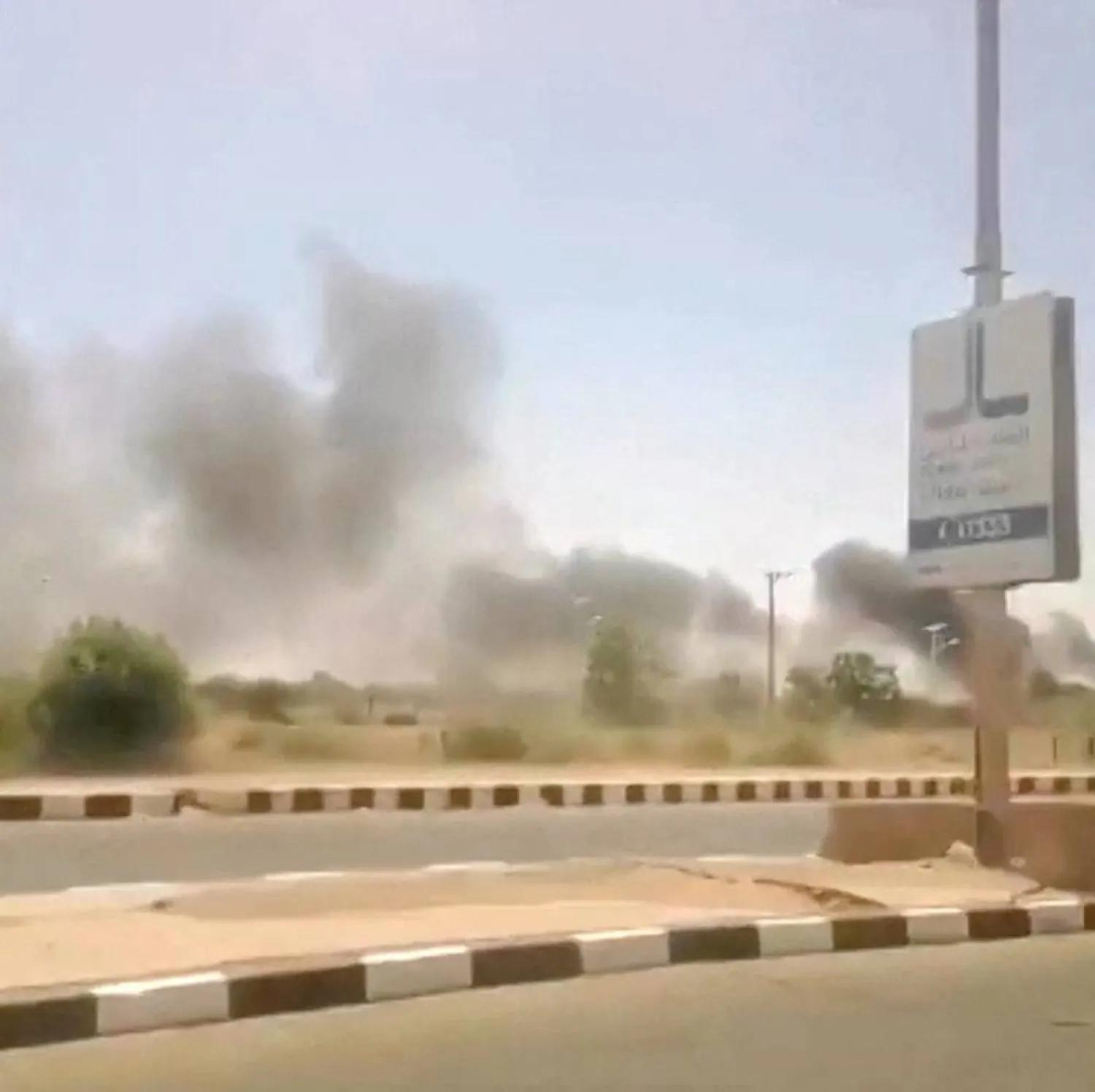
Smoke rises, following a drone attack in Khartoum airport, in Khartoum, Sudan, in this screengrab taken from social media video released on May 4, 2026. (Social media/Reuters TV via Reuters)

Sudan has recalled its ambassador to Ethiopia, accusing the country of involvement in a drone attack targeting the airport in the capital, the official news agency SUNA reported Tuesday.

A military source told AFP that Sudanese air defenses downed drones that targeted Khartoum airport on Monday, while witnesses confirmed hearing blasts and seeing smoke rise from an area nearby.

Drone attacks by both Sudan's army and paramilitary group Rapid Support Forces (RSF), which have been at war since April 2023, have intensified across the country in recent months.

The Sudanese military accused RSF in March of launching drone attacks "from inside Ethiopian territory", the first public allegation of Ethiopian involvement in the conflict.

Mohieddin Salem, the Sudanese army-aligned government's foreign minister, "announced the recall of Sudan's ambassador to Ethiopia for consultations regarding the drone attack on Khartoum International Airport on Monday," SUNA quoted Salem as saying in a statement.

Salem "stated that it has been conclusively proven that the attack originated from Ethiopia, a country that is supposed to be a sister nation," the statement added.