


Developing Roads Reflects Positively on Investments in Riyadh

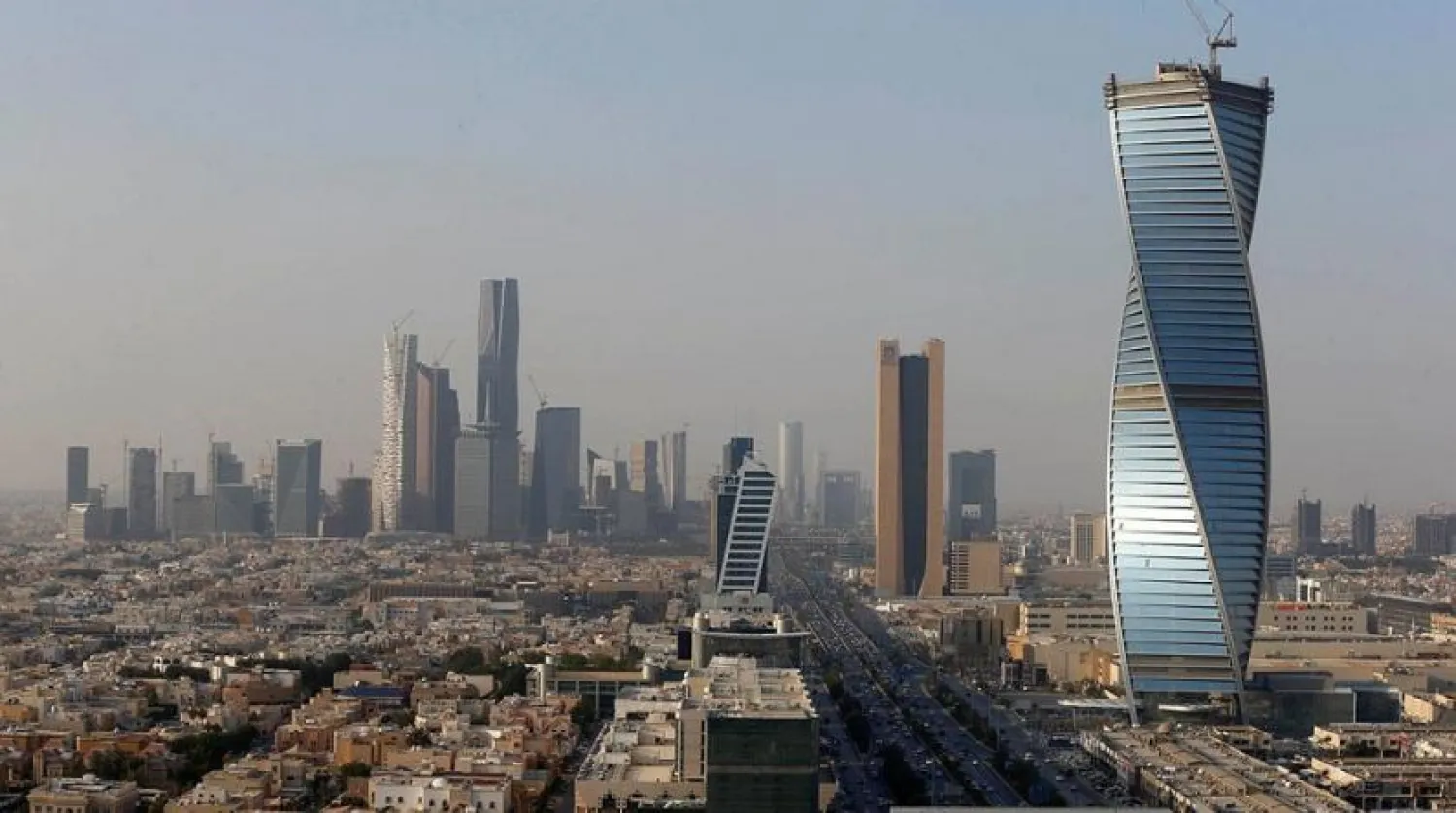
A general view of the Saudi capital Riyadh. (Reuters)
TT

Developing Roads Reflects Positively on Investments in Riyadh

A general view of the Saudi capital Riyadh. (Reuters)

The Chairman of the Riyadh Chamber of Commerce and Industry, Ajlan al-Ajla, said that developing road hubs represented a positive strategic shift in attracting investments in Riyadh, which would support development projects, expand commercial activities, and increase quality projects.

Ajlan stressed that the development would enhance the transportation and logistic services system in line with the development of Riyadh as one of the fastest-growing capitals in the world.

Earlier, Saudi Crown Prince Mohammed bin Salman, Deputy Prime Minister and Minister of Defense, ordered the development of main roads in Riyadh in order to upgrade the city’s transportation system.

Ajlan said in a statement that this will be reflected in the growth and expansion of commercial, economic, and development activities in the capital and raise its competitiveness as an attractive destination for investments.

He pointed out that the plan was to upgrade the city’s transportation system by activating the linkage between its parts and preparing it to be a major hub in providing sustainable transport and logistic services in the Middle East.

The Chairman added that based on Vision 2030 programs, the Crown Prince’s directive will be reflected on all economic activities in the capital, as it contributes to the comprehensive urbanization and development expansion, especially with the significant expansion in Riyadh and population increase.

The program will work on developing junctions between Riyadh’s ring roads and main routes, and developing 400 km of road network, by adding new roads and upgrading existing junctions.

The implementation of this program will contribute to achieving a set of benefits for Riyadh, such as linking different parts of the city with each other via a network of express and arterial roads, accommodating traffic trips to the city through the ring road network, and fulfilling the existing and expected transportation needs.

It will also direct urban development in line with the city's future vision and strategy.

The project will enhance Riyadh’s leading role as one of the major metropolises of the world, in line with the goals and programs of the Kingdom’s Vision 2030; among the main projects developed: improving the First Ring Road with an additional length of 80 km and continued work on the Second Ring Road, developing the main junctions of the King Fahd Road to increase its capacity, and increasing the capacity of the Imam Saud Bin Faisal Road from King Khalid Road until its junction with the second eastern ring road, with a length of 23 km.



Saudi Foreign Minister Receives Phone Call from French Foreign Minister

zSaudi Foreign Minister Prince Faisal bin Farhan bin Abdullah - File Photo/Reuters)
TT

Saudi Foreign Minister Receives Phone Call from French Foreign Minister

zSaudi Foreign Minister Prince Faisal bin Farhan bin Abdullah - File Photo/Reuters)

Saudi Minister of Foreign Affairs Prince Faisal bin Farhan bin Abdullah received a phone call from Minister for Europe and Foreign Affairs of the French Republic Jean-Noël Barrot, SPA reported.

During the call, they discussed bilateral relations and the latest regional and international developments.


Yemen Presidential Leadership Council President Holds Talks with GCC Sec-Gen

President of the Presidential Leadership Council of Yemen Dr. Rashad Mohammed Al-Alimi - Reuters
TT

Yemen Presidential Leadership Council President Holds Talks with GCC Sec-Gen

President of the Presidential Leadership Council of Yemen Dr. Rashad Mohammed Al-Alimi - Reuters

President of the Presidential Leadership Council of Yemen Dr. Rashad Mohammed Al-Alimi met with Secretary-General of the Gulf Cooperation Council (GCC) Jasem Albudaiwi in Riyadh.

According to a press release issued by the GCC General Secretariat, the two sides reviewed GCC-Yemeni relations and discussed the current situation in the Republic of Yemen, with particular focus on recent developments in the governorates of Hadramout and Al-Mahrah. Albudaiwi affirmed that all efforts are being exerted and supported to enhance security and stability in Yemen.

Dr. Al-Alimi commended the stances, leading role, and exceptional efforts made by the GCC states to support Yemen across various fields, contributing to enhancing Yemen’s stability and realizing its development, SPA reported.

Furthermore, Albudaiwi reiterated the GCC’s steadfast position affirming full support for the Presidential Leadership Council, headed by Dr. Al-Alimi, and its supporting entities, in their endeavours to achieve security and stability in Yemen.

He also underscored the GCC’s support for reaching a comprehensive political solution in accordance with the three references, in a manner that preserves Yemen’s sovereignty, unity, territorial integrity, and independence.


No Damage as Quake Strikes Saudi Arabia’s Eastern Region 

No damage was reported from the earthquake. (SPA)
TT

No Damage as Quake Strikes Saudi Arabia’s Eastern Region 

No damage was reported from the earthquake. (SPA)

An earthquake struck Saudi Arabia’s Eastern Region on Wednesday.

Spokesperson for the Saudi Geological Survey (SGS) Tariq Aba Al-Khail said no damage casualties were reported in the 4.0-magnitude quake.

The earthquake resulted from tectonic stresses from the collision of the Arabian and Eurasian geological plates in the Zagros Mountains of Iran, which activated existing faults in the Earth's crust in Eastern Region of the Kingdom, he said.