


IMF Deal Seen as Only Solution for Crisis-Hit Lebanon

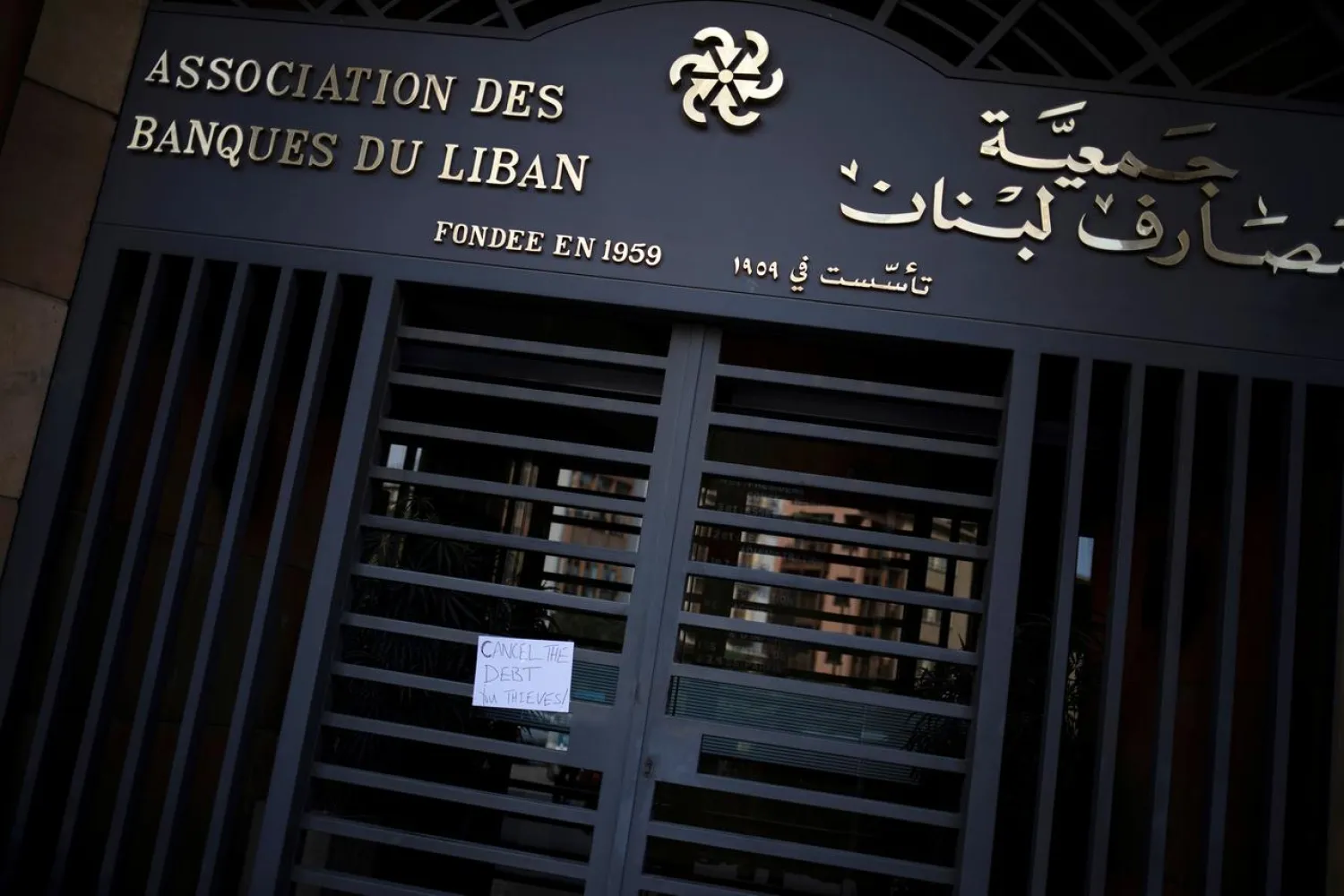
FILE PHOTO: The closed entrance of the Association of Banks in Lebanon in downtown Beirut, Lebanon, October 25, 2019. REUTERS/Alkis Konstantinidis
TT

IMF Deal Seen as Only Solution for Crisis-Hit Lebanon

FILE PHOTO: The closed entrance of the Association of Banks in Lebanon in downtown Beirut, Lebanon, October 25, 2019. REUTERS/Alkis Konstantinidis

The Lebanese government must swallow its misgivings and reach a rescue deal with the International Monetary Fund (IMF) or risk economic implosion and further turmoil, economists, diplomats and politicians said.

Privately, some government officials acknowledge that an IMF bailout is the most logical solution to Lebanon’s economic crisis, according to a source familiar with ongoing discussions.

But to get such a rescue program in place, the new government would have to overcome the objections of Hezbollah.

As Lebanon's financial crisis drags on and government revenues dwindle, the bill to rescue the country is rising.

Former economy minister and ex-vice central bank governor Nasser Saidi estimates the economy will need $30 billion, and an additional $25 billion to recapitalize a banking system in hock to the state.

"Lebanon needs external liquidity both for the balance of payments but also for the government," Saidi said. "That's why the external package and the IMF reform program which comes with all the associated reforms which we need is so necessary".

A $1.2 billion payment on a Eurobond is falling due on March 9 and even though Lebanon is widely expected to restructure its foreign-currency-denominated debt that is unlikely to be enough to deal with the total debt burden, economists and analysts say.

The IMF has estimated that Lebanon's public debt would reach 155% of gross domestic product by the end of 2019, one of the biggest debt burdens in the world.

Any move to restructure will further pressurize local banks, which after years of funneling their deposits to the state, have an exposure to Lebanese sovereign debt that stands at almost twice their capital base.

The government could look at forcing depositors to take losses as another way to alleviate its burden. But the Lebanese banking system has been built on attracting deposits from overseas and grabbing such cash would make it more difficult for Lebanon to attract hard currency in future.

The banks have already seen deposits drain away, despite effectively imposing capital controls on ordinary savers, and urgently need to restock their balance sheets.

Lebanon hired US investment bank Lazard and law firm Cleary Gottlieb Steen & Hamilton LLP last week as advisers.

But with inflation shooting up to 30%, the pound depreciating by 40% since October and the number of jobless rising every day, analysts say only a full IMF deal will unlock the tens of billions of dollars Lebanon now needs.

"The IMF opens doors to international assistance. An IMF program is inevitable”, Reuters quoted Toufic Gaspard, a former government and central bank economist, as saying.

"It's likely Hezbollah will eventually accept an IMF plan because they have no other option. The alternative will be serious political and economic crises”.

The government said it was working its own rescue plan without resorting to an IMF program and was only seeking IMF technical assistance.

A senior Hezbollah official said that terms required by any IMF bailout would spark social unrest.

"The position is not towards the Fund as an international financial institution but on the terms offered to Lebanon, because they will lead to a popular revolution," Hezbollah MP Hassan Fadallah told Reuters.

"Our position is against this type of program and not against the Fund as an organization."

The IMF declined to comment, referring instead to a statement from last week when it said its staff had held five days of "very informative and productive" talks with Lebanese authorities, and stood ready to provide further technical advice as the Lebanese government formulated its economic reform plans.

Some analysts argue Hezbollah will have to relent because its Shiite constituency, especially those who pad the public payroll, will be among the worst hit by economic collapse – and because the IMF is the only alternative to that risky outcome.

"Unless the right, responsible decisions are made, there's a big collapse coming and it’s unknown what will come out of it: will it be the same Lebanon or a different Lebanon?," said Alain Aoun, a senior member of the Free Patriotic Movement.

"The price for the Lebanese system will be very high, bigger than just a change of government," said Aoun, adding that so far no party had presented a credible alternative to an IMF program.

Fadallah did not respond to a question about an IMF program being the only way to avoid economic disaster.



US Embassy in Beirut Warns of Possible Iran Threat to Universities in Lebanon

People walk past the main gate to the campus of the American University of Beirut (AUB) in the center of Beirut on January 13, 2022. (AFP)
TT

US Embassy in Beirut Warns of Possible Iran Threat to Universities in Lebanon

People walk past the main gate to the campus of the American University of Beirut (AUB) in the center of Beirut on January 13, 2022. (AFP)

The US embassy in Beirut said on ‌Friday ‌that Iran ‌and ⁠its aligned armed ⁠groups "may intend to target ⁠universities ‌in Lebanon".

In ‌a security ‌alert, ‌the embassy also ‌urged US citizens to depart ⁠Lebanon "while ⁠commercial flight options remain available".

Lebanon was dragged into the conflict in the Middle East when Iran-backed Hezbollah shot rockets at Israel in retaliation to the killing of Iranian supreme leader Ali Khamenei at the beginning of the war.

Over the past 24 hours, Israeli strikes killed 23 people and wounded 98, the Lebanese health ministry said Friday.

The ministry said that the overall death toll includes 125 children and 91 women, since Israel launched intense airstrikes across Lebanon after the Hezbollah fired rockets toward northern Israel in solidarity with Iran on March 2. The strikes have also wounded 4,138 others.

Among those killed are 53 health workers, while Israeli strikes have targeted 83 emergency medical service facilities, the health ministry said.


UN Force Says 3 Peacekeepers Wounded in Blast Inside South Lebanon Position

 UNIFIL vehicles drive on a main road in Qlayaa, amid escalating hostilities between Israel and Hezbollah, as the US-Israel conflict with Iran continues, in Qlayaa, southern Lebanon, March 27, 2026. (Reuters)
UNIFIL vehicles drive on a main road in Qlayaa, amid escalating hostilities between Israel and Hezbollah, as the US-Israel conflict with Iran continues, in Qlayaa, southern Lebanon, March 27, 2026. (Reuters)
TT

UN Force Says 3 Peacekeepers Wounded in Blast Inside South Lebanon Position

 UNIFIL vehicles drive on a main road in Qlayaa, amid escalating hostilities between Israel and Hezbollah, as the US-Israel conflict with Iran continues, in Qlayaa, southern Lebanon, March 27, 2026. (Reuters)
UNIFIL vehicles drive on a main road in Qlayaa, amid escalating hostilities between Israel and Hezbollah, as the US-Israel conflict with Iran continues, in Qlayaa, southern Lebanon, March 27, 2026. (Reuters)

The United Nations Interim Force in Lebanon said a blast hit one of its positions and wounded three peacekeepers on Friday, the third such incident in a week.

"This afternoon, an explosion inside a UN position... injured three peacekeepers, two seriously. They are all currently being evacuated to hospital. We do not yet know the origin of the explosion," UNIFIL spokesperson Kandice Ardiel said in a statement.

"UNIFIL reminds all actors of their obligations to ensure the safety and security of peacekeepers, including by avoiding combat activities nearby that could put them in danger," she added.

The UN force is deployed in south Lebanon near the Israeli border, where Israel and Hezbollah have been at war for a month and where Israeli troops are pressing a ground invasion.

Lebanon was drawn into the Middle East war on March 2 when the Tehran-backed Hezbollah launched rockets at Israel to avenge the US-Israeli attack that killed Iran's supreme leader Ali Khamenei.

Israel has responded with massive strikes across Lebanon, as well as the ground operation.

UNIFIL had said that a peacekeeper was killed on Sunday evening when a projectile of unknown origin "exploded in a UNIFIL position near Adchit al-Qusayr".

The following day, UNIFIL said an "explosion of unknown origin" destroyed a peacekeeping vehicle, killing two more Indonesian troops.

It said investigations had been launched into both incidents.

A UN security source told AFP this week that Israeli fire was the source of Sunday's attack, while a mine may have caused the following day's deadly blast.

Israel's military denied responsibility for Monday's incident.

"A comprehensive operational examination indicates that no explosive device was placed in the area by army troops, and that no troops were present in the area at all," the statement said.

According to the UN, 97 force members have been killed in violence since UNIFIL was first established to monitor the withdrawal of Israeli forces after they invaded Lebanon in 1978.

The mandate of the force, which for decades has acted as a buffer between Israel and Lebanon, finishes at the end of this year.


RSF in Sudan Kill at Least 10 People in Hospital Drone Attack, Medical Group Says

Fighters of the paramilitary Rapid Support Forces (RSF) drive an armored vehicle in Khartoum in 2023. (AFP)
TT

RSF in Sudan Kill at Least 10 People in Hospital Drone Attack, Medical Group Says

Fighters of the paramilitary Rapid Support Forces (RSF) drive an armored vehicle in Khartoum in 2023. (AFP)

Sudan ’s paramilitary forces killed at least 10 people on Thursday in a drone attack that hit a hospital in the south-central part of the country, said a medical group.

Doctors Without Borders, also known as MSF, said the Sudanese paramilitary Rapid Support Forces, RSF, launched two drone strikes on al-Jabalain Hospital in the White Nile province, hitting an operating theater and a maternity ward.

The strikes, the latest in an intensifying drone warfare between the army and the RSF, killed 10 people, including seven medical staffers, and injured at least 19 people. Those injured were transferred to a hospital in Kosti, which is around 50 miles (80 kilometers) away, said MSF.

Salah Moussa, a senior staffer in the nursing department at al-Jabalain Hospital, was injured in his leg in one of the two strikes. He told The Associated Press by phone on Friday that those killed include the hospital’s general manager, the administrative manager, several policemen and a citizen.

Moussa said he was in his house near the hospital when he heard the sound of explosions at around 11 a.m. on Thursday.

“I rushed to the hospital when I heard the explosion and while we were helping evacuate three injured staff members, another drone strike was launched and I got hit and lost consciousness,” he said. “The hospital lost all its medical and administrative leadership in this attack.”

The strikes are the latest in a series of attacks on the health care system in Sudan that continues to be hit hard during the ongoing war between the army and the RSF that broke out in April 2023. The World Health Organization said in March that over 200 attacks have targeted health care since the war began. Most recently, 70 people were killed, including at least 13 children, in a strike on a hospital in Sudan’s western Darfur region last month.

The nearly three-year conflict in Sudan killed more than 40,000 people, according to UN figures, but aid groups say the true number could be much higher.

“The attack is even more appalling as it occurred during a children’s immunization campaign,” the MSF said of the strike on the al-Jabalain hospital.

Meanwhile, Emergency Lawyers, a local rights group, said Thursday that the attacks also targeted a medical supply depot in Rabak, the capital city of the White Nile province.

The Emergency Lawyers said the “recurring pattern” of drone attacks by the warring parties since March in the provinces of South Kordofan, Blue Nile, East, Central and South Darfur displaced more people.

On Friday, Khalid Aleisir, the minister of culture, information, antiquities and Tourism condemned the attack and called for designating the RSF a terrorist organization and prosecuting its members.

“We also hold regional backers directly responsible for perpetuating this violent campaign through military and logistical support, including advanced weaponry and unmanned aerial systems, which have escalated violence and targeted civilians,” he wrote on X.

Sudan Doctors Network, a local group that monitors war violence, called the attack a “deliberate assault on health facilities and unarmed civilians” that further worsens an already deteriorating health sector in the country.

“MSF is outraged by these repeated attacks on health care, which have escalated dangerously in recent weeks,” said Esperanza Santos, MSF head of emergencies for Sudan in the group’s statement on Thursday. “Health facilities, medical staff, and patients must always be protected. We call on RSF and SAF to immediately stop this spiral of violence against medical facilities.”

A surge in drone strikes in the Sudanese region of Kordofan has taken a growing toll on civilians and hampered aid operations, analysts and humanitarian workers previously said.