Starved of Dollars and Drowning in Debt, Lebanon's Economy Sinks Fast

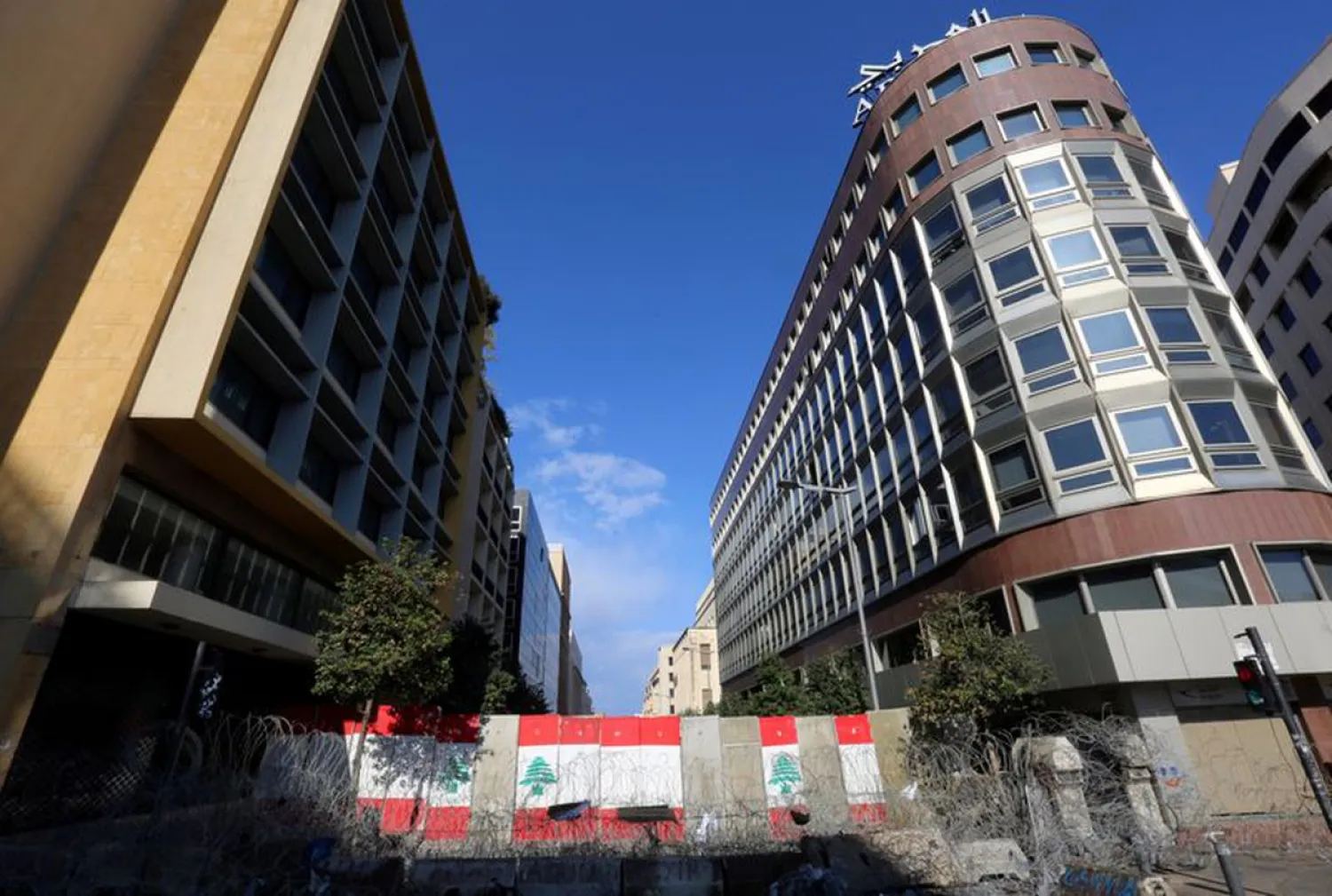
Concrete barriers erected by authorities to block a street hosting banks and financial institutions near the government palace in Beirut, Lebanon, January 24, 2020. REUTERS/Aziz Taher/File Photo
TT

Starved of Dollars and Drowning in Debt, Lebanon's Economy Sinks Fast

Concrete barriers erected by authorities to block a street hosting banks and financial institutions near the government palace in Beirut, Lebanon, January 24, 2020. REUTERS/Aziz Taher/File Photo

After importing medical supplies to Lebanon for 20 years, Hassan Hamdan shut his business in December. Sales were plummeting, clients couldn't pay, and the dollars he needed to buy imports had dried up. Now he drives an Uber.

Businesses such as Hamdan's have been shutting at a rapid rate since a financial crisis exacerbated by months of political instability has brought much of Lebanon's economy to a halt.

"Everyone is in debt - even me - because of what's happening. But I'm able to afford food for the house and a few bills. Without Uber, I would be begging," said Hamdan, 37.

While Lebanon produces little hard, up-to-date economic data, interviews with two dozen business owners, union leaders, industry groups and traders paint a picture of an economic and financial crisis without precedent since independence in 1943.

More than 220,000 jobs in the private sector have been shed since mid-October when protests fuelled by worsening economic conditions erupted against the political elite, according to a survey in February.

"It's a social catastrophe," said Ramzi El Hafez, general manager of InfoPro, the research firm behind the survey. "This is the heaviest one-shot drop since the end of the civil war ... There is no end in sight. It is an open-ended crisis."

A fifth of workers in the hotel industry, a traditional engine of the economy, have been laid off and in the southern city of Sidon, one in five shops has already shut down.

The job losses since October are a major blow to Lebanon's employed workforce, which the International Labour Organisation estimated at just 1.59 million in a 2019 report.

Importers of critical goods such as medical supplies say their requests for dollars have gone almost entirely unmet since February, leaving many hospitals dangerously low on everything from heart stents to dialysis equipment.

"Almost all the work has come to a halt. We're unable to do anything," said Mohamad Sukkar, who owns a contracting company.

His business is frozen, stuck between banks that will not cash cheques and suppliers demanding payment in dollars he cannot get. "We've had to close down all the work and we're not taking up any new work," said Sukkar.

Hard hit businesses were dealt yet another blow this week as Lebanon ordered malls, restaurants, and other venues to close to stop the spread of the coronavirus, as well as halting flights from the worst-hit countries.

'AFRAID TO BRING IN GOODS'

Lebanese banks have attracted huge foreign inflows for years by offering some of the region's highest interest rates, allowing the country to pay for imports despite low exports.

But inflows have fallen sharply in recent years along with economic growth, dragged down by regional turmoil, a nine-year war in Syria and strained relations with several countries.

Lebanese expats who had been propping up the economy with remittances, meanwhile, started to hold back funds as banks began imposing strict controls which now limit withdrawals for regular customers to as little as $100 a week.

The situation has deteriorated since the political crisis to the point where Lebanon said this month it can't repay its sovereign debt as well as pay for essential imports.

Virtually locked out of the banking system, importers have struggled to keep up with the rising price of dollars. The Lebanese pound has lost about 40% of its value since October, hiking the price of everyday imported goods.

As dollars grow increasingly scarce, the country's import-dependent supply chain has slowed to a crawl.

Traders of foodstuffs say they have slashed imports by 30%-40%. Industrialists say they're struggling to source raw materials. Consumers and businesses gripe about rising prices and slumping sales.

"We're getting to the stage where we're afraid to bring in goods," said Mohammed Yakoub, who supplies restaurants. His sales have slumped 70% since October as the economic crisis takes its toll on businesses.

At least 785 restaurants, cafes, and nightclubs went belly-up from September through February, with 240 shut in January alone, according to the sector's main union.

"There will be more unemployment, there will be a big exodus, people will look for work abroad, we are already seeing this. We will lose yet another batch of good workers that we would have liked to retain in the country," said union general secretary Maya Bekhazi.

RUNNING OUT OF WHEAT

Among the tell-tale signs that dollar flows are getting even more critical is what traders describe as a near halt in a central bank process launched in September to secure foreign currency for critical goods - medicine, fuel, and wheat.

"The central bank has stopped transfers for all operations related to importing wheat for about a month. It is completely shut down, so now we are in the process of running out of stocks," said Crown Mills flour mill owner Paul Mansour.

Mansour said mills unable to pay foreign suppliers were considering asking the government to import grain: "The stocks have decreased and within 40 days will be depleted."

Many cities outside Beirut appear harder hit. South of the capital in Sidon, its once-bustling market is lined with empty storefronts up for rent.

"Even the shops you still see open are unable to sell anything," said shopkeeper Abdullah Merzoub. "Things are getting harder".

The head of the Sidon trade association, Ali al-Shareef, said 120 of the city's 600 shops have closed since October and he expected the number to double in the next few months.

"We're headed toward a bigger and bigger collapse," he said.

Emptied of guests, hotels have laid off 20% of their workforce and put the rest on half-time, said Pierre Achkar, head of Lebanon's hotel federation.

"This is the lowest occupancy rate I've seen in 50 years," he said. "If the summer is bad, I think we will have a lot of hotels that will close."

Many companies, such as Chip, which provides security systems, said they were staying in business despite heavy losses only because shutting down and reopening would be more costly.

Chip chief executive Hady Nahas said he was keeping his 72 employees on even though turnover was only 15% of what it was a year ago - but he would be forced to do something dramatic by the end of the year if things don't improve.

"We're draining our personal resources as owners. There's a limit, and I don't know if the situation will be resolved ... before we break," said Nahas.


Bahraini Transport Minister to Asharq Al-Awsat: Each Country to Finance Its Share of Gulf Railway Project

A conceptual rendering of the Gulf railway interconnection project. (X)
TT

Bahraini Transport Minister to Asharq Al-Awsat: Each Country to Finance Its Share of Gulf Railway Project

A conceptual rendering of the Gulf railway interconnection project. (X)

The Gulf Cooperation Council (GCC) member states took a new step toward completing the railway interconnection project by signing the project's general agreement in Bahrain on Sunday. This comes as part of efforts to establish an integrated transport network linking the six nations and boosting the movement of passengers, goods, and commercial trade among them.

Bahraini Minister of Transportation and Telecommunications Dr. Sheikh Abdulla bin Ahmed Al Khalifa told Asharq Al-Awsat that each country will fund and execute the portion of the project located within its territory.

Meanwhile, the costs, fees, and expenses associated with the shared interconnection components among member states will be determined collectively, he added.

He explained that the agreement establishes a joint framework for the project's execution and operation, while defining the obligations of member states and their coordination mechanisms.

He noted that the network, which extends some 2,117 kilometers, aims to transport 6 million passengers and 200 million tons of freight by 2030, with the figures projected to rise to more than 8 million passengers and 271 million tons of freight by 2045.

The project spans from Kuwait, passing through Saudi Arabia, Bahrain, Qatar, and the UAE, all the way to Oman, with the goal of achieving full network operations by December 2030.

According to the minister, interconnection lines between adjacent countries can become operational as soon as their components are completed, without the need to wait for the entire Gulf network to be finalized.

National financing and potential partnerships

On private sector participation, Al Khalifa said that it remains one of the viable options for financing, executing, or operating certain components of the project, depending on the outcomes of economic and financial studies. He stressed that there is no unified public-private partnership model approved across the entire network.

There are currently no pre-existing agreements with specific international partners to finance or execute the project, he said. However, the expertise of global companies in the fields of design, engineering, technology, and operating systems could be utilized based on the project's needs and its various phases.

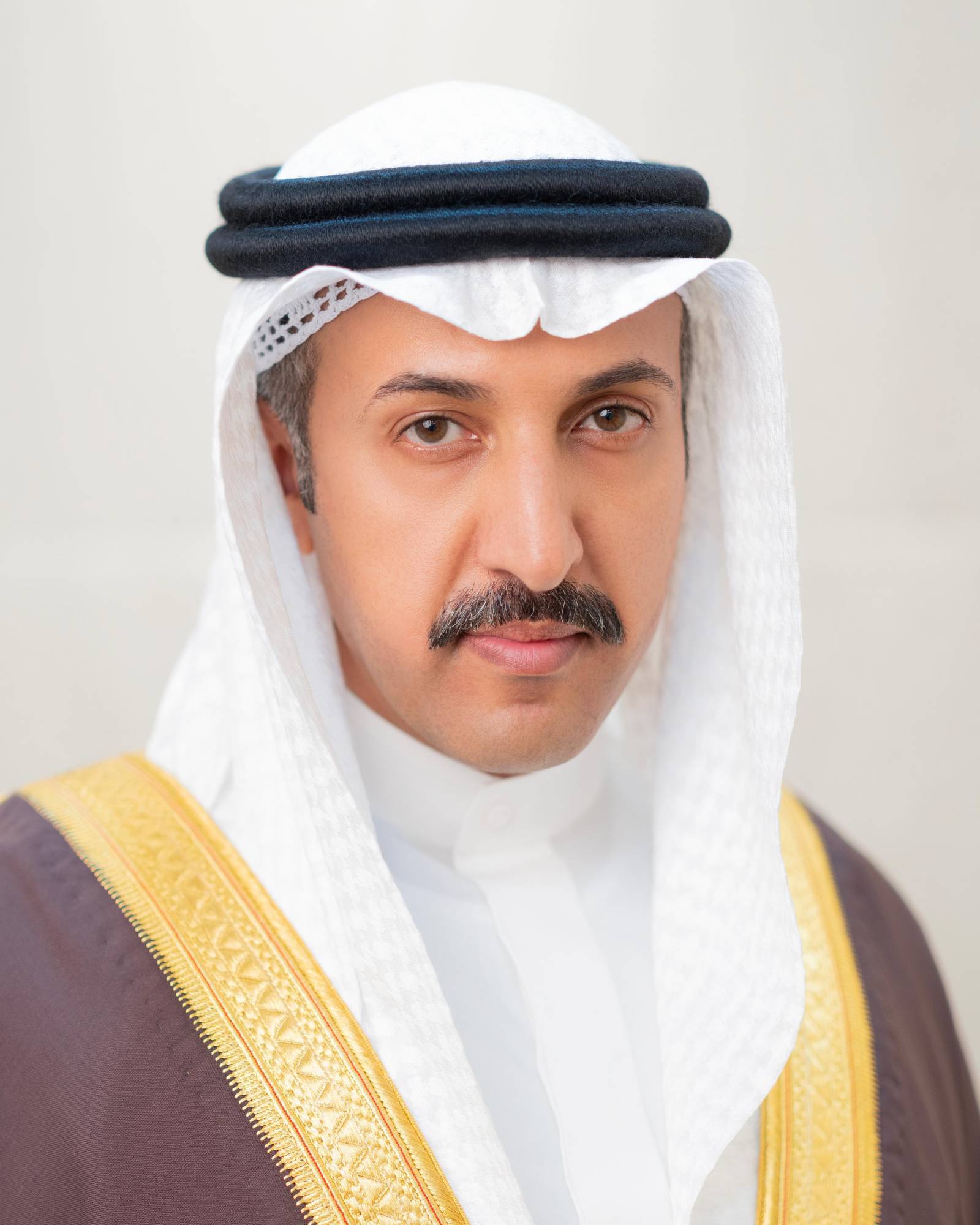
Bahraini Minister of Transportation and Telecommunications Dr. Sheikh Abdulla bin Ahmed Al Khalifa.

Concerning the project's announced completion rate, the minister explained that the 50 percent figure represents the average progress achieved across member states, and does not mean that half of the construction work for the entire Gulf network has been completed.

The project's cost estimates are currently undergoing review and updates in light of economic shifts, rising prices for materials and services, construction costs, and inflation, he revealed without specifying an updated total cost at the present time.

Returns beyond passenger and freight transport

Al Khalifa said that the economic impact of the project is not limited to facilitating passenger movement and freight transport, but extends to improving supply chain efficiency, boosting trade among GCC countries, and linking industrial centers, economic zones, and logistical hubs, as well as supporting employment and investment opportunities.

He added that determining the project's exact contribution to the gross domestic product (GDP) or estimating expected savings in time and costs remains premature, given that returns vary depending on transport routes, the nature of the cargo, and the points of origin and destination.

In light of the challenges facing maritime navigation in the region, the minister stressed that the Gulf railway network is not intended to serve as a substitute for maritime transport. Instead, it acts as a complementary route that boosts transport options and connectivity among GCC nations, increasing the resilience of supply chains against disruptions that could affect various modes of transportation.

He noted that integration between ports, roads, railways, and airports will strengthen the flexibility of the Gulf transport system, while connecting to broader international logistical corridors remains a future possibility contingent on completing studies, understandings, and coordination with the relevant countries and entities.

King Hamad Bridge to link Bahrain and Saudi Arabia

Regarding the connection between Bahrain and Saudi Arabia, Al Khalifa explained that the King Hamad Bridge project includes road lanes and railway lines, enabling the international passenger station in Bahrain to connect with the Saudi railway network and forming one of the essential components for completing the Gulf interconnection.

He added that work is underway on the privatization procedures for the King Fahd Causeway Authority, alongside completing the necessary studies and procedures to transition to the execution of the new bridge project.

Achieving the connection between Bahrain and Saudi Arabia is a fundamental requirement for operating the railway line between the two countries within the project's targeted timeframe in December 2030,e he said.


Egypt Seeks Faster Progress on Libya Gas, Refining and Power Projects

Egyptian Foreign Minister Badr Abdelatty speaks during a press conference with Minister of Information Diaa Rashwan (not pictured) in Cairo, Egypt, March 25, 2026. (Reuters)
TT

Egypt Seeks Faster Progress on Libya Gas, Refining and Power Projects

Egyptian Foreign Minister Badr Abdelatty speaks during a press conference with Minister of Information Diaa Rashwan (not pictured) in Cairo, Egypt, March 25, 2026. (Reuters)

Egypt aims to accelerate energy projects with Libya, including gas pipeline links, refining of Libyan crude in Egypt and an electricity interconnection, Egyptian Foreign Minister Badr Abdelatty said late on Saturday.

Abdelatty's comments were in ‌a ministry ‌statement after a meeting ‌with ⁠Libya’s acting oil ⁠and gas minister Khalifa Abdulsadek in Tripoli.

Abdelatty also ‌called for cooperation on petroleum products and the completion of projects to refine Libyan ‌oil in Egypt and re-export it, the statement said, ⁠adding ⁠that Abdulsadek had said that Libya would continue implementing existing projects and would visit Cairo soon to continue technical talks with Egypt’s petroleum and electricity ministers.

The statement did not provide details on costs or the status of the projects.


GCC: Railway Agreement Sets Joint Framework for Project Implementation and Operation

GCC transport ministers pose for a group photo following the 27th committee meeting in Kuwait. (GCC Railway Authority)
TT

GCC: Railway Agreement Sets Joint Framework for Project Implementation and Operation

GCC transport ministers pose for a group photo following the 27th committee meeting in Kuwait. (GCC Railway Authority)

Jasem Albudaiwi, secretary-general of the Gulf Cooperation Council (GCC), said on Sunday that the signing of the General Agreement on the GCC Railway Project marked an important step toward establishing an integrated regional transport network.

He said the network would facilitate the movement of citizens and residents, ease freight transport, boost intra-GCC trade efficiency and strengthen member states’ economic competitiveness and the region’s position in regional and international trade.

Albudaiwi's remarks came at the signing ceremony in the Bahraini capital, Manama, on Sunday, held under the patronage and in the presence of Bahrain’s Crown Prince and Prime Minister Salman bin Hamad Al Khalifa.

He said the project reflected the GCC’s shared ambition to connect member states and improve mobility and trade by linking their economic and industrial hubs, ports and logistics centers.

He added that the project would create opportunities for safe, reliable, affordable and environmentally friendly transport services that meet development needs, serve the aspirations of future generations and strengthen economic integration among GCC states.

Albudaiwi said the agreement sets a common framework for member states to implement and operate the project in coordination with their national railway networks, while establishing mechanisms and a timetable to accelerate its completion.

Albudaiwi praised GCC leaders and transport ministers for their support of strategic regional projects, thanking Bahrain’s crown prince and prime minister for hosting the signing ceremony and officials for advancing the railway project.