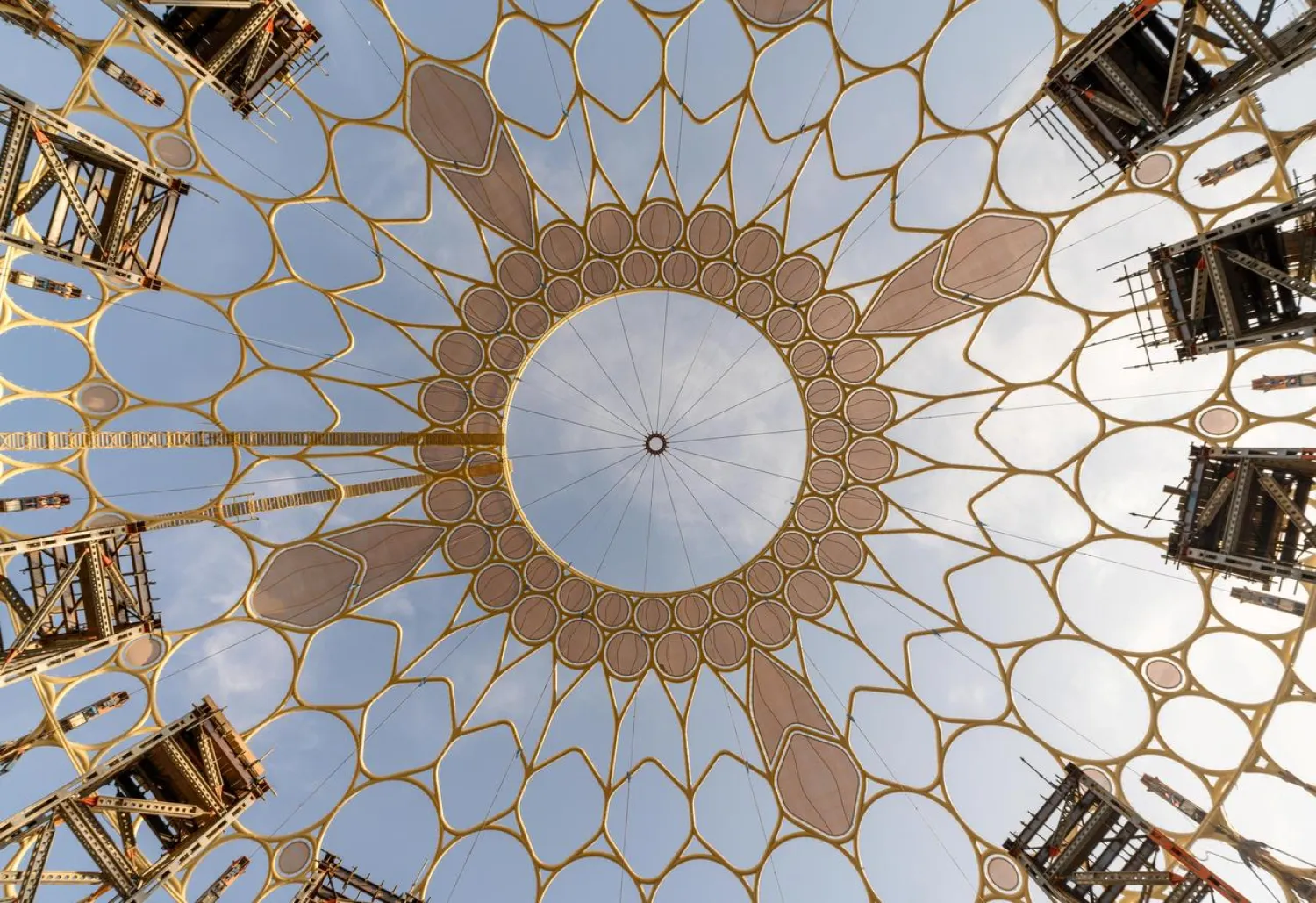
Expo 2020 Dubai Organizers Recommend One-Year Postponement

A view shows the Expo 2020 Dome in Dubai, UAE, in this undated picture obtained September 19, 2019. (Expo 2020 - Reuters)
TT

Expo 2020 Dubai Organizers Recommend One-Year Postponement

A view shows the Expo 2020 Dome in Dubai, UAE, in this undated picture obtained September 19, 2019. (Expo 2020 - Reuters)

Organizers of Expo 2020, a multi-billion-dollar world trade fair originally scheduled to open in Dubai in October, on Monday recommended a one-year postponement due to the coronavirus pandemic.

Dubai had hoped to attract some 25 million visits to the six-month event and many of its economic forecasts are pinned to the mammoth gathering.

"Many countries have been significantly impacted by COVID-19 and they have therefore expressed a need to postpone the opening of Expo 2020 Dubai by one year," Expo 2020 Dubai director general Reem al-Hashimi said.

"The UAE and Expo 2020 Dubai have listened. And in the spirit of solidarity and unity, we supported the proposal to explore a one-year postponement."

Dubai has little of the oil riches of neighboring emirates like Abu Dhabi, and its vital property, tourism and trade sectors had already been badly weakened in recent years.

Expo organizers, participating countries and the Paris-based Bureau International des Expositions (BIE) -- the governing body which awards the event -- had agreed to investigate shifting the mega-event.

"We look forward to welcoming the world, which we are certain will only come out of this pressing challenge stronger, and more resilient than it ever was," Hashimi added.

A final decision on postponement will be made by the BIE, but its Secretary General Dimitri Kerkentzes welcomed the recommendations.

"The UAE´s decision to support a one-year postponement demonstrates pragmatism, openness, and commitment to delivering an Expo that lives up to our shared ambition," he said.

Dubai has already scrapped a string of cultural and entertainment events in recent weeks over the spread of the deadly disease.

"The decision to postpone (Expo 2020) comes at a crucial juncture when the economy is tipped to fall into a recession," said M.R. Raghu, head of research at Kuwait Financial Centre (Markaz).

"SMEs (small and medium-sized enterprises), hospitality, tourism and retail sectors that are already reeling under the twin impact of low oil prices and (the) coronavirus outbreak hoped to recoup and recover lost business during the Expo period."

The United Arab Emirates has announced 611 cases of coronavirus, and five deaths. It has enforced extensive lockdown measures to curb the spread of the disease including an ongoing nighttime curfew.


Saudi Industry Ministry Qualifies 24 Local, International Bidders for Round 10 Exploration Licenses

The Saudi Ministry of Industry and Mineral Resources announced the qualification of 24 local and international bidders to participate in Round 10 of the Kingdom’s exploration license competitions. (Asharq Al-Awsat)
TT

Saudi Industry Ministry Qualifies 24 Local, International Bidders for Round 10 Exploration Licenses

The Saudi Ministry of Industry and Mineral Resources announced the qualification of 24 local and international bidders to participate in Round 10 of the Kingdom’s exploration license competitions. (Asharq Al-Awsat)

Saudi Arabia’s Ministry of Industry and Mineral Resources announced on Tuesday the qualification of 24 local and international bidders, including companies and consortiums, to participate in Round 10 of the Kingdom’s exploration license competitions, marking the start of the bidding phase following the completion of technical and financial evaluations.

In a statement, it said the announcement reflects the ministry’s continued efforts to accelerate mineral exploration, unlock its estimated $2.5 trillion mineral wealth while strengthening the Kingdom’s position as an attractive destination for mining investment.

Spokesperson of the Ministry of Industry and Mineral Resources Jarrah Aljarrah said that the mineralized belts offered in this round cover a total area of 13,000 km2 across five regions: Madinah, Makkah, Riyadh, Qassim, and Hail, and include new exploration sites extending from belts offered in the Round 9.

These include the Nabithah/Ad Duwayhi (Dahlat Shabeb) Belt, home to the Ad Duwayhi Mine, which produces around 180,000 ounces of gold annually; the Sukhaybarat/Al-Safra Belt, a highly prospective zone for gold, copper, silver, zinc, and nickel, hosting advanced projects such as the Sukhaybarat and Bulghah mines; and the Al-Nuqrah Belt, known for its significant gold deposits and copper- and zinc-rich volcanic massive sulfide (VMS) mineralization.

Of the 24 qualified bidders, 17 were previously pre-qualified under Round 9, while seven additional companies and consortia completed the Round 10 pre-qualification questionnaire (PQQ). The continued participation of previously qualified bidders highlights growing investor confidence in Saudi Arabia’s mining opportunities and reinforces the credibility and transparency of its licensing process.

The ministry noted that, under the exploration licensing competition guidelines, pre-qualification remains valid for one calendar year. This allows eligible bidders to participate in subsequent licensing rounds during the validity period and enables greater participation in the Kingdom’s expanding pipeline of exploration opportunities.

The seven pre-qualified bidders include: Saudi Arabian Mining Company (Maaden); PT ANTAM Tbk; Power Metallic Mines Inc.; Wildsky Resources Inc.; consortium comprising Danakali Limited and Masadar Al-Zamarda for Mining; consortium between Anaam Al Qarat for Trading and Sahara Mining Co. Ltd.; and Thurb Al-Hayya for Trading Company.

The list of bidders previously pre-qualified under Round 9 includes: Vedanta Limited; Midana Exploration Pty Ltd; Jacaranda Minerals Pty Ltd; Sierra Nevada Gold; Royal Road Arabia; The Distinguished Consortium Mining Company; Sun Peak Metals; Eqleed-Indotan Mining Company; DesertEx Pty Ltd; Helderberg Limited; Al Tasnim Enterprises LLC; Branch of China National Geological and Mining Corporation; Aurum Global Group; Batin Al Ard for Gold Company; Almasar Minerals Holding Limited; Saudi Gold Refinery (SGR); and Al Ghazal Al Arabi Mining Company.

Saudi Arabia’s exploration license competitions are conducted through a three-stage process designed to ensure transparency, competitiveness, and equal opportunity.

The process begins with a pre-qualification phase, during which applicants are assessed based on technical and financial capabilities. This is followed by the competition and site selection phase, where qualified bidders gain access to competition guidelines and relevant technical documentation and select sites through the ministry’s digital mining platform, Taadeen.

Where multiple bidders compete for the same site, the process advances to a public multi-round bidding process, with awards determined based on competitive exploration expenditure commitments and transparent evaluation criteria.

The next phase of Round 10 will see qualified bidders select available exploration sites through the Taadeen platform, in accordance with clear criteria designed to ensure fair competition and allow companies to pursue opportunities best aligned with their technical strengths and investment strategies.

Aljarrah, the ministry’s spokesperson, said the growing participation in exploration licensing rounds reflects rising confidence in the Kingdom’s mining investment environment, supported by regulatory reform, enhanced geological data, transparent licensing mechanisms, and an expanding portfolio of high-potential exploration opportunities across Saudi Arabia.

These results reflect the impact of the Kingdom’s ongoing regulatory and legislative reforms, which continue to strengthen investor confidence and reinforce Saudi Arabia’s position as a transparent, competitive, and globally attractive mining destination aligned with the objectives of Vision 2030.


China Rides AI Wave as Exports Surge Past Forecast

Containers and ships are seen at the port in Nanjing, in China's eastern Jingsu province early on June 9, 2026. (AFP)
TT

China Rides AI Wave as Exports Surge Past Forecast

Containers and ships are seen at the port in Nanjing, in China's eastern Jingsu province early on June 9, 2026. (AFP)

China's export growth accelerated in May, buoyed by robust demand for chips, autos and other high-tech goods fueling the global AI boom, providing policymakers some relief as energy price shocks from the Iran conflict weigh on broader demand.

A surge in global AI investment has helped the world's top manufacturer offset the export hit many had expected from the Middle East turmoil. But signs are emerging that stockpiling linked to higher energy costs is fading, with prices rising and overseas buyers starting to run down inventories as they hold out for a ceasefire.

Exports expanded 19.4% from a year earlier in US dollar value terms, customs data showed on Tuesday, outpacing the 14.1% gain in April and a 15% rise tipped by economists.

Imports notched another strong month, climbing 27.4% versus a rise of 25.3% a month prior. Economists had forecast growth of 25%.

"Chip price increases continue to support exports, with memory prices rising 20% month-on-month, pushing integrated circuit export growth to ‌111% for the month," ‌said Xing Zhaopeng, ANZ's senior China strategist.

China's exports of automated data processing equipment soared 66.1% in ‌value ⁠terms year-on-year, high-tech ⁠products rose 50.9% and shipments of cars jumped 39%, the data showed.

"Looking ahead, the AI story is far from over -- chips are rewriting China's trade landscape," Xing added.

The AI boom has driven strong demand for semiconductors powering data centers and advanced electronics, playing to China's manufacturing strengths.

But beyond AI, there are signs of strain in other sectors that suggest momentum may be starting to fade. Furniture exports, for example, rose just 1.9% year-on-year in May, while toy shipments fell 7% and footwear exports dropped 10.4%.

Separate factory activity data also showed a steep drop in new export orders last month from April's two-year peak, when warehouse managers reported "booming" business amid a scramble by foreign factories to lock in supplies.

Strong exports powered ⁠China's $20 trillion economy past forecasts in the first quarter, but pockets of weakness in the export ‌engine have reinforced concerns that fragile domestic demand leaves it exposed to weaker global ‌conditions and increases the likelihood of further policy support.

CHINA'S EXCESS CAPACITY STOKES TRADE FRICTION

Beijing is under growing international pressure to strengthen domestic consumption, as critics ‌warn its heavy reliance on imported inputs and re-exports is distorting trade and squeezing other emerging economies out of higher-value manufacturing.

"Close attention ‌must be paid to the risk of escalation between China and major trading partners such as Europe," said Zhiwei Zhang, chief economist at Pinpoint Asset Management.

The Organization for Economic Cooperation and Development amplified that concern last week, noting in a report that nearly 60% of Chinese firms' "market share gains can be explained by subsidies received."

A new US Federal Reserve paper found that China's trade surplus - measured against global GDP - has topped 1%, well above the peaks ‌Japan and Germany hit in the late 20th century, and shows little sign of narrowing.

China's trade surplus, which topped $1 trillion last year, came in at $105.43 billion in May, up from $84.8 billion ⁠a month prior and from a ⁠forecast of $92.1 billion.

The latest trade figures suggest Chinese industrial overcapacity probably accounts for at least some of the shipments.

Exports to Europe rose 7.6% year-on-year in May, while those to the United States climbed 35.4% and to Southeast Asia increased 24.3%.

Purchases from South Korea surged 83.6%. China is Korea's biggest chips market.

RARE EARTHS FLASHPOINT

China's economic heft is also rippling through oil markets, with the world's top energy buyer surprising traders by holding back purchases. Crude imports in May plunged 29% to their lowest level in eight years, helping temper global prices and partially cushion the energy shock triggered by US President Donald Trump's war in Iran.

A closely watched meeting last month between Trump and Chinese leader Xi Jinping helped cool tensions between the two superpowers but produced no meaningful breakthroughs, whether on tariff disputes or cooperation over ending the Iran conflict.

That said, China's rare earth exports climbed to a four-month high, with the world's top producer shipping 5,490 metric tons of the 17-element group essential for electric vehicles, wind turbines and defense technologies - another flashpoint in Beijing's trade tensions with the West.

China's relative advantages in scale, deep supply chains and industrial capacity leave it well positioned to absorb trade frictions with the West, including proposed US tariff hikes, said Sheana Yue, senior economist at Oxford Economics.

"We still expect exports to be China's primary growth driver in 2026, anchored by continued high-tech and clean-tech products despite war-related headwinds to global demand."



Türkiye, Canada Agree to Launch Exploratory Talks on Free Trade

Türkiye’s Trade Minister Omer Bolat addresses the audience during a signing ceremony in Istanbul, Türkiye, April 29, 2024. (Reuters)
TT

Türkiye, Canada Agree to Launch Exploratory Talks on Free Trade

Türkiye’s Trade Minister Omer Bolat addresses the audience during a signing ceremony in Istanbul, Türkiye, April 29, 2024. (Reuters)

The trade ministers of Türkiye and Canada have agreed to launch exploratory discussions aimed at concluding a free trade agreement, according to a joint ministerial statement on Tuesday.

The statement said ‌Turkish Trade ‌Minister Omer ‌Bolat ⁠and Canada's Minister of ⁠International Trade Maninder Sidhu had met to advance the strong and growing economic partnership between the two countries.

"They ⁠agreed to launch ‌exploratory ‌discussions toward a free trade agreement, ‌a step that ‌reflects the ambition of both countries to unlock the full potential of the ‌commercial partnership," the statement said.

It said they identified ⁠energy ⁠as a promising area for expanded cooperation and agreed to explore opportunities in renewable energy, as well as in nuclear energy, including the potential of Canadian CANDU technology to support Türkiye’s diversification goals.