


Fears over GERD's Collapse Due to Design Defects

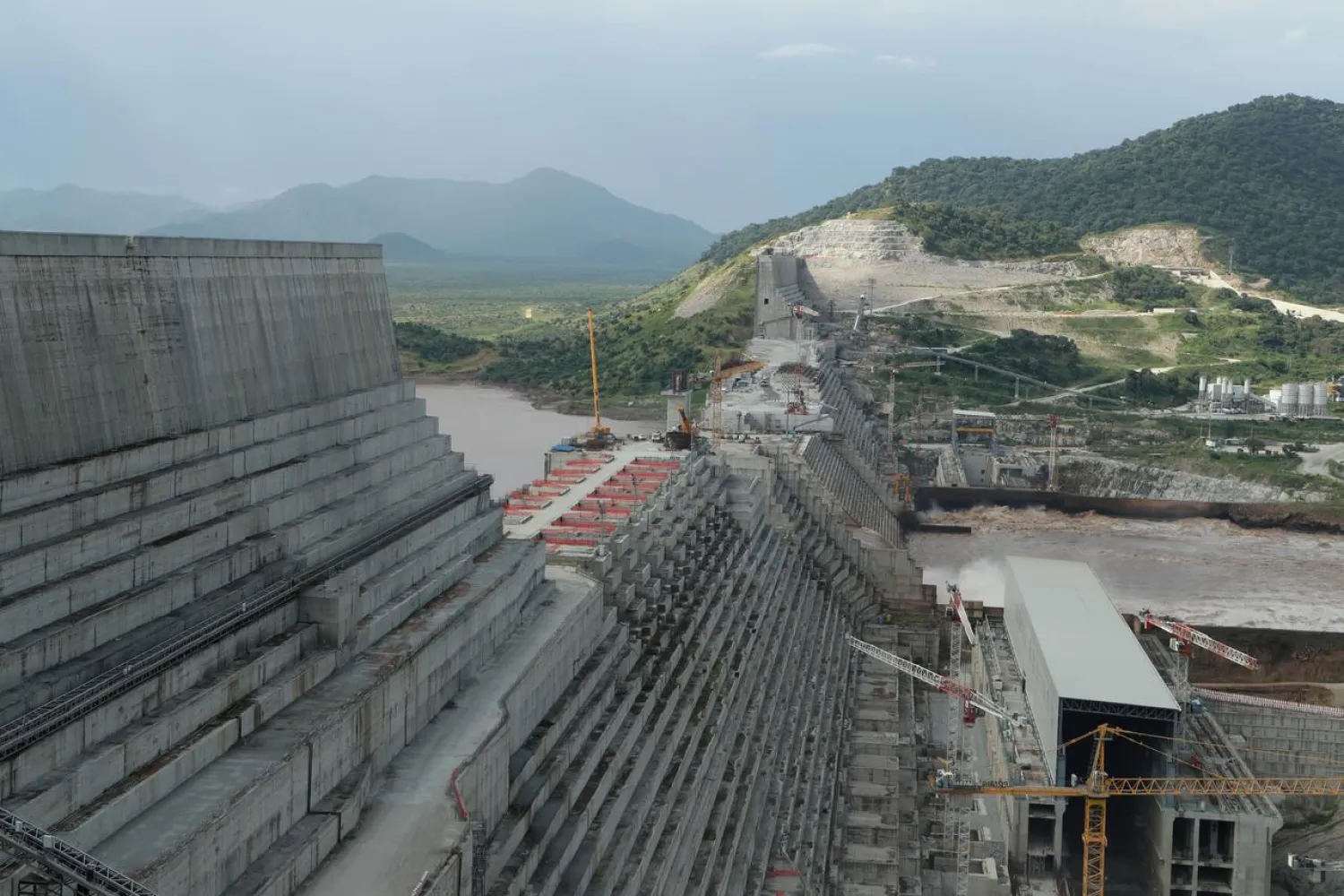
Ethiopia's Grand Renaissance Dam is seen as it undergoes construction work (File Photo: Reuters)
TT

Fears over GERD's Collapse Due to Design Defects

Ethiopia's Grand Renaissance Dam is seen as it undergoes construction work (File Photo: Reuters)

Flaws in the design of the Grand Ethiopian Renaissance Dam (GERD) renewed Egyptian-Sudanese concerns over its possible collapse which could cause extensive damage to the two countries.

Observers say that the technical problems have been known for some time, believing it’s the reason why Ethiopia disrupted the work of the international committees and refused to complete any impartial studies while providing “misleading information.”

GERD has been under construction since 2011 when Ethiopia kicked off building it on the Blue Nile, the main tributary of the Nile water.

The conflict over the Dam escalated following Ethiopia's refusal to attend a meeting in Washington in February to conclude a final agreement with Egypt and Sudan regarding the rules for filling and operating the dam.

Over the past month, Egypt and Ethiopia exchanged accusations of failing the negotiations, and the two countries tried to mobilize international support through diplomatic efforts.

However, signs of a breakthrough are looming on the horizon, as the Sudanese Prime Minister Abdullah Hamdok announced plans to be visit both Egypt and Ethiopia to revive the stalled negotiations.

This came during a phone call between Hamdok and US Secretary of Treasury Steven Mnuchin, who is sponsoring the Washington negotiations in partnership with the World Bank.

The Sudanese member of the international experts committee to evaluate the Renaissance Dam, engineer Diab Hussein Diab, revealed that the dam studies are not completed yet, adding that only Ethiopia studied the dam site and the designs were implemented over stages.

Diab told the Sudanese newspaper Akhbar al-Youm that the committee visited the site to review the construction work more than three times and issued its final report in 2014 with design recommendations for Ethiopia to adopt.

Another committee was assigned to review the foundations and excavation methods to prepare a report of its observations and submit it to the experts committee.

The report was submitted to the executing company highlighting requirements, including issues of rock sediments, cleanliness, and filling in the main dam, indicated Diab who said there were caves of unknown depths and experts couldn’t’ agree whether there are faults or not.

Ethiopia denied the existence of faults or caves at the site, but there may be faults in the lake, 100 km away.

The Sudanese expert revealed that Ethiopia did not conduct a detailed water study to figure any possible problems that could lead to cracks and faults. He noted that the water pressure in the lake, with the existence of faults, might lead to a strong movement such as a tsunami that could reach the dam creating high waves leading to its collapse.

Meanwhile, the former Egyptian Assistant Foreign Minister for the Nile Basin countries, Ambassador Magdy Amer, said the information documented in the experts’ report prove that the dam project has many risks.

Speaking to Asharq Al-Awsat, Amer stressed that all Ethiopian studies are not enough, and Ethiopia made it impossible for the French consultancy offices to conduct any studies.

The former official also indicated that the report of the experts committee recommended changing the design of the dam which might have huge negative effects on Sudan and Egypt.



Egypt Says Only Trump Can Stop War, Warns Oil Could Top $200

US President Donald Trump shakes hands with Egyptian President Abdel Fattah al-Sisi during a bilateral meeting at the World Economic Forum (WEF) in Davos, Switzerland, January 21, 2026. (Reuters)
TT

Egypt Says Only Trump Can Stop War, Warns Oil Could Top $200

US President Donald Trump shakes hands with Egyptian President Abdel Fattah al-Sisi during a bilateral meeting at the World Economic Forum (WEF) in Davos, Switzerland, January 21, 2026. (Reuters)

Egypt’s President Abdel Fattah al-Sisi urged US President Donald Trump on Monday to stop the Iran war and said fears of the oil price going above $200 were not exaggerated.

"I tell President Trump: nobody can stop the war in our region in the Gulf but you," Sisi said at the Egypt Energy Show 2026 energy conference in Cairo.

Noting ‌the impact ‌of supply shortages and price ‌rises, ⁠Sisi cited analysts' concerns ⁠that "the price of a barrel of oil could reach more than $200, and this is not an exaggeration."

Egypt has condemned Iranian attacks on Gulf Arab ⁠states and pushed diplomatic efforts ‌to avoid a wider regional ‌war.

The secretary-general of the Gulf Cooperation Council ‌bloc, Jasem Mohamed Albudaiwi, urged the international community ‌to protect vital maritime corridors, condemning Iran's closure of the Strait of Hormuz and its attacks on regional energy infrastructure.

Addressing the conference virtually, he said Iranian aggression ‌was a threat to the world.

"The brutal Iranian threats against energy ⁠facilities ⁠and the closure of the Strait of Hormuz constitute not only a blatant violation of international law but also a direct threat to global energy," he said.

The GCC, grouping Saudi Arabia, the United Arab Emirates, Qatar, Kuwait, Oman and Bahrain, has faced drone and missile attacks. The closure of the Strait of Hormuz has choked off a crucial route that previously handled about a fifth of global oil supplies.


Rocket Attack Targets Baghdad Army Base

Iraqi soldiers inspect the site of a destroyed healthcare center in the Habbaniyah military base, which was targeted by in an airstrike killing seven security personnel and wounding 13 others, in Habbaniyah, west of Baghdad on March 26, 2026. (AFP)
TT

Rocket Attack Targets Baghdad Army Base

Iraqi soldiers inspect the site of a destroyed healthcare center in the Habbaniyah military base, which was targeted by in an airstrike killing seven security personnel and wounding 13 others, in Habbaniyah, west of Baghdad on March 26, 2026. (AFP)

Rockets fired overnight targeted an Iraqi military base inside the Baghdad airport complex, which also houses a support center for the US embassy, Iraq's defense ministry said Monday.

The base is near a US diplomatic and logistics hub in the airport complex, which has been repeatedly targeted since the start of the war in the Middle East on February 28.

Iraq has been drawn into the conflict despite seeking to avoid it at all costs. Pro-Iran armed groups have claimed responsibility for attacks on US interests in Iraq and across the region, while strikes have also targeted these groups.

Early on Monday morning "an air base was targeted by 122mm Grad rockets launched from the outskirts of Baghdad", a statement from the ministry said.

"This attack resulted in the destruction of an Antonov-132 aircraft belonging to the Iraqi Air Force. No casualties were reported," it added.

A military official told AFP that "rockets fell inside the diplomatic support center early Monday morning, causing a fire".

Earlier this month, a security official told AFP that the US diplomatic hub had evacuated much of its personnel.

Since the outbreak of war, pro-Iran factions -- which have repeatedly claimed attacks against US interests -- have also been targeted by strikes they blame on the US or Israel.

Monday's incident comes after Washington and Baghdad said last week they would "intensify cooperation" to prevent attacks and ensure Iraqi territory is not used to launch assaults against US facilities.

For the first time in 10 days, two drones targeted the US embassy over the weekend but did not hit their targets.

The influential pro-Iran armed group Kataib Hezbollah said on March 19 it would pause such attacks for five days, twice extending.


Lebanese Soldier Killed in Israeli Strike on Checkpoint

This picture taken from the southern Lebanese area of Marjeyoun on March 29, 2026 shows smoke as it rises from the site of an Israeli airstrike that targeted the outskirts of the village of Yohmor. (Photo by AFP)
TT

Lebanese Soldier Killed in Israeli Strike on Checkpoint

This picture taken from the southern Lebanese area of Marjeyoun on March 29, 2026 shows smoke as it rises from the site of an Israeli airstrike that targeted the outskirts of the village of Yohmor. (Photo by AFP)

An Israeli strike has killed a Lebanese soldier at a checkpoint in the country's southern Tyre region, Lebanon's military said Monday.

"An Israeli attack targeted an army checkpoint" in al-Amriyeh near Tyre, "resulting in the death of one soldier and injuries to others", the military said.

A military source told AFP the attack was the first direct targeting of a Lebanese army position since the start of the war.

Also Monday, the Israeli military said a soldier was killed a day earlier in combat in southern Lebanon, bringing to six the number of troops killed since fighting with Hezbollah started earlier in March.

"Sergeant Liran Ben Zion, aged 19, from Holon... fell during combat in southern Lebanon," the military said.

Israeli Prime Minister Benjamin Netanyahu said on Sunday he had ordered the military to further expand its operations in southern Lebanon, citing continued rocket fire by Hezbollah.

Israel has said it will seize a chunk of southern Lebanon to create a "buffer zone" against Hezbollah, stoking Lebanese fears of Israeli military occupation that could deepen instability and cause further displacement.

Authorities in Lebanon say nearly 1,240 people have been killed there. Over 400 Hezbollah fighters have been killed since it fired on Israel on March 2, sources told Reuters, but it is unclear if the official death toll includes those fighters.