


A History of Solitude by David Vincent; A Biography of Loneliness by Fay Bound Alberti – Review

In these isolating times, are you enjoying solitude or, very different, are you suffering from loneliness?

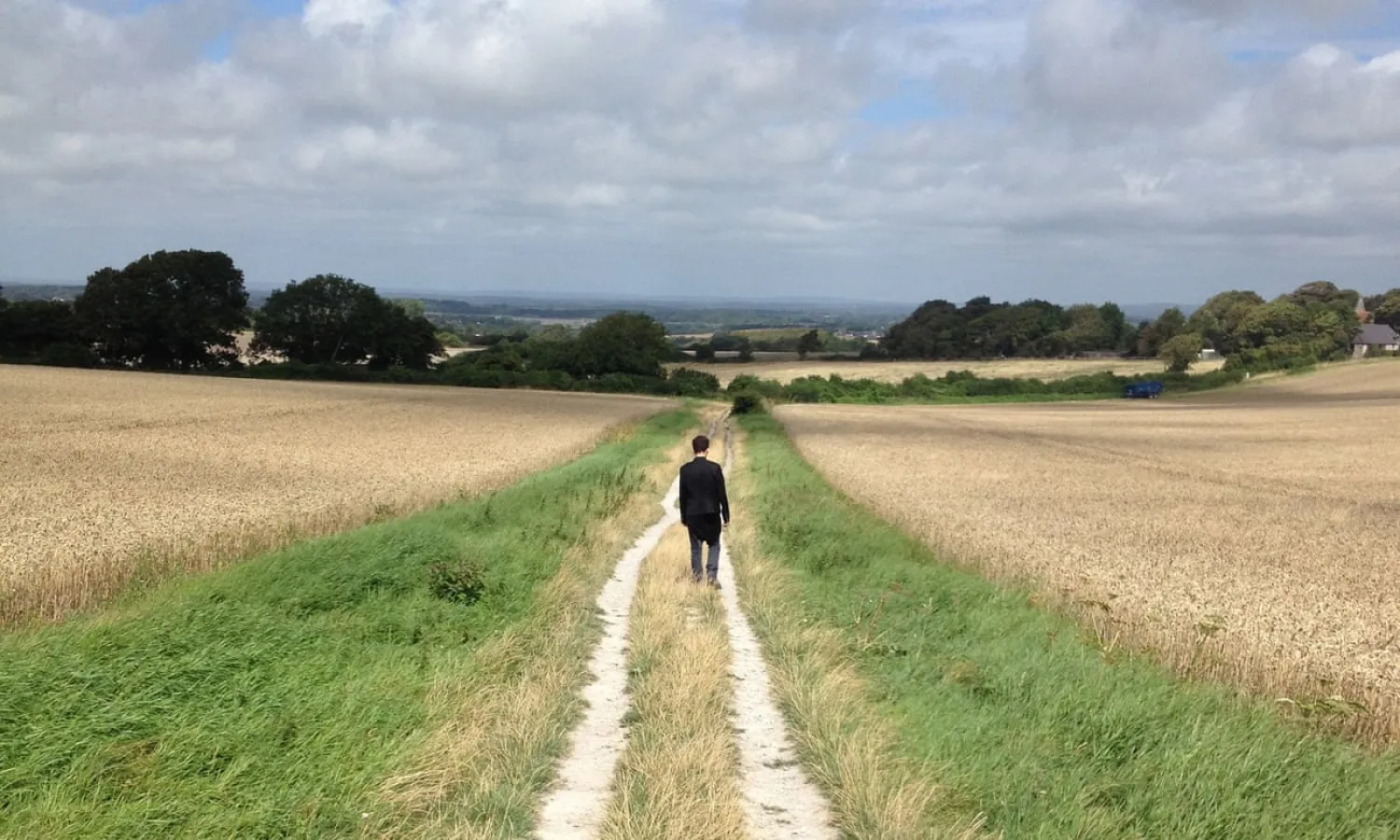
 Lonely as a cloud? Wandering alone allows space for spiritual meditation. Photograph: Rohan Von Lichtenstein
Lonely as a cloud? Wandering alone allows space for spiritual meditation. Photograph: Rohan Von Lichtenstein
TT

A History of Solitude by David Vincent; A Biography of Loneliness by Fay Bound Alberti – Review

 Lonely as a cloud? Wandering alone allows space for spiritual meditation. Photograph: Rohan Von Lichtenstein
Lonely as a cloud? Wandering alone allows space for spiritual meditation. Photograph: Rohan Von Lichtenstein

Solitude is not the same as loneliness. Lonely people feel the need for company, while solitary types seek to escape it. The neatest definition of loneliness, David Vincent writes in his superb new study, is “failed solitude”. Another difference between the two groups is that hermits, anglers, Trappist monks and Romantic poets choose to be alone, whereas nobody chooses to feel abandoned and bereft. Calling yourself “self-partnering”, meaning that you sit in the cinema (should they be open) holding your own hand, may be either a genuine desire for solitude or a way of rationalizing the stigma of isolation. The greatest difference of all, however, is that solitude has rarely killed anyone, whereas loneliness can drive you to the grave. As the coronavirus rampages, some of us might now face a choice between physical infection and mental breakdown.

For the 18th-century Enlightenment, being on your own was a deviation from the true nature of humanity, which was sociable to its core. It was with the Romantics that this began to change. Isolation was now what we shared in common. Frankenstein’s monster is one of the first great loners of English literature, spurned and vilified by humanity. Yet though loneliness was a symptom of the modern era, solitude could be a critique of it. It was one of the few ways in which you could get in touch with the transcendent, thus revealing what was lacking in an increasingly materialistic society. When Wordsworth writes that he wandered lonely as a cloud, he may mean simply that he was by himself, or that he lacked companionship, or that being alone allowed him space for self-knowledge and spiritual meditation.

That the self is revealed only in retreat from the world is a belief which runs back at least to the early Christian desert fathers, but this book shows how the need for self-communion intensifies as modern societies become more crowded. Such withdrawal could come at a cost: Virginia Woolf insisted on the need for a room of one’s own, but only the upper middle classes could have afforded one at the time. In the 19th century, only 1% of the British population lived on their own; in 2011 it was 31%, or some 8 million people. Yet as urbanization and large families pitched people together, the anonymous world of industrial capitalism also split them apart. Rural life may have been rough, but at least you knew who lived next door. So if a longing to be alone became more acute, so did a sense of being forsaken.

A History of Solitude calls for a “quiet history of British society”, or “a history of doing nothing at all”. It is a remarkably versatile study, ranging from the poetry of John Clare to the “networked solitude” of the internet and the cult of mindfulness. There is a fascinating section on solitary walking, which the 19th-century middle classes indulged in for spiritual recreation (Wordsworth is reckoned to have walked some 180,000 miles during his lifetime), and the laboring classes undertook in order to find work. Constant perambulation was what united peasant and patrician.

One can, of course, be solitary in company. In fact, the psychologist Donald Winnicott claims that a child can learn to be alone only in the presence of a trusted adult. The second half of the 19th century witnessed a rash of new convents, where women could be alone together, while a less high-minded form of solitary confinement was provided by the prison system. (The yachtsman Robin Knox-Johnson thought the crime rate might fall if people were sentenced to sail around the world alone instead of going to gaol.) A cameo on smoking shows how in the postwar era the habit was seen less as a route to the churchyard than as a pathway to inner calm, even as a variety of prayer.

Vincent has his doubts about the so-called epidemic of loneliness in modern life. He points out that more and more men and women after the second world war decided to live alone because it was feasible to do so. In any case, widespread loneliness isn’t new, and some sociologists see little evidence that it is on the increase. By contrast, Fay Bound Alberti’s A Biography of Loneliness approaches the issue with a deeper sense of urgency. If Vincent is a social historian, she is an emotional one, convinced that human feelings, far from being timeless and universal, are as historically conditioned as thought and action, and every bit as mutable. The case can be challenged: the way we express emotion is certainly shaped by our culture, but grieving over the loss of a loved one, or panicking when embraced by a grizzly bear, don’t seem to depend on whether you come from Kansas or Cambodia. It is equally doubtful that all emotional states are gendered, as this book maintains. Do women really react differently to men when falling off a mountain? “All emotions are political,” Alberti asserts, but “everything is political” statements risk emptying the term “political” of any useful meaning. It represents an overreaction to those who think that the post of lord chancellor isn’t political but natural.

There’s a gripping account here of Queen Victoria’s pathological grief over Prince Albert’s death, which compares the stricken monarch with the surreal Miss Havisham of Dickens’s Great Expectations. The book is impressively balanced: it sees that loneliness, in the sense of Vincent’s “solitude”, can be the price one pays for creativity. Loneliness can be restorative as well as destructive, but only when it is a choice. Historically speaking, it springs from the separation of self and society; but this long pre-dates 1800, as Hamlet or Othello might testify. Overlooking this fact, the book idealizes the 18th century as a “relatively collective world”, which would have come as something of a surprise to the vagrants and workless who wandered its highways.

All the same, Alberti is right to politicize loneliness, unlike the neuroscientists who are racing to develop a pill to cure it. One can’t dissociate feeling useless and disconnected from the history of possessive individualism, even if that history stretches further back than the author imagines. If, as she points out, “there are very few physical spaces where people can meet in the 21st century without paying for the privilege of being there”, it is largely because the gospel of neoliberalism can see no point in them. There is, then, a villain in this book, as there isn’t in the more cautious reflections of Vincent. But there is also a good deal more: a brief history of old age, speculations on homelessness, refugees, soul mates, hunger artists, and Fomo, the connections between loneliness and obesity, a digression on Wuthering Heights which fails to drive home what an utter bastard Heathcliff is, and an array of other topics.

What distinguishes both these studies is their mixture of empirical research and general commentary. Both recount a grand narrative about solitude or loneliness, unfolding across the centuries, but they do so on the basis of detailed documentation. In their combination of scholarship and sympathy, poetry and clinical psychology, they appeal as much to the common reader as to the expert. One answer to loneliness is solitude. Enjoying being on one’s own, or at least being able to tolerate it, is part of being grown up. But Vincent and Alberti both highlight the privilege this involves – how positive aloneness is possible for the middle-class poet, but not for the impoverished housewife with children to care for, not least in a society which has hacked social provision to the bone.

Even so, this is a compassionate, wide-ranging study, which makes the bold claim that loneliness was invented around 1800. This may help to explain why Robinson Crusoe doesn’t once complain of lacking company. It also chimes with Vincent’s case: in his view, “lonely” becomes a negative emotion only around this time. It is now less a fact (“on one’s own”) than an existential condition, as with Byron’s gloomy heroes. Today, Alberti argues, lonely people are 30% more likely to die early than less lonely ones, the poor are lonelier than the well-off and the young are the loneliest of all. To be lonely is to cease “to exist in a meaningful way with other people”.

(The Guardian)


Best Time to Take Vitamin D for Muscle Strength

Vitamin D tablets (file photo – AP)
TT

Best Time to Take Vitamin D for Muscle Strength

Vitamin D tablets (file photo – AP)

Vitamin D is an essential nutrient that plays a central role in both bone and muscle health.

With growing interest in dietary supplements, a key question arises: what is the best time to take vitamin D to support muscle strength?

This article reviews the latest scientific evidence on vitamin D timing and its impact on muscle health, offering practical recommendations based on recent research.

The optimal time to take vitamin D is with or after a meal that contains fat- preferably in the morning or at lunchtime. Taking it with food enhances absorption, supporting bone health and contributing more effectively to muscle strength. It is also advisable to take it at the same time each day for best results.

How Vitamin D Works in Muscles

Vitamin D is a fat-soluble vitamin, meaning its absorption in the intestine depends heavily on dietary fat. When taken with a fat-containing meal, micelles form, facilitating its transport across the intestinal wall into the bloodstream. It then reaches muscle cells, where it helps promote muscle protein synthesis and improve muscle fiber function.

Scientific Evidence on Timing

A randomized controlled trial published in Nutrients (2022) found that taking a combination of whey protein and vitamin D3 either before sleep or after waking led to beneficial increases in muscle mass in young men undergoing resistance training.

Importantly, no statistically significant differences were found between the groups in terms of muscle gains, suggesting that vitamin D’s benefits for muscle health are not dependent on a specific time of day, but rather on consistent intake.

Effects on Sleep and Melatonin

Some research indicates a link between vitamin D levels and sleep quality, with low levels associated with a higher risk of sleep disorders.

Certain recommendations suggest that taking vitamin D in the evening may interfere with melatonin production—the hormone that regulates the sleep-wake cycle. For this reason, experts generally recommend taking vitamin D in the morning or at midday to avoid potential sleep disruption.

Vitamin D and Athletic Performance

A systematic review published in the Journal of Human Sport and Exercise (2025), analyzing 13 studies on vitamin D and athletic performance, found:

  • Vitamin D supplementation consistently increases blood levels in athletes
  • Noticeable improvements in performance among those initially deficient
  • Mixed effects on muscle recovery and blood markers across studies
  • Seasonal fluctuations in vitamin D levels highlight the importance of supplementation timing

Taking vitamin D with main meals and maintaining daily consistency are key to maximizing its benefits for muscle health. Consulting a healthcare provider is recommended to determine the appropriate dosage based on individual health status and blood levels.


Taif Rose Harvest Season Produces over 550 Million Roses

Rose farms are spread across the highlands of Al-Hada and Al-Shafa - SPA
TT

Taif Rose Harvest Season Produces over 550 Million Roses

Rose farms are spread across the highlands of Al-Hada and Al-Shafa - SPA

Taif rose farms are witnessing a notable abundance of production during the current harvest season, amid favorable climatic conditions that have contributed to improved crop quality and increased quantities. Taif Governorate is home to more than 910 farms, comprising around 1.14 million rose shrubs, which produce approximately 550 million roses annually during a season lasting around 45 days.

Rose farms are spread across the highlands of Al-Hada and Al-Shafa, between the slopes of the Sarawat Mountains, in a natural setting characterized by moderate temperatures and abundant water, with fertile valleys that create an ideal environment for Taif roses, SPA reported.

Farmer Khalaf Jaber Al Tuwairqi stated that moderate weather and the availability of irrigation sources contributed to increased flower density and quality this season, thereby positively impacting harvesting and production. He noted that farms produce thousands of roses daily during peak periods, with around 12,000 roses required to produce one unit of rose oil, one of the world's most precious aromatic oils.

Tourism guide Abdullah Al Zahrani affirmed that the abundant rose production has boosted tourism activity in Taif, as rose farms in Al-Hada and Al-Shafa attract growing numbers of visitors during the harvest season to witness harvesting and distillation stages and learn about this traditional craft that forms part of the governorate's agricultural identity.


Artemis Astronauts to Study the Moon’s Surface Using Mainly Their Eyes

 This photo provided by NASA shows the moon seen from a window on the Orion spacecraft Integrity during the Artemis II mission on Friday, April 3, 2026. (NASA via AP)
This photo provided by NASA shows the moon seen from a window on the Orion spacecraft Integrity during the Artemis II mission on Friday, April 3, 2026. (NASA via AP)
TT

Artemis Astronauts to Study the Moon’s Surface Using Mainly Their Eyes

 This photo provided by NASA shows the moon seen from a window on the Orion spacecraft Integrity during the Artemis II mission on Friday, April 3, 2026. (NASA via AP)
This photo provided by NASA shows the moon seen from a window on the Orion spacecraft Integrity during the Artemis II mission on Friday, April 3, 2026. (NASA via AP)

More than 50 years after humans first flew around the Moon, Artemis astronauts will repeat the feat on Monday and use the most basic instrument to study it: their eyes.

Despite the technological advancements since the Apollo missions, NASA still relies on the eyesight of its astronauts to learn more about the Moon.

"The human eye is basically the best camera that could ever or will ever exist," Kelsey Young, the lead scientist for the Artemis 2 mission, told AFP.

"The number of receptors in the human eye far outweighs what a camera is able to do."

Although modern cameras may be superior to human eyesight in some respects, "the human eye is really good at color, and it's really good at context, and it's also really good at photometric observations," Young said.

Humans can understand how lighting changes surface details, like how angled lighting reveals texture but reduces visible color.

In just the blink of an eye, humans can detect a subtle color shift and understand how lighting changes the contours of a landscape like the Moon's surface, details which are scientifically useful but difficult to ascertain from photos or videos.

Artemis 2 astronaut Victor Glover, who pilots the Orion spacecraft, said before liftoff this week that eyes were a "magical instrument."

- Field scientists -

To ensure they made the most of their proximity to the Moon, the four Artemis 2 crew members underwent more than two years of training.

Young said the goal was to turn the astronauts into "field scientists" via a combination of classroom lessons, geological expeditions to Iceland and Canada, and multiple simulated flybys of the Moon, just like the mission they are on.

The three American astronauts -- commander Reid Wiseman, pilot Glover and mission specialist Christina Koch -- along with Canadian astronaut Jeremy Hansen, all had to memorize the Moon's "Big 15," or the 15 features of the Moon that will allow them to orient themselves.

Using an inflatable Moon globe, they practiced seeing how the angle of the sun changed the colors and textures of the lunar surface, honing their observation and note-taking skills for the big moment.

"I can tell you, they are excited and they are ready," Young said with a smile.

- 'About the size of a basketball' -

The Artemis astronauts' mission is to study certain lunar sites and phenomena as part of 10 objectives chosen by NASA and ranked in priority order based on scientific interest.

During the Moon flyby, which will last for several hours, the crew will have to observe the celestial body with their naked eyes, along with cameras they have on board.

Noah Petro, head of NASA's planetary geology lab, told AFP that the Moon will look to the astronauts "about the size of a basketball held at arm's length."

"The question I'm most interested in is, are they going to be able to see color on the lunar surface," Petro said.

"I don't mean rainbow colors, but you know, dark browns or tan colors because that tells us something about the composition, and that tells us something about the history of the Moon."

David Kring of the Lunar and Planetary Institute told AFP he is not expecting any earth-shattering discoveries because of the multiple lunar probes and high-resolution images of the Moon taken since the Apollo missions.

Nevertheless, "having astronauts describing what they're seeing... That is an occurrence that at least two generations of people on Earth have never heard before," he said.

The Artemis 2 flyby will be broadcast live by NASA, save for a period for when the spacecraft is behind the moon.

"Just listening to their practice descriptions in the mission simulations... It brings chills up my arms," Young said.

"I am absolutely confident that these four people are going to deliver some incredible descriptions."
