


Ed Woodward Deserves Credit for Helping Manchester United Weather the Storm

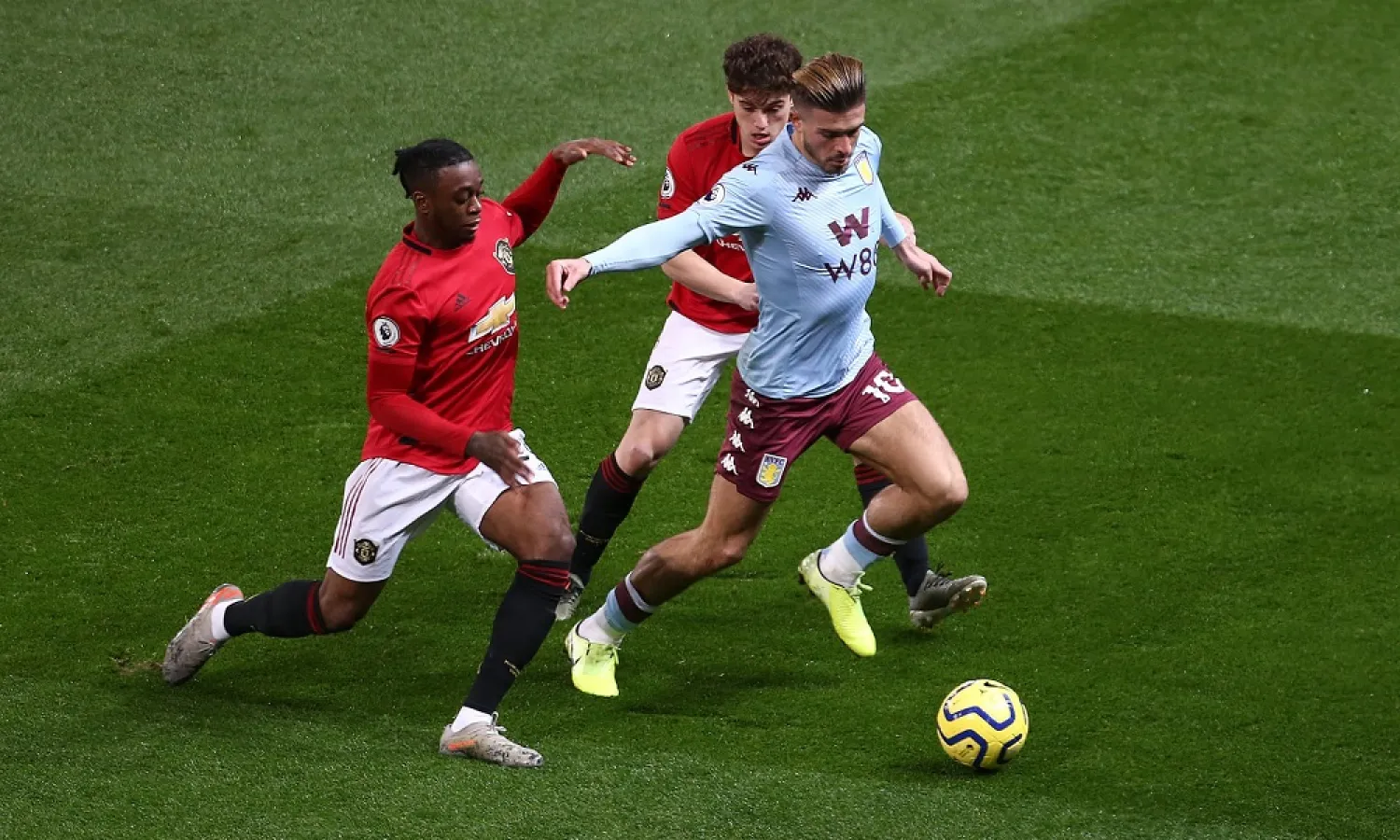
Jack Grealish of Aston Villa (right) is one of several top-class players Manchester United will fancy their chances of signing when the crisis is over. (Getty Images)
TT

Ed Woodward Deserves Credit for Helping Manchester United Weather the Storm

Jack Grealish of Aston Villa (right) is one of several top-class players Manchester United will fancy their chances of signing when the crisis is over. (Getty Images)

Ole Gunnar Solskjær broke cover a few days ago, appearing on Sky Sports to tell his pal Gary Neville that once the pandemic is over Manchester United are hoping to be able to exploit any unexpected transfer market opportunities caused by clubs being forced into financial difficulties through lack of income during the long layoff.

That was how the conversation was reported in most newspapers, anyway. The United manager did not choose the word exploit, and though Neville subsequently conceded his question might have been more diplomatically phrased, it is a little late now to be sparing the feelings of clubs struggling through real hardship. The clear message coming out of Old Trafford is that United are riding the storm and once football is back to normal they anticipate being able to turn a market-leading position into an advantage.

Without much else going on in the game that means everyone from Jack Grealish to Jadon Sancho is being lined up for a move – people are already trying to work out if it would be possible to fit Grealish and James Maddison into the same team. Yet, while Solskjær may be indulging in a spot of wishful thinking if he imagines the game’s brightest young talents are about to form an orderly queue outside his office, his reasoning is not purely pie in the sky.

It certainly seems to be the case, for instance, that United find themselves better insulated than most against loss of gate and matchday income, because for some time they have been working to become less reliant on that particular source of revenue. Anyone who has seen the armies of corporate and hospitality staff that descend on Old Trafford on match days will appreciate that United make more money than most from maximizing their entertainment and merchandising opportunities, though the club have also led the way – often to the point of ridicule – in cutting lucrative deals away from the pitch and stadium. Yes, we are talking global business sponsors here, noodle partners if you like, the tie-ins with mattress makers and coffee producers that have made the executive vice‑chairman, Ed Woodward, a figure of fun.

At the last count, although counting is often difficult because there are various tiers of sponsorship and new names are still being added, United had 26 main global partners. Supporters have generally found this annoying because they would rather the club devoted a similar amount of effort to buying a new center-half or reclaiming a place in the Champions League, while fans of rival clubs have regarded it as a comedy gift. What sort of football follower, after all, would rather see results achieved on the balance sheet than the pitch? Who in their right mind would prefer an accumulation of partners to league points?

The available evidence suggests Woodward would (though he would obviously favor a rise in playing standards, too), and for the past few years he has been mercilessly depicted as a money-grabbing know‑nothing, an accountant unwisely appointed to run a famous football name. Not all of the criticism and mockery has been completely undeserved, yet there have been strong signs in recent months – more or less since a posse of angry United fans turned up at his thankfully unoccupied Cheshire home in January – that the tide is turning for the beleaguered boardroom leader.

Solskjær has confounded a few critics and is now looking capable of inspiring respect from his players and producing results. Bruno Fernandes has been an unalloyed success since arriving from Sporting Lisbon in the last transfer window, not only proving United can still source and attract top players but kicking the whole Paul Pogba embarrassment into the long grass. And now, at a time when results on the pitch can no longer be seen and league points are suddenly unavailable, Woodward could be on the verge of being congratulated for his foresight in making sure United’s revenue streams are sufficiently diverse to survive football itself being forcibly removed from the agenda.

Even before Solskjær made his remarks there must have been a few other clubs wishing they had cast-iron guarantees of continuing income from sources unaffected by coronavirus closures. At an early stage in the discussion about wage cuts and furloughs United were able to make it clear they could afford to take the hit. Woodward said much the same thing a year ago when responding with a shrug to a question about the spectacular blip on the balance sheet occasioned by José Mourinho’s decision to recruit Alexis Sánchez. United may not be getting everything right, then or now, but any business able to grin and bear a Sánchez-sized salary must be in fairly robust shape.

Which is exactly what the next few weeks and months could prove. Solskjær will probably not end up with Grealish, Sancho and Maddison all at the same time, but United will most likely be in a position to end up with someone. No one quite knows how and when this will all end, but it is reasonable to suppose the business-as-usual sign will go up at Old Trafford earlier than at most other clubs.

The CEO who began the season as a clown may yet end it considered a visionary. Truly we are living through strange times. Once the lockdown is over, United’s ultras might have to make another house call, this time to say sorry.

The Guardian Sport


Ghana Draw Cools England Hype and Revives Familiar Questions

 England head coach Thomas Tuchel listens to the national anthem ahead the World Cup Group L soccer match between England and Ghana in Foxborough, Mass., near Boston, Tuesday, June 23, 2026. (AP)
England head coach Thomas Tuchel listens to the national anthem ahead the World Cup Group L soccer match between England and Ghana in Foxborough, Mass., near Boston, Tuesday, June 23, 2026. (AP)
TT

Ghana Draw Cools England Hype and Revives Familiar Questions

 England head coach Thomas Tuchel listens to the national anthem ahead the World Cup Group L soccer match between England and Ghana in Foxborough, Mass., near Boston, Tuesday, June 23, 2026. (AP)
England head coach Thomas Tuchel listens to the national anthem ahead the World Cup Group L soccer match between England and Ghana in Foxborough, Mass., near Boston, Tuesday, June 23, 2026. (AP)

Thomas Tuchel's England were riding a wave of optimism at the World Cup after their opening 4-2 demolition of Croatia, but Tuesday's 0-0 draw against Ghana served as a reminder that progress at major tournaments is not always straightforward.

The victory over Croatia had showcased England at their best, with fluid attacking football, goals and a sense that Tuchel's methods were taking hold.

Against Ghana, however, they encountered an entirely different challenge. Carlos Queiroz's side defended deep, remained organized and physical, and frustrated England for much of the ‌night as they ‌emerged with a valuable point.

England remain top of Group L ‌and ⁠are still firmly ⁠on course for the knockout stages, but the stalemate raised fresh questions about whether Tuchel's side possess the creativity and variety required to break down stubborn opponents.

Ghana appeared content to sit back and absorb pressure, surrendering possession but denying England space in dangerous areas.

"It is difficult to find a way through when someone plays a 4-5-1 and completely deep and is committed to it," Tuchel said afterwards. "They celebrated a 0-0 like a win. You cannot ⁠lose your head about it."

For all of England's dominance on the ‌ball, the Three Lions struggled to create clear ‌chances. Harry Kane, who scored twice in the opening victory over Croatia, was largely isolated and ‌tightly marked.

His frustration was summed up in stoppage time when he blazed his shot ‌over the bar from six yards after Nico O'Reilly's header had struck the crossbar.

The performance also reignited debate about England's attacking options. Anthony Gordon again struggled before being replaced by Bukayo Saka, whose introduction injected some urgency and unpredictability into England's play, forcing a save from Ghana goalkeeper ‌Benjamin Asare late on.

Marcus Rashford may also be pushing for greater involvement after England's lack of penetration against a compact defense.

Declan ⁠Rice and Elliot Anderson ⁠provided control but little creativity in midfield, allowing Ghana to remain comfortable for long stretches.

Rice insisted there was no cause for concern.

"We have one more group game to top the group, so we have to be positive," he said.

England's emphatic win over Croatia had sparked talk of momentum, belief and the possibility that Tuchel's new-look side might be finding its stride early.

Ninety minutes against Ghana quickly cooled that enthusiasm.

For the fourth major tournament in succession, England failed to win their second group game, exchanging the exhilaration of a four-goal display for a frustrating stalemate.

The surge of optimism generated by the Croatia victory has been checked, at least temporarily.

And while England remain well-placed to reach the knockout stages, the sense of optimism that followed their opening performance has been replaced by familiar questions about flare, consistency and whether they can break down organized opposition when space is at a premium.


Infantino: World Cup Hydration Breaks Purely Sporting, Not Commercial

Soccer Football - FIFA World Cup 2026 - Group K - Colombia v DR Congo - Estadio Guadalajara, Guadalajara, Mexico - June 23, 2026 Colombia coach Nestor Lorenzo gives instructions to his players during a hydration break REUTERS/Raquel Cunha
TT

Infantino: World Cup Hydration Breaks Purely Sporting, Not Commercial

Soccer Football - FIFA World Cup 2026 - Group K - Colombia v DR Congo - Estadio Guadalajara, Guadalajara, Mexico - June 23, 2026 Colombia coach Nestor Lorenzo gives instructions to his players during a hydration break REUTERS/Raquel Cunha

FIFA president Gianni Infantino has defended the introduction of hydration breaks at the World Cup, insisting that for football's governing body they are driven purely by sporting considerations and not commercial interests.

Mandatory three-minute breaks, introduced in the 22nd and 67th minutes of every match at the tournament, have drawn criticism from players, coaches and fans since the opening round of fixtures.

The breaks, introduced to help players cope with high temperatures across North America, have opened up additional advertising windows for broadcasters, Reuters reported.

This has fueled debate over their impact on the game, with some viewers complaining about being exposed to commercials during the three-minute stoppages.

"There is no ⁠additional revenue for ⁠FIFA, as all commercial agreements were signed well in advance. So, this is not a financial issue for us. For us, it is purely a sporting matter," Infantino said in a statement on Wednesday.

The breaks allow coaching staff to give in-game tactical instructions, a shift critics say disrupts match momentum and fundamentally alters the nature ⁠of the game.

England manager Thomas Tuchel said the additional break "interrupts and changes the identity of the football match,” while Uruguay coach Marcelo Bielsa said dividing matches into shorter segments takes away the fundamental characteristic of the game.

Spain coach Luis de la Fuente and Netherlands captain Virgil van Dijk have supported the intent behind the rule in extreme heat, but questioned the need for it in cooler conditions and at covered venues.

"The main reason is the heat, but we also have to understand that in a competition like the (FIFA) ⁠World Cup, played ⁠over 39 days, with teams potentially playing eight matches in those 39 days, having a moment to rest is extremely important,” Infantino said.

"What matters even more to us is ensuring that all teams, in every match, are playing under the same conditions.

"It's very difficult to accept that a coach might have the opportunity to influence a match by making adjustments simply because it's hotter, while in another match, where the temperature is slightly lower, the same coach doesn’t have the same opportunity."

Infantino added that the breaks had not reduced the intensity of matches, suggesting players were able to maintain a high level of performance throughout games.


Neymar Available for Scotland Clash but Not Certain to Play, Brazil Coach Says

 Brazil's forward #10 Neymar takes part in a training session at the Columbia Park Training Facility in Morristown, New Jersey on June 22, 2026, during the 2026 World Cup football tournament. (AFP)
Brazil's forward #10 Neymar takes part in a training session at the Columbia Park Training Facility in Morristown, New Jersey on June 22, 2026, during the 2026 World Cup football tournament. (AFP)
TT

Neymar Available for Scotland Clash but Not Certain to Play, Brazil Coach Says

 Brazil's forward #10 Neymar takes part in a training session at the Columbia Park Training Facility in Morristown, New Jersey on June 22, 2026, during the 2026 World Cup football tournament. (AFP)
Brazil's forward #10 Neymar takes part in a training session at the Columbia Park Training Facility in Morristown, New Jersey on June 22, 2026, during the 2026 World Cup football tournament. (AFP)

Neymar is available for Brazil's third World Cup group match against Scotland but coach Carlo Ancelotti declined to say if he would play a role in the Miami Stadium clash.

The 34-year-old forward was recalled by the Italian for the World Cup after almost three years away from the national team but has yet to play at the tournament because of a calf injury.

"Neymar is available," Ancelotti told reporters on Tuesday. "He worked this week and can be available for the match. We are very happy that he is back because, obviously, with his quality, he can help the team.

"I've really got to know him well. He ‌has worked very ‌seriously, trying to recover as quickly as possible.

"I'm very happy ‌with ⁠him. Even if ⁠he doesn't play, he brings experience, he brings knowledge of the game, he helps the younger players. He is doing very well."

Asked how much of the match Neymar could play, Ancelotti joked: "He can play 90 minutes -- walking. No, he's fine, he worked very well, he trained very well."

Brazil, who drew 1-1 with Morocco and beat Haiti 3-0 in their first two Group C matches, will reach the Round of 32 with a victory over the Scots and Ancelotti ⁠said he felt a decent performance was brewing.

"Obviously we have a ‌very big commitment, representing this shirt in the ‌World Cup," he said.

"I think the first match wasn't the best, the second match was better, and ‌we are confident that the third match will be the best."

RAPHINHA REPLACEMENT NEEDED

Ancelotti also ‌needs to find a replacement for Raphinha, who has been sidelined by a hamstring problem, but again declined to share who would take the winger's place in the starting lineup.

Scotland, with a win and a loss, are more than likely competing to be one of the eight teams who ‌will go through to the next round from third place in their groups, but Ancelotti was expecting a tough game.

"Scotland has quality," ⁠the 67-year-old added. "They ⁠are fighters, they are very well-organized.

"(Scott) McTominay and (John) McGinn are experienced players who are used to this kind of game.

"So it will be a difficult game, as usual. I think easy games in the World Cup finished a long time ago. So we are ready to play a difficult match."

Brazil's flight to Miami from their New Jersey base was delayed on Tuesday, pushing back Ancelotti's press conference, but the Italian said he was not going to let it spoil his enjoyment of his first World Cup as a coach.

"Before today everything was perfect. Today we had a small problem, but that can happen," he said.

"I think we have the quality and the confidence for this to be a good World Cup for us. In football, anything can happen but in any case, it will be a very beautiful experience -- even if I had to do a press conference at nine o'clock at night."
