


English Football's Blame Culture Makes it Unable to Come Together

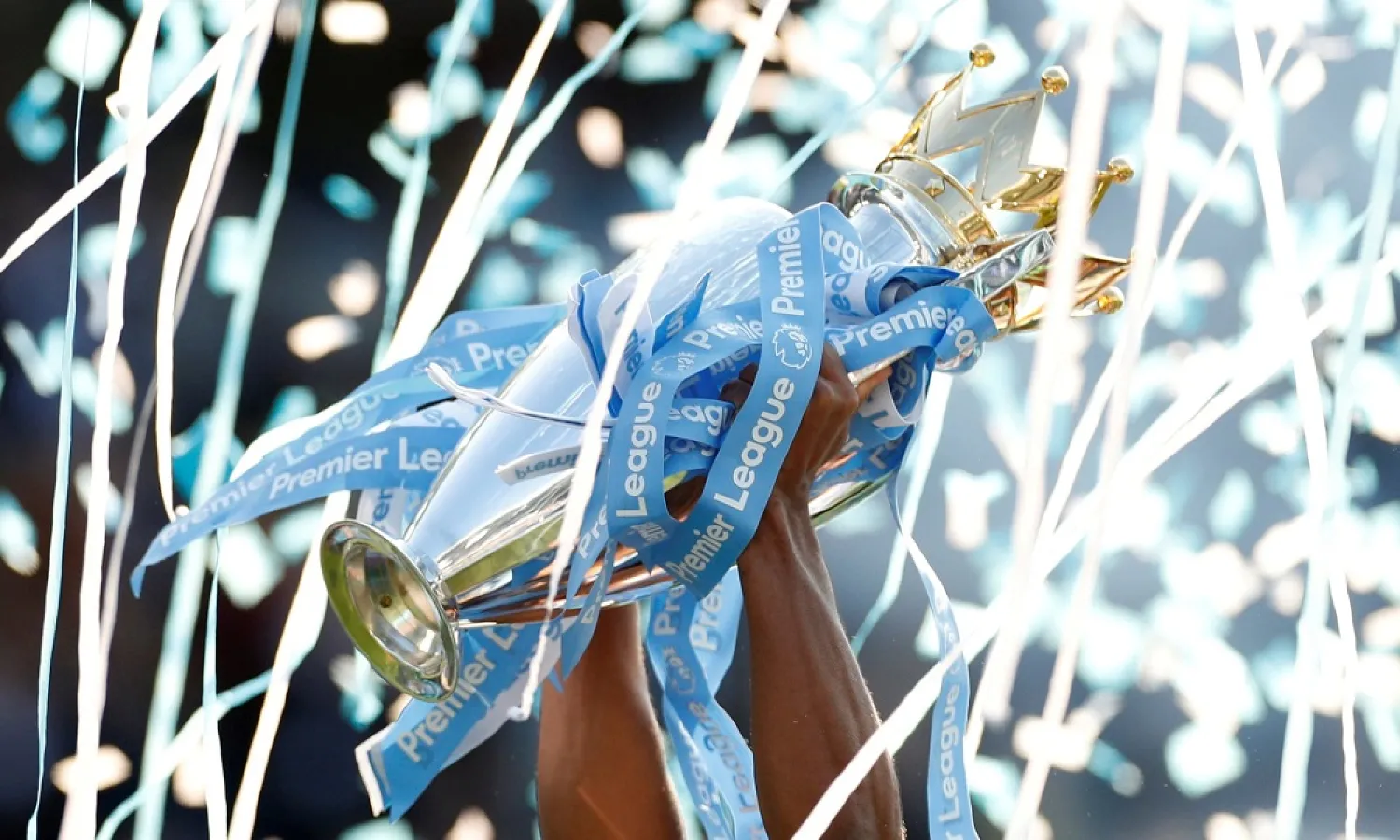
The formation of the Premier League divorced the top clubs from the rest of the pyramid. (Reuters)
TT

English Football's Blame Culture Makes it Unable to Come Together

The formation of the Premier League divorced the top clubs from the rest of the pyramid. (Reuters)

I don’t expect to make too many friends saying this, but perhaps it’s time we all gave Matt Hancock a break. Isn’t it typical how, as soon as things take a turn for the worse, everyone starts singling out the health secretary?

Yes, clearly, he could be doing more to deflect our attention from the failings of his dangerously shambolic government and the chronic underfunding of the National Health Service. And he wants to do more, too.

But there are plenty of other hapless Conservative MPs out there desperately trying to distract us from the fatally inept response to the COVID-19 outbreak by warbling on about footballers. And yet while people such as Julian Knight and Steve Brine get off scot-free, for some reason it’s always Hancock who gets saddled with the blame. It’s an easy target. Cheap populism.

Then again, in these extraordinary times for English football, the thirst for scapegoats, sacrificial lambs and other forms of votive livestock appears to be stronger than ever. Blame culture is nothing new to the game but the urgency of the current crisis appears to have broadened its scope beyond the time-honored targets of referees, television pundits and FA Cup replays.

Hancock is simply the latest patsy to walk into the crosshairs and discover that if you thought English football was dysfunctional when it was awash with money, just see what happens when you turn the money off.

In a way it’s strangely fitting that as the rest of us grapple with questions of life and death, of physical and mental health, of personal freedom and human connection, English football finds itself embroiled in an unseemly wrestle over its favorite topic. Earlier this month, talks between the Professional Footballers’ Association and the Premier League over a collective pay cut disintegrated into a slurry of arch statements and snide briefings.

Meanwhile Newcastle and Tottenham are among the clubs to have attracted widespread scorn for claiming taxpayers’ money while placing staff on furlough. Disgruntled broadcasters are threatening to withhold payments and with every passing day of lockdown the existential threat to livelihoods, to entire clubs, perhaps even to entire leagues, looms ever larger.

This is not, for all the wailing sirens and general sensation of panic, a short-term development. In many ways this is a mud fight that has been brewing for some time: years, perhaps even decades. English football’s inability to come together and function as a collective did not happen overnight; it occurred, instead, in small devastating steps.

You could pinpoint, for example, Tottenham’s circumvention of the FA’s Rule 35 in 1983, allowing them to float on the stock market and irrevocably transforming the modern football club into a profit-making vehicle. The formation of the Premier League, divorcing the largest clubs of any statutory obligation to the rest of the pyramid, ingraining light-touch regulation and free-market economics as cultural ideals.

The largely unchecked influx of billionaire owners in the early 21st century: in recent days plenty of outrage has been directed at figures such as Joe Lewis at Spurs and Mike Ashley at Newcastle, blithely availing themselves of public handouts while placing low-paid staff on leave. But as the old proverb goes, if you’re going to invite ducks into your kitchen, don’t be surprised when they clear out your bread bin.

And so, the story of English football’s boom years is also one of atomization, detachment and polarization: the gradual entrenchment of the Thatcherite compact that we are all eternally in competition. Fans are stirred and stoked and set against each other. Governing bodies scrap for reach and audience and space in the calendar. Clubs, now competing on the balance sheet as well as the pitch, are aligned not in accordance with a wider ecosystem but the individual will and ambition of their owners. Above all, the law of the market reigns supreme: a hierarchy of revenue generation where the language of wealth is the only acceptable tongue.

There is an element of broad-brush here but the wider point remains: if you were trying to design a system hostile to collaboration and solidarity, you could scarcely do better than English football in 2020. Tribal, commercial self-interest is why the game can barely lift a finger to fight racism. It’s why the application of video technology has been such a mess. It’s why scheduling and player workload are a disgrace. It’s why there is still no sustainable funding model for the women’s game. And in the jaws of its worst crisis in a generation, it may just be why its ham-fisted attempts to secure its own future have descended into discord, distrust and in-fighting.

It was striking to read that the Bundesliga’s top four clubs (Bayern Munich, Borussia Dortmund, RB Leipzig and Bayer Leverkusen) have pledged the equivalent of £18m to support their smaller rivals. The French Football Federation is working to set up a solidarity fund for ailing clubs. Of course, no country’s game is free of greed, bickering or self-interest but there does seem something innate in English football’s resistance to collective action, its lionization of the one-off gesture, the individual act of generosity, the PR coup or the PR-inspired U-turn.

It’s the stench of a sport that has gnawed away at its own wider obligations until there are virtually none left to speak of, that has largely shed its pretense of shared destiny and interdependence, the sense that on some level we are all part of the same game. This pandemic has exposed the faultlines in English football, an unsatisfying coalition of chaos that may yet come loose entirely. What emerges from the rubble is anyone’s guess.

The Guardian Sport


Liverpool Boss Slot Says Isak in 'Final Stages of Rehab'

Soccer Football -  FA Cup - Fourth Round - Liverpool v Brighton & Hove Albion - Anfield, Liverpool, Britain - February 14, 2026 Liverpool manager Arne Slot celebrates after the match REUTERS/Phil Noble
Soccer Football - FA Cup - Fourth Round - Liverpool v Brighton & Hove Albion - Anfield, Liverpool, Britain - February 14, 2026 Liverpool manager Arne Slot celebrates after the match REUTERS/Phil Noble
TT

Liverpool Boss Slot Says Isak in 'Final Stages of Rehab'

Soccer Football -  FA Cup - Fourth Round - Liverpool v Brighton & Hove Albion - Anfield, Liverpool, Britain - February 14, 2026 Liverpool manager Arne Slot celebrates after the match REUTERS/Phil Noble
Soccer Football - FA Cup - Fourth Round - Liverpool v Brighton & Hove Albion - Anfield, Liverpool, Britain - February 14, 2026 Liverpool manager Arne Slot celebrates after the match REUTERS/Phil Noble

Liverpool manager Arne Slot said on Thursday he believes striker Alexander Isak is in the "final stages of rehab" and could return by the end of next month to bolster the Reds' push for Champions League qualification.

The British record signing has been sidelined since mid-December when he fractured a bone in his lower leg and needed ankle surgery following a sliding tackle from Tottenham's Micky van de Ven.

His injury came just as 26-year-old Sweden international Isak, who joined Premier League champions Liverpool for £125 million ($169 million) from top-flight rivals Newcastle in September, was finding his form at Anfield with two goals in six matches.

"Alex has been on the pitch, not with his football boots but with his running shoes for the first time this week," Slot told reporters, according to AFP.

"The next step is doing work with the ball, which every player likes most, then the next step is to come into the group and then it takes a while before you're ready to play.

"It will be some time around there, end of March, start of April, where he is hopefully back with the group. That is not to say you are ready to play, let alone start a game.

"But it's nice that rehab goes well; that's a compliment to him and our medical staff.

"I think we all know the moment you go on the pitch it doesn't take three months but these final stages of rehab can also make it change."

Isak is one of five Liverpool first-team players currently sidelined, with only Jeremie Frimpong close to a return.

The right-back has been out since the end of last month with a hamstring injury but is expected to be available for next weekend's visit of West Ham.

Liverpool have had a rare week without a match ahead of Sunday's trip to Nottingham Forest.

"It is nice and useful as the players we are having, nine out of 10 go to the national team so for seven, eight, nine months they hardly have a time off," said Dutch boss Slot, who insisted he had no need of a rest himself.

"It was nice but I did not really need it. Last season I felt I needed it more in this period of time. I am enjoying the work I do here."

Liverpool, after a slow start to their title defense -- are now sixth and within three points of the top four with 12 games to go.

They next play three of the bottom four clubs as they look to get themselves into a Champions League position.

Premier League leaders Arsenal were left just five points clear of second-placed Manchester City after blowing a two-goal lead in a shock 2-2 draw away to rock-bottom Wolves on Wednesday.

Slot, however, said: "We didn't need yesterday to know how difficult it is to win a Premier League game. What has made the Premier League nicer this season than three, four, five, six years ago is it's more competitive."


Familiar Face Returns to Marseille where Habib Beye Takes Charge

(FILES) Rennes' French-Senegalese head coach Habib Beye looks on before the French L1 football match between Le Havre AC (HAC) and Rennes at the Oceane Stadium in Le Havre, Northwestern France, on April 13, 2025. (Photo by Lou BENOIST / AFP)
TT

Familiar Face Returns to Marseille where Habib Beye Takes Charge

(FILES) Rennes' French-Senegalese head coach Habib Beye looks on before the French L1 football match between Le Havre AC (HAC) and Rennes at the Oceane Stadium in Le Havre, Northwestern France, on April 13, 2025. (Photo by Lou BENOIST / AFP)

Marseille is looking to reignite its season with a new coach on board.

The nine-time French champion appointed Habib Beye to replace Roberto De Zerbi following a bad patch of form that saw the club exit the Champions League and drop 12 points behind Ligue 1 leader Lens.

Beye, a former Senegal international who played for Marseille, will be in charge of Friday's trip to Brest.

After leading Red Star to promotion to Ligue 2, Beye spent the last year and a half as the Rennes coach. The club sacked Beye this month.

Key matchups Marseille has failed to win its past three league games, badly damaging its title hopes. The results including a 5-0 mauling at PSG have left fans fuming. The club hopes Beye, a disciplinarian advocating ball possession and a strong attacking identity, will produce a jolt.

Beye's hiring "refocuses us on the challenges we still need to tackle between now and the end of the season,” The Associated Press quoted Marseille owner Frank McCourt as saying.

Since McCourt bought Marseille in 2016, the former powerhouse has failed to find any form of stability in a succession of coaches and crises. It hasn’t won the league title since 2010.

PSG abandoned the top spot to Lens after losing to Rennes 3-1 last week. Luis Enrique's team bounced back with a 3-2 win at Monaco in the first leg of their Champions League playoff and hosts last-placed Metz on Saturday. Lens welcomes Monaco the same day.

Third-placed Lyon, on a stunning 13-match winning run, plays at Strasbourg on Sunday.
Players to watch With the World Cup in his country looming, former Arsenal striker Folarin Balogun is hitting form at the right time. The American forward scored twice inside 18 minutes against PSG and has 10 goals and four assists this season.

At PSG, the man in form is Désiré Doué.

After his team quickly fell behind by two goals against Monaco midweek, Doué came to the rescue to turn things around. The France international was relentless and left his mark on the match after coming on as a replacement for Ousmane Dembélé. He first reduced the deficit, played a role in Achraf Hakimi’s equalizer then netted the winner.
Out of action Dembélé is expected to miss PSG's match against Metz because of an injured left calf.

Off the field PSG was sanctioned with the partial closure of the Auteuil stand for two matches and a 10,000 euros ($11,800) fine by the disciplinary committee of the French league following banners displayed and insults directed by supporters during the match against Marseille on Feb. 8. at the Parc des Princes. There were brief discriminatory chants about Marseille at the start of the game and the referee stopped play for about one minute around the 70th.


Verona Prepares its Ancient Arena for the Olympics Closing Ceremony on Sunday

A view of the Arena ahead of the closing ceremony at the 2026 Winter Olympics, in Verona, Italy, Tuesday, Feb. 17, 2026. (AP Photo/Antonio Calanni)
TT

Verona Prepares its Ancient Arena for the Olympics Closing Ceremony on Sunday

A view of the Arena ahead of the closing ceremony at the 2026 Winter Olympics, in Verona, Italy, Tuesday, Feb. 17, 2026. (AP Photo/Antonio Calanni)

A city forever associated with Romeo and Juliet, Verona will host the final act of the Milan Cortina Winter Olympics on Sunday inside the ancient Roman Arena, where some 1,500 athletes will celebrate their feats against a backdrop of Italian music and dance.

Acclaimed ballet dancer Roberto Bolle has been rehearsing for the closing ceremony inside the Arena di Verona this week under a veil of secrecy, along with some 350 volunteers, for a spectacle titled “Beauty in Motion," which frames beauty as something inherently dynamic.

“Beauty cannot be fixed in time. This ancient monument is beautiful if it is alive, if it continues to change,” said the ceremony's producer, Alfredo Accatino. “This is what we want to narrate: An Italy that is changing, and also the beauty of movement, the beauty of sport and the beauty of nature."

Other headlining Italian artists include singer Achille Lauro and DJ Gabry Ponte, whose hits could be heard blasting from the Arena during rehearsals this week.

Inside a tent serving as a dressing room, seamstresses put the finishing touches on costumes inspired by the opera world as volunteers prepped for the stage, The Associated Press reported.

“It’s really special to be inside the Arena,” said Matilde Ricchiuto, a student from a local dance school. "Usually, I am there as a spectator and now I get to be a star, I would say. I feel super special.”

The Arena has been a venue for popular entertainment since it was first built in 1 A.D., predating the larger Roman Colosseum by decades. Accatino said the ancient monument will produce some surprises from within its vast tunnels.

“Under the Arena there is a mysterious world that hides everything that has happened. At a certain point, this world will come out," Accatino said, promising “something very beautiful."

The ceremony will open with athletes parading triumphantly through Piazza Bra into the Arena, which once served as a stage for gladiator fights and hunts for exotic beasts.

The closing ceremony stage was inspired by a drop of water, meant to symbolically unite the Olympic mountain venues with the Po River Valley, where Milan and Verona are located, while serving as a reminder that the Winter Games are being reshaped by climate change.

While the opening ceremony was held in Milan, the other host city, Cortina d’Ampezzo, nestled in the Dolomite mountains, was considered too small and remote to host the closing ceremony. Verona, in the same Veneto region as Cortina, was chosen for its unique venue and relatively central location, said Maria Laura Iascone, the local organizing committee's head of ceremonies.

“Only Italians can use such monuments to do special events, so this is very unique, very rare," Iascone said of the Arena.

She promised a more intimate evening than the opening ceremony in Milan's San Siro soccer stadium, with about 12,000 people attending the closing compared with more than 60,000 for the opening.

Iascone said about 1,500 of the nearly 3,000 athletes participating in the most spread-out Winter Games in Olympic history are expected to drive a little over an hour from Milan and between two and four hours from the six mountain venues.

The ceremony will close with the Olympic flame being extinguished. A light show will substitute fireworks, which are not allowed in Verona to protect animals from being disturbed.

The Verona Arena will also be the venue for the Paralympic opening ceremony on March 6. For the ceremonies, the ancient Arena has been retrofitted with new wheelchair ramps and accessible restrooms along with other safety upgrades. The six Paralympic events will be held in Milan and Cortina until March 15.
