


English Football's Blame Culture Makes it Unable to Come Together

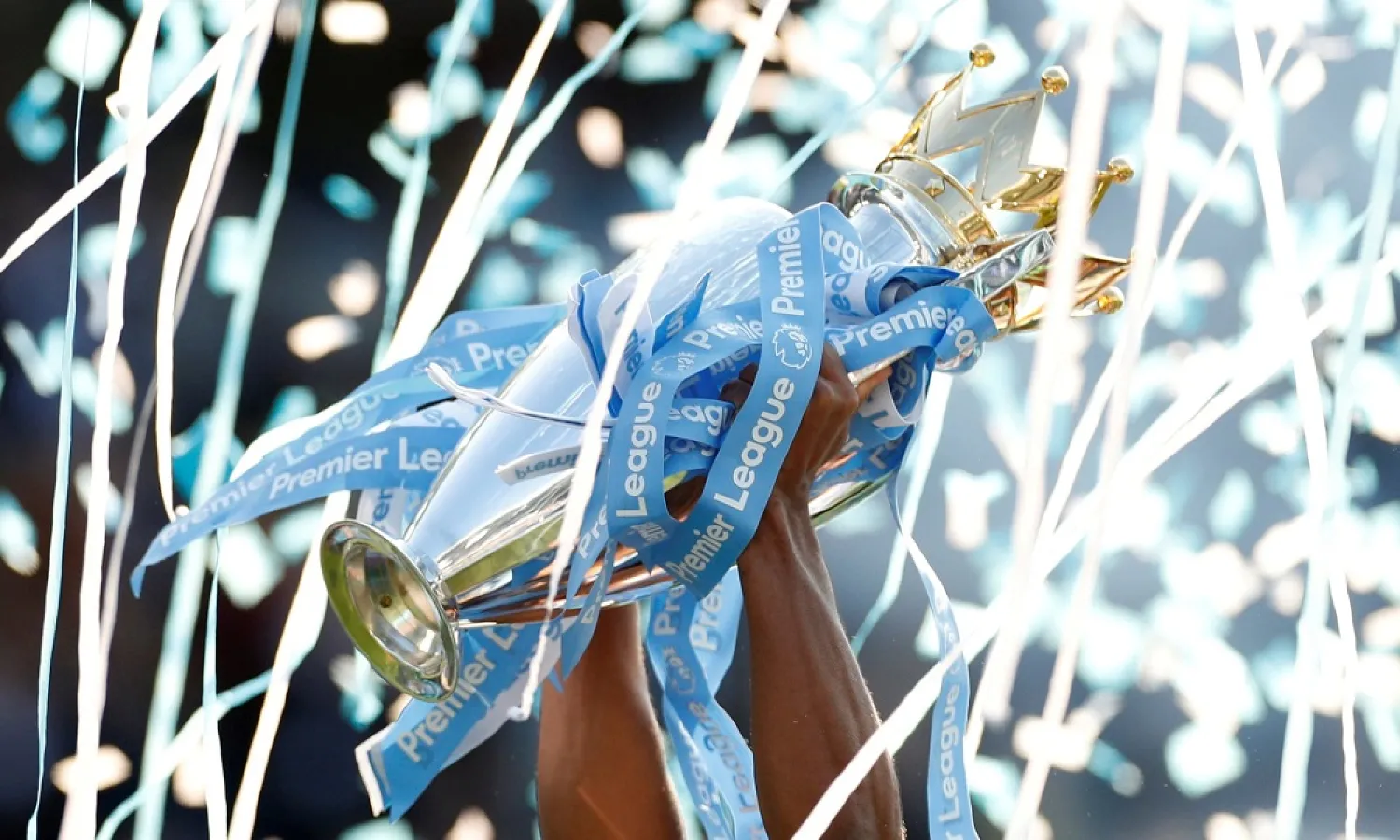
The formation of the Premier League divorced the top clubs from the rest of the pyramid. (Reuters)
TT

English Football's Blame Culture Makes it Unable to Come Together

The formation of the Premier League divorced the top clubs from the rest of the pyramid. (Reuters)

I don’t expect to make too many friends saying this, but perhaps it’s time we all gave Matt Hancock a break. Isn’t it typical how, as soon as things take a turn for the worse, everyone starts singling out the health secretary?

Yes, clearly, he could be doing more to deflect our attention from the failings of his dangerously shambolic government and the chronic underfunding of the National Health Service. And he wants to do more, too.

But there are plenty of other hapless Conservative MPs out there desperately trying to distract us from the fatally inept response to the COVID-19 outbreak by warbling on about footballers. And yet while people such as Julian Knight and Steve Brine get off scot-free, for some reason it’s always Hancock who gets saddled with the blame. It’s an easy target. Cheap populism.

Then again, in these extraordinary times for English football, the thirst for scapegoats, sacrificial lambs and other forms of votive livestock appears to be stronger than ever. Blame culture is nothing new to the game but the urgency of the current crisis appears to have broadened its scope beyond the time-honored targets of referees, television pundits and FA Cup replays.

Hancock is simply the latest patsy to walk into the crosshairs and discover that if you thought English football was dysfunctional when it was awash with money, just see what happens when you turn the money off.

In a way it’s strangely fitting that as the rest of us grapple with questions of life and death, of physical and mental health, of personal freedom and human connection, English football finds itself embroiled in an unseemly wrestle over its favorite topic. Earlier this month, talks between the Professional Footballers’ Association and the Premier League over a collective pay cut disintegrated into a slurry of arch statements and snide briefings.

Meanwhile Newcastle and Tottenham are among the clubs to have attracted widespread scorn for claiming taxpayers’ money while placing staff on furlough. Disgruntled broadcasters are threatening to withhold payments and with every passing day of lockdown the existential threat to livelihoods, to entire clubs, perhaps even to entire leagues, looms ever larger.

This is not, for all the wailing sirens and general sensation of panic, a short-term development. In many ways this is a mud fight that has been brewing for some time: years, perhaps even decades. English football’s inability to come together and function as a collective did not happen overnight; it occurred, instead, in small devastating steps.

You could pinpoint, for example, Tottenham’s circumvention of the FA’s Rule 35 in 1983, allowing them to float on the stock market and irrevocably transforming the modern football club into a profit-making vehicle. The formation of the Premier League, divorcing the largest clubs of any statutory obligation to the rest of the pyramid, ingraining light-touch regulation and free-market economics as cultural ideals.

The largely unchecked influx of billionaire owners in the early 21st century: in recent days plenty of outrage has been directed at figures such as Joe Lewis at Spurs and Mike Ashley at Newcastle, blithely availing themselves of public handouts while placing low-paid staff on leave. But as the old proverb goes, if you’re going to invite ducks into your kitchen, don’t be surprised when they clear out your bread bin.

And so, the story of English football’s boom years is also one of atomization, detachment and polarization: the gradual entrenchment of the Thatcherite compact that we are all eternally in competition. Fans are stirred and stoked and set against each other. Governing bodies scrap for reach and audience and space in the calendar. Clubs, now competing on the balance sheet as well as the pitch, are aligned not in accordance with a wider ecosystem but the individual will and ambition of their owners. Above all, the law of the market reigns supreme: a hierarchy of revenue generation where the language of wealth is the only acceptable tongue.

There is an element of broad-brush here but the wider point remains: if you were trying to design a system hostile to collaboration and solidarity, you could scarcely do better than English football in 2020. Tribal, commercial self-interest is why the game can barely lift a finger to fight racism. It’s why the application of video technology has been such a mess. It’s why scheduling and player workload are a disgrace. It’s why there is still no sustainable funding model for the women’s game. And in the jaws of its worst crisis in a generation, it may just be why its ham-fisted attempts to secure its own future have descended into discord, distrust and in-fighting.

It was striking to read that the Bundesliga’s top four clubs (Bayern Munich, Borussia Dortmund, RB Leipzig and Bayer Leverkusen) have pledged the equivalent of £18m to support their smaller rivals. The French Football Federation is working to set up a solidarity fund for ailing clubs. Of course, no country’s game is free of greed, bickering or self-interest but there does seem something innate in English football’s resistance to collective action, its lionization of the one-off gesture, the individual act of generosity, the PR coup or the PR-inspired U-turn.

It’s the stench of a sport that has gnawed away at its own wider obligations until there are virtually none left to speak of, that has largely shed its pretense of shared destiny and interdependence, the sense that on some level we are all part of the same game. This pandemic has exposed the faultlines in English football, an unsatisfying coalition of chaos that may yet come loose entirely. What emerges from the rubble is anyone’s guess.

The Guardian Sport


Messi Kicks Off MLS Season in Key World Cup Year

Argentine forward Lionel Messi won the MLS Cup for Inter Miami, co-owned by David Beckham. CHANDAN KHANNA / AFP/File
TT

Messi Kicks Off MLS Season in Key World Cup Year

Argentine forward Lionel Messi won the MLS Cup for Inter Miami, co-owned by David Beckham. CHANDAN KHANNA / AFP/File

Lionel Messi kicks off a critical season for Major League Soccer this weekend as the rapidly growing US domestic league seeks to cash in on a huge spike in interest from the upcoming World Cup.

Messi -- MLS's undisputed flagship star -- will lace up his boots for a fourth year with Inter Miami, who take on South Korean ace Son Heung-min's Los Angeles FC in Saturday's opener at the 70,000-capacity Memorial Coliseum.

It is a suitably splashy start for a season that will be split in two by the 2026 World Cup, which takes place across the United States, Canada and Mexico this summer.

World Cup host countries typically see boosts in attendance and interest for their domestic leagues, and MLS bosses are determined to keep US eyeballs on the planet's biggest sport long after national teams have returned home.

"This is a massive year for Major League Soccer," said league commissioner Don Garber, describing the season as "a seminal moment for our sport."

The MLS season will this year have a seven-week interruption for the World Cup in June and July.

Five MLS stadiums will host World Cup matches, while many more will be used as training facilities and fan zones.

An increased number of MLS players are expected to play in the World Cup, including Son -- and potentially Messi, though the Argentina great has not yet confirmed he will participate in a record sixth World Cup.

The league plans to use the season's bifurcation to its advantage in order to draw in new fans.

A rumored $15-30 million marketing spend throughout the international tournament will encourage viewers to embrace their local teams, and elevate the US domestic league's increasingly star-studded profile.

The MLS season resumes for its second half in the rest days between the World Cup semi-finals and final. An All-Star Game will quickly follow.

"MLS will be at the center of the soccer universe during the world's largest sporting event, and that creates an extraordinary opportunity for our league, our clubs, and our players," said Garber.

New stars

The decision to start the new MLS season with a game featuring the league's two biggest global stars, at a giant former Olympic stadium in the heart of Los Angeles, is no accident.

Garber is predicting "the largest opening weekend crowd in league history."

While MLS has been heavily dependent on eight-time Ballon d'Or-winner Messi's allure in recent years, the arrival of Son midway through 2025 has been transformative.

Signed by Los Angeles FC for $26.5 million -- reportedly the largest transfer in MLS history -- the 33-year-old's arrival has brought with it the support of thousands of South Koreans living in the United States.

Other marquee names to join MLS sides this year include Minnesota United's James Rodriguez, who penned an extendable six-month contract in a bid to find form before Colombia's World Cup campaign, after a difficult few domestic seasons.

Argentina-born Mexico striker German Berterame has joined Messi at reigning MLS champions Inter Miami, who are co-owned by David Beckham.

And Timo Werner, joining San Jose Earthquakes, becomes the latest German star to ply his trade in a league that already features Thomas Muller at the Vancouver Whitecaps and Marco Reus for Los Angeles Galaxy.

'Best leagues'

MLS is planning another major change that it hopes will entice even more big names.

Beginning July 2027, MLS will change from its current spring-to-fall schedule, to a summer-through-spring rota.

The switch will align MLS with the big European leagues like England's Premier League and Spain's La Liga.

The hope is this will allow US clubs to buy and sell global talent during simultaneous transfer windows, particularly during the summer break.

It would also avoid future clashes with international fixtures and major tournaments.

Garber said the move "reflects exactly where we see MLS going, not just aligning with the best leagues in the world but competing with them."

Critics say it is a gamble, as MLS will soon be directly competing for viewers with the similarly scheduled NFL, NBA and NHL leagues.


Perfect Start for Pereira as Forest Enjoy Record Win at Fenerbahce

Nottingham Forest's Portuguese head coach Vitor Pereira (CR) gestures from the techincal area during the UEFA Europa League - knockout round play-off first leg - football match between Fenerbahce SK and Nottingham Forest FC at the Sukru Saracoglu Stadium in Istanbul on February 19, 2026. (Photo by Yasin AKGUL / AFP)
TT

Perfect Start for Pereira as Forest Enjoy Record Win at Fenerbahce

Nottingham Forest's Portuguese head coach Vitor Pereira (CR) gestures from the techincal area during the UEFA Europa League - knockout round play-off first leg - football match between Fenerbahce SK and Nottingham Forest FC at the Sukru Saracoglu Stadium in Istanbul on February 19, 2026. (Photo by Yasin AKGUL / AFP)

Nottingham Forest's new head ‌coach Vitor Pereira said he had encouraged his players to express themselves at Fenerbahce on Thursday and they responded in style with a 3-0 victory that marked their biggest away win in European competition.

The comfortable win in the first leg of their Europa League knockout round playoff tie in Turkey was the perfect start for Pereira, who took the ‌helm last ‌weekend following the departure of ‌Sean ⁠Dyche.

Goals from Murillo, ⁠Igor Jesus and Morgan Gibbs-White secured the win but the scoreline could have been even more emphatic.

"We had chance to score two more goals. It was a very good result," Portuguese Pereira told TNT Sports, according to Reuters. "It is only ⁠halftime, we need to be consistent, ‌the schedule is ‌tight and difficult."

Pereira is Forest's fourth managerial appointment this ‌season after Nuno Espirito Santo, Ange Postecoglou ‌and Dyche, and the 57-year-old arrives with the side just three points above the Premier League relegation zone.

"Everyone must be ready to help the ‌team. This is what I ask them," said Pereira. "I realized before I ⁠came that ⁠the players have a lot of quality. They need results but they need to enjoy the game.

"If they enjoy the way they are playing they can have a high level. They need organization and confidence. I asked them to express themselves on the pitch. They did it."

Forest host Liverpool in the league on Sunday before Fenerbahce arrive for the second leg of their Europa League tie on February 26.


FIFA President: All 104 World Cup Matches Will be 'Sold Out'

FIFA President Gianni Infantino speaks during a Board of Peace meeting at the US Institute of Peace, Thursday, Feb. 19, 2026, in Washington. (AP Photo/Mark Schiefelbein)
TT

FIFA President: All 104 World Cup Matches Will be 'Sold Out'

FIFA President Gianni Infantino speaks during a Board of Peace meeting at the US Institute of Peace, Thursday, Feb. 19, 2026, in Washington. (AP Photo/Mark Schiefelbein)

FIFA president Gianni Infantino said all 104 matches of ‌the 2026 World Cup will be "sold out" despite tickets available for the tournament running from June 11 to July 19.

"The demand is there. Every match is sold out," Infantino told CNBC in an interview Wednesday from US President Donald Trump's Mar-a-Lago resort in Palm Beach, Fla.

Infantino said there had been 508 million ticket requests in four weeks from more than 200 countries for about seven million available tickets.

"(We've) never see anything like that -- incredible," he said.

The 48-team World Cup is taking place across 16 host cities in the United States, Mexico and Canada, with MetLife Stadium in East Rutherford, N.J., as the site ‌of the ‌World Cup final.

The head of the sport's governing ‌body ⁠said that tournament ⁠locations contribute to what soccer supporters' associations have complained are exorbitant ticket prices.

"I think it is because it's in America, Canada and Mexico," he said. "Everybody wants to be part of something special."

Also affecting prices are resale websites, which take the official ticket that has a fixed price and use "dynamic pricing" leading to the cost to fluctuate.

"You are able as well to resell your tickets ⁠on official platforms, secondary markets, so the prices as ‌well will go up," Reuters quoted Infantino as saying. "That's part ‌of the market we are in."

A report in the Straits Times said that a ‌Category 3 seat -- the highest section in the stadium -- for Mexico's match ‌against South Africa in the tournament opener on June 11 in Mexico City was listed at $5,324 in the secondary market. The original price was $895.

The same seat category for the World Cup final on July 19, originally priced at $3,450, was advertised for $143,750 on ‌Feb. 11, per the report.

In December, FIFA designated "supporter entry tier" tickets with a $60 price to be allocated to ⁠the national federations ⁠whose teams are playing. Those federations are expected to make those tickets available "to loyal fans who are closely connected to their national teams," FIFA said in a press release.

The last time the US served as a World Cup host in 1994, tickets ranged from $25 to $475. At the 2022 World Cup in Qatar, prices ranged from $70 to $1,600 after the matches were announced.

Infantino in his comments this week estimated that the 2026 World Cup will raise $11 billion in revenue for FIFA, with "every dollar" to be reinvested in the sport in the 211 member countries.

He said the economic impact for the United States would be around $30 billion "in terms of tourism, catering, security investments and so on." Infantino also estimated the tournament will attract 20 million to 30 million tourists and
