


Lebanon: Currency Drops, Central Bank Sets New Exchange Rate at Transfer Firms

 Lebanon's currency continued its downward spiral before the dollar on Thursday, reaching a new low amid financial turmoil in the crisis-hit country. (AP Photo/Hussein Malla)
MANAGEMENT
Lebanon's currency continued its downward spiral before the dollar on Thursday, reaching a new low amid financial turmoil in the crisis-hit country. (AP Photo/Hussein Malla) MANAGEMENT
TT

Lebanon: Currency Drops, Central Bank Sets New Exchange Rate at Transfer Firms

 Lebanon's currency continued its downward spiral before the dollar on Thursday, reaching a new low amid financial turmoil in the crisis-hit country. (AP Photo/Hussein Malla)
MANAGEMENT
Lebanon's currency continued its downward spiral before the dollar on Thursday, reaching a new low amid financial turmoil in the crisis-hit country. (AP Photo/Hussein Malla) MANAGEMENT

The Lebanese central bank set an exchange rate of 3,625 Lebanese pounds per dollar to be applied by money transfer companies on Friday, a central bank source said.

This came as the local currency hit a new low amid financial turmoil in the crisis-hit country compounded by the coronavirus outbreak.

“Prices may change every day and will be set the day before,” the central bank source said, adding that the rate was based on the price dollars were fetching at foreign exchange offices.

“In the event that there are major fluctuations during the day, the price may be set again during the same day,” the source added, Reuters reported.

It was not immediately clear if the rate announced on Friday would be applied by commercial banks for such withdrawals.

The currency crash came as hundreds of Lebanese crowded outside money transfer offices Thursday, the last day that authorities allowed dollars to be dispensed to customers following new Central Bank rules.

The new rules, detailed in a bank circular released this week, require banks to convert cash withdrawals from foreign currency bank accounts to the local currency, the Lebanese pound, at market rates determined daily by the bank.

However, hundreds of protesters took to the streets in Beirut and other cities to denounce the policies of the Central Bank, ignoring regulations for social distancing because of the virus.

Parliament speaker Nabih Berri also urged the government on Thursday to use its legal powers to halt the “dramatic collapse” of the country’s pound currency before it is “too late”.

The change is meant to ease demand on the dollar but has instead caused panic among the Lebanese.

In Lebanon, people have relied on a stable national currency that has been pegged to the dollar for nearly 30 years.

The tiny Mediterranean country of about 5 million people has a large diaspora that sends foreign currency home or relies on transfers from here to students abroad. Also, many Lebanese keep their savings in foreign currency, the Associated Press reported.

The Lebanese pound traded between 3,500 and 3,700 to the dollar on Thursday, a sharp jump amid general currency depreciation that began in March. It had been pegged to the dollar at 1,500 pounds since 1990, the end of the country’s civil war.

For her part, Maha Yahya, director of the Beirut-based Carnegie Middle East Center, said the new rules are an effective float of the currency but it is not yet clear how the banks will implement them.

“Practically they are admitting the market rate. The problem is when you do it on its own without a broader financial package, and not part of a larger financial and economic rescue package, you are basically triggering a rapid inflation,” Yahya said.

The dollar is expected to continue to rise “so everybody now is hedging their bets and waiting," Yahya warned.

Lebanon is facing its worst economic crisis in decades, including unprecedented unemployment levels and a severe liquidity crunch. The crisis has been compounded by a nationwide general lockdown, in place for over a month, to combat the spread of coronavirus.

Prices of basic goods have soared— sugar for instance has gone up by nearly 67 percent. Consumer groups recorded a general 58% price increase on basic commodities since October.



Third ‘Mirkaz AlBalad AlAmeen Platform’ to Open in Makkah on Sunday 

A street in the holy city of Makkah is decorated with Ramadan lights. (SPA)
TT

Third ‘Mirkaz AlBalad AlAmeen Platform’ to Open in Makkah on Sunday 

A street in the holy city of Makkah is decorated with Ramadan lights. (SPA)

The third edition of the “Mirkaz ABalad AlAmeen”, a leading platform for exchanging opportunities in Makkah, will kick off on Sunday, under the theme “Makkah Inspires the World.”

The platform, organized by the Holy Makkah Municipality, will feature 15 exceptional Ramadan evenings focused on dialogue, knowledge exchange, and cross-sector engagement.

Makkah Mayor Musad Aldaood said the platform redefines development from Makkah, where faith meets inspiration and values are transformed into a comprehensive civilizational experience.

He noted that the initiative reflects the ambitions of Saudi Vision 2030 and showcases Makkah to the world as a living model of creativity, leadership, and innovation.

The upcoming edition will host more than 65 speakers, including executive leaders and decision-makers from across all three sectors, alongside futurists, entrepreneurs, and leading voices in culture and inspiration from artists, writers, media professionals, and innovators.

The program targets 12 key sectors: technology and digital transformation, financial investment, communications and media, real estate development, transport and logistics, banking services, youth and sports, tourism and culture, hospitality and catering, Hajj and Umrah, the third sector, and healthcare.


Saudi Arabia’s Mawani Grants Unified License to Global Shipping Line 

The initiative is part of Mawani's ongoing efforts to develop the maritime business environment, enable international companies to invest in the Saudi market, and increase competitiveness within the maritime sector. (Mawani)
TT

Saudi Arabia’s Mawani Grants Unified License to Global Shipping Line 

The initiative is part of Mawani's ongoing efforts to develop the maritime business environment, enable international companies to invest in the Saudi market, and increase competitiveness within the maritime sector. (Mawani)

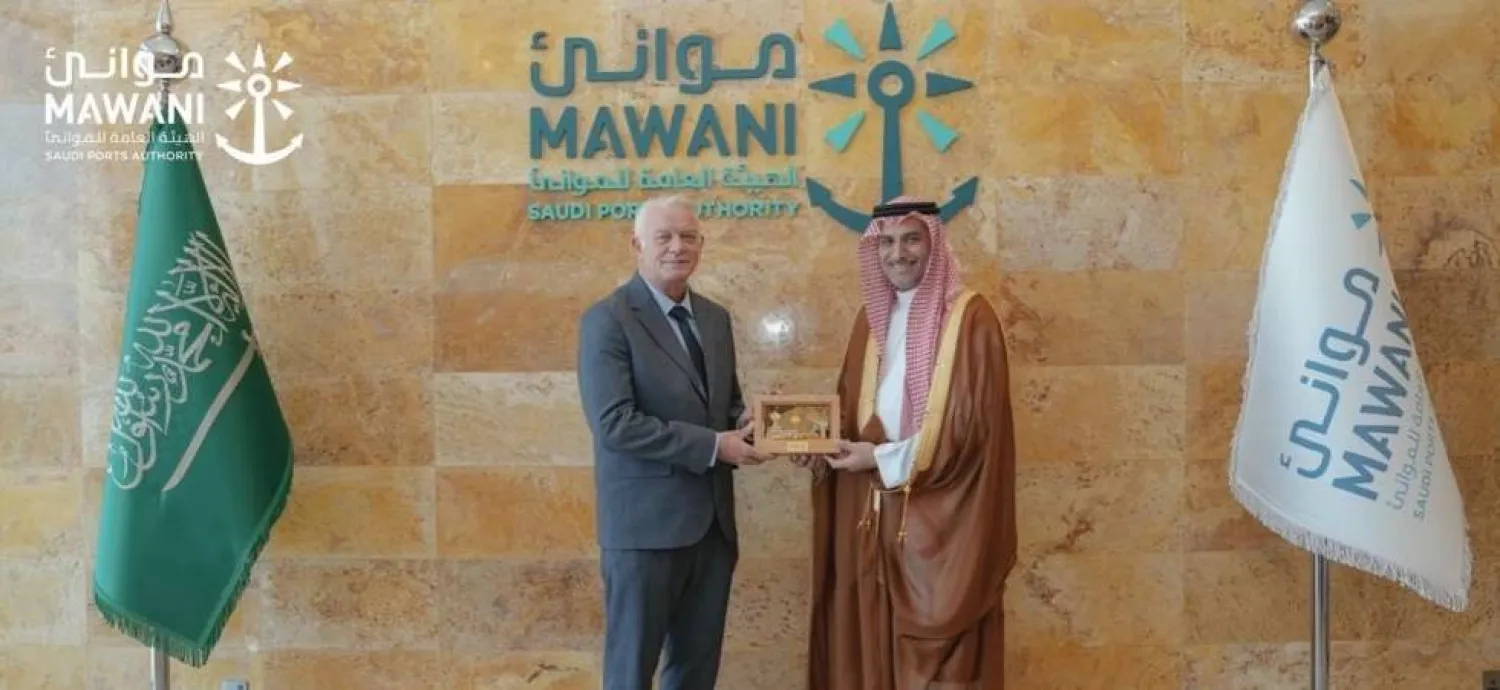
The Saudi Ports Authority (Mawani) granted on Thursday a unified license to international shipping line Global Shipping Line (PIL), officially recognizing it as an authorized foreign investor to operate maritime agencies in the Kingdom's ports, reported the Saudi Press Agency.

The license is issued in accordance with the regulations outlined in the Maritime Agency Services, reflecting Mawani's commitment to boosting the efficiency of the maritime sector and improving the quality of operational services provided at ports.

It aims to attract global expertise and facilitate knowledge transfer within the Kingdom, aligning with international best practices in the maritime transport industry.

The initiative is part of Mawani's ongoing efforts to develop the maritime business environment, enable international companies to invest in the Saudi market, and increase competitiveness within the maritime sector.

PIL, which operates from its regional headquarters in Riyadh, manages operations in 29 countries.

The move strengthens the Kingdom's position as a crucial logistics hub, in line with the National Transport and Logistics Strategy, while attracting more international shipping lines. It reinforces Saudi Arabia's role as a key link among three continents.


IMF: Restoring Lebanon's Economic Growth Will Require Comprehensive Reforms

FILE PHOTO: A view of the International Monetary Fund (IMF) logo at its headquarters in Washington, D.C., US, November 24, 2024. REUTERS/Benoit Tessier//File Photo
TT

IMF: Restoring Lebanon's Economic Growth Will Require Comprehensive Reforms

FILE PHOTO: A view of the International Monetary Fund (IMF) logo at its headquarters in Washington, D.C., US, November 24, 2024. REUTERS/Benoit Tessier//File Photo

Lebanon's economy has shown resilience despite conflicts in the region, with tourism fueling a bit of a rebound, but restoring growth will require comprehensive reforms, the International Monetary Fund said on Thursday.

IMF spokeswoman Julie Kozack said the global lender remains engaged in complex discussions with Lebanese ‌authorities following their ‌request for an IMF-supported ‌program ⁠in March 2025. The ⁠IMF sent a staff mission to Beirut earlier this month, said Reuters.

The talks have been focused on two big issues, she said, citing the need for banking sector restructuring and a medium-term fiscal ⁠strategy. "The economy has shown resilience ‌despite the impact ‌of conflicts in the region. It has had ‌a bit of a rebound ‌on the back of tourism from the strong diaspora," Kozack said.

"But at the same time, really restoring strong and sustainable growth will ‌require a comprehensive set of reforms to tackle some of the ⁠structural ⁠weaknesses that have really hampered Lebanon's economic performance for many years," she said. Reforms also are needed to attract international support to help Lebanon address its substantial reconstruction needs.

Kozack said Lebanon needs an updated medium-term fiscal framework that includes concrete measures to mobilize additional revenues for much-needed capital spending, as well as a sovereign debt restructuring to restore debt sustainability.