



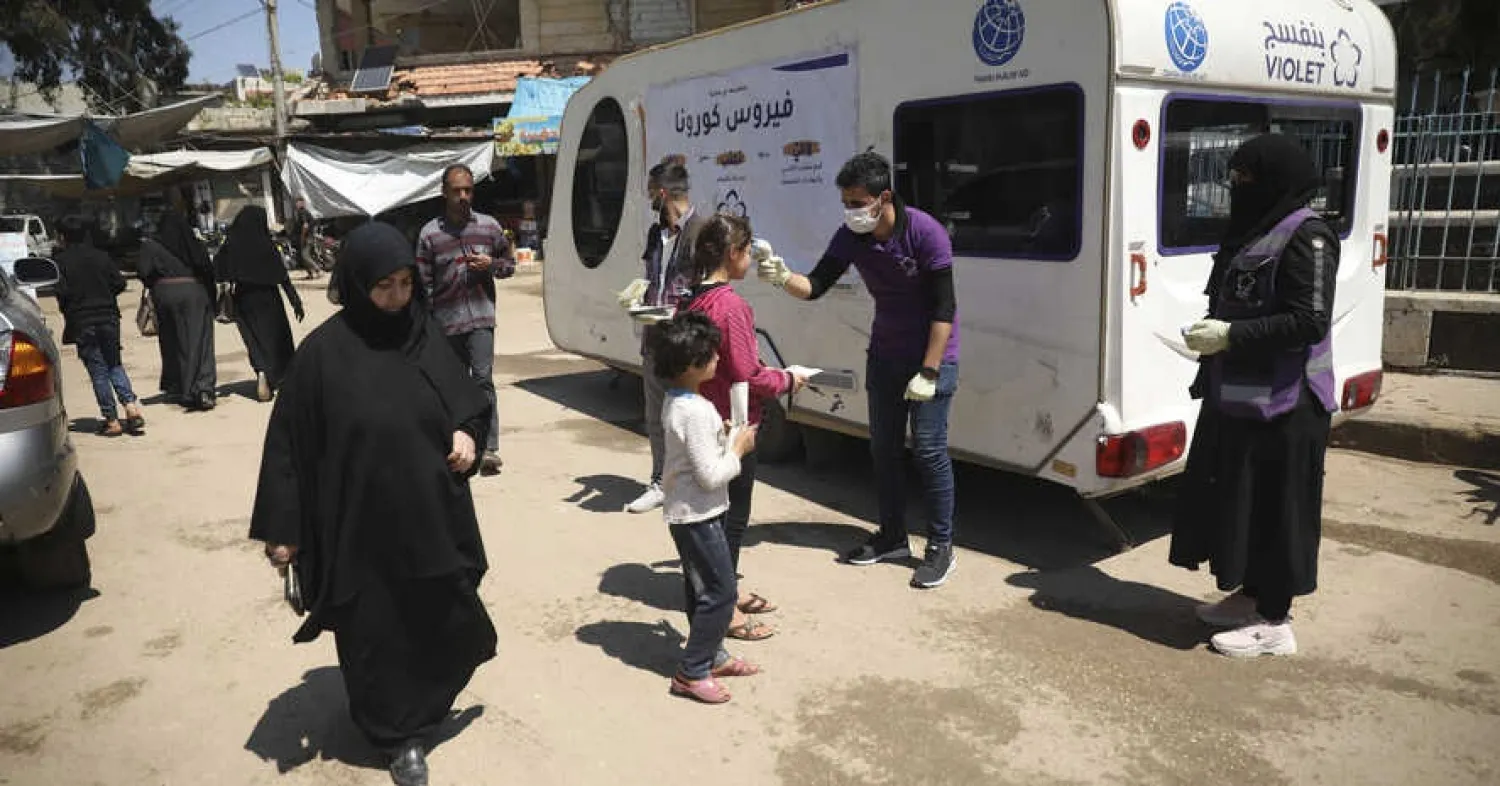

UN humanitarian chief Mark Lowcock said Wednesday that more than 40 cases of the novel coronavirus have been reported in Syria, in addition to at least three death, signaling that “tragedy beckons” after nine years of war that has left the country’s health care system decimated.
Addressing the UN Security Council, he said while the number may sound low compared to other countries, testing in Syria is very limited.
“If this virus is behaving similarly in Syria to how it has elsewhere — and that is our assumption for now — then tragedy beckons,” he said during the remote meeting.
Lowcock asserted that essential medical supplies and equipment must be allowed into the country, and that the Al Yarubiyah border crossing from Iraq to Syria’s northeast must be reopened.
The border crossing was closed in January at Russia’s insistence, and Lowcock said deliveries of medical supplies to the northeast from Damascus have not filled the gap.
With millions of people displaced in crowded conditions and without adequate sanitation, he said Syria can’t be expected “to cope with a crisis that is challenging even the wealthiest nations.”
Efforts are being made to set up isolation areas in displacement camps and health facilities in Syria, but measures aimed at containing the virus are already having side effects such as skyrocketing food prices in some areas, he said, the Associated Press (AP) reported.
For his part, UN Secretary-General Antonio Guterres called for a cease-fire to all conflicts around the world on March 23 to tackle the coronavirus pandemic, and at separate Security Council meetings Wednesday on Syria’s political and humanitarian situation there was widespread support for his appeal.
Geir Pedersen, the UN special envoy for Syria, welcomed the fact that there has been “significant calm in many areas of Syria,” with no all-out offensives since early March.
He said the calm was “uneasy and fragile” and there is a constant risk of things escalating and further appealed for a cease-fire “that results in sustained calm and is nationwide in scope – one that does not see new assaults across lines of contact, and enables Syrians to access equipment and resources necessary to combat COVID-19.”
Meanwhile, Moscow and the Washington disagreed about who should be in the lead in pursuing a cease-fire and an end to the Syrian conflict.
Russia’s UN Ambassador Vassily Nebenzia told the council that the foreign ministers of Russia, Iran and Turkey held a video conference on April 22 and “underscored the leading role of Astana in promoting a Syrian settlement.”
This includes stabilizing the situation in the country, dealing with refugees, resolving humanitarian problems and promoting a dialogue among Syrians in the committee that is to draft a new constitution, according to AP.
However, acting US deputy ambassador, Cherith Norman Chalet, said the UN "must be at the center of any effort to establish a comprehensive, enduring, and verifiable nationwide cease-fire.”


