


Hard Work Lies ahead for Lebanon on Road to IMF Aid Deal as Banks Reject Rescue Plan

An anti-government protester scuffles with Lebanese army soldiers in the town of Zouk Mosbeh, north of Beirut, Lebanon, April 27, 2020. (AP)
TT

Hard Work Lies ahead for Lebanon on Road to IMF Aid Deal as Banks Reject Rescue Plan

An anti-government protester scuffles with Lebanese army soldiers in the town of Zouk Mosbeh, north of Beirut, Lebanon, April 27, 2020. (AP)

With a rescue plan that will form the basis of talks for IMF aid finally in place, Lebanon must now enact painful steps and work out how it distributes the costs, with the country’s banks likely to be particularly hard hit.

The Lebanese government signed a request for assistance from the International Monetary Fund (IMF) on Friday in what Prime Minister Hassan Diab’s office described as “a historic moment in the history of Lebanon”.

Although economists and diplomats welcomed the plan as a critical first step, many were skeptical that ambitious proposals to cut public sector spending and overhaul the banking sector could be enacted after years of political wrangling.

“This means the onset of serious negotiations with the IMF so this is very important and good news because it removes a lot of uncertainty. Having said that, the issue in Lebanon has always been one of execution,” ex-economy minister Nasser Saidi said of the 53-page plan passed on Thursday.

The plan sets out tens of billions of dollars in financial system losses and tough measures to claw Lebanon out of a crisis that has seen its currency crash, unemployment soar, the country default on its sovereign debt and protests on the streets.

“We have taken the first step on the path of saving Lebanon from the deep financial gap; and it would be difficult to get out of it without efficient and impactful help,” Diab’s office said in Friday’s statement.

A rapid slide in the Lebanese pound, which has lost more than half its value since October, has sparked renewed unrest, with a demonstrator killed in riots targeting banks that have frozen savers out of US dollar deposits.

Beirut hopes that with an IMF program in hand, foreign donors will release about $11 billion pledged at a Paris conference in 2018 which was tied to long-stalled reforms.

“Implementation is the hard bit, and Lebanon has consistently failed on this. Progress will only be possible with that, on the basis of greater political and public consensus,” a Western diplomat told Reuters.

The plan, which calls for an additional $10 billion in external support over five years, also forms the backbone of talks with foreign bondholders that have yet to start and several Lebanese dollar bonds notched up their best daily gains on Friday in more than a month.

Lebanon said in March that it was defaulting on Eurobonds totalling $31 billion to preserve cash for vital imports.

“In large part it’s a big PR move for the government as there was a feeling that the government was starting to lose control of the narrative. This plan shows they’re really trying to work towards something,” Nafez Zouk, emerging markets strategist at Oxford Economics, said.

Blow to banks

A central plank of the plan is imposing financial sector losses of roughly $70 billion, which will be covered in part by a shareholder bail-in and cash taken from large depositors.

With measures such as recovering stolen assets abroad, this could take years while some economists say the plan places too heavy a burden on a banking sector that has helped finance decades of large state budget deficits.

“This is basically a takeover of the banking sector by the state. I don’t understand how this will restore confidence,” said Nassib Ghobril, chief economist at Byblos Bank. “When you go this way, where is lending going to come from?”

Marwan Mikhael, head of research at Blominvest Bank, said it was unfair to make banks pay such a high cost for years of government borrowing that led to the default and broader crisis.

“The government doesn’t have the money to bail out the banks ... so here they want the banks to rescue the government.”

The Lebanese Banking Association said Friday it would in “no way” endorse the rescue plan, saying it wasn’t even consulted on it “despite being key part of any solution.”

“Domestic bank restructuring will further destroy confidence in Lebanon both domestically and internationally,” it said in a statement.

The plan will likely deter investment in the economy, thereby, hindering any recovery prospects, it added.

The association called the plan's revenue and expenditure measures "vague" and not backed by a precise timeline for implementation, and said it did not address inflationary pressures that could lead to hyperinflation.

It urged MPs to reject it, in part because it violated private property, and said it would soon present a plan of its own that could restore growth.



Turkish Central Bank Total Reserves Fell Nearly $6 Bln Last Week, Bankers Say 

People walk with the Suleymaniye Mosque in the background ahead of the holy month of Ramadan in Istanbul, Wednesday, Feb. 18, 2026. (AP)
TT

Turkish Central Bank Total Reserves Fell Nearly $6 Bln Last Week, Bankers Say 

People walk with the Suleymaniye Mosque in the background ahead of the holy month of Ramadan in Istanbul, Wednesday, Feb. 18, 2026. (AP)

The Turkish Central Bank's total reserves are expected to have decreased by around $5.8 billion last week to $206 billion, due to a eurobond redemption, bankers ‌said.

Three bankers ‌consulted by ‌Reuters ⁠calculated that net reserves ⁠decreased by $7 billion to $89 billion in the week ending February 20.

Bankers estimated that ⁠an increase in ‌gold ‌prices in the week ‌to February 20 ‌had an upward impact of around $1 billion on reserves. According to ‌the calculations, the central bank sold $3 ⁠billion ⁠in the market last week.

The reserve calculations are based on preliminary data from the central bank. Official data will be released on Thursday.


Despite Drop in 2025, Russian Oil Exports Exceed Pre-war Volumes

Russia relies on a shadow fleet of tankers to get past Western restrictions on its oil exports. Damien MEYER / AFP/File
TT

Despite Drop in 2025, Russian Oil Exports Exceed Pre-war Volumes

Russia relies on a shadow fleet of tankers to get past Western restrictions on its oil exports. Damien MEYER / AFP/File

While Russian oil exports dropped last year, Russia is still exporting higher volumes than before its invasion of Ukraine in 2022, researchers said Tuesday, calling for stricter sanctions enforcement.

The volume of Russian crude oil exports remained six percent above pre-invasion levels in the fourth year of the war, despite Western sanctions aimed at curbing Russia's "shadow fleet," according to a report by Finnish think tank Center for Research on Energy and Clean Air (CREA).

Russia's shadow fleet consists of ageing tankers, with often opaque ownership, used to circumvent sanctions imposed by the European Union, the United States and the G7 group of nations.

However, oil revenues, which are fueling Moscow's war chest, have dropped below pre-invasion levels, as Russia has been forced to adopt price discounts, the report said.

"We've seen a significant drop in Russian fossil fuel export earnings as a result of new measures and greater enforcement," Isaac Levi, a CREA analyst and co-author of the report, told AFP.

But he added that "there are still significant loopholes and areas that have been unaddressed by sanctioning countries", allowing volumes to remain high.

Loopholes include the false flagging of ships but also the issue of re-exportation of refined fuels made from Russian crude oil to sanctioning countries.

"We propose a ban of imports from any refinery or storage terminal that has received a shipment of Russian oil in the previous six months," Levi said.

- Crude to China, India, Türkiye-

Russian revenues from crude oil exports -- one of Russia's main exports -- decreased by 18 percent to 85.5 billion euros in the 12 months leading up to February 24, compared to the year before, according to the report.

Meanwhile volumes fell by six percent to 215 million tons, for the same period, according to the report.

Ninety-three percent of Russian crude was exported to China, India and Türkiye.

The report urged the EU and UK to "detain Russian shadow fleet vessels that pose huge environmental and security threats to European and UK coastlines".

The European Union lists 598 vessels suspected of being part of the "shadow fleet" that are banned from European ports and maritime services.

It also called for an end to Hungary's and Slovakia's continued imports of Russian crude oil.

The two countries, which were exempted from EU sanctions on Russian oil imports, imported 11 percent more Russian crude oil in the first 10 months of 2025 compared to the same period a year earlier, the report stated.


European Oil and Gas Stocks Hit Record High, Surpassing 2007 Level

The chimneys of the Total Grandpuits oil refinery are seen just after sunset, southeast of Paris, France, March 1, 2021. REUTERS/Christian Hartmann
TT

European Oil and Gas Stocks Hit Record High, Surpassing 2007 Level

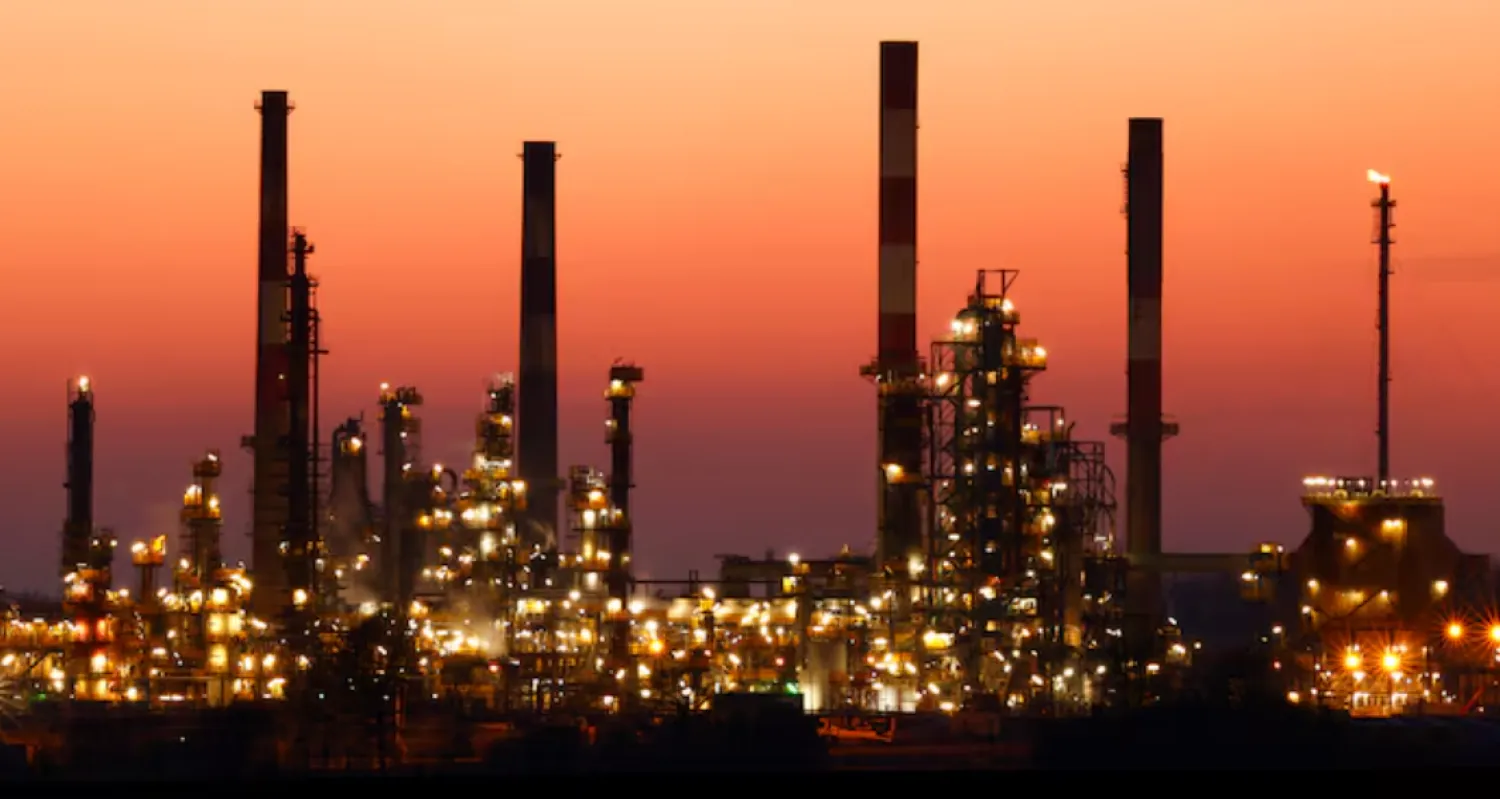
The chimneys of the Total Grandpuits oil refinery are seen just after sunset, southeast of Paris, France, March 1, 2021. REUTERS/Christian Hartmann

The European oil and gas stocks index hit a record high on Monday, surpassing a previous record hit in 2007, helped in recent weeks by a rise in the price of oil, Reuters reported.

At 1450 in London the basket was up 1.5%. Oil and gas names have added 17% year-to-date versus a 6.5% rise for the pan-European STOXX 600 index.

Brent rose as high as $72.44 a barrel on Monday a six month high. It has risen nearly 19% so far in 2026 as investors worry about US military action in Iran.