


Premier League Critics Should Recognize Football Cannot Wait Forever

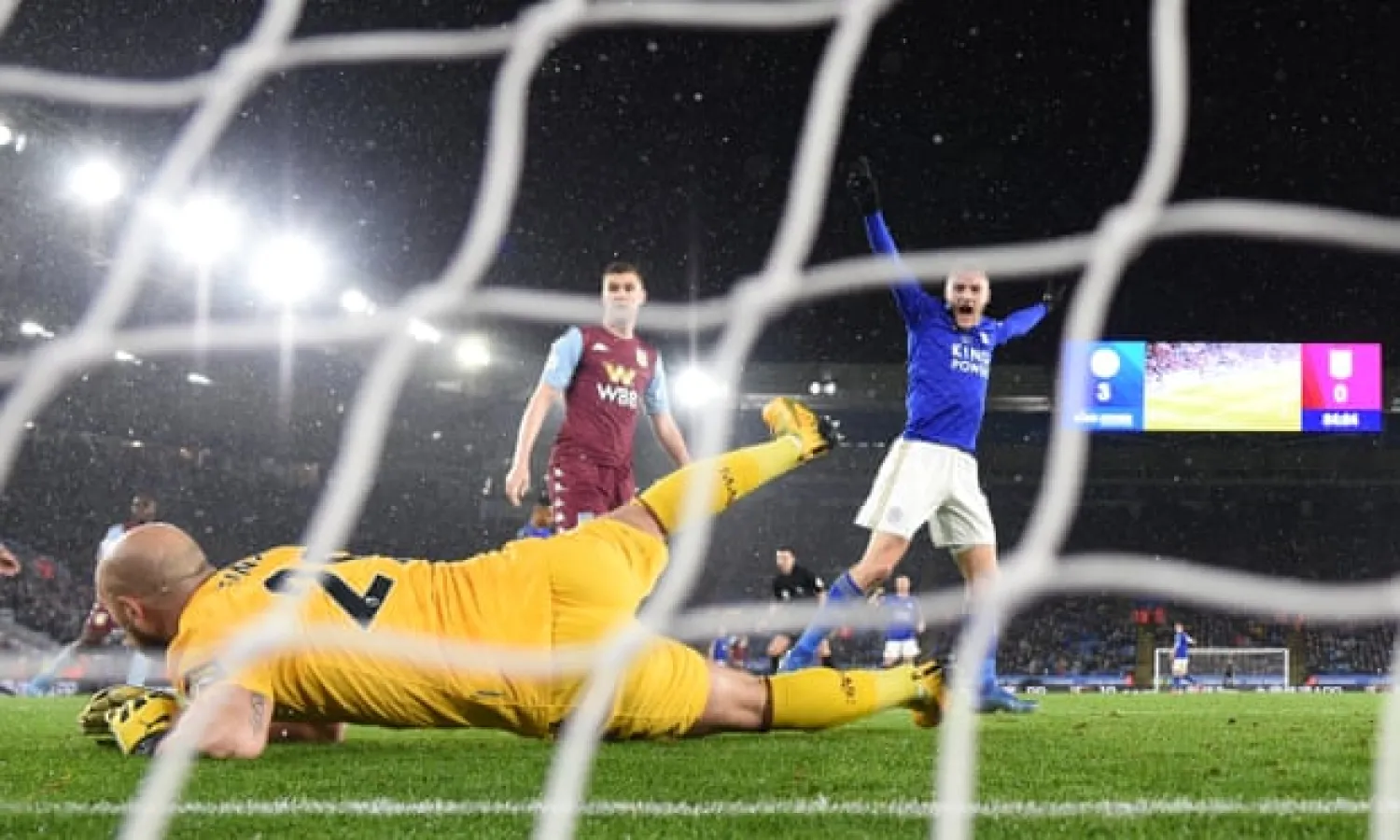
 Jamie Vardy celebrates Leicester’s fourth, scored by Harvey Barnes, against Aston Villa on 9 March. It was the last goal scored in the Premier League before shutdown. Photograph: Michael Regan/Getty Images
Jamie Vardy celebrates Leicester’s fourth, scored by Harvey Barnes, against Aston Villa on 9 March. It was the last goal scored in the Premier League before shutdown. Photograph: Michael Regan/Getty Images
TT

Premier League Critics Should Recognize Football Cannot Wait Forever

 Jamie Vardy celebrates Leicester’s fourth, scored by Harvey Barnes, against Aston Villa on 9 March. It was the last goal scored in the Premier League before shutdown. Photograph: Michael Regan/Getty Images
Jamie Vardy celebrates Leicester’s fourth, scored by Harvey Barnes, against Aston Villa on 9 March. It was the last goal scored in the Premier League before shutdown. Photograph: Michael Regan/Getty Images

With each week the plans become a little more refined and with each week any final decision is pushed back. Football may return, and this is how it may look if it does, but nobody is sure, and any proposed date can only be provisional. Which is as it should be. In an age that often favours decisiveness over the decision itself, there is something vaguely comforting about a process that accepts the wisdom of waiting.

But in the background there is a crucial, nagging voice, and what it is saying is this: if football isn’t prepared to return, at least initially, in a form very different to the one it took before the virus, it may not return for a very long time – and for many clubs that means never.

Various fan bodies, particularly in Germany, have protested about the prospect of football returning behind closed doors. The stand-out proposal from Friday’s Premier League meeting is for matches to be played at neutral grounds. The accusation is of the authorities and clubs acting not for reasons of sport but finance, a tension that has existed since the advent of professionalism 140 years ago. At some point, though, the two intersect.

Football long ago abased itself before the capitalist altar and, while it would be preferable if more than lip service were paid to the idea the game has a community role, that it is not merely a business and didn’t exist simply to make the rich even richer, equally there has to be some realism.

Clubs, however socially responsible, need revenue to survive. In Europe’s big five leagues, a high proportion of that revenue is derived from broadcasting rights and to generate that games need to be played.

One of the reasons Dutch clubs seem to have reacted with relative equanimity to their government’s decision to ban all public events until at least 1 September is that the pressure from broadcasters in the Netherlands is nowhere near as intense. The outcry in France after a similar decision would almost certainly have been louder – and various clubs are considering their legal options – had a new, far more lucrative television deal not been beginning next season.

There has also been a quasi-moral argument raised, that there is something distasteful about plotting a return to live sport when people are still dying in their hundreds by the day. And perhaps there is; it’s easy to imagine how modern football’s combination of glitz and pettiness could jar with a general mood of sombreness.

But it’s not to diminish the unique nature of the coronavirus crisis or the tragedy of those deaths to observe that all life goes on all the time against a background of mortality. At some point, as the risk of contagion recedes, lockdown will ease and some version of some variant of life will begin again.

Judging that point is, of course, enormously difficult, and where football should lie on the list of priorities can be debated. But the two principal factors in making a decision must be safety and resources.

What is clear is the clubs have no desire to make any call without official support and that there is no appetite on the part of the government to institute the sort of ban seen in the Netherlands and France. That football could be considering a return in Germany, Italy, Spain and England while suspended in two ostensibly similar neighbouring countries is bewildering, but given the easing of lockdown is necessarily a gradual process, perhaps it is only natural that different countries should have different concerns and take different steps first.

Germany looks the country closest to a return, though the revelation of three positive tests at Cologne may affect those plans, perhaps before the end of this month.

That at least gives the Premier League an example of what football may look like, that minimising the risk to players will be complicated and require sacrifice and discipline is clear. To a layman, frankly, the processes look baffling and overwhelming, and it is entirely understandable that players should be concerned – and fully involved in any decision – but it may be their acceptance is the only way football can return without a wait of several months that could devastate clubs.

Then there is the matter of resources. The guidance suggests players should be tested two or three times a week. Even if the tests are sourced privately, that clearly should not happen until staff in hospitals and other key positions – in shops, on public transport, in schools – are being tested regularly.

Equally, there will have to be medical and security staff on duty at stadiums. Again, that cannot happen if they would be better deployed elsewhere. Those are matters on which football can only wait.

Using eight-to-10 neutral stadiums would seem a way of making the process more efficient: fewer arenas to adapt to the guidelines and keep clean, less risk of fans congregating. It is far from ideal but these are compromises that may have to be accepted for football to get under way again.

And the vital point, perhaps, is this: that these measures may be necessary not only for this season but for next as well. Ending 2019-20 now, whatever method is used to determine positions and titles, promotion and relegation and European qualification, may resolve certain issues regarding contracts that are set to expire on 30 June, may allow prize money to be distributed (although probably not without legal challenges) and may answer some perceived need to be seen to be decisive, but the fundamental will remain: the virus will still be there.

Whether football returns in June or September, or later even than that, it will be a long time before it is played in stadiums packed with crowds of tens of thousands, without players having to undertake complex social distancing measures. Normal isn’t coming back any time soon.

The Guardian Sport


PSG’s Mental Strength Hailed as they Come from Behind to Win at Monaco

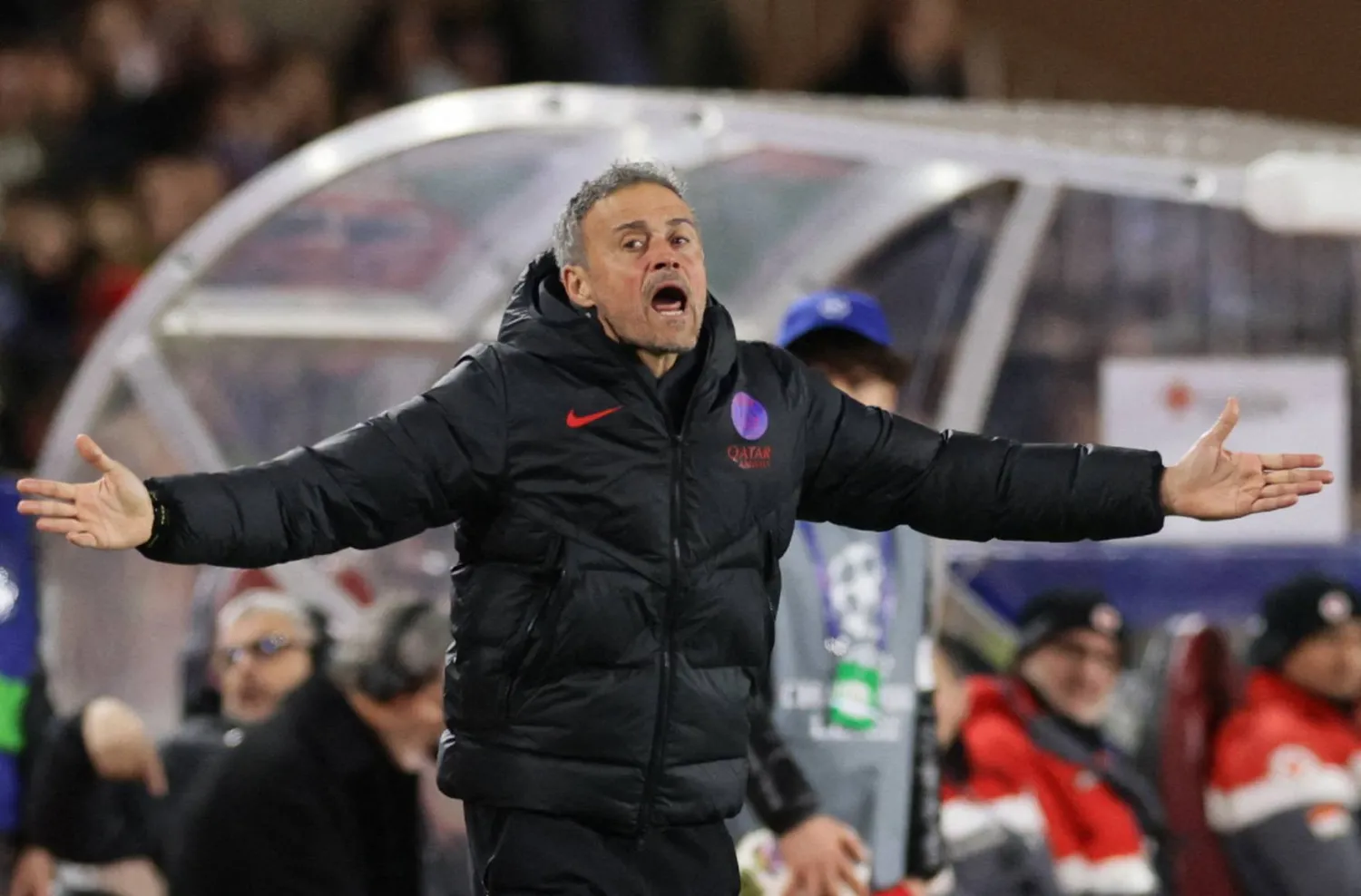
Soccer Football - UEFA Champions League - Play Off - First Leg - AS Monaco v Paris St Germain - Stade Louis II, Monaco - February 17, 2026 Paris St Germain coach Luis Enrique reacts REUTERS/Manon Cruz
TT

PSG’s Mental Strength Hailed as they Come from Behind to Win at Monaco

Soccer Football - UEFA Champions League - Play Off - First Leg - AS Monaco v Paris St Germain - Stade Louis II, Monaco - February 17, 2026 Paris St Germain coach Luis Enrique reacts REUTERS/Manon Cruz

Paris Saint-Germain coach Luis ‌Enrique hailed the mental strength of his side in coming from two goals down to win 3-2 away at Monaco in the Champions League on Tuesday, but warned the knockout round tie was far from finished.

The first leg clash between the two Ligue 1 clubs saw Folarin Balogun score twice for the hosts in the opening 18 minutes before Vitinha had his penalty saved to compound matters.

But after Desire Doue came on for injured Ousmane Dembele, the ‌match turned ‌and defending champions PSG went on to ‌secure ⁠a one-goal advantage ⁠for the return leg.

"Normally, when a team starts a match like that, the most likely outcome is a loss,” Reuters quoted Luis Enrique as saying.

“It was catastrophic. It's impossible to start a match like that. The first two times they overcame our pressure and entered our half, they scored. They ⁠made some very good plays.

“After that, it's difficult ‌to have confidence, but we ‌showed our mental strength. Plus, we missed a penalty, so ‌it was a chance to regain confidence. In the ‌last six times we've played here, this is only the second time we've won, which shows how difficult it is.”

The 20-year-old Doue scored twice and provided a third for Achraf Hakimi, just ‌days after he had turned in a poor performance against Stade Rennais last Friday ⁠and was ⁠dropped for the Monaco clash.

“I'm happy for him because this past week, everyone criticized and tore Doue apart, but he was sensational, he showed his character. He helped the team at the best possible time.”

Dembele’s injury would be assessed, the coach added. “He took a knock in the first 15 minutes, then he couldn't run.”

The return leg at the Parc des Princes will be next Wednesday. “Considering how the match started, I'm happy with the result. But the match in Paris will be difficult, it will be a different story,” Luis Enrique warned.


Mbappe Calls for Prestianni Ban over Alleged Racist Slur at Vinicius

TOPSHOT - Real Madrid's French forward #10 Kylian Mbappe talks with SL Benfica's Portuguese head coach Jose Mourinho during the UEFA Champions League knockout round play-off first leg football match between SL Benfica and Real Madrid CF at Estadio da Luz in Lisbon on February 17, 2026. (Photo by PATRICIA DE MELO MOREIRA / AFP)
TT

Mbappe Calls for Prestianni Ban over Alleged Racist Slur at Vinicius

TOPSHOT - Real Madrid's French forward #10 Kylian Mbappe talks with SL Benfica's Portuguese head coach Jose Mourinho during the UEFA Champions League knockout round play-off first leg football match between SL Benfica and Real Madrid CF at Estadio da Luz in Lisbon on February 17, 2026. (Photo by PATRICIA DE MELO MOREIRA / AFP)

Real Madrid forward Kylian Mbappe said Benfica's Gianluca Prestianni should be banned from the Champions League after the Argentine was accused of directing a racist slur at Vinicius Jr during the Spanish side's 1-0 playoff first-leg win on Tuesday.

Denying the accusation, Prestianni said the Brazilian misheard him.

The incident occurred shortly after Vinicius had curled Real into the lead five minutes into the second half in Lisbon.

Television footage showed the Argentine winger covering his mouth with his shirt before making a comment that Vinicius and nearby teammates interpreted as a racial ‌slur against ‌the 25-year-old, with referee Francois Letexier halting the match for ‌11 ⁠minutes after activating ⁠FIFA's anti-racism protocols.

The footage appeared to show an outraged Mbappe calling Prestianni "a bloody racist" to his face, Reuters reported.

The atmosphere grew hostile after play resumed, with Vinicius and Mbappe loudly booed by the home crowd whenever they touched the ball. Despite the rising tensions, the players were able to close out the game without further interruptions.

"I want to clarify that at no time did I direct racist insults to Vini Jr, ⁠who regrettably misunderstood what he thought he heard," Prestianni wrote ‌on his Instagram account.

"I was never racist with ‌anyone and I regret the threats I received from Real Madrid players."

Mbappe told reporters he ‌heard Prestianni direct the same racist remark at Vinicius several times, an allegation ‌also levelled by Real's French midfielder Aurelien Tchouamen.

Mbappe said he had been prepared to leave the pitch but was persuaded by Vinicius to continue playing.

"We cannot accept that there is a player in Europe's top football competition who behaves like this. This guy (Prestianni) doesn't ‌deserve to play in the Champions League anymore," Mbappe told reporters.

"We have to set an example for all the children ⁠watching us at ⁠home. What happened today is the kind of thing we cannot accept because the world is watching us.

When asked whether Prestianni had apologized, Mbappe laughed.

"Of course not," he said.

Vinicius later posted a statement on social media voicing his frustration.

"Racists are, above all, cowards. They need to cover their mouth with their shirt to show how weak they are. But they have the protection of others who, theoretically, have an obligation to punish them. Nothing that happened today is new in my life or my family's life," Vinicius wrote.

The Brazilian has faced repeated racist abuse in Spain, with 18 legal complaints filed against racist behavior targeting Vinicius since 2022.

Real Madrid and Benfica will meet again for the second leg next Wednesday at the Bernabeu.


Second Season of ‘Kings League–Middle East' to Kick off in March in Riyadh 

The second season of the Kings League-Middle East will kick off in Riyadh on March 27. (Kings League-Middle East on X)
TT

Second Season of ‘Kings League–Middle East' to Kick off in March in Riyadh 

The second season of the Kings League-Middle East will kick off in Riyadh on March 27. (Kings League-Middle East on X)

The Kings League-Middle East announced that its second season will kick off in Riyadh on March 27.

The season will feature 10 teams, compared to eight in the inaugural edition, under a format that combines sporting competition with digital engagement and includes the participation of several content creators from across the region.

The Kings League-Middle East is organized in partnership with SURJ Sports Investments, a subsidiary of the Public Investment Fund (PIF), as part of efforts to support the development of innovative sports models that integrate football with digital entertainment.

Seven teams will return for the second season: DR7, ABO FC, FWZ, Red Zone, Turbo, Ultra Chmicha, and 3BS. Three additional teams are set to be announced before the start of the competition.

Matches of the second season will be held at Cool Arena in Riyadh under a single round-robin format, with the top-ranked teams advancing to the knockout stages, culminating in the final match.

The inaugural edition recorded strong attendance and wide digital engagement, with approximately a million viewers following the live broadcasts on television and digital platforms.
