


Iraq Forms Committee to List Victims of Violence at Protests

Iraqi protesters raise national flags as they clash with security forces on Al-Jumhuriyah bridge in the capital Baghdad. AFP file photo
TT

Iraq Forms Committee to List Victims of Violence at Protests

Iraqi protesters raise national flags as they clash with security forces on Al-Jumhuriyah bridge in the capital Baghdad. AFP file photo

Iraqi Prime Minister Mustafa al-Kadhimi has thanked the Higher Judicial Council for releasing activists and lawyers from the southern Diwaniyah and Wasit governorates.

“I thank the Higher Judicial Council for setting free lawyers and protestors arrested today in Diwaniyah and Kut,” Kadhimi tweeted Tuesday.

“The right to peaceful protest is constitutionally guaranteed. Security forces and demonstrators are responsible for protecting public and private property,” he added.

Kadhimi’s praise follows Iraqi authorities forming a committee tasked with preparing an accurate list of names of those who were killed, wounded and disabled during popular protests. The list is expected to include security men as well as protesters.

"The planned list will cover the period from October 1, 2019 to May 18, and it will be published in the media, and it will be adopted as a basis for honoring the martyrs and compensating the families of the victims," a statement from Kadhimi’s office said.

It said that Kadhimi "entrusted a specialized committee linked to his office with the task of preparing this list in cooperation with various state institutions and Iraqi and international organizations so as to ensure the accuracy of the information contained therein."

This list, if completed, is considered the first official Iraqi effort to document victims of the protests and fulfills one of the pledges made by Kadhimi’s cabinet.

Many, however, remain unsure about measures taken by Kadhimi’s government and its ability to hold perpetrators of violence accountable.

On Monday night, confrontations erupted between security forces and demonstrators, which resulted in the arrest of four protesters from Diwaniyah, including two lawyers who are facing court charges related to encouraging masses to stage demonstrations.


Israeli Flag Raised over Lebanon’s Beaufort Castle in Deepest Incursion in 26 Years

An Israeli flag is raised on Beaufort Castle, as seen from Marjayoun, southern Lebanon, May 31, 2026. REUTERS/Stringer
TT

Israeli Flag Raised over Lebanon’s Beaufort Castle in Deepest Incursion in 26 Years

An Israeli flag is raised on Beaufort Castle, as seen from Marjayoun, southern Lebanon, May 31, 2026. REUTERS/Stringer

Israeli troops have captured a strategic mountain topped with a Crusader-built castle in southern Lebanon in their deepest incursion into the country in more than a quarter century.

The capture of Beaufort castle near the city of Nabatiyeh came after days of intense fighting and airstrikes in nearby villages where Israeli troops fought Hezbollah members in the rugged area.

The capture of the castle marks a major gain for Israel since the latest Israel-Hezbollah war began in early March and as the two countries hold direct talks in Washington.

The Israeli push came despite a nominal ceasefire that has been in place since April 17.

The Israeli army’s Arabic spokesperson, Avichay Adraee, posted a photograph on X showing Israeli troops walking outside the castle.

Defense Minister Israel Katz also wrote on X, saying that they had raised an Israeli flag over the castle.

Israeli troops previously captured the castle in 1982 and held it until they withdrew from Lebanon in 2000.

The Israeli military said in a statement that it launched an operation a few days ago in the Beaufort Ridge and the Suluki valley further south with the aim of dismantling Hezbollah infrastructure and removing "direct threats to Israeli civilians.”

The statement said the army is ready “to expand the operation if needed.”

Israeli troops have been advancing for days in villages close to Beaufort castle after crossing the Litani River, which the Israeli military previously used as a de facto boundary. They are now about 5 kilometers from the city of Nabatiyeh, a major center in southern Lebanon.

This picture taken from the Marjayoun area in southern Lebanon shows smoke rising after an Israeli airstrike on the village of Arnoun on May 31, 2026. (Photo by AFP)

Also Sunday, the Israeli military warned Lebanese civilians living south of the Zahrani river to evacuate the region, warning that it was stepping up operations against Hezbollah.

"Residents of southern Lebanon, you must move immediately to north of the Zahrani," Adraee posted on social media.

Hezbollah overnight claimed two attacks targeting Israeli troops and a Merkava tank in the southwestern town of Bayada near the border. In recent days, the group has said it has clashed with Israeli troops in several towns just north of the river near Nabatiyeh and the strategic castle.

Hezbollah in recent weeks has frustrated Israel with attacks on troops and northern towns using hard-to-detect fiber optic drones.


UN Reveals Famine Pockets in Areas of Northern Yemen

Unprecedented deterioration of living and economic conditions in Yemen (UN)
TT

UN Reveals Famine Pockets in Areas of Northern Yemen

Unprecedented deterioration of living and economic conditions in Yemen (UN)

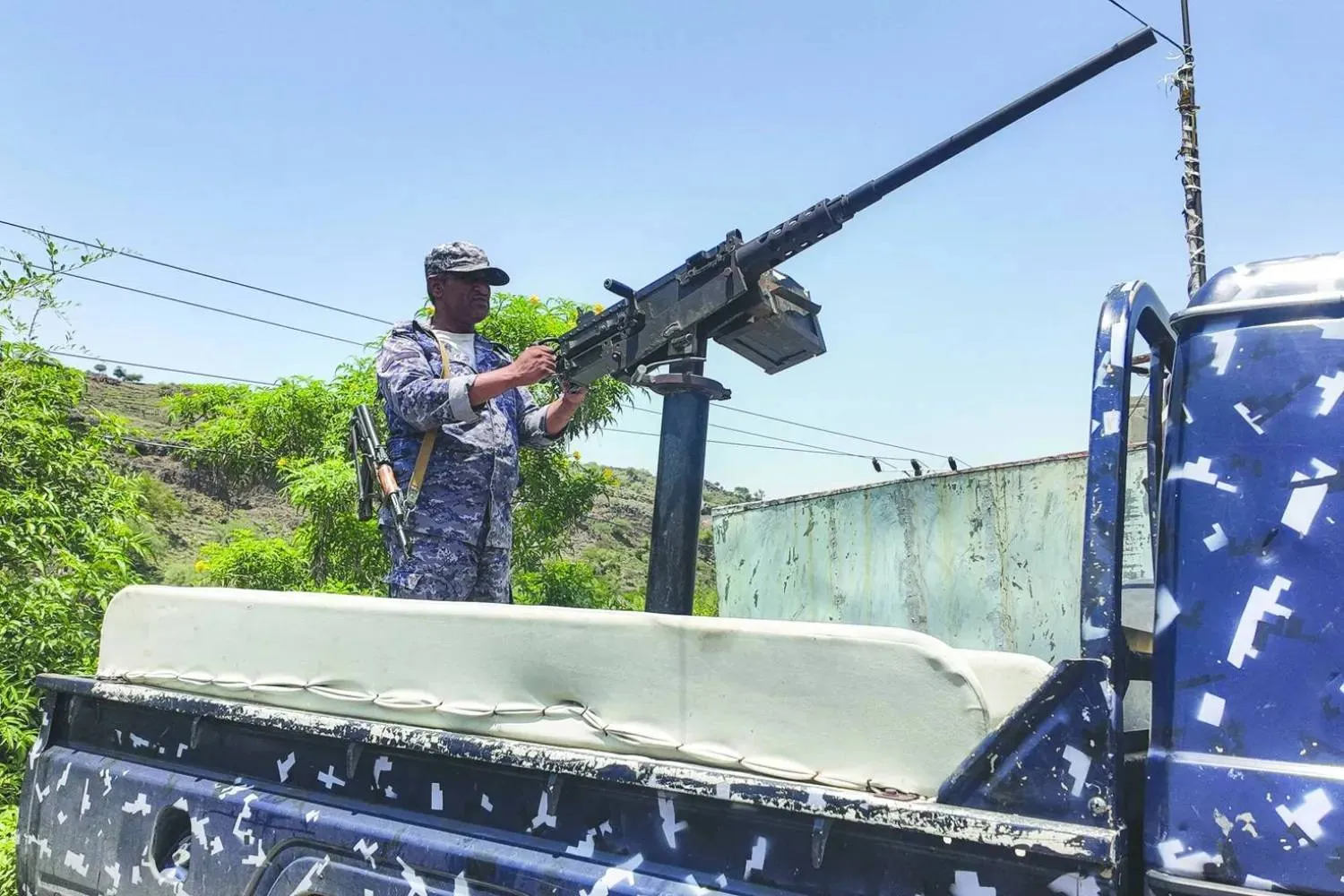
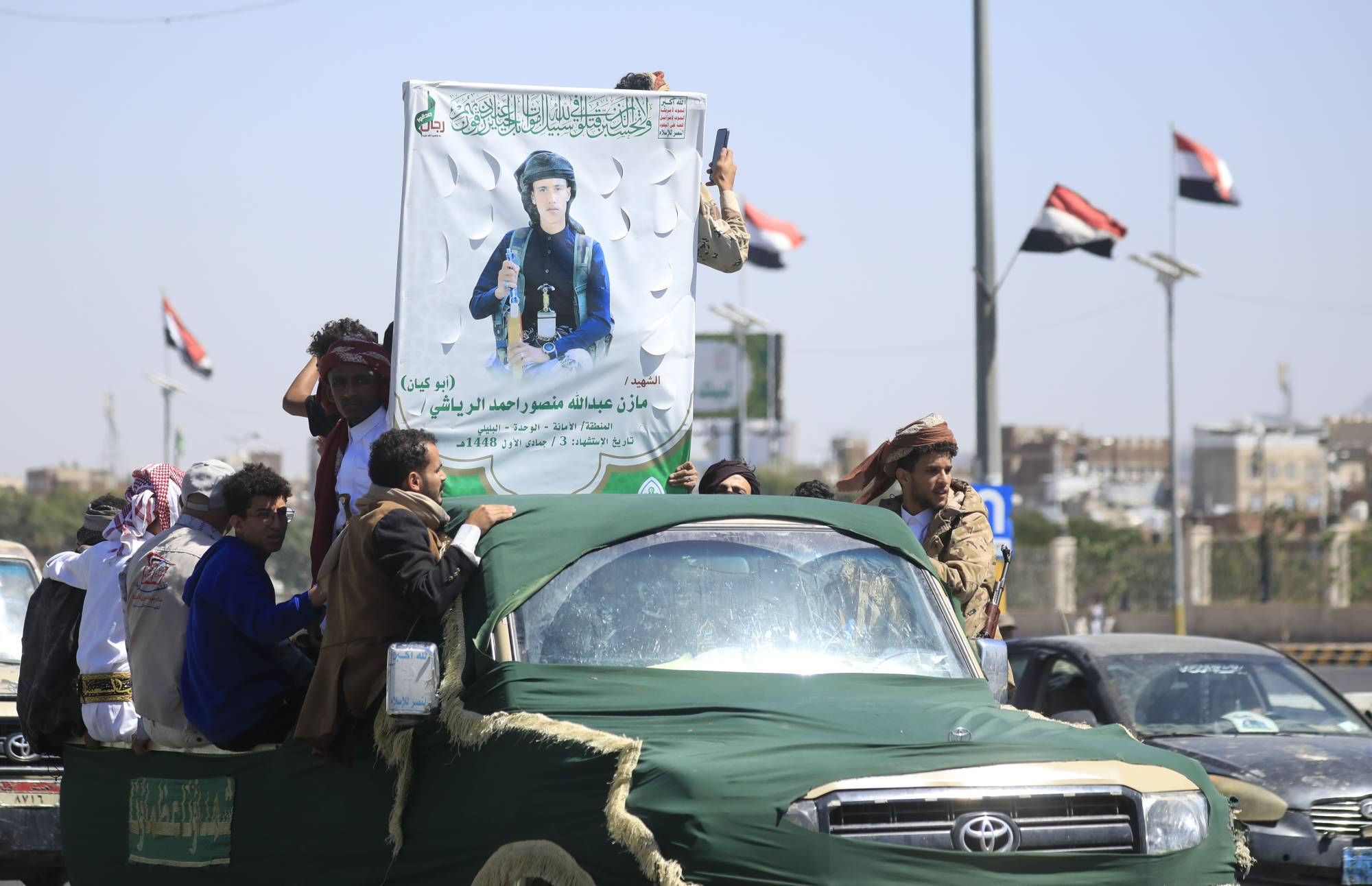
Famine pockets are emerging in Houthi-controlled areas of northern Yemen, amid an unprecedented deterioration of living and economic conditions and severe funding shortfalls, threatening to slide millions of Yemenis into catastrophic levels of food insecurity, recent UN data showed.

In its Yemen Market and Trade Bulletin, the UN’s Food and Agriculture Organization (FAO) said Yemen currently bears the world’s highest burden of populations trapped in the Integrated Food Security Phase 4 (Emergency).

It warned that without immediate multi-year funding and the restoration of humanitarian access, a slide into localized catastrophic conditions (IPC Phase 5) remains imminent.

FAO said the food security outlook for Yemen through the end of 2026 remains highly alarming, with 18.7 million people (53% of the population) projected to face Crisis or worse levels of acute food insecurity (IPC Phase 3+).

Its short-term outlook and implications on food security found that Yemen currently bears the world’s highest burden of populations trapped in the “emergency” phase, covering approximately 17% of the population, where the risk of excess mortality (exceeding the expected number of deaths under normal conditions) is real and steadily increasing.

Indicators of Famine

The FAO report said isolated pockets of catastrophic conditions (IPC Phase 5) are already emerging, particularly within Houthi-controlled areas.

It assumed that Yemen's structural food system collapse is driven by a critical convergence of localized instability, severe funding shortfalls (only 13% funded as of May), and regional geopolitical shocks.

Regional escalations and trade disruptions through the Strait of Hormuz are driving up fuel costs, triggering price increases across domestic transport, food, and agricultural inputs, the report added.

It warned that without immediate multi-year funding and the restoration of humanitarian access, a slide into localized catastrophic conditions (IPC Phase 5) remains imminent.

The report noted that the cost of the Minimum Food Basket remained stable, tracking 26% lower year-on-year and 9% below the three-year average. However, actual food access remains heavily restricted across communities by weak consumer purchasing power, irregular public salary payments, and the lingering effects of past inflation shocks, it added.

Economic Pressures

According to the UN agency, fuel prices in government-controlled areas rose, pushing overall costs back to their three-year average—with diesel climbing slightly above it—renewing pressure on domestic fuel affordability.

Concerning food and fuel imports, UN data showed that in April, wheat imports diverged by port, rising through Houthi-controlled ports in the north while collapsing through government-controlled ports.

Also, fuel imports resumed via Ras Isa after none in March, lifting national fuel imports 71% month-on-month.

FAO said that compounded by decades of civil conflict and intensifying climate shocks, macroeconomic and external pressures have affected Yemeni household assets, plunging over 53% of the population into severe food insecurity and forcing millions into deep, systemic destitution and poverty.

In return, it noted that in government-controlled areas, a stronger Yemeni Rial kept staple food prices stable month-on-month and 22% to 30% lower than the previous year.

Still, the UN agency warned that rising domestic fuel prices alongside increasing global food, energy, and shipping costs threaten to renew upward pressure on local food prices.

Concerning casual labor wage rates, FAO revealed that in April 2026, labor markets showed mixed trends: agricultural wages remained constant at 6% higher year-on-year and 18% above the three-year average, whereas casual labor wages fell 11% compared to April 2025 and dropped slightly below their three-year average, highlighting a continuous decline in non-agricultural income opportunities.


PM Says Lebanon Facing Dangerous Israeli Escalation

Destroyed buildings are pictured in the village of Kfar Kila in southern Lebanon as seen from across the border in the Upper Galilee region of northern Israel on May 29, 2026. (AFP)
TT

PM Says Lebanon Facing Dangerous Israeli Escalation

Destroyed buildings are pictured in the village of Kfar Kila in southern Lebanon as seen from across the border in the Upper Galilee region of northern Israel on May 29, 2026. (AFP)

Lebanese Prime Minister Nawaf Salam denounced on Saturday what he called a dangerous Israeli escalation in the south, urging an immediate ceasefire and insisting that a "scorched-earth policy" would not ensure Israel's security.

In a televised address, Salam also defended his government's direct negotiations with Israel -- which Iran-backed Hezbollah opposes -- saying that the talks were the "least costly path" for Lebanon.

"In light of the dangerous and unprecedented Israeli escalation over the past few days, it is necessary to step up political and diplomatic efforts to achieve a swift and real ceasefire," Salam said.

He accused Israel of "pursuing a scorched-earth policy and collective punishment" by "destroying towns and villages, and forcing their inhabitants into exile".

This will bring "neither security nor stability" to Israel, he said.

Salam's broadcast came after Israel's military issued new evacuation warnings for residents of more south Lebanon villages, and a day after military delegations from both countries held landmark security talks in Washington.

Those talks took place ahead of US-brokered negotiations early next week -- the fourth round since the latest Israel-Hezbollah conflict erupted in March.

Salam said the outcome of the direct negotiations with Israel was "not guaranteed", but that they "are the least costly path for our country and our people".

A US statement after Friday's talks made no mention of a ceasefire, and Israel has recently intensified its air and ground operations against Hezbollah.

A truce to halt the fighting officially took effect on April 17, but has never been observed.
