Lebanon's Crisis, Pandemic Hit American University in Beirut

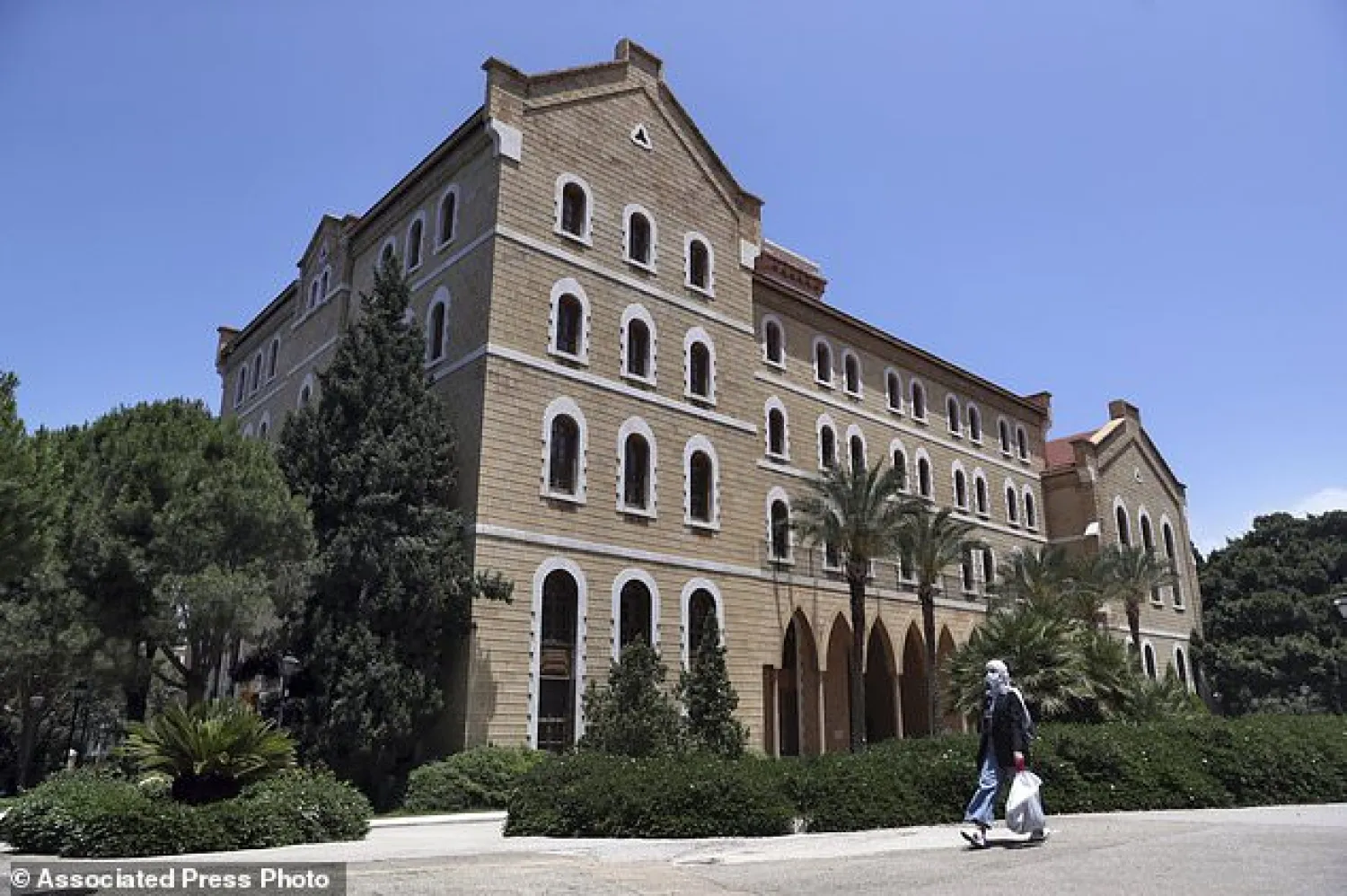
A woman walks on American University of Beirut's campus (AUB,) one of the oldest and most prestigious education institutions in the Middle East region, Monday, June. 22, 2020. (AP Photo/Bilal Hussein)
TT

Lebanon's Crisis, Pandemic Hit American University in Beirut

A woman walks on American University of Beirut's campus (AUB,) one of the oldest and most prestigious education institutions in the Middle East region, Monday, June. 22, 2020. (AP Photo/Bilal Hussein)

One of the Arab world´s oldest and most prestigious universities, which endured civil war, kidnappings and various economic crises, is preparing for what may be the biggest challenge in its 154-year history.

The American University of Beirut is confronting a global pandemic, a severe recession and the collapse of Lebanon's currency - all at the same time - and is planning a series of sweeping layoffs and salary cuts in response.

AUB president Fadlo Khuri said the school, which ranks among the top 150 in the world, will lay off up to 25% of its workforce, close administrative departments and shelve an ambitious project for a major new medical center.

"The layoffs are very painful," Khuri told The Associated Press in an interview at the sprawling campus on the Mediterranean Sea. "AUB has never had to do this before, we´ve never been forced to have layoffs."

The announcement has come as a shock to members of the 6,500-strong workforce of AUB and the American University Medical Center. Tens of thousands of Lebanese have already lost their jobs in a worsening economic crisis exacerbated by the coronavirus outbreak.

The crisis is rooted in decades of institutionalized corruption and mismanagement that came to a head last October, igniting mass protests. The economic meltdown has plunged the fragile country into deep uncertainty and threatens to unleash further unrest and chaos.

Unemployment has skyrocketed to 35%, and nearly half the population lives below the poverty line, according to the World Bank.

The crisis has also squeezed the middle class. Lebanese, who have long used the dollar and the Lebanese pound interchangeably, have seen the local currency lose nearly 70% of its value. With incomes and savings evaporating, many parents have been unable to afford school, and university fees charged in dollars.

Khuri first laid out the painful reality in a memo to staff on May 5, describing the situation as a "confluence of calamities" that he said together amount to the "greatest crisis since the university´s foundation in 1866."

He said the university had expected to raise $609 million in revenue for 2019 and 2020, but instead faces real losses of $30 million, an amount that would almost totally wipe out contingency funds it has built up since 2015.

In a June 15 memo, he announced there would be a series of unprecedented layoffs to help cope with the crisis. Khuri told the AP the decision was "very difficult personally" but aims at making AUB more sustainable.

The American University of Beirut, which operates under a charter from the state of New York, was the first to introduce American education to the Middle East. For generations, it has educated the Arab world´s elite, produced three presidents, around a dozen prime ministers - including current premier Hassan Diab - and countless Cabinet ministers and ambassadors. It currently enrolls around 9,250 students.

The university remained open throughout much of the 1975-1990 Lebanese civil war, providing an oasis of calm and greenery even as a number of foreign staff members were kidnapped or killed, including president Malcom Kerr who was assassinated in 1984 and David Dodge who was acting university president when he was kidnapped by pro-Iranian gunmen in 1982. He was released a year later in Iran. International and local faculty and students joined waves of Lebanese who fled the country´s recurring conflicts.

The university closed down when the coronavirus pandemic hit in March, but it has partially reopened for summer classes.

Khuri said the current crisis is very different than what happened during the civil war, when the Central Bank and government still had resources that could stabilize the situation.

"What happened during the civil war is that the Lebanese state disintegrated but the Lebanese government still had resources," Khuri said. "Right now, what you have is a perfect storm."

Khuri, who has expressed support for the demands of the protest movement, said the system in Lebanon needs to fundamentally change. He hopes that the aspirations of young Lebanese who took to the streets in October last year will be heard.

"The poison in the American constitution was slavery, the poison in the Lebanese constitution is sectarianism," he said.

Lebanon's communal power-sharing system, established since the country's independence from France, distributes top government posts according to sect and has spawned widespread corruption and political paralysis.

Khuri, who was born in Boston and brought up in Beirut, where he attended AUB in the early 1980s, said he was concerned that when Beirut airport reopens after the coronavirus shutdown, even more of Lebanon's best and brightest will emigrate.

He said a strong AUB is the best hope for the people of Lebanon and the Arab world, to help develop the region's future leaders - another reason to take tough measures.

"It´s a very bitter cup to drink, but we don´t get to choose our battles in life, and unfortunately this is the one that I´ve inherited," he said.


Bahraini Transport Minister to Asharq Al-Awsat: Each Country to Finance Its Share of Gulf Railway Project

A conceptual rendering of the Gulf railway interconnection project. (X)
TT

Bahraini Transport Minister to Asharq Al-Awsat: Each Country to Finance Its Share of Gulf Railway Project

A conceptual rendering of the Gulf railway interconnection project. (X)

The Gulf Cooperation Council (GCC) member states took a new step toward completing the railway interconnection project by signing the project's general agreement in Bahrain on Sunday. This comes as part of efforts to establish an integrated transport network linking the six nations and boosting the movement of passengers, goods, and commercial trade among them.

Bahraini Minister of Transportation and Telecommunications Dr. Sheikh Abdulla bin Ahmed Al Khalifa told Asharq Al-Awsat that each country will fund and execute the portion of the project located within its territory.

Meanwhile, the costs, fees, and expenses associated with the shared interconnection components among member states will be determined collectively, he added.

He explained that the agreement establishes a joint framework for the project's execution and operation, while defining the obligations of member states and their coordination mechanisms.

He noted that the network, which extends some 2,117 kilometers, aims to transport 6 million passengers and 200 million tons of freight by 2030, with the figures projected to rise to more than 8 million passengers and 271 million tons of freight by 2045.

The project spans from Kuwait, passing through Saudi Arabia, Bahrain, Qatar, and the UAE, all the way to Oman, with the goal of achieving full network operations by December 2030.

According to the minister, interconnection lines between adjacent countries can become operational as soon as their components are completed, without the need to wait for the entire Gulf network to be finalized.

National financing and potential partnerships

On private sector participation, Al Khalifa said that it remains one of the viable options for financing, executing, or operating certain components of the project, depending on the outcomes of economic and financial studies. He stressed that there is no unified public-private partnership model approved across the entire network.

There are currently no pre-existing agreements with specific international partners to finance or execute the project, he said. However, the expertise of global companies in the fields of design, engineering, technology, and operating systems could be utilized based on the project's needs and its various phases.

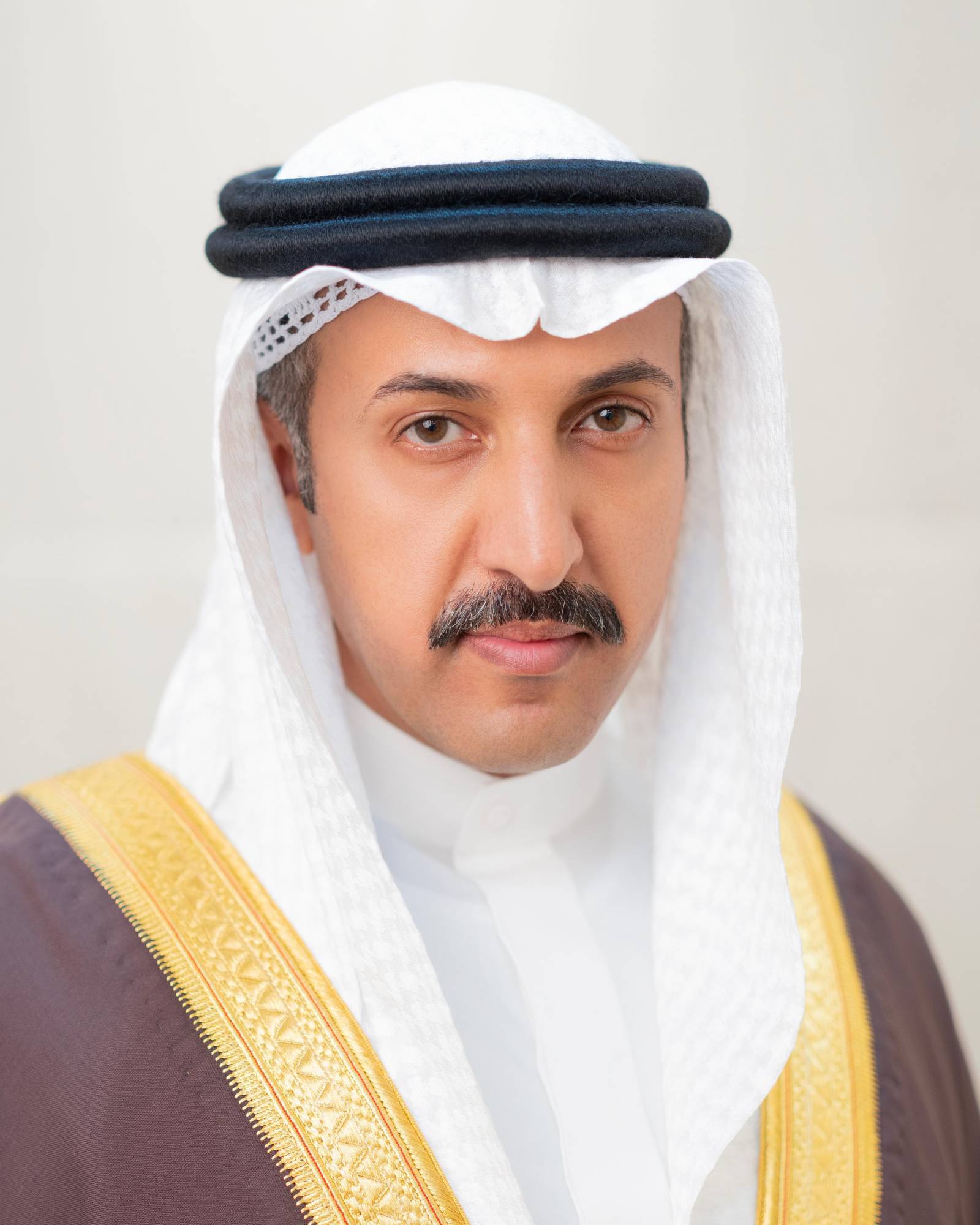
Bahraini Minister of Transportation and Telecommunications Dr. Sheikh Abdulla bin Ahmed Al Khalifa.

Concerning the project's announced completion rate, the minister explained that the 50 percent figure represents the average progress achieved across member states, and does not mean that half of the construction work for the entire Gulf network has been completed.

The project's cost estimates are currently undergoing review and updates in light of economic shifts, rising prices for materials and services, construction costs, and inflation, he revealed without specifying an updated total cost at the present time.

Returns beyond passenger and freight transport

Al Khalifa said that the economic impact of the project is not limited to facilitating passenger movement and freight transport, but extends to improving supply chain efficiency, boosting trade among GCC countries, and linking industrial centers, economic zones, and logistical hubs, as well as supporting employment and investment opportunities.

He added that determining the project's exact contribution to the gross domestic product (GDP) or estimating expected savings in time and costs remains premature, given that returns vary depending on transport routes, the nature of the cargo, and the points of origin and destination.

In light of the challenges facing maritime navigation in the region, the minister stressed that the Gulf railway network is not intended to serve as a substitute for maritime transport. Instead, it acts as a complementary route that boosts transport options and connectivity among GCC nations, increasing the resilience of supply chains against disruptions that could affect various modes of transportation.

He noted that integration between ports, roads, railways, and airports will strengthen the flexibility of the Gulf transport system, while connecting to broader international logistical corridors remains a future possibility contingent on completing studies, understandings, and coordination with the relevant countries and entities.

King Hamad Bridge to link Bahrain and Saudi Arabia

Regarding the connection between Bahrain and Saudi Arabia, Al Khalifa explained that the King Hamad Bridge project includes road lanes and railway lines, enabling the international passenger station in Bahrain to connect with the Saudi railway network and forming one of the essential components for completing the Gulf interconnection.

He added that work is underway on the privatization procedures for the King Fahd Causeway Authority, alongside completing the necessary studies and procedures to transition to the execution of the new bridge project.

Achieving the connection between Bahrain and Saudi Arabia is a fundamental requirement for operating the railway line between the two countries within the project's targeted timeframe in December 2030,e he said.


Egypt Seeks Faster Progress on Libya Gas, Refining and Power Projects

Egyptian Foreign Minister Badr Abdelatty speaks during a press conference with Minister of Information Diaa Rashwan (not pictured) in Cairo, Egypt, March 25, 2026. (Reuters)
TT

Egypt Seeks Faster Progress on Libya Gas, Refining and Power Projects

Egyptian Foreign Minister Badr Abdelatty speaks during a press conference with Minister of Information Diaa Rashwan (not pictured) in Cairo, Egypt, March 25, 2026. (Reuters)

Egypt aims to accelerate energy projects with Libya, including gas pipeline links, refining of Libyan crude in Egypt and an electricity interconnection, Egyptian Foreign Minister Badr Abdelatty said late on Saturday.

Abdelatty's comments were in ‌a ministry ‌statement after a meeting ‌with ⁠Libya’s acting oil ⁠and gas minister Khalifa Abdulsadek in Tripoli.

Abdelatty also ‌called for cooperation on petroleum products and the completion of projects to refine Libyan ‌oil in Egypt and re-export it, the statement said, ⁠adding ⁠that Abdulsadek had said that Libya would continue implementing existing projects and would visit Cairo soon to continue technical talks with Egypt’s petroleum and electricity ministers.

The statement did not provide details on costs or the status of the projects.


GCC: Railway Agreement Sets Joint Framework for Project Implementation and Operation

GCC transport ministers pose for a group photo following the 27th committee meeting in Kuwait. (GCC Railway Authority)
TT

GCC: Railway Agreement Sets Joint Framework for Project Implementation and Operation

GCC transport ministers pose for a group photo following the 27th committee meeting in Kuwait. (GCC Railway Authority)

Jasem Albudaiwi, secretary-general of the Gulf Cooperation Council (GCC), said on Sunday that the signing of the General Agreement on the GCC Railway Project marked an important step toward establishing an integrated regional transport network.

He said the network would facilitate the movement of citizens and residents, ease freight transport, boost intra-GCC trade efficiency and strengthen member states’ economic competitiveness and the region’s position in regional and international trade.

Albudaiwi's remarks came at the signing ceremony in the Bahraini capital, Manama, on Sunday, held under the patronage and in the presence of Bahrain’s Crown Prince and Prime Minister Salman bin Hamad Al Khalifa.

He said the project reflected the GCC’s shared ambition to connect member states and improve mobility and trade by linking their economic and industrial hubs, ports and logistics centers.

He added that the project would create opportunities for safe, reliable, affordable and environmentally friendly transport services that meet development needs, serve the aspirations of future generations and strengthen economic integration among GCC states.

Albudaiwi said the agreement sets a common framework for member states to implement and operate the project in coordination with their national railway networks, while establishing mechanisms and a timetable to accelerate its completion.

Albudaiwi praised GCC leaders and transport ministers for their support of strategic regional projects, thanking Bahrain’s crown prince and prime minister for hosting the signing ceremony and officials for advancing the railway project.