


Facebook Steps Up Fight Against 'Hateful Content' in Ads

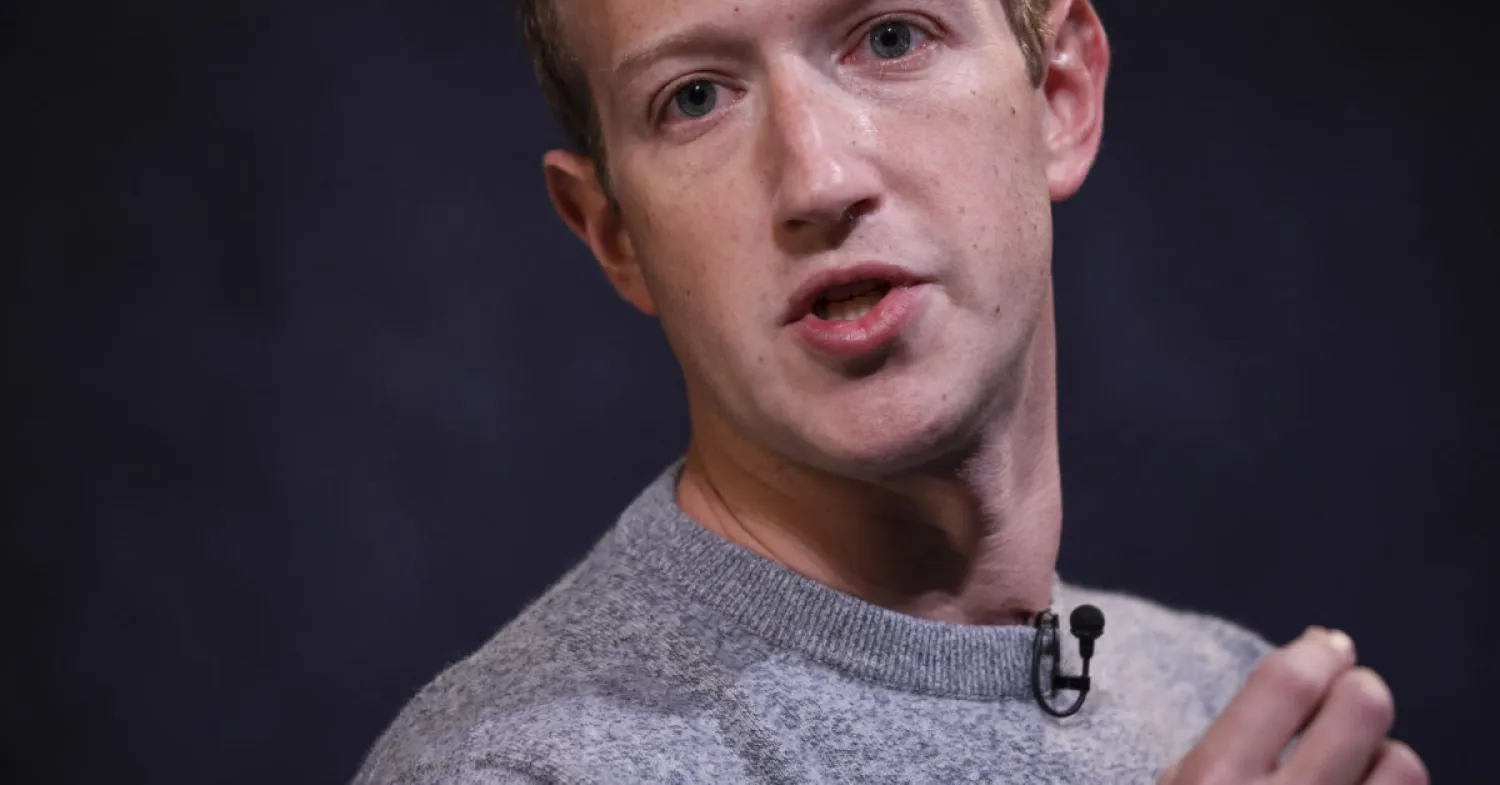
Facebook CEO Mark Zuckerberg, seen in an October 2019 picture, said the social network will step up efforts to curb hateful content and also add tags to rule-breaking posts that are "newsworthy" | AFP
TT

Facebook Steps Up Fight Against 'Hateful Content' in Ads

Facebook CEO Mark Zuckerberg, seen in an October 2019 picture, said the social network will step up efforts to curb hateful content and also add tags to rule-breaking posts that are "newsworthy" | AFP

Facebook said Friday it would ban a "wider category of hateful content" in ads as the embattled social media giant moved to respond to growing protests over its handling of inflammatory posts.

Chief executive Mark Zuckerberg said Facebook also would add tags to posts that are "newsworthy" but violate platform rules -- following the lead of Twitter, which has used such labels on tweets from President Donald Trump.

The initiative comes with the leading social network facing a growing boycott by advertisers -- with soft drink behemoth Coca-Cola and Anglo-Dutch giant Unilever joining Friday -- as activists seek tougher action on content they deem to promote discrimination, hatred or violence.

The new policy on hateful content in ads will "prohibit claims that people from a specific race, ethnicity, national origin, religious affiliation, caste, sexual orientation, gender identity or immigration status are a threat to the physical safety, health or survival of others," Zuckerberg said.

"We're also expanding our policies to better protect immigrants, migrants, refugees, and asylum seekers" from hateful ads, he continued.

Facebook has underscored its moves to stem racism in the wake of civil unrest triggered by the May 25 killing of African American George Floyd at the hands of Minneapolis police.

"We invest billions of dollars each year to keep our community safe and continuously work with outside experts to review and update our policies," a spokesperson said.

"The investments we have made in (artificial intelligence) mean that we find nearly 90 percent of hate speech" and take action before users report it.

- 'Newsworthy' exception -

Zuckerberg said the "newsworthy" exemption normally occurs "a handful of times a year," when Facebook decides to leave up a message that would ordinarily be removed for rule violations.

Under the new policy, Zuckerberg said, "we will soon start labeling some of the content we leave up because it is deemed newsworthy, so people can know when this is the case."

He said users will be allowed to share the content "but we'll add a prompt to tell people that the content they're sharing may violate our policies."

Twitter in recent weeks has labeled at least one Trump tweet misleading and has flagged others as violating platform rules, accessible only when users click through a warning. The move has angered the president and his allies.

Internet platforms have faced intense pressure from activists following Floyd's death.

A coalition including the National Association for the Advancement of Colored People (NAACP) has been urging companies to stop advertising on Facebook, using the #StopHateForProfit hashtag.

At the same time, Trump and his allies have voiced anger over what they claim is biased against conservatives.

- Brand boycott accelerates -

Zuckerberg made no mention of the ad boycott but said the changes were based on "feedback from the civil rights community and reflect months of work with our civil rights auditors."

Coca-Cola, a major force in global advertising, said it would suspend ads on social media for at least 30 days as it reassesses its policies, though it said the decision was not related to the #StopHateForProfit campaign.

"There is no place for racism in the world and there is no place for racism on social media," James Quincey, chairman and CEO of The Coca-Cola Company, said in a brief statement.

He said social media companies need to provide "greater accountability and transparency."

Unilever, home to brands including Lipton tea and Ben and Jerry's ice cream, said it would stop advertising on Facebook, Twitter, and Instagram in the US until the end of 2020 due to the "polarized election period."

American Honda said it would halt ads on Facebook in July, "choosing to stand with people united against hate and racism," adding to a list that includes US telecom giant Verizon and sporting goods makers Patagonia, North Face and REI.

The Facebook move on hate speech in ads "is welcome but (they) account for a small portion of harmful content on the platform," said Graham Brookie, director of the Atlantic Council's Digital Forensics Research Lab, which monitors social media disinformation.

Michelle Amazeen, a Boston University professor of political communication, said details still remain unclear.

"Will Facebook allow independent verification of which content they tag and the subsequent effects on diffusion?" she asked.



EU Urges Iran to Release Nobel-Prize Winner Mohammadi

A handout photo provided by the Narges Mohammadi Foundation on October 2, 2023 shows an undated, unlocated photo of Iranian rights campaigner Narges Mohammadi. (Narges Mohammadi Foundation/AFP)
TT

EU Urges Iran to Release Nobel-Prize Winner Mohammadi

A handout photo provided by the Narges Mohammadi Foundation on October 2, 2023 shows an undated, unlocated photo of Iranian rights campaigner Narges Mohammadi. (Narges Mohammadi Foundation/AFP)

The European Union called on Saturday for the release of Nobel Peace Prize laureate Narges Mohammadi, who was detained by Iranian security forces along with at least eight other activists.

Brussels described Friday's arrests in the eastern city of Mashhad as "deeply concerning".

"The EU urges Iranian authorities to release Ms. Mohammadi, taking also into account her fragile health condition, as well as all those unjustly arrested in the exercise of their freedom of expression," Anouar El Anouni, a spokesman for the bloc's diplomatic service, said.

Mohammadi, 53, who was last arrested in November 2021, has spent much of the past decade behind bars.

The 2023 Peace Prize laureate was granted temporary leave from prison on health grounds after problems related to her lungs and other issues in December 2024.

On Friday she was detained once again along with eight other activists at a ceremony for lawyer Khosrow Alikordi, who was found dead in his office last week, her foundation said.

Within Iran, the Mehr news agency cited the Mashhad governor Hassan Hosseini as saying individuals held at the ceremony had chanted "slogans deemed contrary to public norms" but did not name them.

"Mohammadi, who already had to endure years in prison because of her advocacy, bravely continues to use her voice to defend human dignity and the fundamental rights of Iranians, including freedom of expression, which must be respected at all times," El Anouni said.

Alikordi, 45, was a lawyer who had defended clients in sensitive cases, including people arrested in a crackdown on nationwide protests that erupted in 2022.

His body was found on December 5, with rights groups calling for an investigation into his death, which Norway-based NGO Iran Human Rights said "had very serious suspicion of a state murder".


US, Ukraine to Discuss Ceasefire in Berlin Ahead of European Summit

Anti-drone nets hang taut along a road near the city of Izyum of Kharkiv region, northeastern Ukraine, 12 December 2025. (EPA)
TT

US, Ukraine to Discuss Ceasefire in Berlin Ahead of European Summit

Anti-drone nets hang taut along a road near the city of Izyum of Kharkiv region, northeastern Ukraine, 12 December 2025. (EPA)

Germany will host US and Ukrainian delegations over the weekend for talks on a ceasefire in Ukraine, ahead of a summit with European leaders and President Volodymyr Zelenskiy in Berlin on Monday, a German official said on Saturday.

A US official said overnight that President Donald Trump's envoy Steve Witkoff and son-in-law Jared Kushner were travelling to Germany for talks involving Ukrainians and Europeans.

The choice to send Witkoff, who has led negotiations with Ukraine and Russia regarding a US peace proposal, appeared to be a signal that Washington saw a chance of progress. The White House had said on Thursday Trump would send an official to talks only if he felt there was enough progress to be made.

"Talks on a possible ceasefire in Ukraine are taking place in Berlin this weekend between foreign policy advisors from, among others, the US and Ukraine," said a German government source when asked about the meetings.

On Monday, Merz is hosting Zelenskiy and European leaders for a summit in Berlin, the latest in a series of public shows of support for the Ukrainian leader from allies across Europe as Kyiv faces pressure from Washington to sign up to a peace plan that initially backed Moscow's main demands.

Britain, France and Germany have been working in the last few weeks to refine the US proposals, which, in a draft disclosed last month, called for Kyiv to cede more territory, abandon its ambition to join NATO and accept limits on its armed forces.


Germany to Send Soldiers to Fortify Poland Border

A border guard officer stands guard at the Polish-Belarusian border, in Polowce, Poland. (AP file photo)
TT

Germany to Send Soldiers to Fortify Poland Border

A border guard officer stands guard at the Polish-Belarusian border, in Polowce, Poland. (AP file photo)

Germany has said it will send a group of soldiers to Poland to help with a project to fortify the country's eastern border as worries mount about the threat from Russia.

Poland, a strong supporter of Ukraine in its fight against Moscow, announced plans in May last year to bolster a long stretch of its border that includes Belarus and the Russian exclave of Kaliningrad.

The main task of the German soldiers in Poland will be "engineering activities," a spokesman for the defense ministry in Berlin said late Friday.

This could include "constructing fortifications, digging trenches, laying barbed wire, or erecting tank barriers," he said.

"The support provided by German soldiers as part of (the operation) is limited to these engineering activities."

The spokesman did not specify the exact number of troops involved, saying only it would be a "mid-range two-digit number".

They are expected to participate in the project from the second quarter of 2026 until the end of 2027.

The spokesman stressed that parliamentary approval was not needed for the deployment as "there is no immediate danger to the soldiers from military conflicts".

Except for certain exceptional cases, the German parliament has to approve the deployment of the country's armed forces overseas.

Since Russia's full-scale invasion of Ukraine in 2022, Warsaw has staunchly backed Kyiv and been a transit route for arms being supplied by Ukraine's Western allies.

Warsaw has also modernized its army and hiked defense spending.

Germany is Ukraine's second-biggest supplier of military aid after the United States and has sent Kyiv a huge quantity of equipment ranging from air defence systems to armored vehicles.