Germany Cautions Virus Risk Still High as Economies Restart

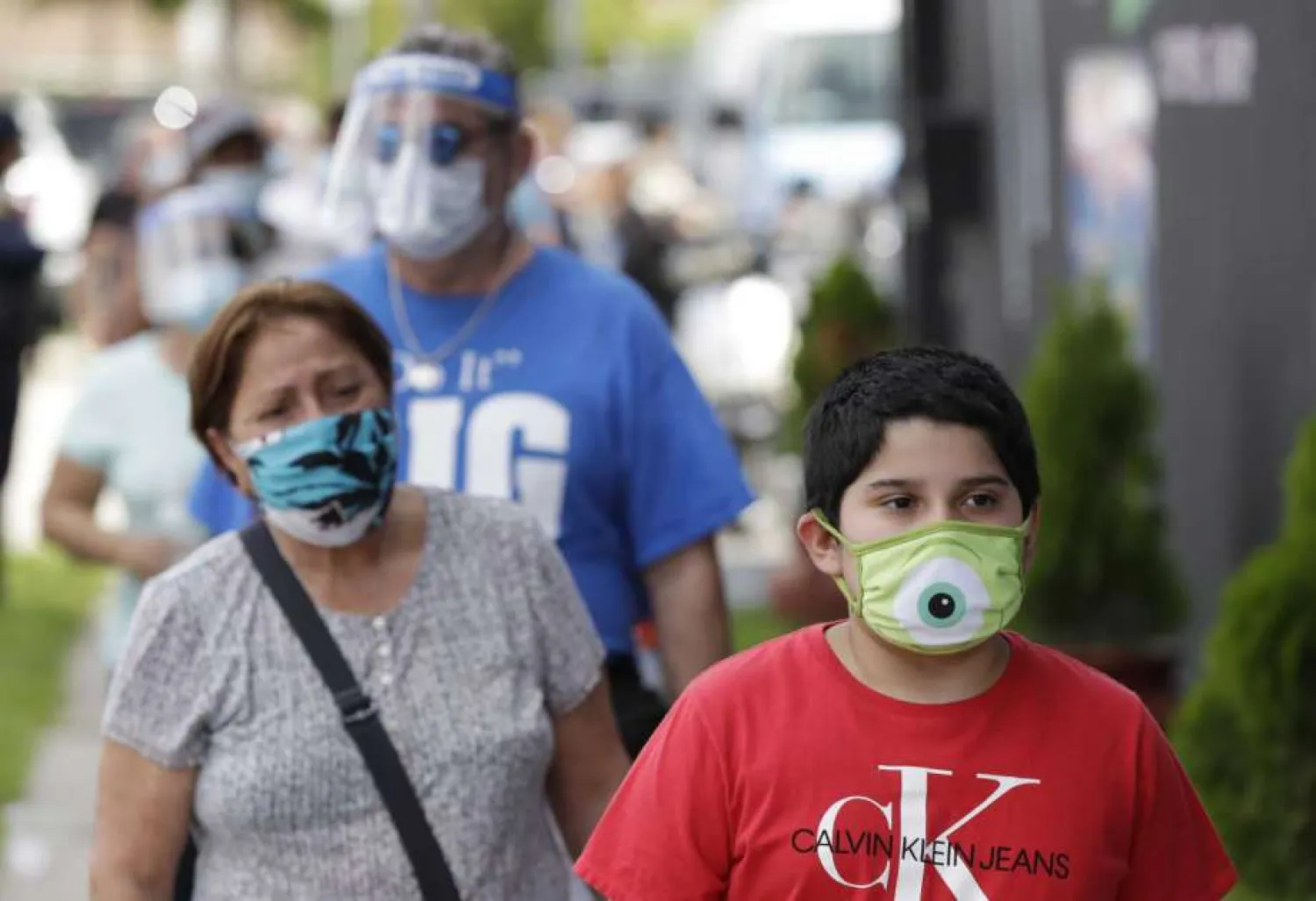
People, social distancing and wearing masks to prevent the spread of the new coronavirus, wait in line at a mask distribution event, Friday, June 26, 2020, in a COVID-19 hotspot of the Little Havana neighborhood of Miami. (AP Photo/Wilfredo Lee)
TT

Germany Cautions Virus Risk Still High as Economies Restart

People, social distancing and wearing masks to prevent the spread of the new coronavirus, wait in line at a mask distribution event, Friday, June 26, 2020, in a COVID-19 hotspot of the Little Havana neighborhood of Miami. (AP Photo/Wilfredo Lee)

German Chancellor Angela Merkel cautioned Saturday that the coronavirus pandemic is far from over, as regional outbreaks gave rise to fears of a second wave. Two of the largest US states reversed course and reinstated some coronavirus restrictions amid a surge in new infections.

India reported more than 18,000 new cases, pushing its cumulative total over the half-million mark, the fourth-highest globally behind the US, Brazil, and Russia. Elsewhere, Egypt and Britain said they would ease virus controls, while China and South Korea battled smaller outbreaks in their capitals.

Merkel said in her weekly video podcast that getting Europe's economy back on track is her primary goal as Germany takes over the rotating European Union presidency next week, but stressed that everyone shared a "joint responsibility" in following social distancing, mask and hygiene rules as lockdown rules are relaxed.

German authorities renewed a lockdown in a western region of about 500,000 people last week after about 1,300 slaughterhouse workers tested positive for COVID-19, in an attempt to prevent the outbreak from spreading across the area.

Germany has recorded nearly 195,000 coronavirus infections and only around 9,000 deaths, with more than 177,000 recoveries, according to a Johns Hopkins University tally.

"The risk posed by the virus is still serious," Merkel said. "It's easy to forget because Germany has gotten through the crisis well so far, but that doesn't mean we are protected, that the risk has been averted; that is not the case, as is demonstrated by these regional outbreaks."

Fans of Germany's Schalke soccer club planned to demonstrate later in the day at the stadium against chairman Clemens Toennies, one of whose companies owns the slaughterhouse where the outbreak began. Workplace and living conditions for migrant workers employed at the facility have come into focus after the outbreak.

In the U.S., the daily number of confirmed infections surged to an all-time high of 45,300 on Friday, eclipsing the previous high of 40,000 set the previous day, according to Johns Hopkins. Newly reported cases per day have risen on average about 60% over the past two weeks, according to an Associated Press analysis.

While the rise partly reflects expanded testing, experts say there is ample evidence the scourge is making a comeback, including rising deaths and hospitalizations in parts of the country and higher percentages of virus tests coming back positive.

About 600 people are dying every day from the coronavirus in the US, down from a peak of around 2,200 in mid-April. Some experts doubt that deaths will return to that level, because of advances in treatment and prevention and because younger adults are more likely than older ones to survive.

The virus is blamed for about 125,000 deaths and nearly 2.5 million confirmed infections nationwide in the US, by Johns Hopkins´ count. But health officials believe the true number of infections is about 10 times higher. Worldwide, the virus has claimed close to a half-million lives with nearly 10 million cases.

Texas Gov. Greg Abbott ordered all bars closed, and Florida banned alcohol at such establishments. They joined a small but growing number of states that are either backtracking or putting any further reopening of their economies on hold because of a comeback by the virus, mostly in the country´s South and West.

Health experts have said a disturbingly large number of cases are being seen among young people who are going out again, often without wearing masks or observing other social-distancing rules.

"It is clear that the rise in cases is largely driven by certain types of activities, including Texans congregating in bars," Abbott said.

The Republican governor, who had pursued one of the most aggressive reopening schedules of any state, also scaled back restaurant capacity and said outdoor gatherings of more than 100 people would need approval from local officials.

Mayor Carlos Gimenez in Florida´s Miami-Dade County announced Friday night that he would close beaches over the Fourth of July weekend. He said cracking down on recreational activities is prudent given the growing number of infections among young adults.

Florida´s agency that regulates bars acted after the daily number of new confirmed cases neared 9,000, almost doubling the record set just two days earlier.

Colleen Corbett, a 30-year-old bartender at two places in Tampa, said that she was disappointed and worried about being unemployed again, but that the restrictions are the right move. Most customers were not wearing masks, she said.

"It was like they forgot there was a pandemic or just stopped caring," Corbett said.

Elsewhere, Britain was expected to scrap a 14-day quarantine requirement for people returning from abroad in a bid to make summer vacation travel possible. Only travelers from "red´´ zones, places with a high level of COVID-19, will be told to self-isolate. A full list of countries, due to be published next week, is likely to give Spain, Greece, and France a green light.

Egypt on Saturday lifted many restrictions put in place against the coronavirus pandemic, reopening cafes, clubs, gyms,
and theaters after more than three months of closure, despite a continued upward trend in new infections.

Authorities in other countries were taking a more cautious approach, with the Indian city of Gauhati, the capital of Assam state, announcing a new two-week lockdown starting Monday, with night curfews and weekend lockdowns in the rest of the state. India added 18,552 cases in the past 24 hours, raising its total to 508,953. The death toll reached 15,685.

China saw an uptick in cases, one day after authorities said they expect an outbreak in Beijing to be brought under control in the near future. The National Health Commission reported 17 new cases in the nation's capital, the most in a week, among 21 nationwide.

Xu Hejian, the deputy chief of Beijing´s publicity department, said the situation is severe and complex. "We must not, in the slightest degree, lower our guard," he said.

South Korea, where a resurgence in the past month threatens to erase the country´s earlier success, reported 51 new cases, including 35 in the Seoul metropolitan area. Officials, worried about the fragile economy, have resisted calls to reimpose restrictions eased in April.

Australia braced for more imported cases as citizens return home. About 300 people were due to arrive this weekend from Mumbai, India, with others expected to follow from South America and Indonesia. One state heath official said he is preparing for 5% to 10% of the returnees to be infected, based on arrivals from Indonesia in other states.


Bahraini Transport Minister to Asharq Al-Awsat: Each Country to Finance Its Share of Gulf Railway Project

A conceptual rendering of the Gulf railway interconnection project. (X)
TT

Bahraini Transport Minister to Asharq Al-Awsat: Each Country to Finance Its Share of Gulf Railway Project

A conceptual rendering of the Gulf railway interconnection project. (X)

The Gulf Cooperation Council (GCC) member states took a new step toward completing the railway interconnection project by signing the project's general agreement in Bahrain on Sunday. This comes as part of efforts to establish an integrated transport network linking the six nations and boosting the movement of passengers, goods, and commercial trade among them.

Bahraini Minister of Transportation and Telecommunications Dr. Sheikh Abdulla bin Ahmed Al Khalifa told Asharq Al-Awsat that each country will fund and execute the portion of the project located within its territory.

Meanwhile, the costs, fees, and expenses associated with the shared interconnection components among member states will be determined collectively, he added.

He explained that the agreement establishes a joint framework for the project's execution and operation, while defining the obligations of member states and their coordination mechanisms.

He noted that the network, which extends some 2,117 kilometers, aims to transport 6 million passengers and 200 million tons of freight by 2030, with the figures projected to rise to more than 8 million passengers and 271 million tons of freight by 2045.

The project spans from Kuwait, passing through Saudi Arabia, Bahrain, Qatar, and the UAE, all the way to Oman, with the goal of achieving full network operations by December 2030.

According to the minister, interconnection lines between adjacent countries can become operational as soon as their components are completed, without the need to wait for the entire Gulf network to be finalized.

National financing and potential partnerships

On private sector participation, Al Khalifa said that it remains one of the viable options for financing, executing, or operating certain components of the project, depending on the outcomes of economic and financial studies. He stressed that there is no unified public-private partnership model approved across the entire network.

There are currently no pre-existing agreements with specific international partners to finance or execute the project, he said. However, the expertise of global companies in the fields of design, engineering, technology, and operating systems could be utilized based on the project's needs and its various phases.

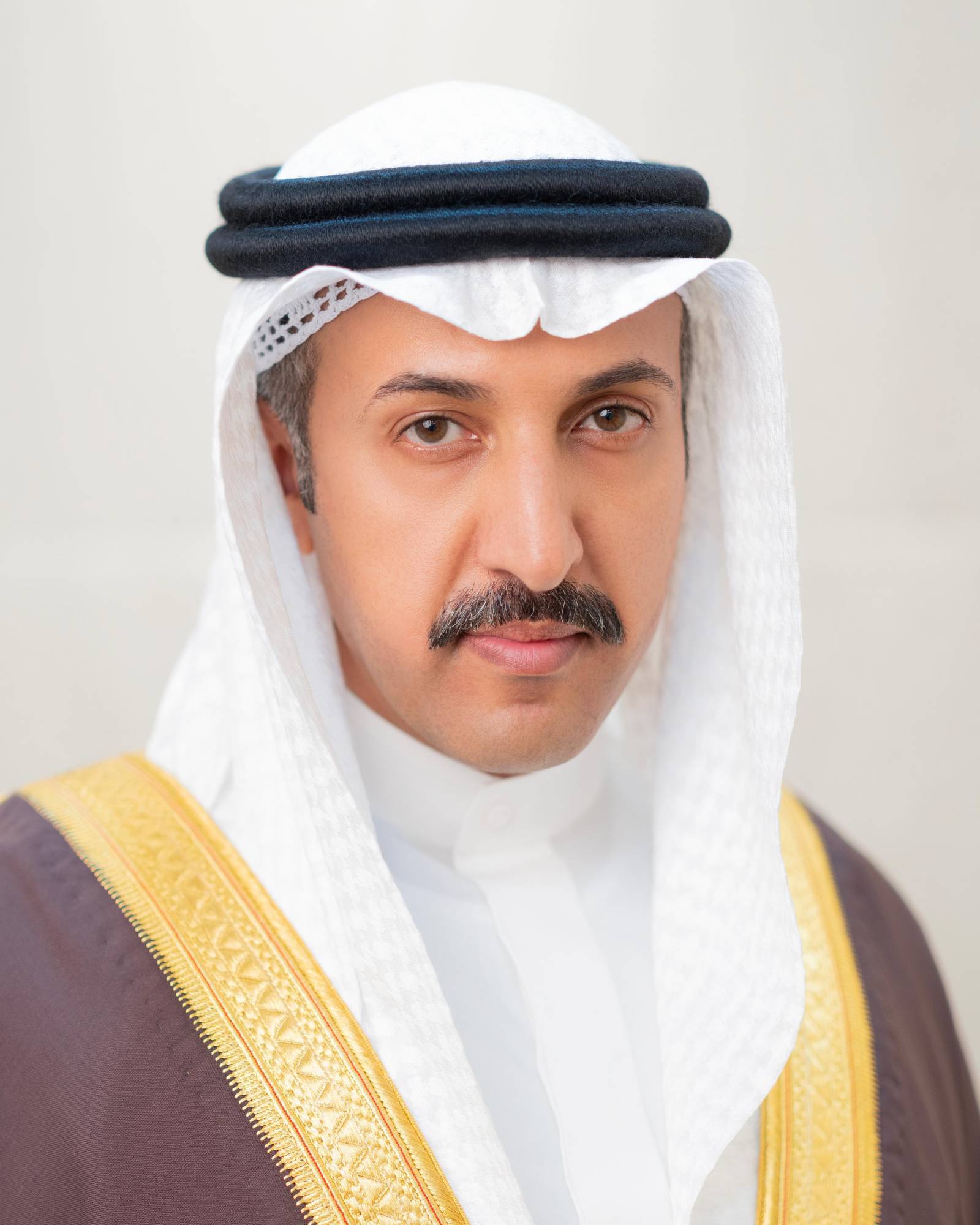
Bahraini Minister of Transportation and Telecommunications Dr. Sheikh Abdulla bin Ahmed Al Khalifa.

Concerning the project's announced completion rate, the minister explained that the 50 percent figure represents the average progress achieved across member states, and does not mean that half of the construction work for the entire Gulf network has been completed.

The project's cost estimates are currently undergoing review and updates in light of economic shifts, rising prices for materials and services, construction costs, and inflation, he revealed without specifying an updated total cost at the present time.

Returns beyond passenger and freight transport

Al Khalifa said that the economic impact of the project is not limited to facilitating passenger movement and freight transport, but extends to improving supply chain efficiency, boosting trade among GCC countries, and linking industrial centers, economic zones, and logistical hubs, as well as supporting employment and investment opportunities.

He added that determining the project's exact contribution to the gross domestic product (GDP) or estimating expected savings in time and costs remains premature, given that returns vary depending on transport routes, the nature of the cargo, and the points of origin and destination.

In light of the challenges facing maritime navigation in the region, the minister stressed that the Gulf railway network is not intended to serve as a substitute for maritime transport. Instead, it acts as a complementary route that boosts transport options and connectivity among GCC nations, increasing the resilience of supply chains against disruptions that could affect various modes of transportation.

He noted that integration between ports, roads, railways, and airports will strengthen the flexibility of the Gulf transport system, while connecting to broader international logistical corridors remains a future possibility contingent on completing studies, understandings, and coordination with the relevant countries and entities.

King Hamad Bridge to link Bahrain and Saudi Arabia

Regarding the connection between Bahrain and Saudi Arabia, Al Khalifa explained that the King Hamad Bridge project includes road lanes and railway lines, enabling the international passenger station in Bahrain to connect with the Saudi railway network and forming one of the essential components for completing the Gulf interconnection.

He added that work is underway on the privatization procedures for the King Fahd Causeway Authority, alongside completing the necessary studies and procedures to transition to the execution of the new bridge project.

Achieving the connection between Bahrain and Saudi Arabia is a fundamental requirement for operating the railway line between the two countries within the project's targeted timeframe in December 2030,e he said.


Egypt Seeks Faster Progress on Libya Gas, Refining and Power Projects

Egyptian Foreign Minister Badr Abdelatty speaks during a press conference with Minister of Information Diaa Rashwan (not pictured) in Cairo, Egypt, March 25, 2026. (Reuters)
TT

Egypt Seeks Faster Progress on Libya Gas, Refining and Power Projects

Egyptian Foreign Minister Badr Abdelatty speaks during a press conference with Minister of Information Diaa Rashwan (not pictured) in Cairo, Egypt, March 25, 2026. (Reuters)

Egypt aims to accelerate energy projects with Libya, including gas pipeline links, refining of Libyan crude in Egypt and an electricity interconnection, Egyptian Foreign Minister Badr Abdelatty said late on Saturday.

Abdelatty's comments were in ‌a ministry ‌statement after a meeting ‌with ⁠Libya’s acting oil ⁠and gas minister Khalifa Abdulsadek in Tripoli.

Abdelatty also ‌called for cooperation on petroleum products and the completion of projects to refine Libyan ‌oil in Egypt and re-export it, the statement said, ⁠adding ⁠that Abdulsadek had said that Libya would continue implementing existing projects and would visit Cairo soon to continue technical talks with Egypt’s petroleum and electricity ministers.

The statement did not provide details on costs or the status of the projects.


GCC: Railway Agreement Sets Joint Framework for Project Implementation and Operation

GCC transport ministers pose for a group photo following the 27th committee meeting in Kuwait. (GCC Railway Authority)
TT

GCC: Railway Agreement Sets Joint Framework for Project Implementation and Operation

GCC transport ministers pose for a group photo following the 27th committee meeting in Kuwait. (GCC Railway Authority)

Jasem Albudaiwi, secretary-general of the Gulf Cooperation Council (GCC), said on Sunday that the signing of the General Agreement on the GCC Railway Project marked an important step toward establishing an integrated regional transport network.

He said the network would facilitate the movement of citizens and residents, ease freight transport, boost intra-GCC trade efficiency and strengthen member states’ economic competitiveness and the region’s position in regional and international trade.

Albudaiwi's remarks came at the signing ceremony in the Bahraini capital, Manama, on Sunday, held under the patronage and in the presence of Bahrain’s Crown Prince and Prime Minister Salman bin Hamad Al Khalifa.

He said the project reflected the GCC’s shared ambition to connect member states and improve mobility and trade by linking their economic and industrial hubs, ports and logistics centers.

He added that the project would create opportunities for safe, reliable, affordable and environmentally friendly transport services that meet development needs, serve the aspirations of future generations and strengthen economic integration among GCC states.

Albudaiwi said the agreement sets a common framework for member states to implement and operate the project in coordination with their national railway networks, while establishing mechanisms and a timetable to accelerate its completion.

Albudaiwi praised GCC leaders and transport ministers for their support of strategic regional projects, thanking Bahrain’s crown prince and prime minister for hosting the signing ceremony and officials for advancing the railway project.