


Kuwait’s Amiri Diwan Steps in to Thwart Attempts to Spark Crises

A general view of Kuwait. (Reuters)
TT

Kuwait’s Amiri Diwan Steps in to Thwart Attempts to Spark Crises

A general view of Kuwait. (Reuters)

The statement issued by Kuwait’s Amiri Diwan was “extraordinary” for putting a stop to the allegations and fabrications of a former lawmaker who is affiliated with the Muslim Brotherhood.

The strong response, the first of its kind to be issued outside of the foreign ministry or National Assembly, forced those making such false claims to confront their legal responsibilities.

The statement was prompted after former Kuwaiti MP Mubarak Al-Duwailah made allegations against Emir Sheikh Sabah Al-Ahmad Al-Jaber Al-Sabah about a meeting he held with former Libyan leader Moammar al-Gaddafi. The Emir sought the services of tribes in order to spread chaos in the Gulf region, claimed Al-Duwailah.

Al-Duwailah made the allegations during a television show with Mohammad Talal Al-Saeed, aired on June 23, 2020, as well as in a tweet on June 25, 2020.

His remarks prompted the Amiri Diwan to issue its statement. No one could attribute anything to the Emir without "an official approval by the Amiri Diwan," adding that violations would entail legal action.

Through this statement, Kuwait, led by its Emir, sought to put an end to such petty attempts to drag the country towards Islamist-driven chaos.

Al-Duwailah is a member of the Islamic Constitutional Movement, a political arm of the Muslim Brotherhood in Kuwait.

Political parties are banned in Kuwait, but these groups have tried to promote Muslim Brotherhood rhetoric. They succeeded in winning a seat at the National Assembly for the first time in 1981.

Al-Duwailah himself had served in the National Assembly from 1985 and in four more terms. Throughout this time, the Islamists could muster no more than six seats at the assembly.

The former MP had previously found himself at odds with the law and state in 2014. The foreign ministry had submitted a complaint against him before the public prosecution over statements deemed dangerous to Kuwait’s national interests and security.

His remarks were met with a wave of local outrage and a rebuke from National Assembly Speaker Marzouk al-Ghanim, who expressed his complete rejection of any criticism against the United Arab Emirates.


Erdogan: Saudi Arabia, Türkiye Eye Joint Investment in KAAN Fighter Jet

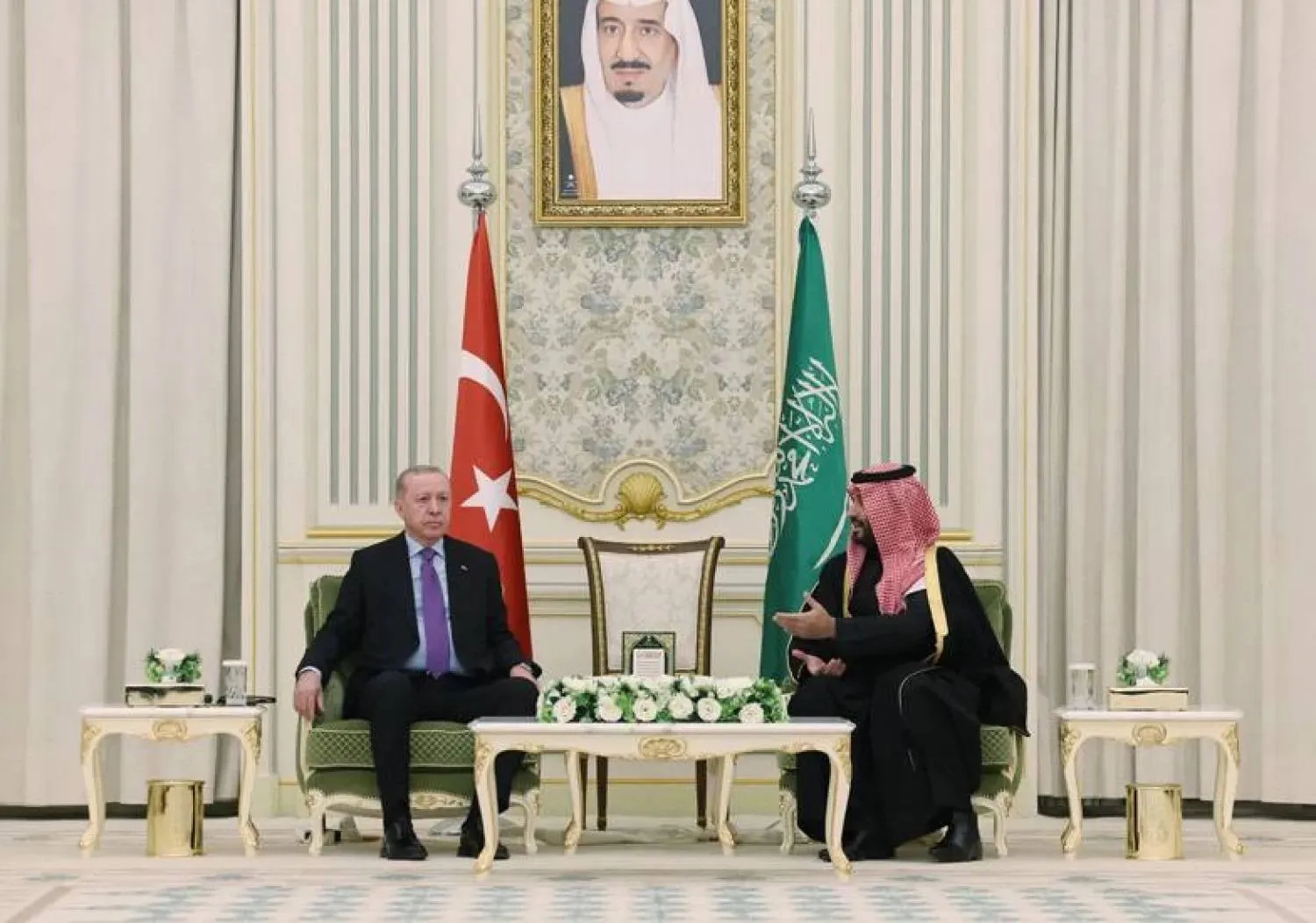
Saudi Crown Prince Mohammed bin Salman met Turkish President Recep Tayyip Erdogan in Riyadh (Turkish Presidency). 
TT

Erdogan: Saudi Arabia, Türkiye Eye Joint Investment in KAAN Fighter Jet

Saudi Crown Prince Mohammed bin Salman met Turkish President Recep Tayyip Erdogan in Riyadh (Turkish Presidency). 

Turkish President Recep Tayyip Erdogan said work has begun on a defense cooperation agreement between Türkiye and Saudi Arabia that includes joint investment in the production of the fifth-generation KAAN fighter jet.

Erdogan said Türkiye’s progress in defense industries is being closely followed by Saudi Arabia, as well as by other countries, adding that Ankara is preparing to conclude significant agreements with Riyadh in this field.

Speaking to a group of Turkish journalists on his return from a regional tour that included Saudi Arabia and Egypt, with his remarks published on Thursday, Erdogan said: “We have received many positive comments on the Turkish fighter KAAN, and discussions are under way on joint investment with Saudi Arabia in this regard.”

He stressed that KAAN is not merely a combat aircraft but a symbol of Türkiye’s engineering capabilities and its determination to maintain an independent defense posture. He added that cooperation with Saudi Arabia in this area is likely to expand, including through joint investments.

In February 2024, Türkiye announced the successful first flight of its domestically produced fifth-generation fighter jet, KAAN, manufactured by Turkish Aerospace Industries. With this milestone, Türkiye became one of only five countries capable of producing fifth-generation fighter aircraft and aims to export the jet.

KAAN is designed to carry out air-to-air combat missions and conduct precision strikes from internal weapons bays at supersonic speed.

Erdogan said he held “highly productive” talks with Saudi Crown Prince Mohammed bin Salman during his visit to Riyadh on Tuesday, noting that Saudi Arabia holds a special place for Türkiye in defense industries, transport, healthcare, investment, and construction services. Bilateral trade reached $8 billion in 2025, while Turkish contractors have completed more than 400 projects in the Kingdom worth a total of $30 billion.

He added that Saudi Arabia and Türkiye share aligned views on regional issues, stressing that both countries oppose any new war in the region and favor peace, stability, and calm, which he said would benefit all parties.


Saudi Crown Prince Receives Letter from Maldives President

Saudi Crown Prince Mohammed bin Salman bin Abdulaziz (SPA)
TT

Saudi Crown Prince Receives Letter from Maldives President

Saudi Crown Prince Mohammed bin Salman bin Abdulaziz (SPA)

Prince Mohammed bin Salman bin Abdulaziz Al Saud, Saudi Crown Prince and Prime Minister, received a letter from Maldives President Dr. Mohamed Muizzu on bilateral relations between their countries.

Vice Minister of Foreign Affairs Waleed Elkhereiji received the letter on Thursday during a meeting with Maldives Ambassador to Saudi Arabia Ahmed Sareer at the ministry’s headquarters in Riyadh.

Discussions during the meeting addressed bilateral relations and topics of mutual interest.


Albudaiwi: 'Arabian Gulf Security 4' Exercise Enhances GCC Security Integration

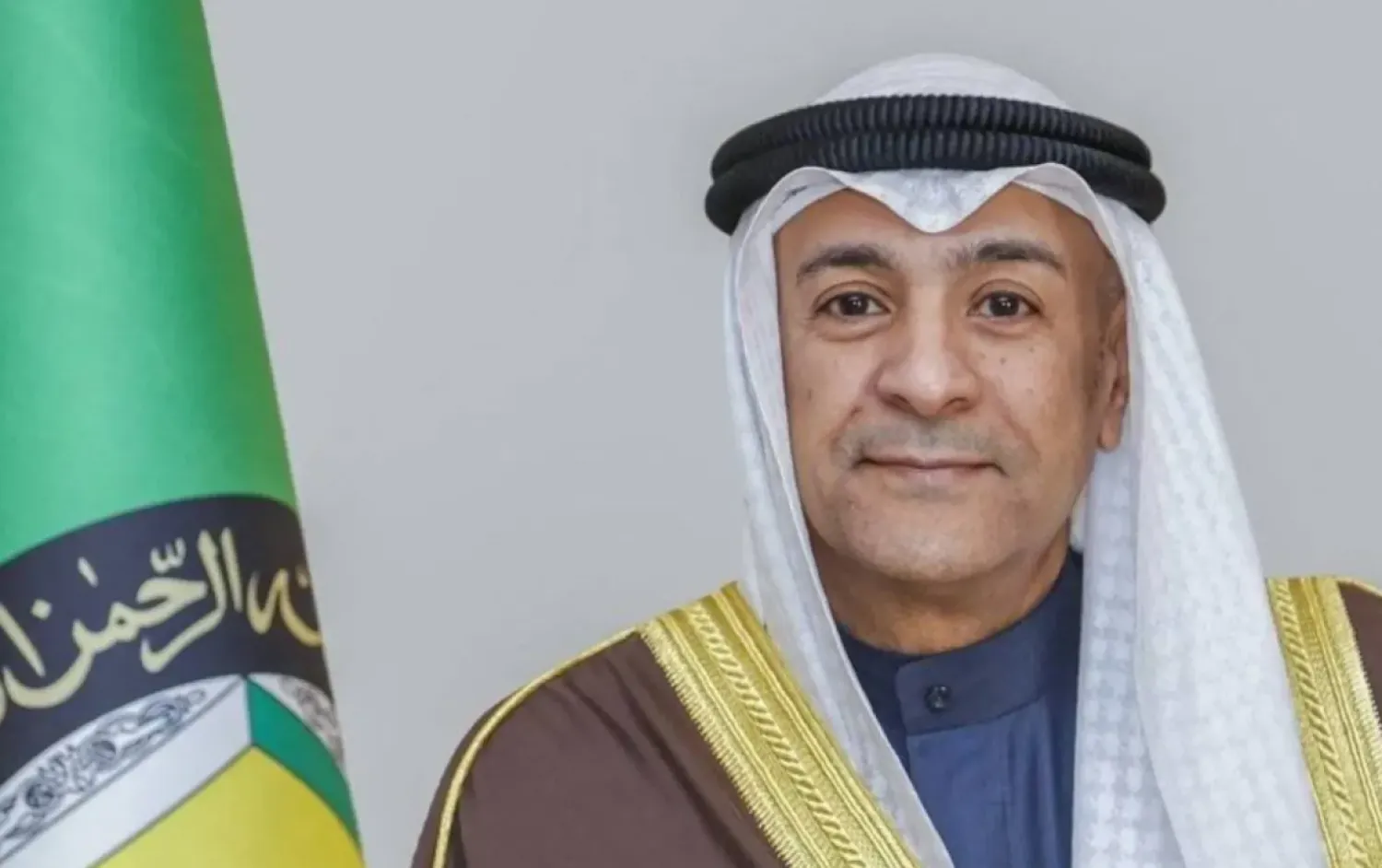
Secretary General of the Gulf Cooperation Council Jasem Mohamed Albudaiwi. GCC
TT

Albudaiwi: 'Arabian Gulf Security 4' Exercise Enhances GCC Security Integration

Secretary General of the Gulf Cooperation Council Jasem Mohamed Albudaiwi. GCC

Gulf Cooperation Council (GCC) Secretary-General Jasem Mohamed Albudaiwi affirmed that the "Arabian Gulf Security 4" tactical exercise serves to bolster Gulf security integration and embodies the unity and shared destiny of member states.

The statement was made Wednesday during Albudaiwi’s participation in the closing day of the exercise, held in Qatar. The event was attended by Qatari Interior Minister Shaikh Khalifa bin Hamad bin Khalifa Al Thani along with the GCC Ministers of Interior.

"This fourth edition of the drill, conducted by the GCC Ministries of Interior with the participation of specialized units from the friendly United States of America, is of paramount importance in supporting the collective Gulf security framework," the secretary-general said.

He stressed its role in enhancing coordination and integration among the respective ministries and elevating joint readiness and response to security challenges, thereby contributing to the consolidation of security and stability across the GCC.

He further highlighted that the "Arabian Gulf Security 4" exercise reflects a mutual commitment to advancing security operational mechanisms, exchanging expertise and best practices, as well as unifying efforts to counter transnational risks and threats. He pointed out that such maneuvers constitute a fundamental pillar for strengthening institutional integration and security cooperation pathways among member states.

The secretary-general expressed his appreciation for the efforts of the Ministry of Interior of Qatar in hosting and organizing the exercise, noting that the extensive resources and capabilities provided were instrumental to its success.

Closing his remarks, he voiced his aspiration that the exercise achieves its strategic objectives, fulfilling the visions of leaders of the GCC states, and ensuring sustained security and stability for the peoples of the GCC.