

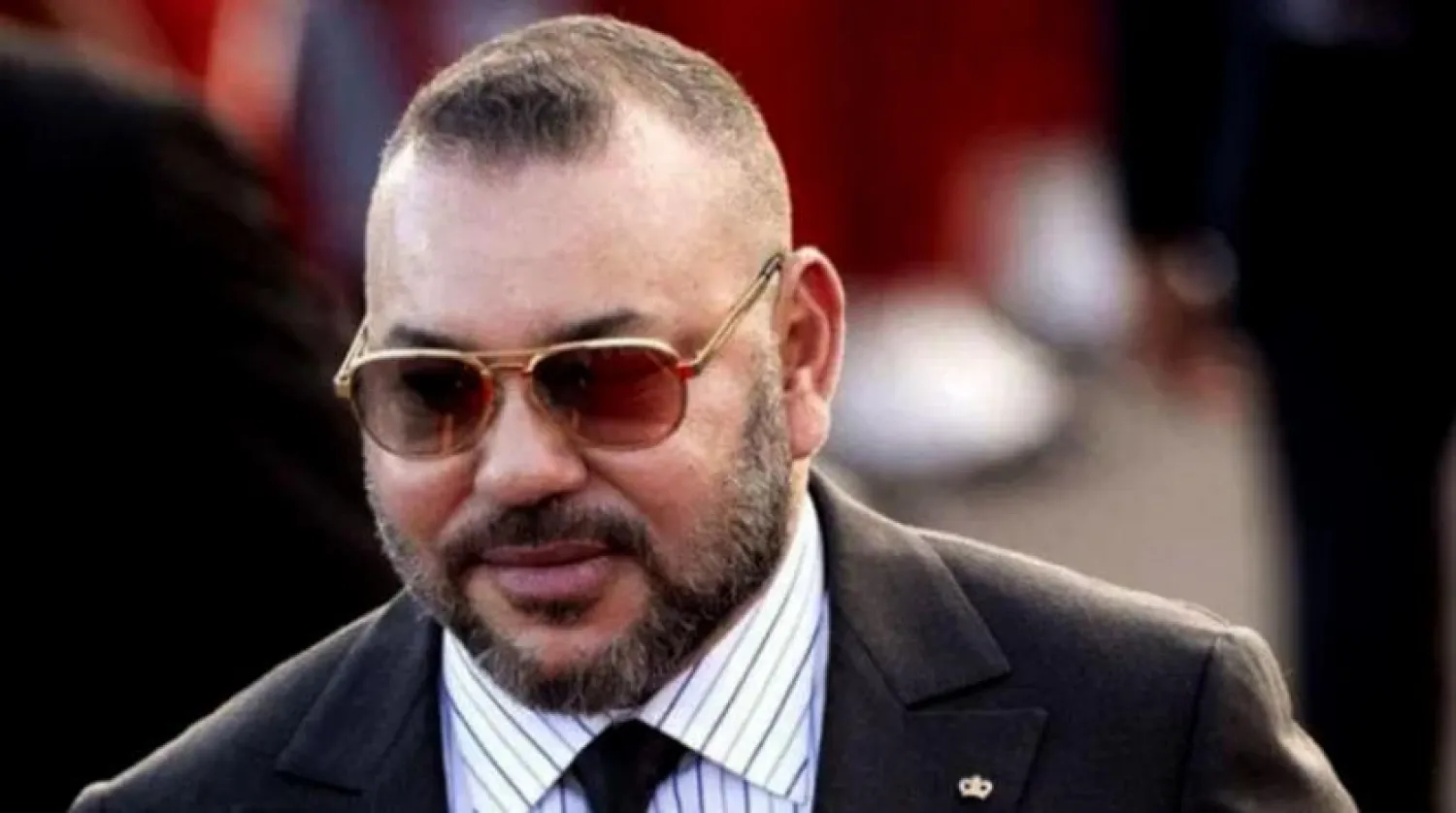

Morocco's King Approves 2020 Budget Amendment

King Mohammed VI, Asharq Al-Awsat
TT

Morocco's King Approves 2020 Budget Amendment

King Mohammed VI, Asharq Al-Awsat

A Council of Ministers, chaired by King Mohammed VI in Rabat on Monday, examined and approved the headlines of the edited draft budget 2020.

The new budget was elaborated to help the economy recover from the impact of the coronavirus and the restrictive measures relating to it.

The review of the 2020 budget expected the fiscal deficit at 7.5% and growth at -5% on the back of the coronavirus outbreak, the Royal cabinet said on Monday.

It provides for measures to shore up economic activity including an interest rate cap of 3.5% for state-guaranteed loans to both private and public enterprises and incentives for companies to keep staff, the cabinet said in a statement.

Morocco’s economy grew only 0.1% in the first three months this year before dipping -13.8% in the second quarter as the pandemic affected domestic and foreign demand.

The pandemic affected exports, the tourism sector, remittances from Moroccans abroad and foreign investments, all key to Morocco’s hard currency inflows.

The government has mobilized $4 billion in foreign debt to finance its balance of payments with the Central Bank expecting government debt to surge to 75.3% of gross domestic product in 2020 from 65% in 2019.

The special fund for the Management of the Coronavirus Pandemic, which has collected $3.4 billion will continue to be earmarked to mitigate the social and economic consequences of the pandemic.

Morocco’s national economy was clearly affected by the repercussions of the pandemic internationally and locally, and this was highlighted by comparing the economic data for May 2020 with May 2019.

The comparison, according to the Moroccan finance minister, showed the kingdom’s car exports falling by 90%, noting that car exports have become the most important export sector in Morocco with a value of nearly $7 billion at the end of 2019.

The aviation industry also fell by 76%, the textile and clothing industry dropped 74%, and there are expectations that tourism revenues will fall 70%, while foreign direct investment has fallen by 70%.



IEA Is Ready to Further Tap Global Oil Reserves if Needed, Chief Says

25 January 2019, Switzerland, Davos: Executive Director of the International Energy Agency Fatih Birol speaks during the Annual Meeting 2019 of the World Economic Forum. (Valeriano Di Domenico/World Economic Forum/dpa)
TT

IEA Is Ready to Further Tap Global Oil Reserves if Needed, Chief Says

25 January 2019, Switzerland, Davos: Executive Director of the International Energy Agency Fatih Birol speaks during the Annual Meeting 2019 of the World Economic Forum. (Valeriano Di Domenico/World Economic Forum/dpa)

The head of the International Energy Agency, Fatih Birol, said on Monday he hopes another oil stockpile release is not needed but "we stand ready to act" if the energy shock resulting from the war with Iran requires ‌it.

The 32-member ‌IEA agreed last month ‌to ⁠release 400 million barrels of ⁠oil from reserves, the largest coordinated release ever, in a bid to calm oil markets.

The US, the world's largest oil and gas producer, agreed to release 172 million barrels ⁠from its Strategic Petroleum Reserve.

"I ‌hope, very much ‌hope, we don't need to do ‌it but if it is needed we ‌are ready to act," Birol said.

Birol reiterated at an Atlantic Council event that the war has resulted in the worst ‌global energy disruption ever and said that more than 80 oil ⁠and ⁠gas facilities including production, terminals and refineries across the Middle East have been damaged by war with Iran.

Benchmark oil prices are trading near $100 a barrel.

Due to the vast extent of the production shut-ins and closure of the Strait of Hormuz, the oil releases are "not a solution," Birol said, "it's just reducing the pain."


Hapag-Lloyd Says US Plans to Block Hormuz Difficult to Assess

(FILES) A Hapag Lloyd container ship is seen in Rotterdam's harbour on August 1, 2022. (Photo by JOHN THYS / AFP)
TT

Hapag-Lloyd Says US Plans to Block Hormuz Difficult to Assess

(FILES) A Hapag Lloyd container ship is seen in Rotterdam's harbour on August 1, 2022. (Photo by JOHN THYS / AFP)

Germany's Hapag-Lloyd said on Monday that it is difficult to assess what effect US President Donald Trump's plans to block the Strait of Hormuz would have on shipping.

"What's important is that passage through the Strait of Hormuz be restored as soon as possible," said a company spokesperson in an emailed statement.

From Hapag-Lloyd's view, as long as there are mines, passage is not possible, and in addition, insurance for passage is also difficult to obtain at this time, added the spokesperson.


UN: Iran War Could Plunge 32 million into Poverty

People shop at the fruit and vegetable market the day after negotiations between Iran and the US in Pakistan failed to produce a deal, in the capital Tehran on April 13, 2026. (Photo by ATTA KENARE / AFP)
TT

UN: Iran War Could Plunge 32 million into Poverty

People shop at the fruit and vegetable market the day after negotiations between Iran and the US in Pakistan failed to produce a deal, in the capital Tehran on April 13, 2026. (Photo by ATTA KENARE / AFP)

More than 32 million people worldwide could be plunged into poverty by the economic fallout from the Iran war, with developing countries expected to be hit hardest, the United Nations Development Program (UNDP) warned.

In a report issued amid doubts over a fragile ceasefire, the UNDP said the world is facing a “triple shock” involving energy, food and weaker economic growth.

The agency said the conflict is reversing gains in international development, with the impact expected to be felt unevenly across regions.

Alexander De Croo, UNDP administrator and former prime minister of Belgium, said: “A conflict like this is development in reverse. Even if the war stops, and a ceasefire is very welcome, the impact is already there.”

“You will see an enduring impact, especially in poorer countries, where people are being pushed back into poverty. This is the most painful aspect. The people being pushed into poverty are very often the same people who were in poverty, escaped it, and are now being pushed back.”

Energy prices surged sharply during the six weeks of the Iran war after Iran’s closure of the Strait of Hormuz choked global oil and gas supplies. With knock-on effects on fertilizer supplies and global shipping, experts warn of a “time bomb” threatening food security in the developing world.

The head of the International Monetary Fund said the war’s “devastating effects” have caused lasting damage to the global economy, even if the conflict ends.

Publishing its report alongside meetings of world leaders in Washington for the IMF Spring Meetings, the UNDP said a global response is required to support countries hardest hit by the economic fallout.

It said targeted and temporary cash transfers are needed to protect the most vulnerable households in developing countries, at a cost of about $6 billion to mitigate the shocks for those living below the poverty line.

De Croo said international agencies and development banks could provide financial support. “There is a positive economic return from short-term cash transfers to avoid people being pushed back into poverty,” he said. Alternative measures could include temporary subsidies or vouchers for electricity or cooking gas.

Setting out three scenarios for the war, the UNDP found that in the worst case – involving six weeks of major disruption to oil and gas production and eight months of sustained higher costs – up to 32.5 million people globally would fall into poverty.

The report used the upper-middle-income poverty line defined by the World Bank, set at less than $8.30 per person per day.

The UNDP said that while richer countries are in a stronger position to cushion the economic fallout, countries in the global south face weaker conditions and already severe financial constraints.

This comes as western governments, including the US, Germany, France and the UK, cut aid spending amid rising borrowing and debt levels in advanced economies and calls to increase defense spending.

Data from the Organization for Economic Co-operation and Development published last week showed that countries in its Development Assistance Committee cut aid spending to $174.3 billion in 2025, nearly a quarter lower than in 2024.