Mosques in Makkah to Be Disinfected with Product that Decontaminates in 30 Secondshttps://english.aawsat.com/home/article/2397191/mosques-makkah-be-disinfected-product-decontaminates-30-seconds
Mosques in Makkah to Be Disinfected with Product that Decontaminates in 30 Seconds
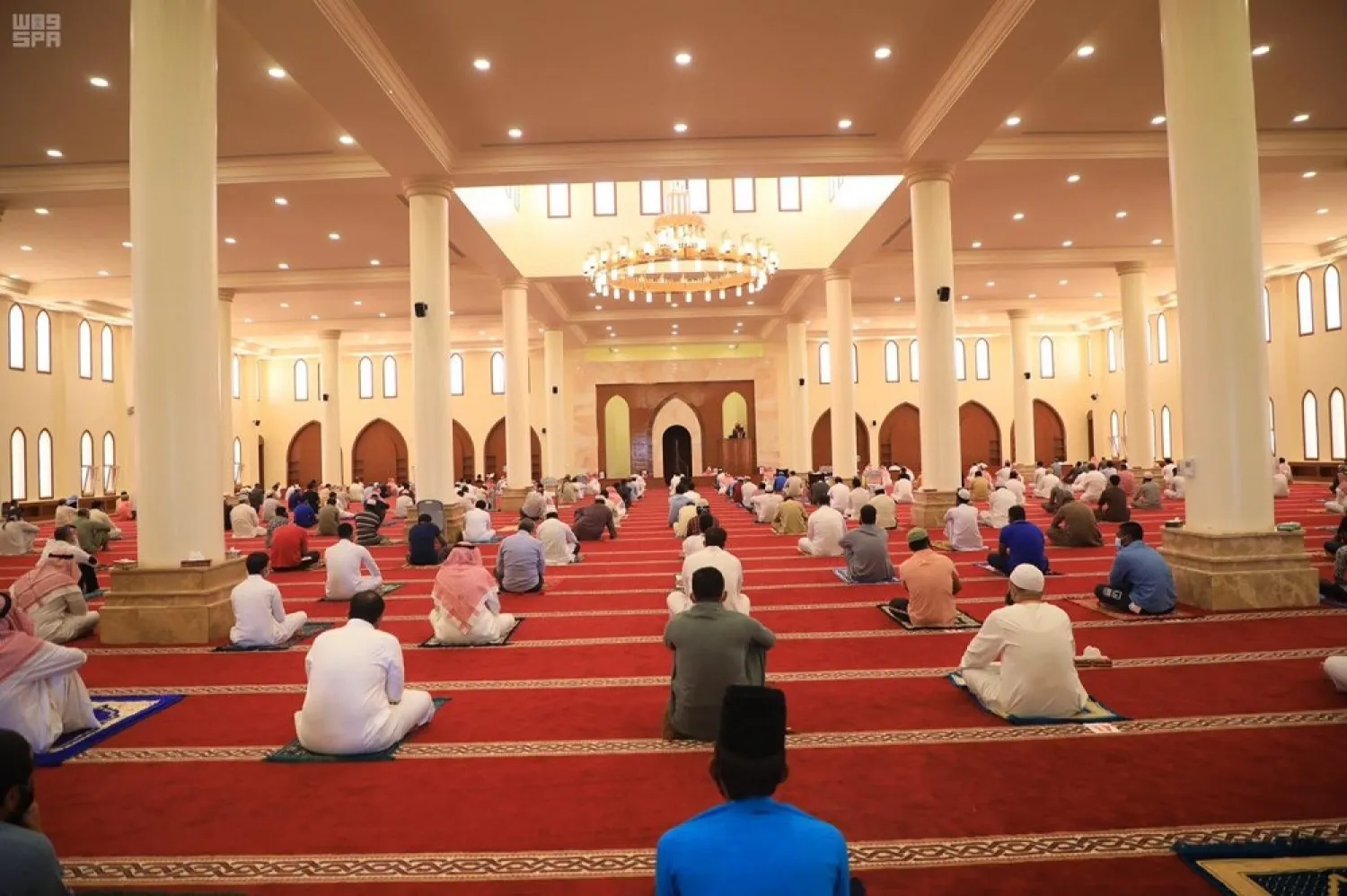
Social distancing is observed at a mosque in Saudi Arabia. (SPA)
As part of Saudi Arabia’s efforts to curb the spread of the novel coronavirus, a campaign has been launched in the holy city of Makkah to disinfect 250 mosques using MicroSafe, an eco-friendly alcohol-free disinfectant composed of oxidized water, ensuring the safety and health of worshippers.
The Hadiyah Charity Association, in partnership with the Ministry of Islamic Affairs, Dawah and Guidance, started the disinfection process, which was launched from the Salaf Al-Saleh Mosque.
Mansour al-Amer, the head of the association, said several precautionary and preventive measures to reduce the spread of the coronavirus and ensure the safety of worshippers will be implemented as part of the initiative, noting that the technology has been approved by the Saudi Food and Drug Authority.
Safa Qadumi, the CEO of MicroSafe Group, said the product does not include chemicals, leave any side effects or agitate the skin eyes and has no scent, because it is composed of oxidized water. It is used worldwide to disinfect hospitals and ambulances, and can be used at mosque facilities and carpets, making them decontaminated and safe for worship, in as little as 30 seconds.
The Saudi Ministry of Health registered 2,613 new cases of COVID 19 on Friday, raising the total number to 245,851. It said 3,539 recoveries were recorded, raising the tally to 191,161. Thirty-seven new deaths were registered, bringing the total to 2,407 deaths.
Al-Haddad Predicted an 80-Day Israeli War... Saad Called for It to Endhttps://english.aawsat.com/features/5328055-al-haddad-predicted-80-day-israeli-war-saad-called-it-end
Al-Haddad Predicted an 80-Day Israeli War... Saad Called for It to End
Qassam Brigades fighters infiltrated Israeli territory in an unprecedented attack on Israel, dubbed “Al-Aqsa Flood.” (File photo: Qassam Brigades website)
Details and behind-the-scenes accounts of the October 7, 2023, attack continue to emerge day by day, although many secrets were buried with those who planned the attack and whom Israel pursued and ultimately killed. They include Yahya Sinwar, the former head of Hamas’s political bureau; his brother Mohammed, one of the most prominent commanders of the Qassam Brigades; the brigades’ commander-in-chief, Mohammed Deif; and other figures.
Last July, Israeli intelligence agencies disclosed the contents of a letter they claimed belonged to Sinwar, reportedly seized from Hamas premises in Gaza. In it, he allegedly anticipated a major Israeli response to the attack, including the possibility of using nuclear weapons to strike Gaza. New Palestinian information is now emerging about the planning behind the attack and expectations of Israel’s response.
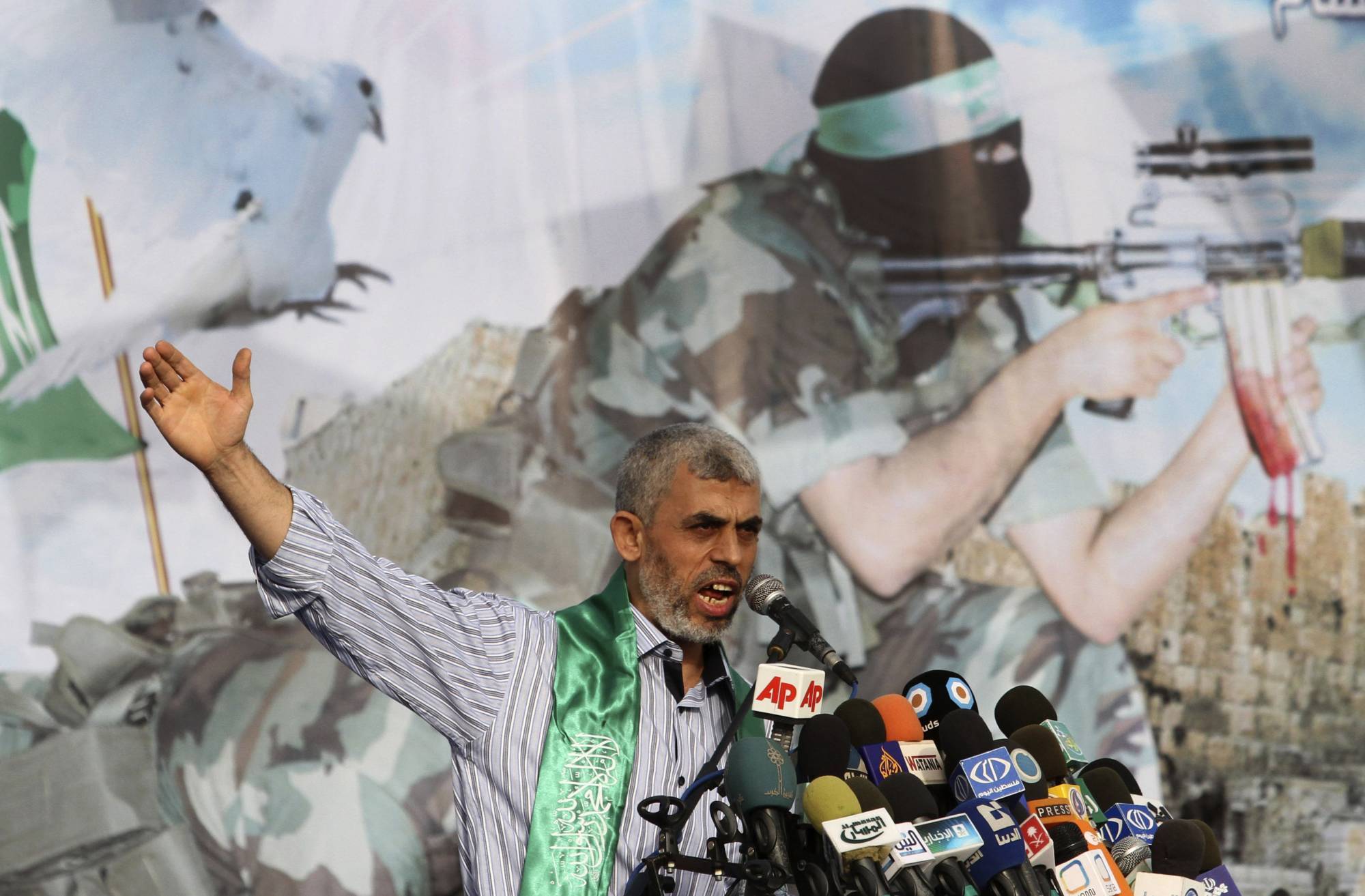
Yahya Sinwar in an archive photo taken in Gaza on October 21, 2011. (AP)
Ezzedine Al-Haddad
Two Hamas sources in Gaza told Asharq Al-Awsat that Ezzedine al-Haddad, the commander of the Qassam Brigades who assumed responsibility for the brigades after the assassinations of Mohammed Deif and Yahya Sinwar, had predicted in a message sent on the first day of the war that it would last only 80 days, after which an agreement would be reached to exchange prisoners and secure Israel’s withdrawal from the Gaza Strip.
According to one source, al-Haddad, who was among the planners and overseers of the attack, had assigned defensive tasks to certain field commanders, instructing them not to exceed specific limits during their participation in the assault on the morning of October 7. However, the sudden collapse of the Gaza Division prompted Qassam fighters to expand their incursion and reach areas that the brigade leadership had not expected them to reach inside the Israeli communities surrounding Gaza. The leadership had overseen the operation from several command centers.
The source said some units had been tasked with advancing deep into Israeli territory and disrupting Israeli forces, while others had been assigned limited objectives before withdrawing to take up defensive positions later. However, the plan did not unfold as intended in several respects because of the collapse of Israeli defenses.
Another source noted that the deaths of numerous field commanders during clashes or in the intense Israeli bombardment in the attack’s opening hours undermined the defensive plan prepared for parts of Gaza Governorate, where al-Haddad was then responsible for a brigade.
The source said al-Haddad was one of the figures who had the greatest influence on the execution of the October 7 attack. He had overseen efforts to increase production of the Yasin 105 launcher for defensive as well as offensive operations. He also authorized field commanders to launch the operation just hours before it began. They had not been briefed on the plan or informed about the attack in advance. During the operation, he had urged them to capture as many Israelis as possible to secure the release of Palestinian prisoners held in Israeli jails.
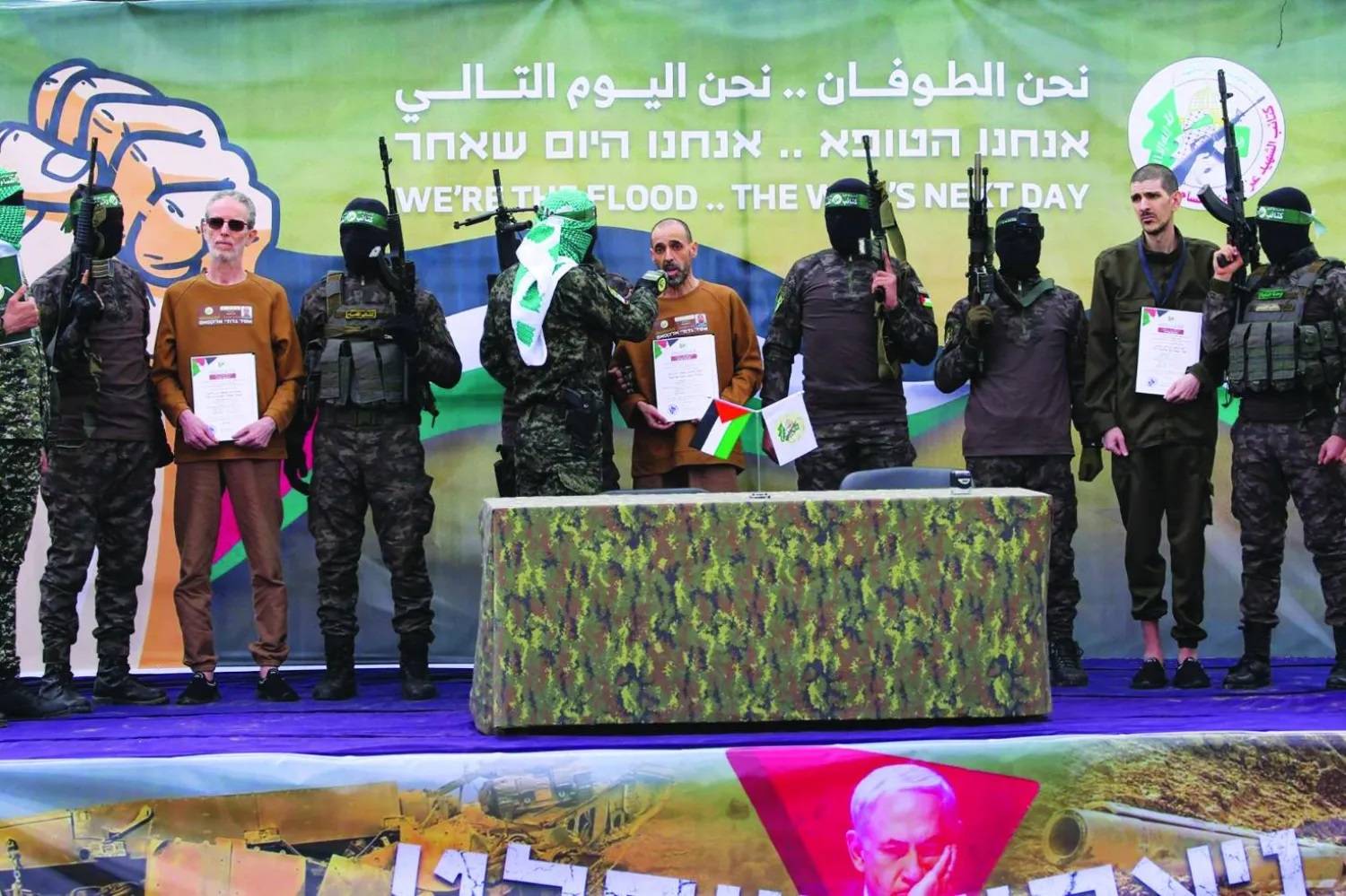
A Hamas banner bearing the slogan “We Are the Flood... We Are the Day After” during the handover of a group of Israeli hostages. (File photo: AFP)
The Defensive Plan
The source explained that al-Haddad was responsible for defending Gaza City and the northern Gaza Strip. He led the defensive plan alongside field commanders and did not leave the northern part of the territory after Israel separated it from central and southern Gaza. He continued moving among his fighters at the most advanced positions where clashes with Israeli forces were taking place, while also focusing on protecting Israeli hostages.
Assessments within the Hamas and Qassam Brigades leadership that the war could last several months reflected a more optimistic expectation of Israel’s response, given that the group held hostages. However, observers believe these assessments failed to account for the scale of the events, particularly after Israel felt that its security and national pride had been wounded and that it had been humiliated. This prompted Israel to seek revenge by every means available and to continue the war to this day.
A third source said the collapse of the defensive plan forced al-Haddad to find replacements quickly among the leadership. However, the limited experience of some of them led the Qassam commander to adopt a strategy of launching surprise attacks while allowing Israeli forces to advance deep into areas where fighters had set up ambushes. The aim was to inflict unexpected casualties on the Israeli military and focus on capturing soldiers to undermine their morale.
One aspect al-Haddad appears to have failed to anticipate in his defensive plan for northern Gaza was Israel’s ability to reach certain military positions and weapons, missile, and drone storage facilities quickly.
At the same time, the sources believe that al-Haddad and prominent field commanders succeeded in thwarting what became known as the “Generals’ Plan.” The plan aimed to carry out a very large-scale military operation in northern Gaza after separating it from the center and south of the Strip. It involved coordinated attacks by air, land, and sea; taking control of hospitals, shelters, and other facilities; killing, wounding, and arresting hundreds of people and transferring them into Israel; and displacing residents to the southern part of the Strip.
However, after more than 107 days, the plan had failed, and Israel withdrew from those areas amid fierce surprise attacks that killed dozens of Israeli troops.
Raed Saad
Another revelation from behind the scenes of the war concerns divisions within Hamas and the Qassam Brigades leadership over ceasefire proposals. According to one source, prominent Qassam Brigades commander and military council member Raed Saad called in the early months of the war for efforts to end the fighting at any cost.
According to several sources, Saad was among the leaders taken by surprise by the October 7 attack and did not know when it would be carried out, despite being one of the commanders who had helped develop the plan. Israel calls the plan “Jericho Wall,” based on intelligence it had obtained years earlier. Saad was then responsible for operations and had drawn up the plan in 2016. Its implementation was postponed several times over the following years.
According to the first source, Saad sent a written message to the military council leadership during the first four months of the war, urging it to reach an agreement and accept a ceasefire. He stressed that continuing the war did not serve Hamas or the Qassam Brigades, particularly given the high number of fatalities and the possibility that the toll would rise over time.
However, Israel’s repeated rejection of proposals and insistence on continuing the war sidelined those voices, and the fighting continued, the source told Asharq Al-Awsat.
The source added that Saad oversaw numerous areas of responsibility and tasks during the war that strengthened the Qassam Brigades’ ability to withstand the fighting. He continued supporting field commanders in combat and remained in close and regular contact with al-Haddad and other leaders to determine military operations, confront Israeli forces, and keep Israeli hostages in a way that could help secure a prisoner-exchange deal.
Arabs in Israel: A Dangerous Security Secret, Especially During Electionshttps://english.aawsat.com/features/5327937-arabs-israel-dangerous-security-secret-especially-during-elections
Arabs in Israel: A Dangerous Security Secret, Especially During Elections
Benjamin Netanyahu with his wife and Israeli President Isaac Herzog (AFP)
“We on the right and center-right represent about 65% of the electorate, so we will remain able to form governments in the future. I know I will lose support and may even alarm many of my good friends. But I believe we must tie our fate to that of the Arabs in Israel.”
Natan Eshel, known as Benjamin Netanyahu’s closest adviser, published those words on June 16, 2019.
His opinion piece appeared that day in two newspapers at opposite ends of Israel’s political spectrum: Haaretz, which the right sees as radically left-wing, and Makor Rishon, the newspaper of the pro-settlement right, which the left regards as a platform for the fascist right.
Anyone who knows the inner workings of Israeli politics understands that the article expressed Netanyahu’s own views. The governing right was addressing the entire Israeli public, from the far right to the far left, through the liberal center.
Its message: the right had the courage to change official policy toward Arab citizens, marked throughout Israel’s history by racial discrimination and the suppression of freedoms.
The article sent shock waves through Israel. The country was in a historic constitutional crisis, going through five elections in two and a half years. “The Arabs are not the problem, but the solution,” Eshel wrote in the same article.
What happened over seven years to make Netanyahu abandon that path and embrace its opposite, hostility and hatred?
And why is Israel’s Central Elections Committee, supposedly a model of integrity, now voting overwhelmingly to disqualify all Arab candidate lists, seeking to deny Arab citizens their basic right to run for the Knesset?
A closer look reveals that most Israeli parties are mired in racism. They treat the Arab minority with arrogance and condescension, just as Aryans in Europe treated Jews: excluding them, trampling on their rights and doing everything they can to diminish their standing.
The question remains: What drove Netanyahu to seek fair treatment for Arabs, then retreat so far that he now sees them as an “eighth front” in Israel’s wars, alongside Iran, Lebanon’s Hezbollah, Iraq’s Hezbollah, Hamas in Gaza, the Palestinian Authority in the West Bank and the Houthis in Yemen?
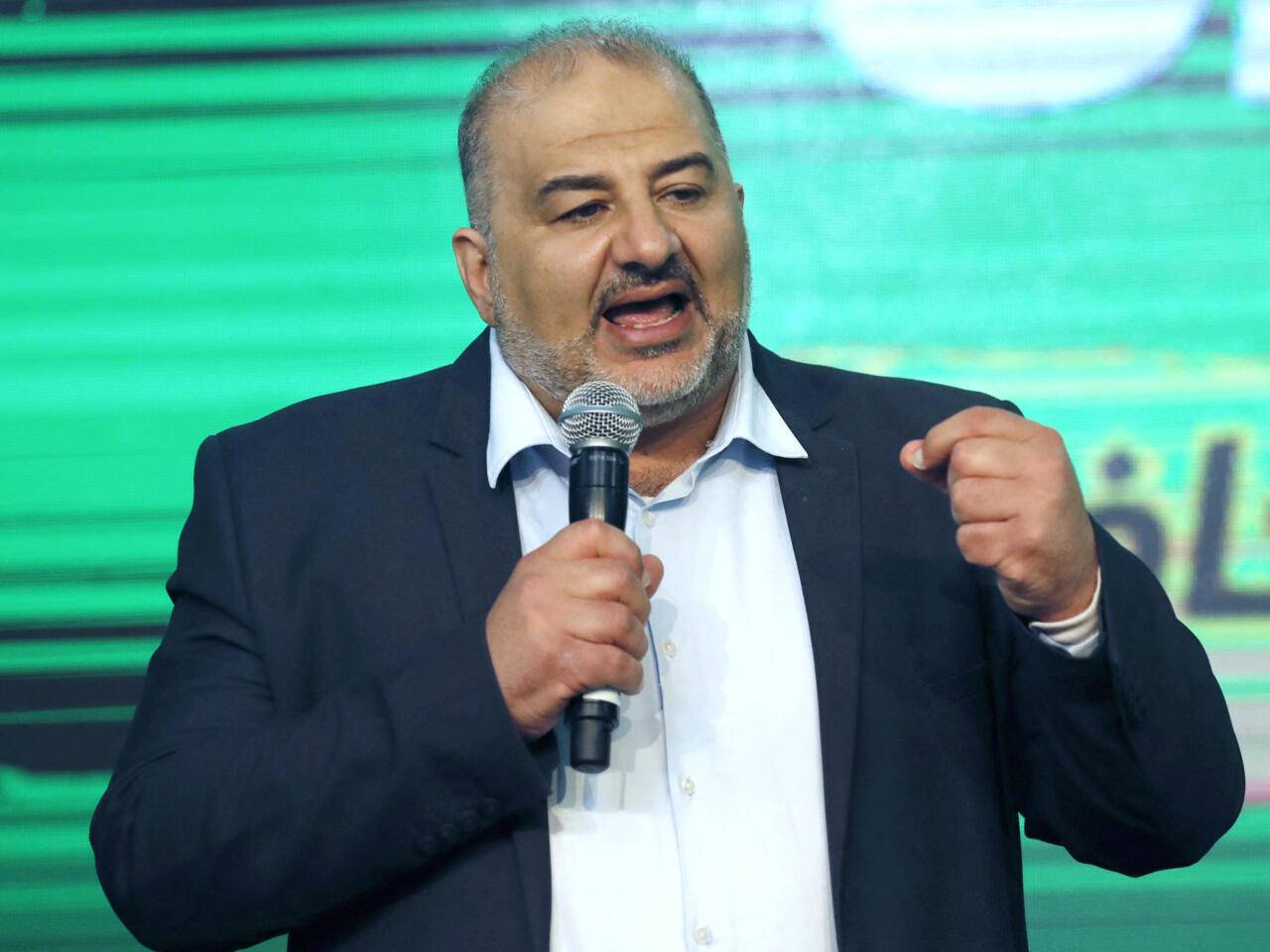
Mansour Abbas. AFP
The turn begins
Some trace the shift to 2016, when Attorney General Avichai Mandelblit decided to file indictments in three serious corruption cases.
These analysts see Netanyahu’s outreach to Arab citizens as a normal democratic step: an attempt to redress decades of racial discrimination and show that the right, in particular, could put them on a path toward equality.
He had approved Plan 922, allocating $5 billion to narrow some of the disparities caused by discrimination. The plan was developed with the Joint List, led by lawmaker Ayman Odeh, and the National Committee of Heads of Arab Local Authorities, led by Mazen Ghnaim.
But Netanyahu’s aides had a different calculation. They were building an alliance of right-wing parties to shield him against the judiciary, which was trying him on three corruption indictments.
The right was fragmented. Its far-right parties distrusted Netanyahu’s governments, which always included one or more centrist parties. He offered them a deal: a permanent alliance, in good times and bad, that would hold under any circumstances and support him in court.
When far-right leaders began throwing their weight around and imposing conditions, he turned to another tactic: an alliance with one of the Arab lists.
All the Arab parties had by then united under the Joint List. Netanyahu knew that bringing one into his coalition could break that unity. He would achieve three goals at once: divide his opponents, as he routinely did; secure a governing majority; and win respect in the West for ending the exclusion of Arabs and discrimination against them.
But the hard-line far right insisted he must not ally with Arabs. The opportunity collapsed.
His center-right rivals, Naftali Bennett and Yair Lapid, seized it instead. In 2021, they formed a coalition with the United Arab List, led by lawmaker Mansour Abbas. That alliance gave them the numbers to form a government.
The government lasted a year and a half; too little time to fundamentally change Israeli policy. But it gave Arab parties political legitimacy and secured several gains for Arab citizens, foremost among them Plan 555, providing an estimated $10 billion in funding.
It began with Rabin
Abbas’ alliance with the Bennett-Lapid government was not the first to include Arabs.
In 1993, Shas, the party of ultra-Orthodox Jews of Middle Eastern origin, left Yitzhak Rabin’s government, reducing it to a minority. Rabin turned to the Arabs.
They were represented by two parties: the Democratic Front for Peace and Equality, led by lawmaker Tawfiq Zayyad, with three seats, and the Arab Democratic Party, led by lawmaker Abdulwahab Darawshe, with two. Together, they formed the “blocking bloc,” preventing the right from toppling the government.
Rabin showed a sincere commitment to the alliance. He accepted two conditions: begin a process to achieve full equality for Israel’s Arab citizens and recognize the Palestine Liberation Organization.
The alliance delivered on both fronts. The Oslo Accords were one of its fruits. But, as is well known, the Israeli right assassinated Rabin. Netanyahu then took power for his first term, from 1996 to 1999.
The process was derailed. Arabs were again excluded and pushed toward the political margins. Their parties resumed their struggle from the back benches of the Knesset opposition, in street demonstrations and through international pressure from United Nations bodies, the European Union and other institutions.
Netanyahu once again turned them into a bogeyman to frighten Jews.
Incitement long before Oct. 7
The impression that Netanyahu is exploiting the Hamas attack of Oct. 7, 2023, to fuel hatred of Arabs in Israel misses the longer history. Incitement against them began long before the attack. Netanyahu himself played a decisive role.
An Israel Democracy Institute poll showed how successful that incitement had been.
Conducted a week before his June 2019 call to bring Arabs into the coalition, it found that 81% of Jewish respondents opposed Arab parties’ participation. Just 13% supported it.
The Hamas attack, however, became a defining benchmark for Israeli policy and a fixation for an entire society. At its core lies hatred of Palestinians — all Palestinians, including Gaza’s children — and support for killing them alongside their mothers, daughters and elderly people. Even Palestinian citizens of Israel were cast as enemies.
Why? Did they join the Hamas attack? Did they approve of it?
Every Israeli politician and military official knows that Arab citizens stand in direct opposition to Hamas and wholly opposed its attack. Many were themselves killed or wounded.
Arabs opposed the attack
Arabs in the Negev were among the first hit by Hamas rockets during the attack. Six were killed.
The attackers also killed a Palestinian woman wearing a headscarf who tried to stop them from killing civilians. She told them their actions violated Islamic values. They shot her.
They also shot an Arab paramedic from Iksal, near Nazareth, who worked for Magen David Adom, as he treated a wounded Jew.
Even the Islamic Movement led by lawmaker Mansour Abbas condemned the Oct. 7 attack as “a massacre and an inhuman, unjustified act that does not reflect the values of the Palestinian people.” Almost every Arab politician in Israel did much the same.
To say that “after Oct. 7, no government may be formed that relies on Arab parties” is therefore a slur built on lies and ingratitude. Behind it lies blind racism.
The threat this policy poses to Israel’s future has ignited a struggle among Jews themselves over how to respond.
The majority, including liberal centrist forces led by Gadi Eisenkot, Naftali Bennett and Yair Lapid, embrace this racist position without shame or hesitation.
Despite their positive experience of an alliance with Mansour Abbas, they bowed to Netanyahu’s campaign, disavowed that alliance and pledged to reject any government dependent on an Arab party.
Eisenkot tried to soften his opposition. At a meeting with voters in Jerusalem last Friday, he said: “Since this morning, my team has been dealing with the promise supposedly made to them that Mansour Abbas would be in the government. Anyone who knows me knows that I do not make promises.”
His answer still left him an opening. Every partner, he said, must accept three basic principles: that Israel is a Jewish, democratic and liberal state; the values of the Declaration of Independence; and the obligation to perform military or national service.
Last Tuesday, he told Radio 103FM he had added a fourth condition: anyone joining his government must support eliminating Hamas.
A liberal and left-wing current rejects this racist approach. It argues that the Jewish people, who once suffered racial discrimination in its most abhorrent forms, now practice it openly, explicitly and as official policy.
“Bringing Arab parties and Arab society into any future governing coalition is a strategic necessity to save Israel and defeat the right, which is destroying Israel,” said Yair Golan, leader of the Democrats party.
Yet Golan joined the racist right-wing parties in backing the disqualification of Sami Abu Shehadeh, leader of Balad.
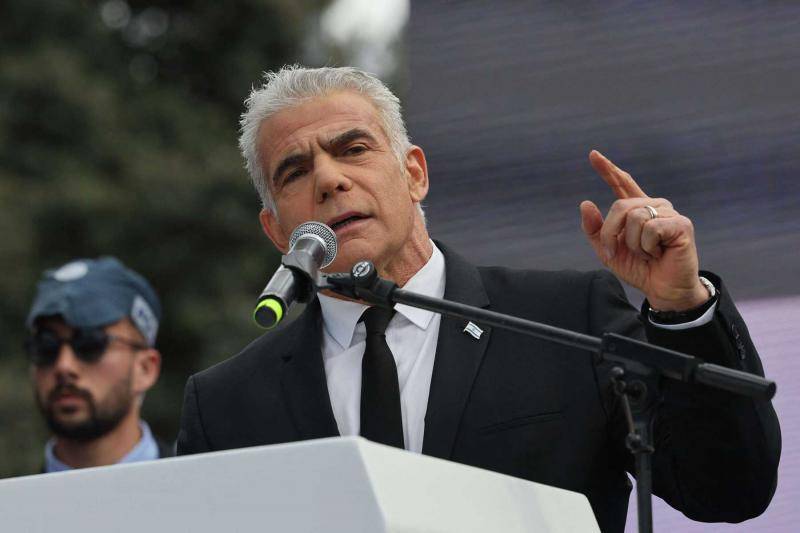
Yair Lapid. AFP
A cautious Arab campaign
Arab parties are fighting cautiously, seeking to give the right no ammunition against them on any front.
The right has made the fight against these parties a central campaign goal, particularly as it watches its opponents fall into its trap. It is pursuing a legal battle to disqualify every Arab party and bar them from elections, arguing that they support terrorism and do not recognize Israel as a Jewish and democratic state.
Arab party leaders grasped what the election battle meant for their community’s future. They chose the safest paths to greater political weight.
First, they sought to prevent any Arab votes from being wasted.
Three parties formed an alliance: the Democratic Front for Peace and Equality, led by Professor Yousef Jabareen; the Arab Movement for Change, led by lawmaker Ahmad Tibi; and the National Democratic Assembly, led by Sami Abu Shehadeh. They also signed a surplus-vote agreement with the United Arab List, led by lawmaker Mansour Abbas.
Second, the two Arab lists signed a code of honor pledging a fair and clean election campaign. Their leaders agreed to cooperate in the Knesset afterward to secure the strongest possible parliamentary leadership positions.
Third, Abbas added a Jewish lawmaker, former police major general Yoav Segalovitz, to his list, giving him second place.
Segalovitz has an extensive record of fighting organized crime, now the gravest scourge facing Arabs in Israel. His presence on an Arab list undercuts those who would deem it illegitimate.
Abu Shehadeh’s disqualification
Fourth, they widened the battle with the right, involving international actors from the United Nations, the European Union and some groups in the United States to prevent the racist campaign against them.
The Elections Committee disqualified Sami Abu Shehadeh over an article he wrote on Oct. 8, 2023, the day after the Hamas attack on Israel.
The article glorified the attack as a successful act of resistance and an outcome to be expected under the physical principle that “for every action, there is a reaction.”
Abu Shehadeh repudiated its substance. Speaking before the committee on Wednesday, he said he had written it before learning of the atrocities committed during the Hamas attack.
Writing the article was a mistake, he said. If he wrote it today, he would write it differently.
He stressed that he rejected violence against any party, whether a state or individuals, and that his political record was full of support for a just peace. The proposal to disqualify him was therefore unfair.
The retraction did not save him. A decision was also made to disqualify even Abbas’ list, which had expressed willingness to join the government.
The Supreme Court adopted the same position. It told him it would disqualify him if he continued with the court proceedings, but advised him to withdraw and cancel his candidacy himself.
He did so. His action joined the earlier measures seen as part of a measured effort to pull the rug out from under the right.
First the parties, then citizenship
Arabs now see their struggle as fundamental and existential. Those seeking to disqualify their parties are, in practice, paving the way to stripping them of their status as citizens.
They see clearly how brutal views such as those of Finance Minister Bezalel Smotrich influence a range of Jewish actors: from armed militias threatening their existence to the terrorist professor at Bar-Ilan University who devised a plan for a Jewish terrorist organization to kill hundreds of Arabs and force them from their homeland.
Israel’s Scorn of Nobel Peace Prize Laureate Highlights its Combative Relationship with UN Bodieshttps://english.aawsat.com/features/5327871-israel%E2%80%99s-scorn-nobel-peace-prize-laureate-highlights-its-combative-relationship-un
09 October 2026, Bavaria, Nürnberg: South African lawyer Navanethem "Navi" Pillay speaks at the Nuremberg Forum in Nuremberg following the announcement that she is the recipient of the 2026 Nobel Peace Prize. (dpa)
TT
TT
Israel’s Scorn of Nobel Peace Prize Laureate Highlights its Combative Relationship with UN Bodies
09 October 2026, Bavaria, Nürnberg: South African lawyer Navanethem "Navi" Pillay speaks at the Nuremberg Forum in Nuremberg following the announcement that she is the recipient of the 2026 Nobel Peace Prize. (dpa)
The decision to award this year's Nobel Peace Prize to veteran jurist Navi Pillay has exposed the vast gulf between Israel and global institutions charged with upholding international law, a rift that has widened over the war in Gaza.
Over a decades-long career, Pillay served at the highest levels of international organizations created in the wake of World War II to prevent a recurrence of its horrors. As a young lawyer in her native South Africa, she campaigned against apartheid and for the release of Nelson Mandela, and as an international jurist she helped sentence dozens of people convicted of taking part in the 1994 Rwandan genocide.
But her leadership of a UN-backed panel that determined Israel committed genocide in Gaza — allegations it vehemently denies — has led many in Israel to see the Nobel nod as a high-profile rebuke of the country just days after the anniversary of the Oct. 7, 2023, Hamas attack that triggered the war.
Allegations of genocide are particularly explosive in Israel, which was founded in part as a refuge for survivors of the Nazi Holocaust.
“Awarding Pillay the Nobel Peace Prize isn’t a recognition of justice. It’s the grotesque weaponization of an award to legitimize anti-Israel hatred and prejudice,” Israel's Foreign Ministry said on X. “Joseph Goebbels is certainly applauding from hell,” it added, referring to the Nazi propagandist.
The vitriol comes from the widespread perception in Israel that the United Nations and other international bodies are biased against it. The United States has echoed that criticism and announced a raft of sanctions aimed at dismantling the International Criminal Court hours after the Nobel Prize announcement.
But Pillay's findings over the years were largely consistent with those of major human rights groups and other international bodies, and the facts she cited in reaching her conclusions had been widely reported.
Pillay led a panel that accused Israel of genocide in Gaza
Pillay led a three-member expert panel commissioned by the UN Human Rights Council that concluded last year that Israel had committed genocide in Gaza.
Their 22-page report cited the death toll; Israeli restrictions on humanitarian aid that led to widespread hunger; a policy of “systematically destroying” the healthcare system; the direct targeting of children and “explicit statements” of intent by Israeli civilian and military authorities.
Human rights groups and many experts on genocide have reached similar conclusions.
The commission has also issued reports accusing Hamas of war crimes during its Oct. 7, 2023, attack, when gunmen killed some 1,200 people and abducted 251 others. Israel’s retaliatory offensive has killed over 74,000 Palestinians, according to Gaza’s Health Ministry. The ministry, part of the Hamas-run government, maintains detailed records seen as generally reliable by UN agencies and many independent experts.
Israel has vehemently denied the allegations, casting them as an antisemitic blood libel. The Israeli military says it takes extraordinary measures to prevent harm to civilians and blames their deaths on Hamas because it operates in densely populated areas.
The International Court of Justice, the UN's top court, is investigating genocide allegations brought by South Africa, and the International Criminal Court has issued an arrest warrant for Israeli Prime Minister Benjamin Netanyahu, for war crimes and crimes against humanity.
Pillay currently serves as an ad hoc judge in the ICJ's ongoing genocide case against Myanmar and served as an ICC judge from 2003-2008.
Israel has rejected the commission since its inception
The commission was created after the 2021 Israel-Hamas war and is the first to have an open-ended mandate. Critics say such permanent scrutiny shows anti-Israel bias, while supporters say it's needed to keep tabs on injustices faced by Palestinians under decades of Israeli rule.
Israel has refused to cooperate with the commission or other UN-endorsed investigations. It has pointed to the presence of notoriously repressive countries on the 47-member Human Rights Council and accused it of relentlessly singling out Israel while ignoring violations elsewhere.
A member of the commission, Indian jurist Miloon Kothari, sparked controversy in 2022 when he referred to a “Jewish lobby” in a media interview and questioned Israel's UN membership, citing its alleged violations of member state obligations.
Pillay issued a letter at the time saying Kothari had been misquoted and that the commission does not question Israel's status or UN membership.
She addressed the wider criticism in an interview with The Associated Press last year after she and the other commission members resigned, citing personal reasons and the need for change. They have since been replaced.
“We’re an independent panel,” she said. “People who accuse us of being antisemitic ... they twist the facts, they invent facts, falsify facts. I would like to see them challenge the report: Which of the facts that we have set out are incorrect?” she said.
Pillay also investigated Israel's decades-long occupation of the West Bank
Even before the latest Israel-Hamas war, Pillay had repeatedly taken Israel to task over its open-ended military rule over millions of Palestinians.
In a report released more than a year before the Oct. 7 attack, the commission accused Israel of de facto annexation of the West Bank, which it captured alongside Gaza and east Jerusalem in the 1967 Middle East war. The Palestinians want an independent state encompassing all three territories.
The International Court of Justice later issued a landmark ruling that Israel's occupation of the territories was unlawful.
The commission had said Israel's continuous expansion of Jewish settlements, its demolition of Palestinian homes and its fragmentation of Palestinian life were aimed at securing permanent rule over the territory, which is home to some 3 million Palestinians and 500,000 Israeli settlers.
Palestinians in the West Bank live under Israeli military rule, with the Palestinian Authority administering population centers. The settlers have Israeli citizenship, including freedom of movement and the right to vote.
Israel's UN mission rejected the report at the time of its release, calling it part of an “anti-Israel agenda” at the international body.
But Israel's current government and most of its political class is opposed to Palestinian statehood, and Netanyahu has repeatedly said Israel will maintain permanent control over the territories.
Israel views the West Bank as the biblical and historical cradle of Judaism, and says its withdrawal would pave the way for a Hamas-run state that would threaten its existence. The last substantive Israeli-Palestinian peace talks broke down in 2009, after Netanyahu returned to office.
Pillay's commission had also raised concerns about Israel's potential annexation of Gaza, saying its efforts to carve out buffer zones and military corridors were “vastly disproportionate to any reasonable military objective.”
It said calls by Israeli officials for the “voluntary migration” of much of Gaza's population from the war-ravaged territory, if implemented, would amount to forcible transfer, a crime against humanity.
لم تشترك بعد
انشئ حساباً خاصاً بك لتحصل على أخبار مخصصة لك ولتتمتع بخاصية حفظ المقالات وتتلقى نشراتنا البريدية المتنوعة