


Families Step in at Kabul COVID-19 Ward to Care for Patients

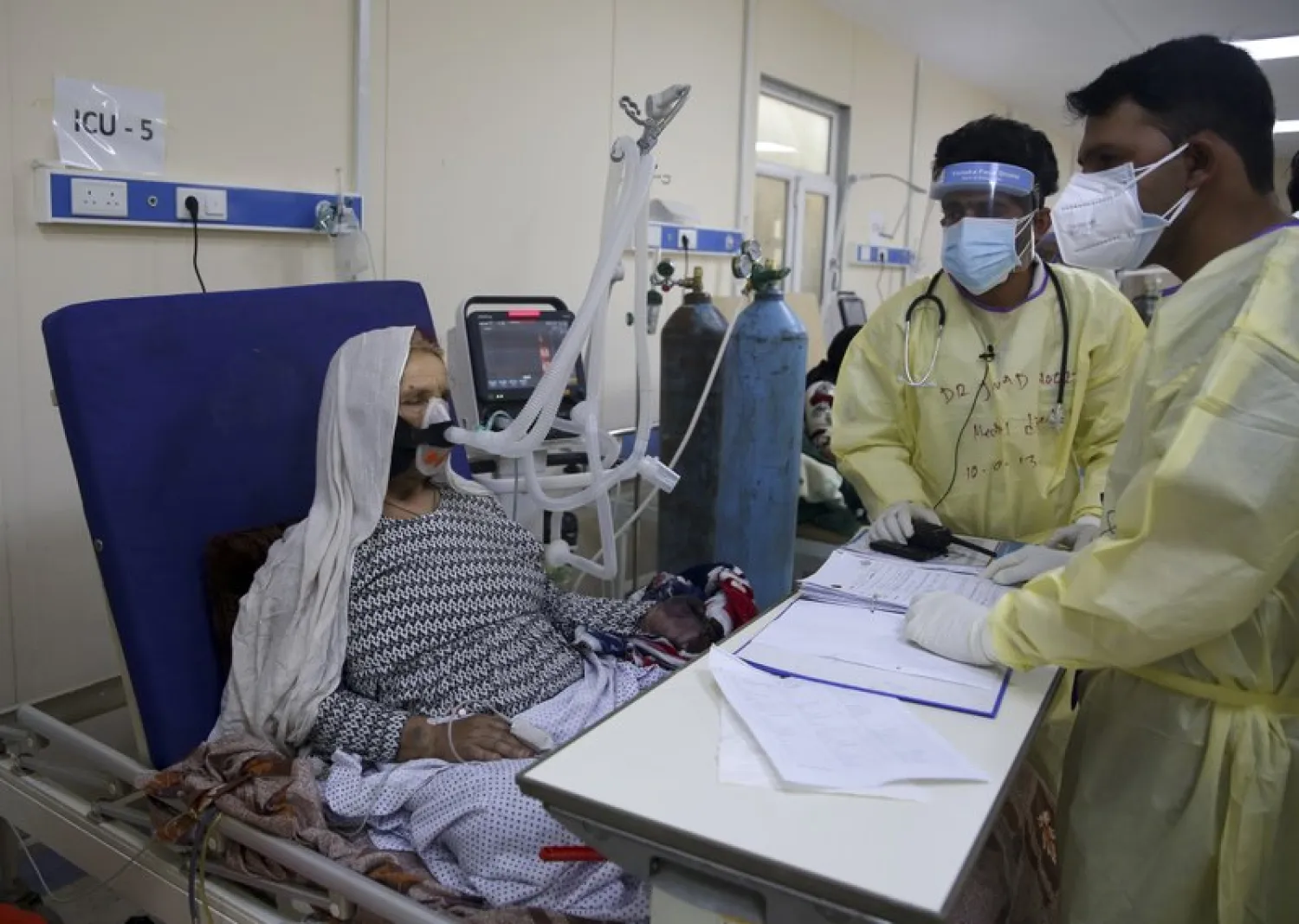
Afghan doctors help a patient to breathe through an oxygen mask in the Intensive Care Unit ward for COVID-19 patients at the Afghan-Japan Communicable Disease Hospital in Kabul, Afghanistan, Tuesday June 30, 2020. (AP Photo/Rahmat Gul)
TT

Families Step in at Kabul COVID-19 Ward to Care for Patients

Afghan doctors help a patient to breathe through an oxygen mask in the Intensive Care Unit ward for COVID-19 patients at the Afghan-Japan Communicable Disease Hospital in Kabul, Afghanistan, Tuesday June 30, 2020. (AP Photo/Rahmat Gul)

The intensive care unit at the Afghan capital's premier hospital for COVID-19 patients is a medical nightmare - and a stark warning how the country´s war-ravaged health care system risks collapsing.

Family members, without protective equipment and only a few wearing face masks, help care for the patients lying in hospital beds. They say they have no choice because there are not enough nurses and other medical staff.

The next-of-kin often guard their loved one´s oxygen tank, fearing it could be stolen because there is a shortage of just about everything, including oxygen cylinders.

The 100-bed Afghan-Japan Communicable Disease Hospital in western Kabul is one of only two facilities for coronavirus testing and treatment in the Afghan capital. Newly graduated Afghan doctors have joined the 370-member staff after many of the hospital's experienced physicians walked out a few months ago, fearing the virus.

The 92-square-meter (1,000-square-foot) ICU ward has only 13 beds, and COVID-19 patients admitted here are in critical condition; few are hooked up to ventilators, some of the others rely on oxygen tanks.

Assadullah, who like many Afghans goes by only one name, says he struggled to stay awake night after night at the ICU ward, guarding the tank that kept his father alive. In his father's final days, the relative of another patient came over, threatening to take the tank.

"Your father is dying but mine is alive, he told me ... in such a situation, how could I have left my father alone," said Assadullah, who lost his father to the virus on Tuesday.

Abdul Rahman, 42, feels the same way and rushes to rub his 70-year-old mother's back every time she coughs.

A few beds away, 64-year-old Mohammad Amin's left foot has turned black from gangrene that set in after a blood clot due to the virus. His son and wife tend to him as best they can, but they say it's exhausting.

For the hospital's director, Hakimullah Saleh, every staffer is a hero, risking their own life to provide critical care. They face so many work challenges, he said, on top of which they sometimes have to deal with "threats" from distraught families who feel the hospital is not doing enough.

One of Saleh's heroes, Dr. Jawad Norzai, is relentless in his devotion to the patients, he said. Along with his job as chief surgeon, Norzai visits over 60 patients a day and finds the time to train new doctors, Saleh said.

The 32-year-old Norzai got his medical diploma in 2013 and worked first for private hospitals, joining the Afghan-Japan only after hearing how many of the staff had left. Norzai said he, like many medical professionals, contracted the virus but recovered. He said he infected several of his family members but luckily, they also recovered.

Another one of the Afghan-Japan doctors who recovered from the virus is Mozhgan Nazehad, 35. "I spent three nights awake because of severe pain, back pain, and lower limb pain, that pain I will never forget," said Nazehad, who lives apart from her family to keep them safe.

The other hospital that treats COVID-19 patients is the Ali Jenah, funded by Pakistan, a 200-bed but less-equipped facility, also in western Kabul. There is also an isolation center in the dormitory of the Kabul University, but it does not provide treatment.

According to the Health Ministry, more than 1,700 medical workers - including 40 at the Afghan-Japan hospital - were infected while providing care to COVID-19 patients; 26 have died.

Afghanistan has so far recorded almost 35,000 cases of the virus, including 1,094 deaths, with the number of infections thought to far outnumber the official tally.

The International Rescue Committee warned last month that Afghanistan is on the brink of a humanitarian disaster because the government is unable to test some 80% of possible coronavirus cases.

The Health Ministry said it now has the capacity to test only 2,500 people per day. Last month, 10,000 to 20,000 people were coming daily, asking to be tested, but the government had to turn many down. Afghanistan has one doctor for every 3,500 people, less than a fifth of the global average, according to the World Health Organization.

The International Committee of the Red Cross said on Tuesday that in addition to the COVID-19 health crisis faced in Afghanistan, the socioeconomic impact of the virus could become catastrophic with 12.4 million people - one third of the country´s population - already considered to be living at "emergency" levels of food shortages.

Seemingly indicative of the fractured health care system, Afghan President Ashraf Ghani´s special envoy for economic development, Yosuf Ghaznafar, went to Turkey when he became ill with COVID-19. He died of the disease there in early July, according to a statement from the presidency - the most senior Afghan official so far to die of the virus.

"Your father is dying but mine is alive, he told me ... in such a situation, how could I have left my father alone," said Assadullah, who lost his father to the virus on Tuesday.

Abdul Rahman, 42, feels the same way and rushes to rub his 70-year-old mother's back every time she coughs.

A few beds away, 64-year-old Mohammad Amin's left foot has turned black from gangrene that set in after a blood clot due to the virus. His son and wife tend to him as best they can, but they say it's exhausting.

For the hospital's director, Hakimullah Saleh, every staffer is a hero, risking their own life to provide critical care. They face so many work challenges, he said, on top of which they sometimes have to deal with "threats" from distraught families who feel the hospital is not doing enough.

One of Saleh's heroes, Dr. Jawad Norzai, is relentless in his devotion to the patients, he said. Along with his job as chief surgeon, Norzai visits over 60 patients a day and finds the time to train new doctors, Saleh said.

The 32-year-old Norzai got his medical diploma in 2013 and worked first for private hospitals, joining the Afghan-Japan only after hearing how many of the staff had left. Norzai said he, like many medical professionals, contracted the virus but recovered. He said he infected several of his family members but luckily, they also recovered.

Another one of the Afghan-Japan doctors who recovered from the virus is Mozhgan Nazehad, 35. "I spent three nights awake because of severe pain, back pain, and lower limb pain, that pain I will never forget," said Nazehad, who lives apart from her family to keep them safe.

The other hospital that treats COVID-19 patients is the Ali Jenah, funded by Pakistan, a 200-bed but less-equipped facility, also in western Kabul. There is also an isolation center in the dormitory of the Kabul University, but it does not provide treatment.

According to the Health Ministry, more than 1,700 medical workers - including 40 at the Afghan-Japan hospital - were infected while providing care to COVID-19 patients; 26 have died.

Afghanistan has so far recorded almost 35,000 cases of the virus, including 1,094 deaths, with the number of infections thought to far outnumber the official tally.

The International Rescue Committee warned last month that Afghanistan is on the brink of a humanitarian disaster because the government is unable to test some 80% of possible coronavirus cases.

The Health Ministry said it now has the capacity to test only 2,500 people per day. Last month, 10,000 to 20,000 people were coming daily, asking to be tested, but the government had to turn many down. Afghanistan has one doctor for every 3,500 people, less than a fifth of the global average, according to the World Health Organization.

The International Committee of the Red Cross said on Tuesday that in addition to the COVID-19 health crisis faced in Afghanistan, the socioeconomic impact of the virus could become catastrophic with 12.4 million people - one third of the country´s population - already considered to be living at "emergency" levels of food shortages.

Seemingly indicative of the fractured health care system, Afghan President Ashraf Ghani´s special envoy for economic development, Yosuf Ghaznafar, went to Turkey when he became ill with COVID-19. He died of the disease there in early July, according to a statement from the presidency - the most senior Afghan official so far to die of the virus.



Russia's Lavrov Warns against Any New US Strike on Iran

FILE PHOTO: Russia's Foreign Minister Sergei Lavrov speaks during an annual press conference in Moscow, Russia, January 14, 2025. REUTERS/Evgenia Novozhenina/File Photo
TT

Russia's Lavrov Warns against Any New US Strike on Iran

FILE PHOTO: Russia's Foreign Minister Sergei Lavrov speaks during an annual press conference in Moscow, Russia, January 14, 2025. REUTERS/Evgenia Novozhenina/File Photo

Russian Foreign Minister Sergei Lavrov, in ‌an interview made public on Wednesday, said that any new US strike on Iran would have serious consequences and called for restraint to find a solution to enable Iran to pursue a peaceful nuclear program.

Lavrov's interview with Saudi Arabia's Al-Arabiya television was aired a day after US and Iranian negotiators held indirect talks in Geneva to head off a new mounting crisis between Washington and Tehran, Reuters said.

"The consequences are not good. There have already been strikes on Iran on ‌nuclear sites ‌under the control of the International Atomic ‌Energy ⁠Agency. From what ⁠we can judge there were real risks of a nuclear incident," Lavrov said in the interview, which was posted on his ministry's website.

"I am carefully watching reactions in the region from Arab countries, Gulf monarchies. No one wants an increase in tension. Everyone understands this is playing with fire."

Boosting ⁠tensions, he said, could undo the ‌positive steps of recent years, including ‌improved relations between Iran and nearby countries, notably Saudi Arabia.

A senior ‌US official told Reuters on Wednesday that Iran was ‌expected to submit a written proposal on how to resolve its standoff with the United States after the talks in Geneva.

US national security advisers met in the White House on Wednesday and ‌were told all US military forces deployed to the region should be in place ⁠by mid-March, ⁠the official said.

The United States wants Iran to give up its nuclear program, and Iran has adamantly refused and denied it is trying to develop an atomic weapon.

Lavrov said Arab countries were sending signals to Washington "clearly calling for restraint and a search for an agreement that will not infringe on Iran's lawful rights and ... guarantee that Iran has a purely peaceful nuclear enrichment program".

Russia, he said, remained in close, regular contact with Iran's leaders "and we have no reason to doubt that Iran sincerely wants to resolve this problem on the basis of observing the Nuclear Non-Proliferation Treaty".


AI Cannot Be Left to 'Whims of a Few Billionaires', UN Chief Says

India's Prime Minister Narendra Modi speaks with United Nations Secretary-General Antonio Guterres during a welcoming ceremony at AI Impact Summit, in New Delhi, India, February 18, 2026. India's Press Information Bureau/Handout via REUTERS
TT

AI Cannot Be Left to 'Whims of a Few Billionaires', UN Chief Says

India's Prime Minister Narendra Modi speaks with United Nations Secretary-General Antonio Guterres during a welcoming ceremony at AI Impact Summit, in New Delhi, India, February 18, 2026. India's Press Information Bureau/Handout via REUTERS

UN chief Antonio Guterres warned technology leaders Thursday of the risks of artificial intelligence, saying its future cannot be left to "the whims of a few billionaires".

Speaking at a global AI summit in India, the UN chief called on tech tycoons to support a $3 billion global fund to ensure open access to the fast-advancing technology for all.

"AI must belong to everyone," he said.

"The future of AI cannot be decided by a handful of countries -- or left to the whims of a few billionaires," he added, warning the world risked deepening inequality unless urgent steps were taken.

"Done right, AI can... accelerate breakthroughs in medicine, expand learning opportunities, strengthen food security, bolster climate action and disaster preparedness and improve access to vital public services," he said.

"But it can also deepen inequality, amplify bias and fuel harm."

The UN has set up an AI scientific advisory body to help countries make decisions about the revolutionary technology.

Guterres warned that people must be protected from exploitation, and that "no child should be a test subject for unregulated AI".

He pressed for global guardrails to ensure oversight and accountability, and the creation of "Global Fund on AI" to build basic capacity.

"Our target is $3 billion," he told the conference, which includes national leaders as well as tech CEOs, including Sam Altman of OpenAI and Google's Sundar Pichai.

"That's less than one percent of the annual revenue of a single tech company. A small price for AI diffusion that benefits all, including the businesses building AI."

Without investment, "many countries will be logged out of the AI age", exacerbating global divides, he said.

He also cautioned that as AI's energy and water demands soar, data centers must switch to clean power, rather than "shift costs to vulnerable communities".


US Military Tells Trump It's ‘Ready’ to Strike Iran as Soon as Saturday

A shot showing personnel preparations aboard the US aircraft carrier "Gerald Ford" (US Navy)
TT

US Military Tells Trump It's ‘Ready’ to Strike Iran as Soon as Saturday

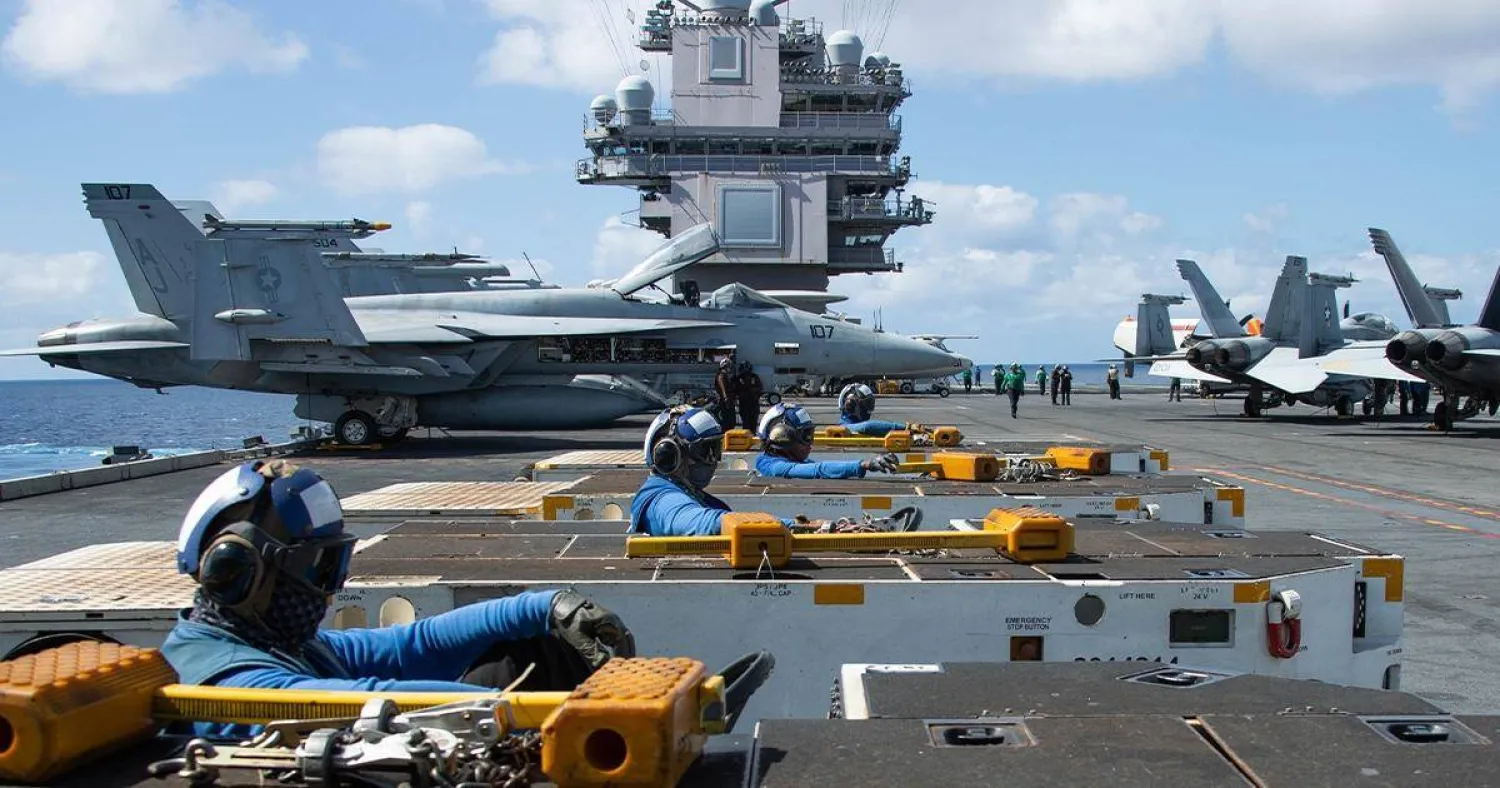
A shot showing personnel preparations aboard the US aircraft carrier "Gerald Ford" (US Navy)

Top national security officials have told US President Donald Trump the military is ready for potential strikes on Iran as soon as Saturday, but the timeline for any action is likely to extend beyond this weekend, sources familiar with the discussions told CBS News.

Trump has not yet made a final decision about whether to strike, said the officials, who spoke under condition of anonymity to discuss sensitive national matters.

The conversations have been described as fluid and ongoing, as the White House weighs the risks of escalation and the political and military consequences of restraint, added CBS.

Over the next three days, the Pentagon is moving some personnel temporarily out of the Middle East region — primarily to Europe or back to the United States — ahead of potential action or counterattacks by Iran if the US were to move ahead with its operation, according to multiple officials.

It's standard practice for the Pentagon to shift assets and personnel ahead of a potential US military activity and doesn't necessarily signal an attack on Iran is imminent, one of the sources told CBS.

Contacted by CBS News on Wednesday afternoon, a Pentagon spokesperson said they had no information to provide.

Iran was discussed in the White House Situation Room on Wednesday, a US official and a senior military official told CBS News. All military forces deployed to the region are expected to be in place by mid-March.

Axios had also said that a war between the United States and Iran is looming — and there are several factors suggesting President Trump might push the button soon.

On Wednesday, Iran's top diplomat Abbas Araghchi said that Tehran was "drafting" a framework for future talks with the United States, as the US energy secretary said Washington would stop Iran's nuclear ambitions "one way or another".