


Yemeni Speaker Complains to UN over Houthi Violations

 Yemeni Speaker (SABA news agency)
Yemeni Speaker (SABA news agency)
TT

Yemeni Speaker Complains to UN over Houthi Violations

 Yemeni Speaker (SABA news agency)
Yemeni Speaker (SABA news agency)

Yemeni parliament speaker Sultan al-Barakani has called upon the international community to take firm stances on the Houthi atrocities against oppositionists.

“The militia are doing what they are doing amidst international silence,” he said.

The Speaker noted that Houthis are taking control of the houses of parliamentarians in the capital Sanaa and other areas under their control.

Houthis have lately confiscated the house of Yasser Al-Awadhi, a tribal and political leader who led a military uprising against their rule in the central province of Al-Bayda.

Early this year, the Iran-backed Houthi militia had attacked and confiscated properties of 35 Yemeni MPs who back the internationally recognized government.

In a separate letter to the UN Special Envoy Martin Griffiths, al-Barakani called on the UN to save the Yemeni people from the serial deterioration of their lives since the September 2014 Houthi coup including the proliferation of coronavirus in the population centers they control; the death sentences against MPs, politicians and journalists; and other terrorist acts, in disregard for all UN resolutions and human values.

Meanwhile, Yemen's National Alliance of Political Parties (NAPP), a group of parties loyal to the internationally recognized government, had also called on the UN and its envoy to condemn the ongoing Houthi attacks against Yemeni pro-government leaders.

“Such ill-disciplined actions are considered terrorism and an organized violence and they prove that militias give no considerations to the values and morals of the Yemeni society,” they said in a statement.

The parties added that the militias insist on continuing the series of their crimes against the Yemeni people, rejecting all international efforts to reach peace in the country.

“Such behavior is reflected in their decision issued last March to sentence 35 Yemeni pro-government deputies to death,” after charging them with cooperating with the Saudi-led Arab coalition, the statement added.

The charges include parliament Speaker Sultan al-Burkani, his deputy Abdulaziz al-Jabari, Jawf governor Amin al-Akimi and Chief of Staff Sagheer bin Aziz.
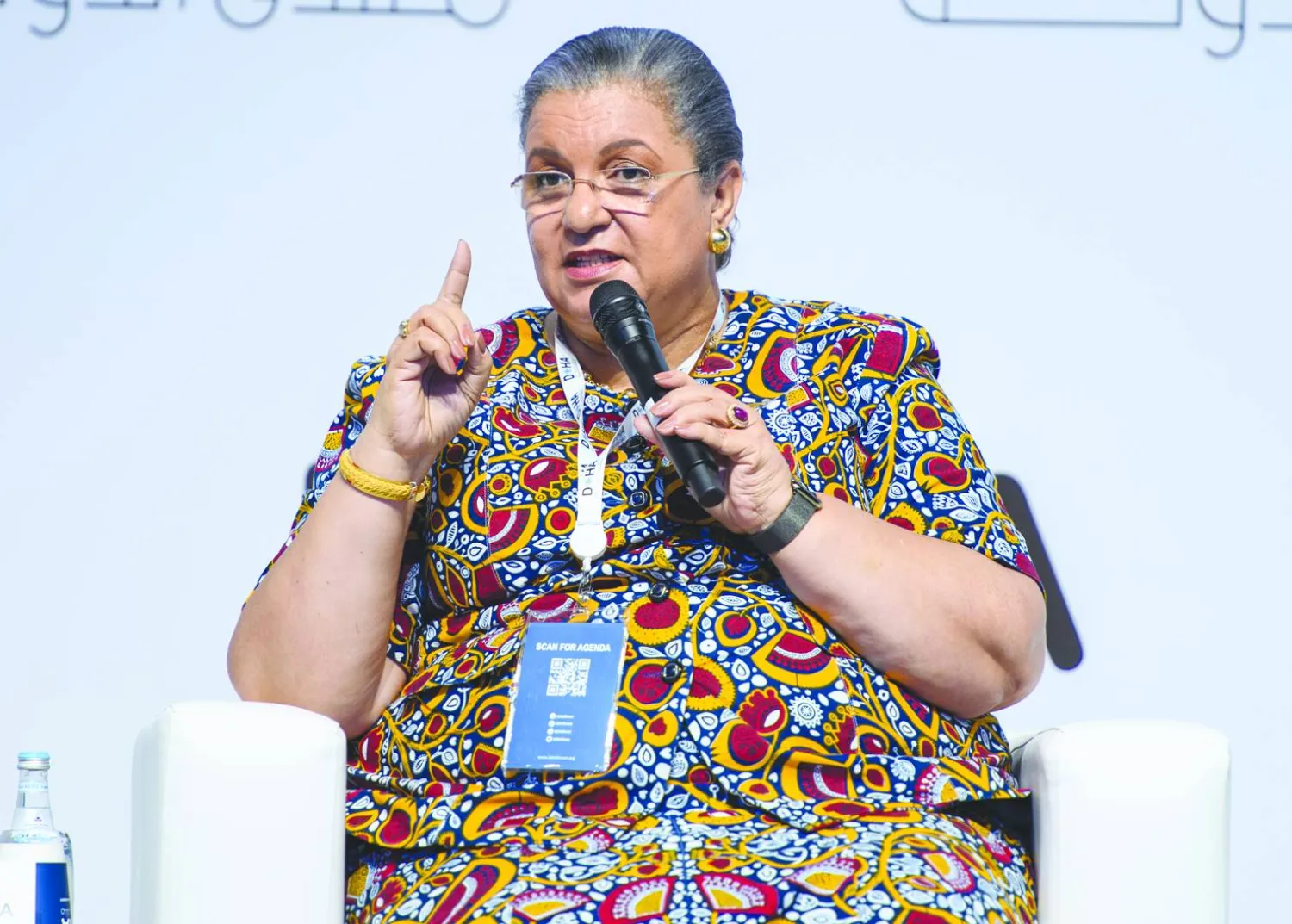



Tetteh: Despite UN Engagement, No Progress in Libya Roadmap

Head of the United Nations Support Mission in Libya Hanna Tetteh Getty)
TT

Tetteh: Despite UN Engagement, No Progress in Libya Roadmap

Head of the United Nations Support Mission in Libya Hanna Tetteh Getty)

The UN’s top envoy for Libya, Hanna Tetteh, has informed the Security Council that despite active United Nations engagement, the Libyan House of Representatives and the High Council of State have failed to make progress on the first steps of the agreed political roadmap, including establishing a mechanism to select the board of the High National Elections Commission (HNEC) and advancing electoral legislation.

Briefing the Council in New York on Wednesday, the Special Representative of the Secretary-General said: “Their inability to use their agreed mechanism and follow-on unilateral actions has further eroded their credibility."

Tetteh added that Libyan public perceptions reflect a growing belief that the bodies are “unable or unwilling” to deliver.

She told Council members that she has begun consultations with key actors on an alternative two-step approach aimed at restoring momentum. Should a smaller group of Libyan representatives fail to agree on the roadmap’s milestones, she warned, a broader convening would be required. “We cannot wait indefinitely,” she emphasized.

The UN envoy also issued a stark warning about escalating tensions within Libya’s judicial system.

She said “contradictory, parallel judicial decisions put into jeopardy the unity of the legal and judicial systems,” cautioning that the situation “is a red line that if crossed can undermine the unity of the state.”

She urged Libyan leaders to refrain from further escalatory steps and called on the Council to hold accountable those taking actions that threaten to fracture the judiciary.

Tetteh also warned that transnational criminal networks continue to expand, turning Libya into a major transit hub for drug trafficking and sustaining illicit economies linked to corruption and armed groups.


Damascus, in Cooperation with Baghdad, Foils Plot to Smuggle Drugs Abroad

Quantities of Captagon prepared for smuggling abroad- SANA
TT

Damascus, in Cooperation with Baghdad, Foils Plot to Smuggle Drugs Abroad

Quantities of Captagon prepared for smuggling abroad- SANA

Syrian authorities said they have thwarted an attempt to smuggle a large shipment of drugs out of the country.

The Syrian Narcotics Directorate said on Wednesday it seized approximately 400,000 captagon pills, weighing about 65 kilograms, during an operation in Homs province in central Syria.

The drugs would have been smuggled to other countries, the Syrian Arab News Agency (SANA) reported. Two suspects were arrested on suspicion of managing a drug-trafficking network operating across borders.

The operation was carried out in coordination with Iraq’s General Directorate for Narcotics and Psychotropic Substances Control, SANA quoted a Syrian Interior Ministry statement as saying.

Earlier this month, the Syrian Narcotics Directorate conducted a joint security operation with the Iraqi authorities targeting an international drug-trafficking network, and seizing about 300,000 Captagon pills. Two people were also arrested.


How Gaza Armed Gangs Recruit New Members

Security personnel guard trucks carrying aid as they arrive in Rafah, amid the ongoing conflict between Israel and the Palestinian Islamist group Hamas, in the southern Gaza Strip January 17, 2024. (Reuters)
TT

How Gaza Armed Gangs Recruit New Members

Security personnel guard trucks carrying aid as they arrive in Rafah, amid the ongoing conflict between Israel and the Palestinian Islamist group Hamas, in the southern Gaza Strip January 17, 2024. (Reuters)

As Hamas moves to strike armed gangs operating in areas of the Gaza Strip under Israeli army control, the groups are responding with defiance, stepping up efforts to recruit young men and expand their ranks.

Videos posted on social media show training exercises and other activities, signaling that the gangs remain active despite pressure from Hamas security services.

Platforms affiliated with Hamas security say some members have recently turned themselves in following mediation by families, clans and community leaders. The gangs have not responded to those statements. Instead, they occasionally broadcast footage announcing new recruits.

Among the most prominent was Hamza Mahra, a Hamas activist who appeared weeks ago in a video released by the Shawqi Abu Nasira gang, which operates north of Khan Younis and east of Deir al-Balah.

Mahra’s appearance has raised questions about how these groups recruit members inside the enclave.

Field sources and others within the security apparatus of a Palestinian armed faction in Gaza told Asharq Al-Awsat that Mahra’s case may be an exception. They described him as a Hamas activist with no major role, despite his grandfather being among the founders of Hamas in Jabalia.

His decision to join the gang was driven by personal reasons linked to a family dispute, they said, not by organizational considerations.

The sources said the gangs exploit severe economic hardship, luring some young men with money, cigarettes and other incentives. Some recruits were heavily indebted and fled to gang-controlled areas to avoid repaying creditors.

Others joined in search of narcotic pills, the sources said, noting that some had previously been detained by Hamas-run security forces on similar charges. Economic hardship and the need for cigarettes and drugs were among the main drivers of recruitment, they added, saying the gangs, with Israeli backing, provide such supplies.

Resentment toward Hamas has also played a role, particularly among those previously arrested on criminal or security grounds and subjected to what the sources described as limited torture during interrogations under established procedures.

According to the sources, some founders or current leaders of the gangs previously served in the Palestinian Authority security services.

They cited Shawqi Abu Nasira, a senior police officer; Hussam al-Astal, an officer in the Preventive Security Service; and Rami Helles and Ashraf al-Mansi, both former officers in the Palestinian Presidential Guard.

These figures, the sources said, approach young men in need and at times succeed in recruiting them by promising help in settling debts and providing cigarettes. They also tell recruits that joining will secure them a future role in security forces that would later govern Gaza.

The sources described the case of a young man who surrendered to Gaza security services last week. He said he had been pressured after a phone call with a woman who threatened to publish the recording unless he joined one of the gangs.

He later received assurances from another contact that he would help repay some of his debts and ultimately agreed to enlist.

During questioning, he said the leader of the gang he joined east of Gaza City repeatedly assured recruits they would be “part of the structure of any Palestinian security force that will rule the sector.”

The young man told investigators he was unconvinced by those assurances, as were dozens of others in the same group.

Investigations of several individuals who surrendered, along with field data, indicate the gangs have carried out armed missions on behalf of the Israeli army, including locating tunnels. That has led to ambushes by Palestinian factions.

In the past week, clashes in the Zaytoun neighborhood south of Gaza City and near al-Masdar east of Deir al-Balah left gang members dead and wounded.

Some investigations also found that the gangs recruited young men previously involved in looting humanitarian aid.