Audit: Lebanon Central Bank Governor Inflated Assets as Liabilities Grew

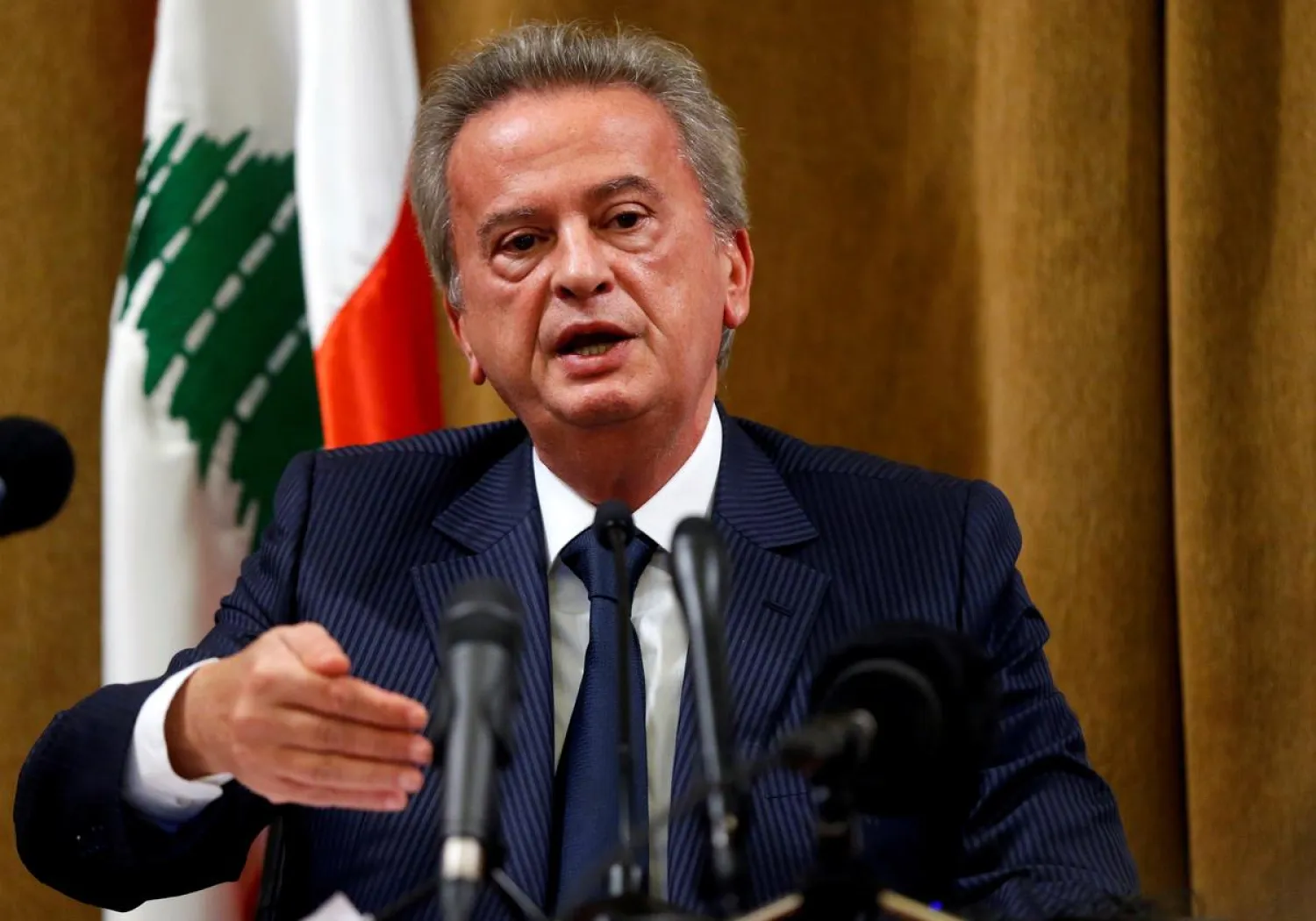
FILE PHOTO: Lebanon's Central Bank Governor Riad Salameh speaks during a news conference at the central bank in Beirut, Lebanon, November 11, 2019. REUTERS/Mohamed Azakir/File Photo
TT

Audit: Lebanon Central Bank Governor Inflated Assets as Liabilities Grew

FILE PHOTO: Lebanon's Central Bank Governor Riad Salameh speaks during a news conference at the central bank in Beirut, Lebanon, November 11, 2019. REUTERS/Mohamed Azakir/File Photo

Lebanon's central bank governor inflated the institution's assets by over $6 billion in 2018, its audited annual accounts show, underlining the extent of financial engineering used to help prop up the country's economy.

The financial statements for 2018, a copy of which was seen by Reuters, were signed off with qualifications by EY and Deloitte just last month, and have not been made public.

The accounts show how the central bank managed to balance its books while helping to fund an ever-widening government deficit, including recording a 10.27 trillion Lebanese pound ($6.82 billion) asset described as "seigniorage on financial stability".

The accounts said governor Riad Salameh "determines on a yearly basis the amount that should be allocated from the liability balance from seigniorage to deferred interest expense and other finance costs".

Most central banks record seigniorage, usually defined as a profit made from printing money, as an income stream. But Lebanon's central bank was recording expected seigniorage profits as an asset, according to the annual financial statement for 2018, prepared by the central bank and reviewed by EY and Deloitte.

"The item that deals with seigniorage is total fiction," said Steve H. Hanke, Professor of Applied Economics at the Johns Hopkins University.

A central banking expert who has been following the financial crisis in Lebanon for years, Hanke said Lebanon's central bank had used the category of "other assets" to disguise losses on loans to the government.

Salameh did not respond to detailed questions that were emailed to his office.

Deloitte declined to comment. EY did not respond to a request for comment.

The outlines of the central bank's accounting approach were first reported by the Financial Times.

Explaining why they were signing off on the accounts with qualifications, EY and Deloitte listed a number of factors including being unable to confirm all deposit balances and being unable to conduct an in-person inventory of the bank's gold reserves.

In addition, Deloitte and EY said the central bank used an accounting and financial reporting framework adopted by its own council, rather than International Financial Reporting Standards (IFRS). They said their own audit was conducted in accordance with International Standards on Auditing.

The central bank's unusual approach is permissible because there is no global standard for central bank accounting.

FINANCIAL ENGINEERING

During Salameh's 27 years in charge, the governor has used what he has described as "financial engineering" to keep Lebanon's public finances afloat and defend the pound's peg to the US dollar, chiefly by attracting dollars from local banks with high interest rates.

The International Monetary Fund described Lebanon's central bank as "the linchpin of financial stability" in an October 2019 report "but at the cost of intensifying sovereign-bank linkages, which pose risks to banking sector stability, and weighing down its balance sheet while protecting banks' profitability."

Salameh has publicly defended the strategy.

"This engineering, we were forced to do it to buy time for Lebanon, so Lebanon could reform," he said in a televised address in April.

But an economic crisis that has led Lebanon to default on foreign currency debt and seen the currency plunge by 80% has shaken his reputation as a pillar of stability, and Salameh has become a focus of anger for street protesters.

Prime Minister Hassan Diab said on Tuesday that turnaround specialist Alvarez & Marsal would conduct a forensic audit and KPMG and Oliver Wyman a financial audit of the central bank amid a dispute over the scale of the financial losses facing the institution.

The 2018 report shows a number of methods used to inflate assets and minimize liabilities of the central bank, which the government and the IMF, from which Lebanon is seeking support, say is $50 billion in the red.

As well as the unorthodox seigniorage accounting, the central bank also booked supposed profits on lending to the government. The cost of interest paid to banks at rates of between 10% and 20% was meanwhile constantly deferred, building up huge future debts, the statements show.

The statements also refer to the central bank purchasing treasury bills from the banks at a premium carried over unamortized, meaning it should be treated as a liability on the central bank's balance sheet.

"Central banks don't have strict rules like companies do, IFRS or GAAP," said Mike Azar, a senior financial adviser based in Lebanon, referring to international accounting standards. "But there are good practices they should follow. One is not to show losses and resulting negative capital as fake assets."

GOLD RESERVES

Talks with the IMF that began in May are on hold while the government and central bank argue over the scale of losses in the financial system -- estimated at nearly $69 billion by Alain Bifani, a former member of Lebanon's negotiating team with the IMF -- and how they should be shared.

The most recent central bank data show it had assets of $152 billion last month. According to research by Credit Libanais, that included "other assets" valued at $48.2 billion in mid-June, 61% higher than a year before, a rise the investment bank attributed to seigniorage, open market operations and an appreciation in gold reserves.

The 2018 statements showed the central bank held gold worth 10.61 trillion pounds, although the auditors said they were unable to perform a physical inventory due to a "policy which gives access exclusivity to top executives of the bank".

One accountant, who spoke on condition of anonymity, said that should have raised a red flag given the central bank's asset position and credibility was under scrutiny.

The accountant also said it was not best practice for the central bank's financial statements to be released so late.

A September 2018 paper by the IMF said more than half of central banks publish their statements within nine months of their financial year-ends.

Asked about the 2018 report, Bifani, the second member of Lebanon's IMF team to quit last month, after 20 years as director general at the finance ministry, said auditors had not carried out a physical inspection of the central bank's gold reserves for years.

"As far as I know in the last 30 years they haven't been allowed to do an inventory of the gold reserves," he said. "The most glaring thing is how they're hiding the losses. He is trying to inflate his assets as much as possible."


Bahraini Transport Minister to Asharq Al-Awsat: Each Country to Finance Its Share of Gulf Railway Project

A conceptual rendering of the Gulf railway interconnection project. (X)
TT

Bahraini Transport Minister to Asharq Al-Awsat: Each Country to Finance Its Share of Gulf Railway Project

A conceptual rendering of the Gulf railway interconnection project. (X)

The Gulf Cooperation Council (GCC) member states took a new step toward completing the railway interconnection project by signing the project's general agreement in Bahrain on Sunday. This comes as part of efforts to establish an integrated transport network linking the six nations and boosting the movement of passengers, goods, and commercial trade among them.

Bahraini Minister of Transportation and Telecommunications Dr. Sheikh Abdulla bin Ahmed Al Khalifa told Asharq Al-Awsat that each country will fund and execute the portion of the project located within its territory.

Meanwhile, the costs, fees, and expenses associated with the shared interconnection components among member states will be determined collectively, he added.

He explained that the agreement establishes a joint framework for the project's execution and operation, while defining the obligations of member states and their coordination mechanisms.

He noted that the network, which extends some 2,117 kilometers, aims to transport 6 million passengers and 200 million tons of freight by 2030, with the figures projected to rise to more than 8 million passengers and 271 million tons of freight by 2045.

The project spans from Kuwait, passing through Saudi Arabia, Bahrain, Qatar, and the UAE, all the way to Oman, with the goal of achieving full network operations by December 2030.

According to the minister, interconnection lines between adjacent countries can become operational as soon as their components are completed, without the need to wait for the entire Gulf network to be finalized.

National financing and potential partnerships

On private sector participation, Al Khalifa said that it remains one of the viable options for financing, executing, or operating certain components of the project, depending on the outcomes of economic and financial studies. He stressed that there is no unified public-private partnership model approved across the entire network.

There are currently no pre-existing agreements with specific international partners to finance or execute the project, he said. However, the expertise of global companies in the fields of design, engineering, technology, and operating systems could be utilized based on the project's needs and its various phases.

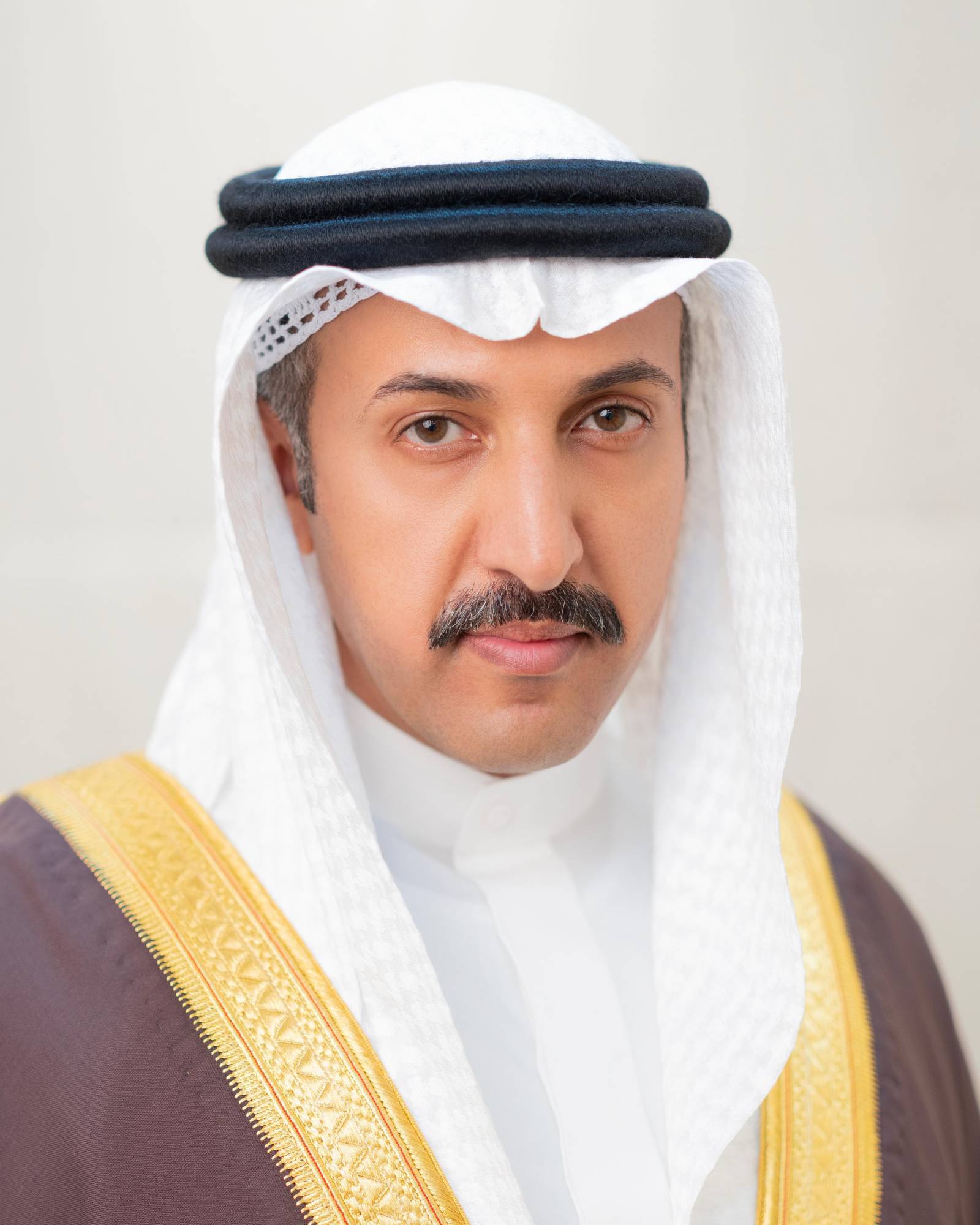
Bahraini Minister of Transportation and Telecommunications Dr. Sheikh Abdulla bin Ahmed Al Khalifa.

Concerning the project's announced completion rate, the minister explained that the 50 percent figure represents the average progress achieved across member states, and does not mean that half of the construction work for the entire Gulf network has been completed.

The project's cost estimates are currently undergoing review and updates in light of economic shifts, rising prices for materials and services, construction costs, and inflation, he revealed without specifying an updated total cost at the present time.

Returns beyond passenger and freight transport

Al Khalifa said that the economic impact of the project is not limited to facilitating passenger movement and freight transport, but extends to improving supply chain efficiency, boosting trade among GCC countries, and linking industrial centers, economic zones, and logistical hubs, as well as supporting employment and investment opportunities.

He added that determining the project's exact contribution to the gross domestic product (GDP) or estimating expected savings in time and costs remains premature, given that returns vary depending on transport routes, the nature of the cargo, and the points of origin and destination.

In light of the challenges facing maritime navigation in the region, the minister stressed that the Gulf railway network is not intended to serve as a substitute for maritime transport. Instead, it acts as a complementary route that boosts transport options and connectivity among GCC nations, increasing the resilience of supply chains against disruptions that could affect various modes of transportation.

He noted that integration between ports, roads, railways, and airports will strengthen the flexibility of the Gulf transport system, while connecting to broader international logistical corridors remains a future possibility contingent on completing studies, understandings, and coordination with the relevant countries and entities.

King Hamad Bridge to link Bahrain and Saudi Arabia

Regarding the connection between Bahrain and Saudi Arabia, Al Khalifa explained that the King Hamad Bridge project includes road lanes and railway lines, enabling the international passenger station in Bahrain to connect with the Saudi railway network and forming one of the essential components for completing the Gulf interconnection.

He added that work is underway on the privatization procedures for the King Fahd Causeway Authority, alongside completing the necessary studies and procedures to transition to the execution of the new bridge project.

Achieving the connection between Bahrain and Saudi Arabia is a fundamental requirement for operating the railway line between the two countries within the project's targeted timeframe in December 2030,e he said.


Egypt Seeks Faster Progress on Libya Gas, Refining and Power Projects

Egyptian Foreign Minister Badr Abdelatty speaks during a press conference with Minister of Information Diaa Rashwan (not pictured) in Cairo, Egypt, March 25, 2026. (Reuters)
TT

Egypt Seeks Faster Progress on Libya Gas, Refining and Power Projects

Egyptian Foreign Minister Badr Abdelatty speaks during a press conference with Minister of Information Diaa Rashwan (not pictured) in Cairo, Egypt, March 25, 2026. (Reuters)

Egypt aims to accelerate energy projects with Libya, including gas pipeline links, refining of Libyan crude in Egypt and an electricity interconnection, Egyptian Foreign Minister Badr Abdelatty said late on Saturday.

Abdelatty's comments were in ‌a ministry ‌statement after a meeting ‌with ⁠Libya’s acting oil ⁠and gas minister Khalifa Abdulsadek in Tripoli.

Abdelatty also ‌called for cooperation on petroleum products and the completion of projects to refine Libyan ‌oil in Egypt and re-export it, the statement said, ⁠adding ⁠that Abdulsadek had said that Libya would continue implementing existing projects and would visit Cairo soon to continue technical talks with Egypt’s petroleum and electricity ministers.

The statement did not provide details on costs or the status of the projects.


GCC: Railway Agreement Sets Joint Framework for Project Implementation and Operation

GCC transport ministers pose for a group photo following the 27th committee meeting in Kuwait. (GCC Railway Authority)
TT

GCC: Railway Agreement Sets Joint Framework for Project Implementation and Operation

GCC transport ministers pose for a group photo following the 27th committee meeting in Kuwait. (GCC Railway Authority)

Jasem Albudaiwi, secretary-general of the Gulf Cooperation Council (GCC), said on Sunday that the signing of the General Agreement on the GCC Railway Project marked an important step toward establishing an integrated regional transport network.

He said the network would facilitate the movement of citizens and residents, ease freight transport, boost intra-GCC trade efficiency and strengthen member states’ economic competitiveness and the region’s position in regional and international trade.

Albudaiwi's remarks came at the signing ceremony in the Bahraini capital, Manama, on Sunday, held under the patronage and in the presence of Bahrain’s Crown Prince and Prime Minister Salman bin Hamad Al Khalifa.

He said the project reflected the GCC’s shared ambition to connect member states and improve mobility and trade by linking their economic and industrial hubs, ports and logistics centers.

He added that the project would create opportunities for safe, reliable, affordable and environmentally friendly transport services that meet development needs, serve the aspirations of future generations and strengthen economic integration among GCC states.

Albudaiwi said the agreement sets a common framework for member states to implement and operate the project in coordination with their national railway networks, while establishing mechanisms and a timetable to accelerate its completion.

Albudaiwi praised GCC leaders and transport ministers for their support of strategic regional projects, thanking Bahrain’s crown prince and prime minister for hosting the signing ceremony and officials for advancing the railway project.