FILE PHOTO: A merchant counts Turkish lira banknotes at the Grand Bazaar in Istanbul, Turkey, March 29, 2019. REUTERS/Murad Sezer/File Photo
Turkey's economy is expected to shrink this year for the first time in more than a decade as the COVID-19 pandemic and related restrictions hit demand, according to a Reuters poll published on Friday.
The median forecast in a July 21-23 survey of 42 economists in and outside the country was for a contraction of 4.3% in 2020, with drops in the second and third quarters of 12.2% and 3.1% respectively. However, the Turkish economy is expected to grow next year by 4.5%, according to the median forecast.
"We are seeing a U-shaped recovery in the Turkish economy right now ... However, the uncertainties about a possible second wave of the outbreak necessitates a cautious approach to these economic recovery scenarios," said Enver Erkan, economist at Tera Yatirim.
There are downside risks to growth next year, Erkan said, adding that tensions between the US and China will have an impact too.
"I am not saying everything will be alright in 2021, we will be in a process of changing back," he noted.
The government had forecast 5% economic growth this year before the virus outbreak and has since maintained the economy could still grow this year, following a robust 4.5% expansion in the first quarter.
But economic activity declined sharply in the second quarter as Ankara shut schools and some businesses, closed borders and adopted weekend lockdowns to slow the spread of the coronavirus. It has started taking steps to re-open the economy since June.
Turkey's economy last contracted on an annual basis in 2009, by 4.7%. From 2010 to 2018, its average growth rate was more than 5%, mainly due to a construction boom driven by cheap capital following the global financial crisis.
According to Reuters, a currency crisis in 2018 was set off by concerns over central bank independence and tensions between Ankara and Washington. That led to three straight quarters of economic contraction and a modest annual growth rate of 0.9% last year.
Bahraini Transport Minister to Asharq Al-Awsat: Each Country to Finance Its Share of Gulf Railway Projecthttps://english.aawsat.com/business/5338994-bahraini-transport-minister-asharq-al-awsat-each-country-finance-its-share-gulf
Bahraini Transport Minister to Asharq Al-Awsat: Each Country to Finance Its Share of Gulf Railway Project
A conceptual rendering of the Gulf railway interconnection project. (X)
The Gulf Cooperation Council (GCC) member states took a new step toward completing the railway interconnection project by signing the project's general agreement in Bahrain on Sunday. This comes as part of efforts to establish an integrated transport network linking the six nations and boosting the movement of passengers, goods, and commercial trade among them.
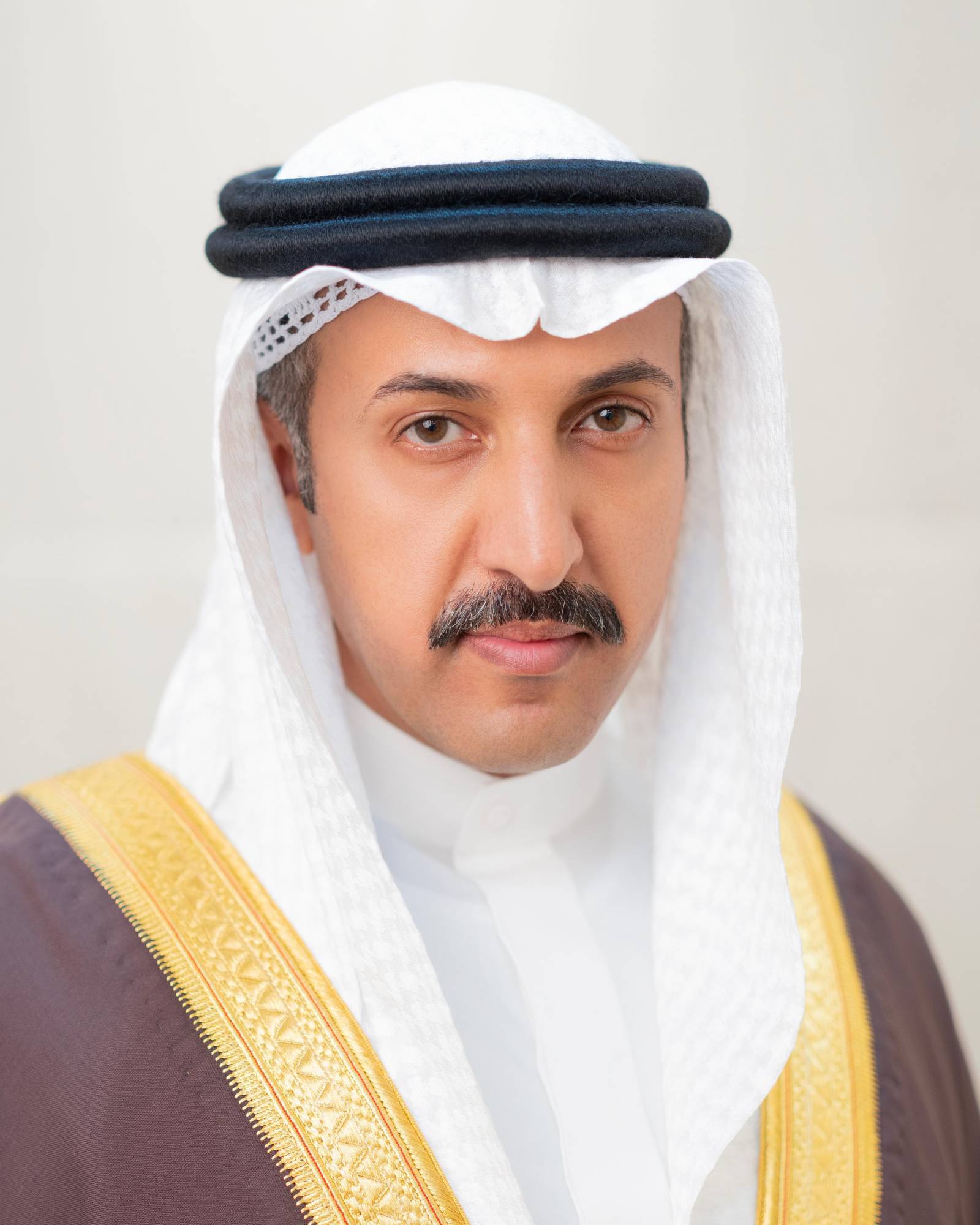
Bahraini Minister of Transportation and Telecommunications Dr. Sheikh Abdulla bin Ahmed Al Khalifa told Asharq Al-Awsat that each country will fund and execute the portion of the project located within its territory.
Meanwhile, the costs, fees, and expenses associated with the shared interconnection components among member states will be determined collectively, he added.
He explained that the agreement establishes a joint framework for the project's execution and operation, while defining the obligations of member states and their coordination mechanisms.
He noted that the network, which extends some 2,117 kilometers, aims to transport 6 million passengers and 200 million tons of freight by 2030, with the figures projected to rise to more than 8 million passengers and 271 million tons of freight by 2045.
The project spans from Kuwait, passing through Saudi Arabia, Bahrain, Qatar, and the UAE, all the way to Oman, with the goal of achieving full network operations by December 2030.
According to the minister, interconnection lines between adjacent countries can become operational as soon as their components are completed, without the need to wait for the entire Gulf network to be finalized.
National financing and potential partnerships
On private sector participation, Al Khalifa said that it remains one of the viable options for financing, executing, or operating certain components of the project, depending on the outcomes of economic and financial studies. He stressed that there is no unified public-private partnership model approved across the entire network.
There are currently no pre-existing agreements with specific international partners to finance or execute the project, he said. However, the expertise of global companies in the fields of design, engineering, technology, and operating systems could be utilized based on the project's needs and its various phases.
Bahraini Minister of Transportation and Telecommunications Dr. Sheikh Abdulla bin Ahmed Al Khalifa.
Concerning the project's announced completion rate, the minister explained that the 50 percent figure represents the average progress achieved across member states, and does not mean that half of the construction work for the entire Gulf network has been completed.
The project's cost estimates are currently undergoing review and updates in light of economic shifts, rising prices for materials and services, construction costs, and inflation, he revealed without specifying an updated total cost at the present time.
Returns beyond passenger and freight transport
Al Khalifa said that the economic impact of the project is not limited to facilitating passenger movement and freight transport, but extends to improving supply chain efficiency, boosting trade among GCC countries, and linking industrial centers, economic zones, and logistical hubs, as well as supporting employment and investment opportunities.
He added that determining the project's exact contribution to the gross domestic product (GDP) or estimating expected savings in time and costs remains premature, given that returns vary depending on transport routes, the nature of the cargo, and the points of origin and destination.
In light of the challenges facing maritime navigation in the region, the minister stressed that the Gulf railway network is not intended to serve as a substitute for maritime transport. Instead, it acts as a complementary route that boosts transport options and connectivity among GCC nations, increasing the resilience of supply chains against disruptions that could affect various modes of transportation.
He noted that integration between ports, roads, railways, and airports will strengthen the flexibility of the Gulf transport system, while connecting to broader international logistical corridors remains a future possibility contingent on completing studies, understandings, and coordination with the relevant countries and entities.
King Hamad Bridge to link Bahrain and Saudi Arabia
Regarding the connection between Bahrain and Saudi Arabia, Al Khalifa explained that the King Hamad Bridge project includes road lanes and railway lines, enabling the international passenger station in Bahrain to connect with the Saudi railway network and forming one of the essential components for completing the Gulf interconnection.
He added that work is underway on the privatization procedures for the King Fahd Causeway Authority, alongside completing the necessary studies and procedures to transition to the execution of the new bridge project.
Achieving the connection between Bahrain and Saudi Arabia is a fundamental requirement for operating the railway line between the two countries within the project's targeted timeframe in December 2030,e he said.
Egypt Seeks Faster Progress on Libya Gas, Refining and Power Projectshttps://english.aawsat.com/business/5338878-egypt-seeks-faster-progress-libya-gas-refining-and-power-projects
Egyptian Foreign Minister Badr Abdelatty speaks during a press conference with Minister of Information Diaa Rashwan (not pictured) in Cairo, Egypt, March 25, 2026. (Reuters)
TT
TT
Egypt Seeks Faster Progress on Libya Gas, Refining and Power Projects
Egyptian Foreign Minister Badr Abdelatty speaks during a press conference with Minister of Information Diaa Rashwan (not pictured) in Cairo, Egypt, March 25, 2026. (Reuters)
Egypt aims to accelerate energy projects with Libya, including gas pipeline links, refining of Libyan crude in Egypt and an electricity interconnection, Egyptian Foreign Minister Badr Abdelatty said late on Saturday.
Abdelatty's comments were in a ministry statement after a meeting with Libya’s acting oil and gas minister Khalifa Abdulsadek in Tripoli.
Abdelatty also called for cooperation on petroleum products and the completion of projects to refine Libyan oil in Egypt and re-export it, the statement said, adding that Abdulsadek had said that Libya would continue implementing existing projects and would visit Cairo soon to continue technical talks with Egypt’s petroleum and electricity ministers.
The statement did not provide details on costs or the status of the projects.
GCC: Railway Agreement Sets Joint Framework for Project Implementation and Operationhttps://english.aawsat.com/business/5338872-gcc-railway-agreement-sets-joint-framework-project-implementation-and-operation
GCC: Railway Agreement Sets Joint Framework for Project Implementation and Operation
GCC transport ministers pose for a group photo following the 27th committee meeting in Kuwait. (GCC Railway Authority)
Jasem Albudaiwi, secretary-general of the Gulf Cooperation Council (GCC), said on Sunday that the signing of the General Agreement on the GCC Railway Project marked an important step toward establishing an integrated regional transport network.
He said the network would facilitate the movement of citizens and residents, ease freight transport, boost intra-GCC trade efficiency and strengthen member states’ economic competitiveness and the region’s position in regional and international trade.
Albudaiwi's remarks came at the signing ceremony in the Bahraini capital, Manama, on Sunday, held under the patronage and in the presence of Bahrain’s Crown Prince and Prime Minister Salman bin Hamad Al Khalifa.
He said the project reflected the GCC’s shared ambition to connect member states and improve mobility and trade by linking their economic and industrial hubs, ports and logistics centers.
He added that the project would create opportunities for safe, reliable, affordable and environmentally friendly transport services that meet development needs, serve the aspirations of future generations and strengthen economic integration among GCC states.
Albudaiwi said the agreement sets a common framework for member states to implement and operate the project in coordination with their national railway networks, while establishing mechanisms and a timetable to accelerate its completion.
Albudaiwi praised GCC leaders and transport ministers for their support of strategic regional projects, thanking Bahrain’s crown prince and prime minister for hosting the signing ceremony and officials for advancing the railway project.
لم تشترك بعد
انشئ حساباً خاصاً بك لتحصل على أخبار مخصصة لك ولتتمتع بخاصية حفظ المقالات وتتلقى نشراتنا البريدية المتنوعة