


Tiktok and Wechat: Chinese Apps Dogged by Security Fears

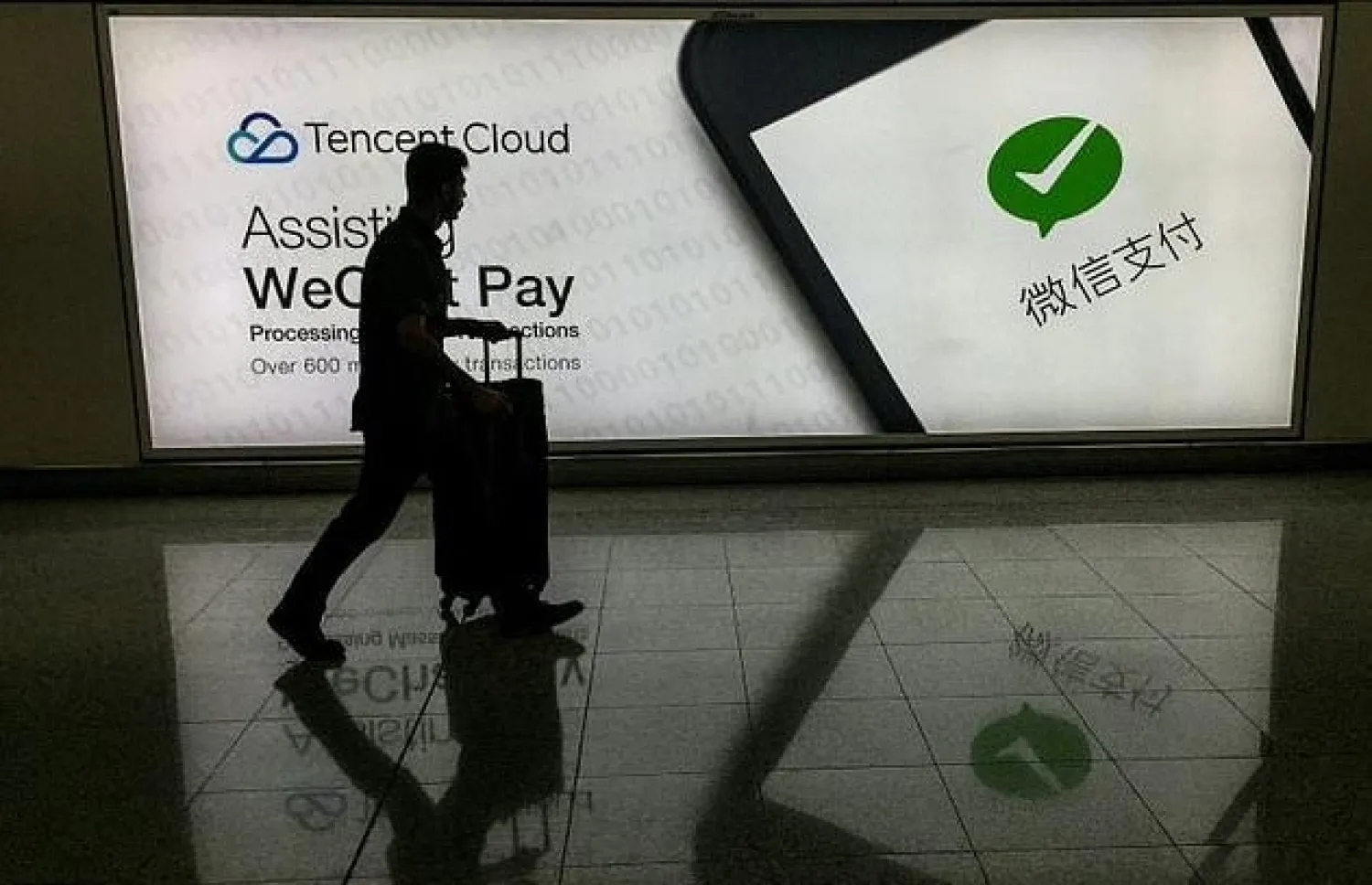
WeChat is used for everything from messaging to ride-hailing and mobile payments. AFP
TT

Tiktok and Wechat: Chinese Apps Dogged by Security Fears

WeChat is used for everything from messaging to ride-hailing and mobile payments. AFP

The United States has fired a new salvo in its rivalry with China, ordering sweeping restrictions against Chinese-owned social media stars TikTok and WeChat.

Here are some key facts about the platforms:

- What is WeChat? -

WeChat, known as "weixin" or micro-message in Chinese, belongs to tech giant Tencent and has grown to become ubiquitous in daily life across China since its 2011 launch.

It has more than a billion monthly users and is a "super app" used for everything from messaging to ride-hailing and mobile payments, while also serving as a social media platform.

Tencent surpassed Facebook's net worth after it became the first Asian firm to be valued at more than $500 billion in 2017, according to AFP.

The Hong Kong-listed company now has a market capitalisation of HK$5.32 trillion ($686 billion), compared with Facebook's $756 billion.

While WeChat is available in various languages, its main user base is in mainland China, where potential rivals such as Facebook's WhatsApp messaging service are barred from competing.

It is also a widely used among the Chinese diaspora, and foreigners doing business in the country, to keep in touch with people there.

Tencent has shares in many American companies, including electric-car maker Tesla, social media company Snap, and top games developers such as Riot Games, Epic Games and Activision Blizzard.

- Surveillance on WeChat -

WeChat has been dogged by privacy concerns.

The platform censors content for all users registered with Chinese phone numbers, even if they go abroad or switch to an international number, according to a University of Toronto study from 2016.

Another report from the same university in May said accounts not registered in China were also subject to "pervasive content surveillance".

Chinese authorities routinely censor online content and block Western websites such as Facebook, Twitter and the New York Times.

WeChat's privacy policy says the platform only shares user information "where necessary" with governments and law enforcement agencies.

- What is TikTok? -

TikTok features kaleidoscopic feeds of short user-made videos of anything from hair-dye tutorials to choreographed dance routines.

It belongs to Chinese tech firm ByteDance and targets the international market while Douyin, a domestic version of the platform, caters exclusively to Chinese users.

TikTok has been downloaded more than 2 billion times since its 2017 launch, according to data from US-based research agency SensorTower.

The app is most popular among teenagers but has found fresh popularity during coronavirus lockdowns around the world as adults look for new ways to pass the time.

It attracted huge followings in the United States, Indonesia and other countries, but it recently became one of 59 Chinese mobile apps banned by India over national security and privacy concerns.

- Distancing from China -

TikTok has in recent months sought to distance itself from its Chinese owners. It appointed former Disney executive Kevin Mayer, an American, as its new chief executive in May.

It also withdrew from Hong Kong shortly after China imposed a new security law on the city that gave police fresh powers to censor the internet -- a move that analysts said was an effort to avoid the suggestion it was a Chinese-controlled company.

But the app has nonetheless been accused of privacy breaches.

Trump previously set a deadline of mid-September for TikTok to be acquired by a US firm or be banned in the US.

Microsoft has expanded its talks on TikTok to a potential deal that would include buying the global operations of the fast-growing app, the Financial Times reported Thursday.



US Tech Giant Nvidia Announces India Deals at AI Summit

FILED - 04 February 2026, Bavaria, Munich: The NVIDIA logo is seen during a press conference at the opening of Telekom and NVIDIA's AI factory "Industrial AI Cloud". Photo: Sven Hoppe/dpa
TT

US Tech Giant Nvidia Announces India Deals at AI Summit

FILED - 04 February 2026, Bavaria, Munich: The NVIDIA logo is seen during a press conference at the opening of Telekom and NVIDIA's AI factory "Industrial AI Cloud". Photo: Sven Hoppe/dpa

US artificial intelligence chip titan Nvidia unveiled tie-ups with Indian computing firms on Wednesday as tech companies rushed to announce deals and investments at a global AI conference in New Delhi.

This week's AI Impact Summit is the fourth annual gathering to discuss how to govern the fast-evolving technology -- and also an opportunity to "define India's leadership in the AI decade ahead", organizers say.

Mumbai cloud and data center provider L&T said it was teaming up with Nvidia, the world's most valuable company, to build what it touted as "India's largest gigawatt-scale AI factory".

"We are laying the foundation for world-class AI infrastructure that will power India's growth," said Nvidia boss Jensen Huang in a statement that did not put a figure on the investment.

L&T said it would use Nvidia's powerful processors, which can train and run generative AI tech, to provide data center capacity of up to 30 megawatts in Chennai and 40 megawatts in Mumbai.

Nvidia said it was also working with other Indian AI infrastructure players such as Yotta, which will deploy more than 20,000 top-end Nvidia Blackwell processors as part of a $2 billion investment.

Dozens of world leaders and ministerial delegations have come to India for the summit to discuss the opportunities and threats, from job losses to misinformation, that AI poses.

Last year India leapt to third place -- overtaking South Korea and Japan -- in an annual global ranking of AI competitiveness calculated by Stanford University researchers.

But despite plans for large-scale infrastructure and grand ambitions for innovation, experts say the country has a long way to go before it can rival the United States and China.

The conference has also brought a flurry of deals, with IT minister Ashwini Vaishnaw saying Tuesday that India expects more than $200 billion in investments over the next two years, including roughly $90 billion already committed.

Separately, India's Adani Group said Tuesday it plans to invest $100 billion by 2035 to develop "hyperscale AI-ready data centers", a boost to New Delhi's push to become a global AI hub.

Microsoft said it was investing $50 billion this decade to boost AI adoption in developing countries, while US artificial intelligence startup Anthropic and Indian IT giant Infosys said they would work together to build AI agents for the telecoms industry.

Nvidia's Huang is not attending the AI summit but other top US tech figures joining include OpenAI's Sam Altman, Google DeepMind's Demis Hassabis and Microsoft founder Bill Gates.

Indian Prime Minister Narendra Modi and other world leaders including French President Emmanuel Macron and Brazil's Luiz Inacio Lula da Silva are expected to deliver a statement at the end of the week about how they plan to address concerns raised by AI technology.

But experts say that the broad focus of the event and vague promises made at previous global AI summits in France, South Korea and Britain mean that concrete commitments are unlikely.

Nick Patience, practice lead for AI at tech research group Futurum, told AFP that nonbinding declarations could still "set the tone for what acceptable AI governance looks like".

But "the largest AI companies deploy capabilities at a pace that makes 18-month legislative cycles look glacial," Patience said.

"So it's a case of whether governments can converge fast enough to create meaningful guardrails before de facto standards are set by the companies themselves."


India Eyes $200B in Data Center Investments as It Ramps Up Its AI Hub Ambitions

FILE -Google CEO Sundar Pichai, right, interacts with India's Minister for Information and Technology Ashwini Vaishnaw during Google for India 2022 event in New Delhi, Dec. 19, 2022. (AP Photo/Manish Swarup), File)
TT

India Eyes $200B in Data Center Investments as It Ramps Up Its AI Hub Ambitions

FILE -Google CEO Sundar Pichai, right, interacts with India's Minister for Information and Technology Ashwini Vaishnaw during Google for India 2022 event in New Delhi, Dec. 19, 2022. (AP Photo/Manish Swarup), File)

India is hoping to garner as much as $200 billion in investments for data centers over the next few years as it scales up its ambitions to become a hub for artificial intelligence, the country’s minister for electronics and information technology said Tuesday.

The investments underscore the reliance of tech titans on India as a key technology and talent base in the global race for AI dominance. For New Delhi, they bring in high-value infrastructure and foreign capital at a scale that can accelerate its digital transformation ambitions.

The push comes as governments worldwide race to harness AI's economic potential while grappling with job disruption, regulation and the growing concentration of computing power in a few rich countries and companies.

“Today, India is being seen as a trusted AI partner to the Global South nations seeking open, affordable and development-focused solutions,” Ashwini Vaishnaw told The Associated Press in an email interview, as New Delhi hosts a major AI Impact Summit this week drawing participation from at least 20 global leaders and a who’s who of the tech industry.

In October, Google announced a $15 billion investment plan in India over the next five years to establish its first artificial intelligence hub in the South Asian country. Microsoft followed two months later with its biggest-ever Asia investment announcement of $17.5 billion to advance India’s cloud and artificial intelligence infrastructure over the next four years.

Amazon too has committed $35 billion investment in India by 2030 to expand its business, specifically targeting AI-driven digitization. The cumulative investments are part of $200 billion in investments that are in the pipeline and New Delhi hopes would flow in.

Vaishnaw said India’s pitch is that artificial intelligence must deliver measurable impacts at scale rather than remain an elite technology.

“A trusted AI ecosystem will attract investment and accelerate adoption,” he said, adding that a central pillar of India’s strategy to capitalize on the use of AI is building infrastructure.

The government recently announced a long-term tax holiday for data centers as it hopes to provide policy certainty and attract global capital.

Vaishnaw said the government has already operationalized a shared computing facility with more than 38,000 graphics processing units, or GPUs, allowing startups, researchers and public institutions to access high-end computing without heavy upfront costs.

“AI must not become exclusive. It must remain widely accessible,” he said.

Alongside the infrastructure drive, India is backing the development of sovereign foundational AI models trained on Indian languages and local contexts. Some of these models meet global benchmarks and in certain tasks rival widely used large language models, Vaishnaw said.

India is also seeking a larger role in shaping how AI is built and deployed globally as the country doesn’t see itself strictly as a “rule maker or rule taker,” according to Vaishnaw, but an active participant in setting practical, workable norms while expanding its AI services footprint worldwide.

“India will become a major provider of AI services in the near future,” he said, describing a strategy that is “self-reliant yet globally integrated” across applications, models, chips, infrastructure and energy.

Investor confidence is another focus area for New Delhi as global tech funding becomes more cautious.

Vaishnaw said the technology’s push is backed by execution, pointing to the Indian government's AI Mission program which emphasizes sector specific solutions through public-private partnerships.

The government is also betting on reskilling its workforce as global concerns grow that AI could disrupt white collar and technology jobs. New Delhi is scaling AI education across universities, skilling programs and online platforms to build a large AI-ready talent pool, the minister said.

Widespread 5G connectivity across the country and a young, tech-savvy population are expected to help with the adoption of AI at a faster pace, he added.

Balancing innovation with safeguards remains a challenge though, as AI expands into sensitive sectors such as governance, health care and finance.

Vaishnaw outlined a fourfold strategy that includes implementable global frameworks, trusted AI infrastructure, regulation of harmful misinformation and stronger human and technical capacity to hedge the impact.

“The future of AI should be inclusive, distributed and development-focused,” he said.


Report: SpaceX Competing to Produce Autonomous Drone Tech for Pentagon 

The SpaceX logo is seen in this illustration taken, March 10, 2025. (Reuters)
TT

Report: SpaceX Competing to Produce Autonomous Drone Tech for Pentagon 

The SpaceX logo is seen in this illustration taken, March 10, 2025. (Reuters)

Elon Musk's SpaceX and its wholly-owned subsidiary xAI are competing in a secret new Pentagon contest to produce voice-controlled, autonomous drone swarming technology, Bloomberg News reported on Monday, citing people familiar with the matter.

SpaceX, xAI and the Pentagon's defense innovation unit did not immediately respond to requests for comment. Reuters could not independently verify the report.

Texas-based SpaceX recently acquired xAI in a deal that combined Musk's major space and defense contractor with the billionaire entrepreneur's artificial intelligence startup. It occurred ahead of SpaceX's planned initial public offering this year.

Musk's companies are reportedly among a select few chosen to participate in the $100 million prize challenge initiated in January, according to the Bloomberg report.

The six-month competition aims to produce advanced swarming technology that can translate voice commands into digital instructions and run multiple drones, the report said.

Musk was among a group of AI and robotics researchers who wrote an open letter in 2015 that advocated a global ban on “offensive autonomous weapons,” arguing against making “new tools for killing people.”

The US also has been seeking safe and cost-effective ways to neutralize drones, particularly around airports and large sporting events - a concern that has become more urgent ahead of the FIFA World Cup and America250 anniversary celebrations this summer.

The US military, along with its allies, is now racing to deploy the so-called “loyal wingman” drones, an AI-powered aircraft designed to integrate with manned aircraft and anti-drone systems to neutralize enemy drones.

In June 2025, US President Donald Trump issued the Executive Order (EO) “Unleashing American Drone Dominance” which accelerated the development and commercialization of drone and AI technologies.