Hardened Lebanese Merchants Battered by Beirut Blast

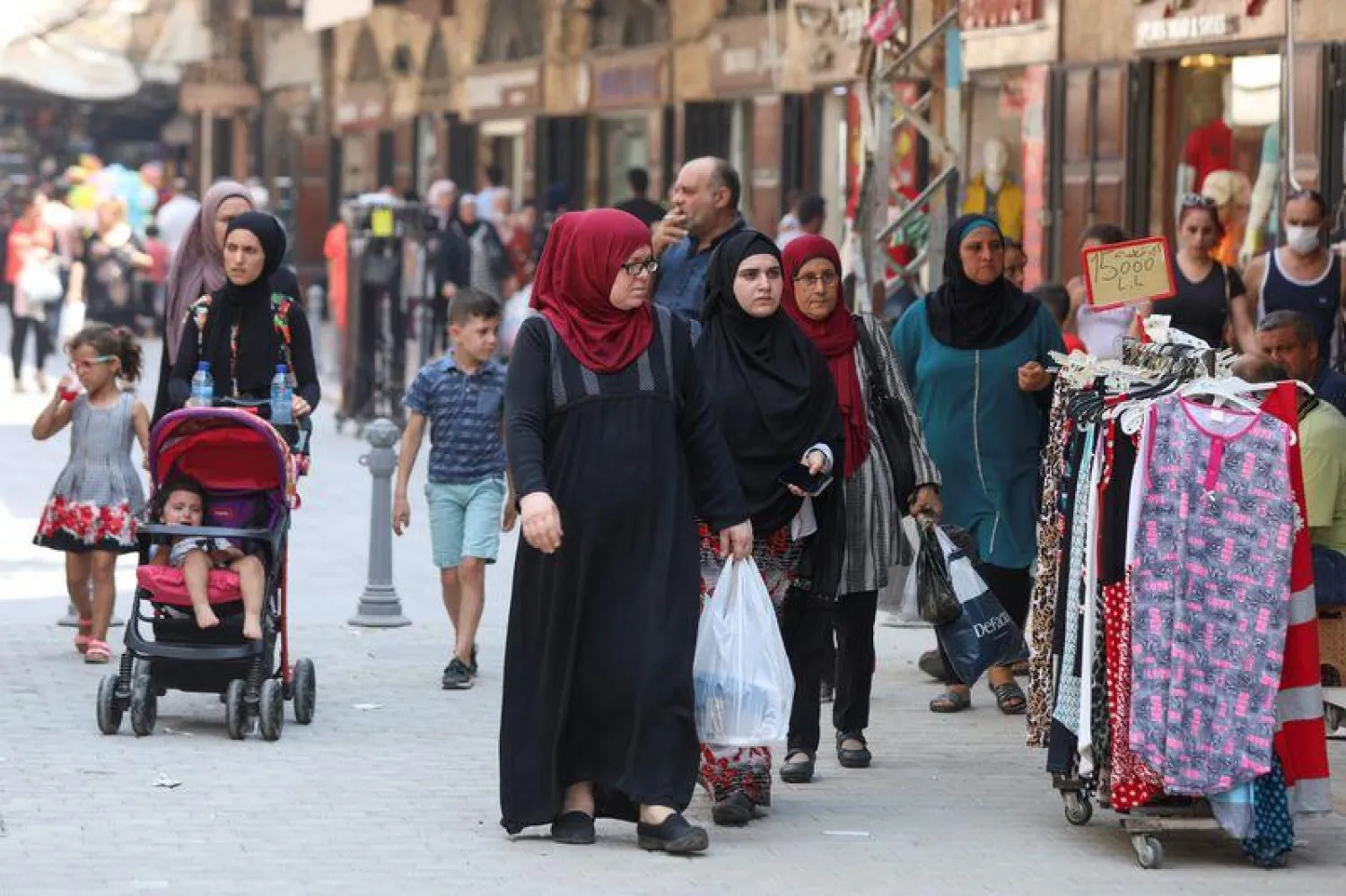
People walk at a souk ahead of the Eid al-Adha celebrations in Tripoli, northern Lebanon July 29, 2020. REUTERS/Mohamed Azakir
TT

Hardened Lebanese Merchants Battered by Beirut Blast

People walk at a souk ahead of the Eid al-Adha celebrations in Tripoli, northern Lebanon July 29, 2020. REUTERS/Mohamed Azakir

Sleep Comfort survived Lebanon's 15-year civil war. But nothing could have prepared the high-end family furniture business for the Beirut port blast that destroyed swathes of the capital.

Employees barely escaped glass shards which flew across the showroom, located in one of the hardest-hit districts. In an instant, one-third of the furniture stock was lost and the factory gutted, incurring some $600,000 in losses.

"I am only here for my father otherwise I would have left," said chief sales manager Jad Ayoub, Reuters reported.

"I would go anywhere."

The biggest blast in Beirut's history killed at least 170 people, injured 6,000 and triggered protests against a political elite blamed for political turmoil and economic collapse. Homes and businesses were razed in the country's commercial heart.

Authorities have said they will hold those responsible to account.

The Aug. 4 explosion dealt a catastrophic blow to everyone from mechanics to major food importers, already struggling amid a financial crisis that hammered the currency and sent unemployment soaring.

Beirut was built around its port, one of the region's busiest and for centuries a lifeline for Lebanon's merchant culture.

The blast badly damaged it, and while some shipping lines say they are resuming visits to its container terminal, traders and business owners say they have no visibility on what goods survived or when imports can resume.

"The government decided that anything in the port has to be analysed for ammonium nitrate residues ... Everything is at a standstill. There is nobody to answer us," said Hani Bohsali, general manager of Bohsali Foods SAL and president of Lebanon's food importers syndicate.

He said the 52 companies in the Syndicate of Importers of Foodstuffs, Consumer Products and Drinks could suffer losses of no less than $50-60 million.

"It is indeed a disaster. In case these goods were demolished (along with) a good part of my working capital, can I continue in the same volumes I used to before? Definitely not. Will the bank give me new credits? No, because of the financial crisis."

Lebanon imports nearly 85% of its food. It defaulted on its foreign currency debt in March, citing critically low reserves.

The government, which quit this week over the blast, had launched talks with the IMF for a bailout but they were put on hold due to an internal row over the scale of financial losses.

Authorities have said initial estimates show $15 billion in damages, a bill Lebanon cannot pay.

Insurance firms have taken a hit.

Ghassan Saab, vice chairman of Fidelity, said the company has received 500 claims for property and motor damages as well as those from political unrest running into the hundreds of millions of dollars.

"I doubt that all of the 60 insurance companies operating in Lebanon would survive the 2020 challenges which are the financial crisis, Covid-19 and the explosion," Saab said.

"Definitely, the government resignation will help, but the government is not enough. Lebanon needs a complete reform to recover."

According to Reuters, Foreign donors have linked any financial lifeline to the state to the enactment of long-demanded reforms.


IEA: The Age of Electricity is Coming, We Will Still Use Oil and Natural Gas

FILE PHOTO: A view of the logo of the International Energy Agency in Paris, France, December 15, 2023. REUTERS/Sarah Meyssonnier/File Photo
TT

IEA: The Age of Electricity is Coming, We Will Still Use Oil and Natural Gas

FILE PHOTO: A view of the logo of the International Energy Agency in Paris, France, December 15, 2023. REUTERS/Sarah Meyssonnier/File Photo

The concentration of a small number of countries in clean energy supply chains is an emerging challenge for Southeast Asian countries, International Energy Agency Executive Director Fatih Birol said on Tuesday, amid fast-rising power demand in the region.

"The age of electricity is coming. We will still use oil, still use natural gas including LNG, but electricity demand is growing very strongly," Birol told delegates at the Singapore International Energy Week conference.

Birol did not identify the countries dominating clean energy supplies, but China is by far the largest global supplier of renewable energy equipment, from solar panels ⁠to wind turbines, electric ⁠vehicles and batteries.

Electricity demand in ASEAN countries is rising at twice the pace of overall energy consumption, driven by industrial electrification, air-conditioning needs, electric vehicles and data centers, he said.

Southeast Asian nations have emerged as key drivers of China's clean-energy export boom, splashing out over $20 billion on Chinese-made clean-tech products so far in 2026, according ⁠to energy think tank Ember.

Birol also warned that geopolitical tensions have become an increasingly dominant force in global energy markets.

"In my professional life, I have never, never ever seen the dark and long shadow of geopolitics dominating the energy sector in such a way," Reuters quoted him as saying. "I can only imagine that the role of geopolitics will be much more pronounced, and this means energy security is going to become even more important than it is today."

Birol said the Middle East war has triggered fundamental changes in global energy consumption patterns, ⁠spurring growth in ⁠solar, coal and nuclear power as well as electric vehicle adoption.

"I see in the last eight months very strong growth of electric car sales," he said, adding that global electric vehicle sales outside China had risen 60% above previous trends over the period because of the conflict.

Consumption of alternative energy sources has increased as diesel prices have jumped about 200% and LNG prices have risen 250% from pre-war levels, according to Birol.

He said on Monday at the same conference that he does not expect energy markets in 2027 to return to where they were before the US-Israeli war on Iran began.


Cyprus Seals $1.8 Bn Deal to Develop First Commercial Gas Project

The Cypriot Cronos field in the Mediterranean is being developed by a joint venture between operator Eni and TotalEnergies (X)
TT

Cyprus Seals $1.8 Bn Deal to Develop First Commercial Gas Project

The Cypriot Cronos field in the Mediterranean is being developed by a joint venture between operator Eni and TotalEnergies (X)

Cyprus signed contracts worth $1.8 billion with Italian energy provider Eni on Monday to develop the Mediterranean island nation's first commercial gas project, with production slated for 2028 on the project in partnership with France's TotalEnergies.

European countries have stepped up efforts to use domestic energy resources with the Ukraine and Iran wars roiling global energy markets and supply in recent years.

The agreements to develop the field in Cyprus' exclusive economic zone cover engineering, construction, installation and drilling work, allowing natural gas to be transported to Egypt for processing and liquefaction before delivery mainly to European markets.

"Eni has signed the main engineering, procurement, construction and drilling contracts for the development of the Cronos Project, marking the start of the project's execution phase and a key milestone towards the monetization of Cyprus' first gas development," AFP quoted the Italian firm as saying in a statement.

"As Eni's first development project in Cyprus and the country's first hydrocarbon development, Cronos represents a strategic milestone."

Cypriot President Nikos Christodoulides in a statement hailed the agreement as a "decisive step towards exploiting our country's natural wealth.”

He said the contracts for the "first commercial exploitation of Cypriot natural gas" were worth up to $1.8 bn.

"It represents a strong vote of confidence in our country's energy prospects with significant geopolitical and economic implications," he added.

Cypriot Energy Minister Michalis Damianos said the project marked Cyprus' transition from offshore exploration and discoveries to developing and producing its gas reserves.

Kronos is estimated to contain more than three trillion cubic feet of natural gas.

Existing Egyptian infrastructure will be used, including facilities linked to the large Zohr gas field, with the gas to be liquefied at the Damietta terminal for export.

Using existing infrastructure is expected to reduce costs and accelerate the route to market, while deepening energy cooperation between Cyprus and Egypt.

"A regional value chain is being created that connects Cyprus's resources, Egypt's infrastructure and European demand," said Damianos.

Cyprus has discovered offshore gas but has not yet brought a field into commercial production.

Kronos is seen as a key test of its ability to turn those discoveries into exports.

Eni and Total hold the majority of exploration blocks -- seven of 13 south of the island -- licensed by the Cyprus government.

The eastern Mediterranean has become an energy hot spot, with significant natural gas finds off Israel and Egypt.


HSBC Shares Tumble 6% after Third-quarter Revenue Disappoints, Wealth Growth Slows

People alight from a tram outside the HSBC bank headquarters in Hong Kong on October 27, 2026, ahead of the bank's third quarter results announcement. (Photo by Peter PARKS / AFP)
TT

HSBC Shares Tumble 6% after Third-quarter Revenue Disappoints, Wealth Growth Slows

People alight from a tram outside the HSBC bank headquarters in Hong Kong on October 27, 2026, ahead of the bank's third quarter results announcement. (Photo by Peter PARKS / AFP)

HSBC's shares slid 6% on Tuesday after revenue undershot estimates and growth at its wealth business slowed, highlighting the challenge big banks face to sustain recent record profits.

Europe's largest bank reported a 32% surge in pretax profit to $9.6 billion for the July-September quarter, in line with estimates. But investors and analysts focused on the lack of upgrades to the bank's performance guidance and underwhelming third-quarter revenue of $18.6 billion against forecasts for $19 billion.

The drop in the bank's shares underscores how recent strong results from European lenders have increased investor expectations for performance, even as the impact of the Iran war on inflation and interest rates has created a tough environment for banks. The shares remain up 9% for the year to ⁠date.

HSBC also launched ⁠a share buyback of up to $1 billion, the same amount as the previous quarter and a move that had boosted shares in previous reporting periods but is now largely expected by investors.

"There is sometimes a market expectation that we upgrade guidance or targets," CFO Pam Kaur told reporters on a conference call when asked about the share drop.

According to Reuters, analysts noted that the bank's net interest income slightly missed expectations, while fee income from its key wealth growth pillar was steady but ⁠unspectacular.

Escalating deposit competition in Hong Kong and the UK, HSBC's two core markets, are expected to push up interest expenses, they said. Time deposits in the bank's Hong Kong portfolio rose two percentage points quarter-on-quarter to 38%, but Jefferies analysts noted that the shift to chase higher deposits by offering higher interest rates is expected to erode margins.

Revenue for HSBC's wealth division was flat at $2.7 billion. That compared with 15% and 23% year-on-year revenue growth in the first two quarters.

The performance of HSBC's wealth business is under particular scrutiny because the British bank, like its peers, is focusing growth on fee-generating businesses such as wealth management as lending comes under pressure from falling interest rates.

Analysts warned that Asia-focused banks are bracing for a slowdown in wealth momentum ⁠following robust gains driven ⁠by Chinese capital inflows.

Kaur said on the call that China's tightening of wealth flows has prompted clients to shift from other banks in Hong Kong to HSBC.

"We picked up more business."

HSBC benefited from the absence of legal provisions booked in the same quarter a year earlier. It also said expected credit losses tumbled 17% to $800 million, thanks to a reduction in charges linked to Hong Kong's real estate sector as well as its UK and Mexican wealth businesses.

British banks' strong recent results have prompted calls from trade unions and activist groups for tax hikes on the sector in finance minister John Healey's first budget, due on Wednesday.

Bank bosses have lobbied hard to avoid such an increase in sector levies, arguing it would curb lending and make Britain less competitive.

HSBC announced an interim dividend of $0.1 per share, the same as the previous quarter.