Members of security forces are seen during a security deployment in Sirte, Libya August 17, 2020. REUTERS/Esam Omran Al-Fetori
Libya's warring rival governments announced in separate statements Friday that they would cease all hostilities and organize nationwide elections soon, an understanding swiftly welcomed by the United Nations and Egyptian President Abdel Fattah al-Sisi.
The statements were signed by Fayez al-Sarraj, head of the Government of National Accord based in the capital Tripoli, and Aguila Saleh, speaker of the eastern-based parliament.
Sarraj, who heads the Presidential Council, said parliamentary and presidential elections would be held in March.
Both statements called for demilitarizing the city of Sirte and the Jufra area in central Libya, and a joint police force to be responsible for security there.
Both administrations also called for oil revenues to flow into the bank account of the National Oil Corporation outside Libya.
The announcements came amid fears of an escalation in the more than 9-year-old conflict.
The UN Support Mission in Libya welcomed both statements, and called for the expulsion of all foreign forces and mercenaries in Libya.
Among the first to react to Friday’s announcement was al-Sisi, who welcomed the ceasefire declarations.
"I welcome statements by Libya's Presidential Council and the House of Representatives calling for a ceasefire and halting military operations in all Libyan territory," Sisi said in a tweet.
Israel to Close All Land Crossings with West Bank on Election Dayhttps://english.aawsat.com/arab-world/5333333-israel-close-all-land-crossings-west-bank-election-day
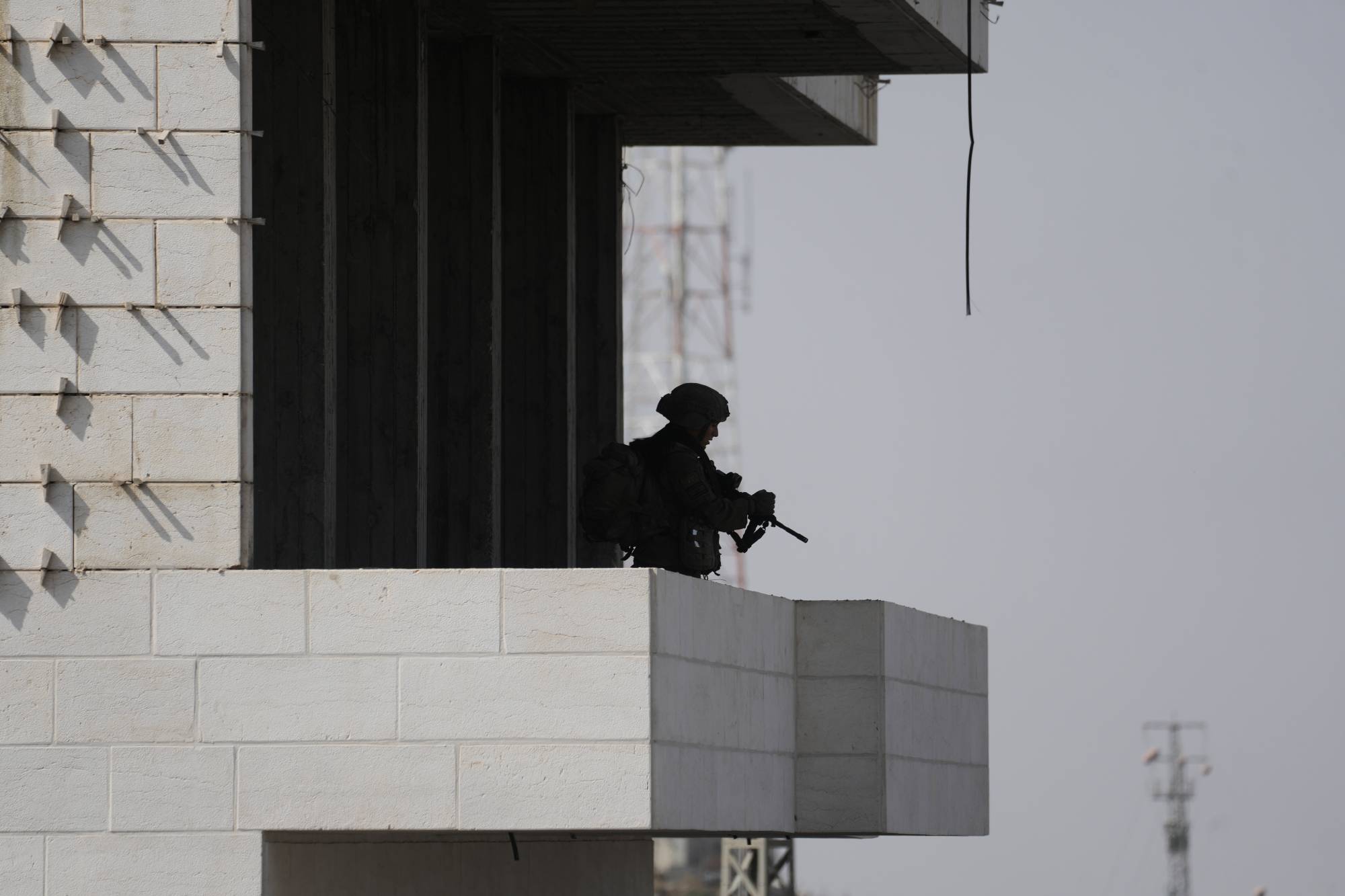
Israeli soldiers stand guard at the site of a shooting on Friday in Hebron, in the Israeli-occupied West Bank, October 24, 2026. (Reuters)
TT
TT
Israel to Close All Land Crossings with West Bank on Election Day
Israeli soldiers stand guard at the site of a shooting on Friday in Hebron, in the Israeli-occupied West Bank, October 24, 2026. (Reuters)
Israel said Sunday all land crossings with the West Bank will be closed on the day of next week's election, as it pledged a harder line on militancy after Palestinian gunmen killed two soldiers in the territory.
The announcement came a day after Israeli forces pushed into the occupied West Bank city of Hebron and displaced around 2,000 residents, with Defense Minister Israel Katz saying, "they will not be allowed to return... until we've finished dealing with all the Hamas issues in Hebron".
Hamas, while not claiming credit, hailed Friday's killings at a checkpoint near the Palestinian city, in which attackers shot dead two Israeli soldiers and wounded three more.
Prime Minister Benjamin Netanyahu vowed to exact a heavy price for the attack just days before polls and said he was planning an operation on a scale not seen since Israel first occupied the West Bank in 1967.
The Israeli army said that, from Sunday, Palestinians would "not be permitted to enter Israeli communities in Judea and Samaria and the Jordan Valley for work", using terms many in Israel use to refer to the West Bank.
Israeli soldiers take up positions during an army operation in the West Bank city of Hebron Saturday, Oct. 24, 2026. (AP)
The army also said it would enforce "a ban on the entry and exit of Palestinian workers throughout Judea and Samaria and the Jordan Valley, including industrial zones, as well as the closure of all land crossings throughout Election Day" on October 27, it added.
Israel's longest serving prime minister Netanyahu is facing a tight race for a new term in Tuesday's polls, with his security-first reputation all but shattered by Hamas's October 7, 2023 attack.
The Palestinian Authority, the semi-autonomous body that governs parts of the West Bank in cooperation with Israel, called for international pressure on Israel to protect residents affected by the military operation.
The Israeli army said that over Friday and Saturday, it operated in 40 areas throughout the territory, with locals reporting that soldiers announced evacuations over loudspeakers late at night.
Israeli forces said they "apprehended approximately 40 suspects, including terrorists affiliated with the Hamas and Islamic Jihad terrorist organizations".
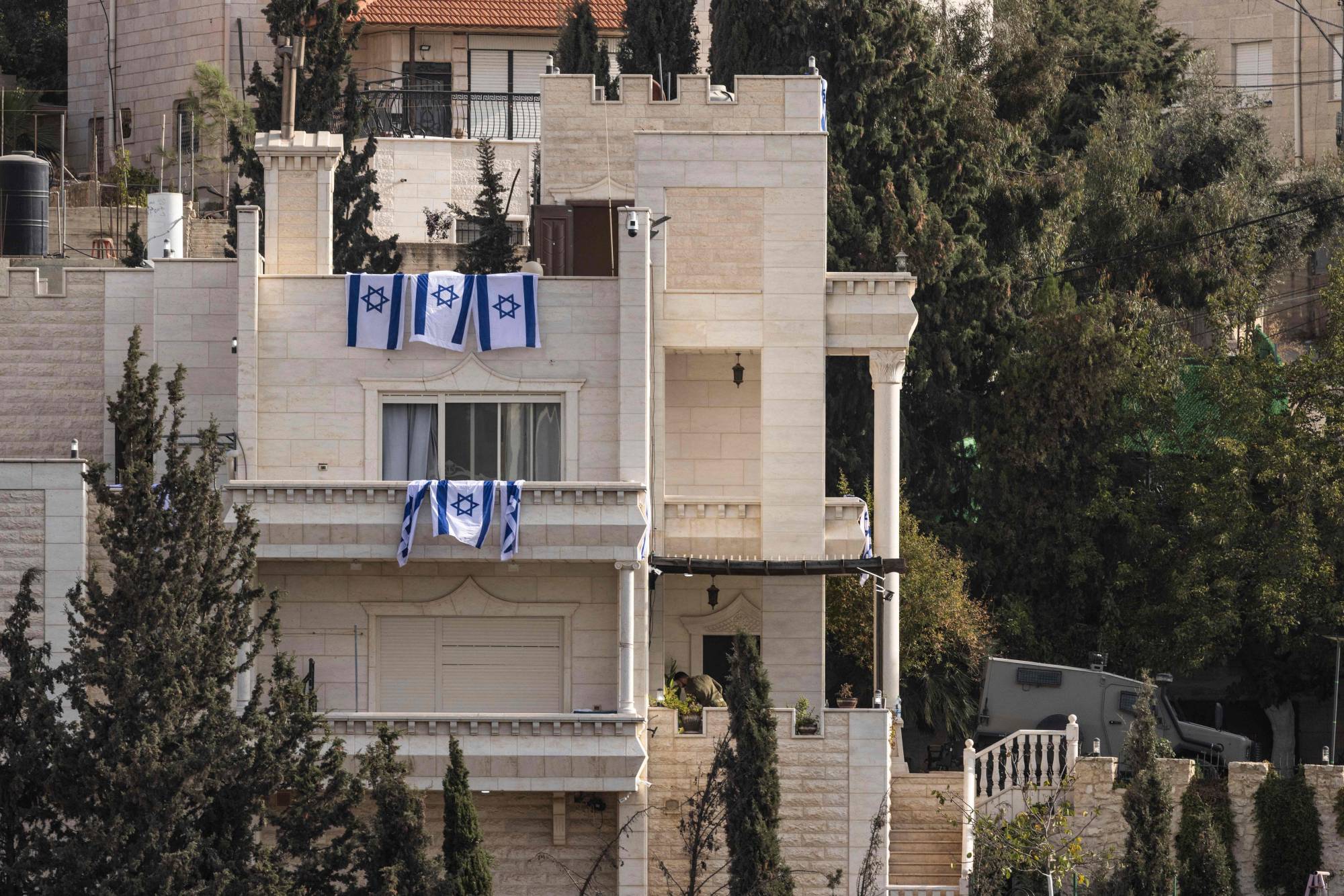
Israeli flags hang from a house after the Israeli army forced Palestinians to evacuate the Ein Deir Baha neighborhood in occupied West Bank city of Hebron on October 24, 2026. (AFP)
- 'Painful price' -
In the Hebron neighborhood of Ein Deir Baha, nestled between two hills, vacated buildings were marked by X's and the streets were deserted, save a pair of Israeli military vehicles.
Israeli flags were draped on a house on the slope apparently taken over by troops.
Higazi Shawer al-Tamimi, 70, a shopkeeper who plays a leadership role in the neighborhood, said he was awakened at 1:00 am by soldiers and a senior officer who said he had to leave.
"I asked them how long the evacuation would last. They said: 'Until further notice.'"
He told AFP he had only a short time to pack, adding that for some residents, getting out of the neighborhood was an ordeal.
"For example, my wife's mother, who is 90 years old and lives in the area, had to be carried out because she is ill," he said.
Right-wing Finance Minister Bezalel Smotrich, who also holds a position in the defense ministry overseeing civilian affairs in the West Bank, said he personally ordered "the immediate demolition of a row of illegal structures" following Friday's shooting.
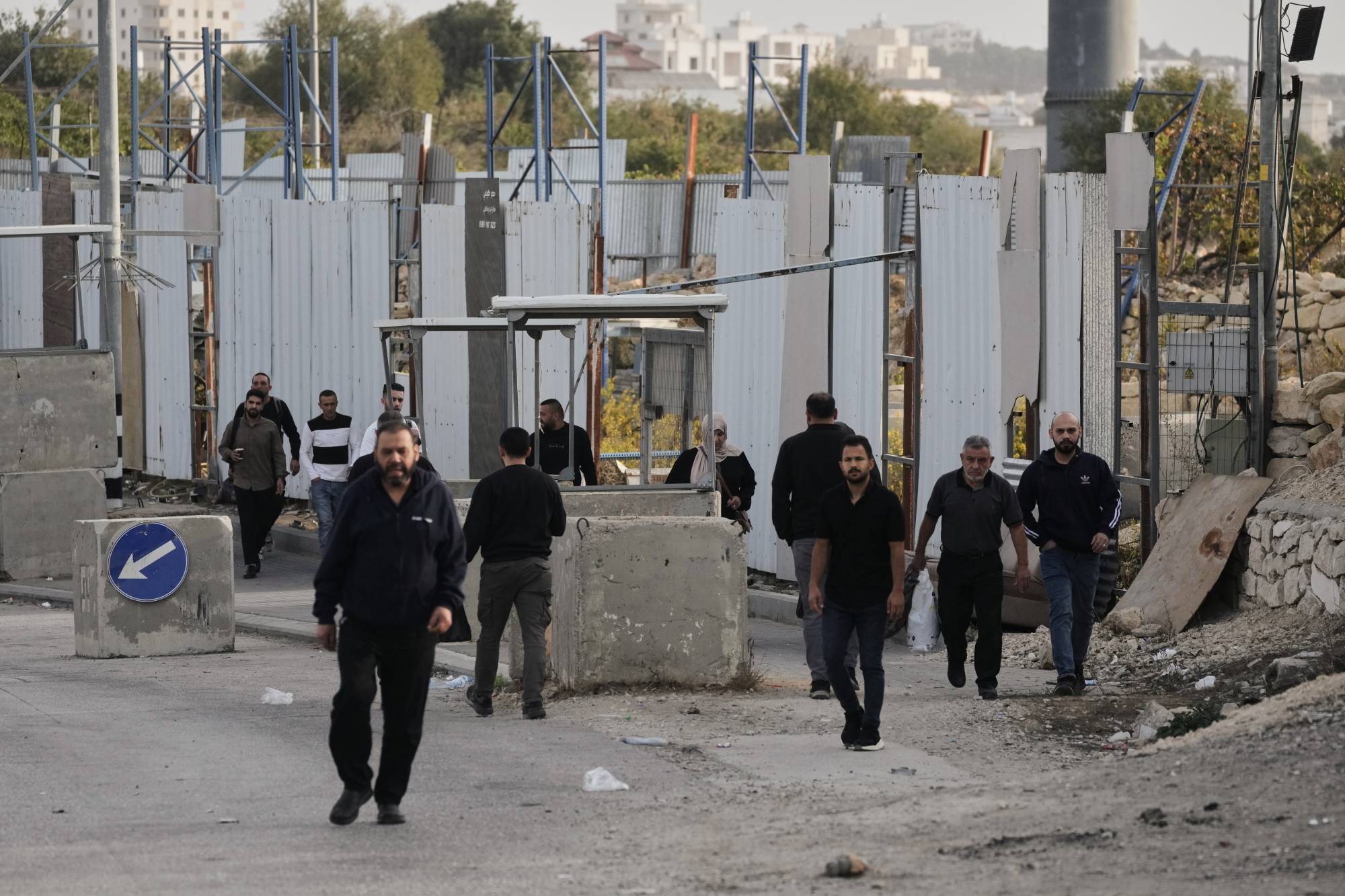
Palestinians cross on foot past a military gate closed to vehicles during an Israeli army operation in Hebron in the occupied West Bank Saturday, Oct. 24, 2026, a day after a Palestinian shooting attack in the area. (AP)
"Anyone who messes with us will quickly understand that he will pay a painful price," he wrote on X.
To Tamimi, the West Bank operation is only happening because Netanyahu wants to win the election on "the blood of the Palestinian people".
He said people were not going anywhere. "I have lived through all the stages of the occupation, and I will die here."
But Tamimi's brother, Khaled Shawer al-Tamimi, 68, said he and his son left after the evacuation order rang out.
"The army was announcing through loudspeakers: 'Leave the area.' So we left."
He told AFP he was surprised to hear Friday's assailants came from the neighborhood, which he described as middle-class and law-abiding.
"We have never seen or even heard a single gunshot being fired," he said from his son's sitting room as children flitted about.
The Israeli military said the operation would last several days, but Netanyahu suggested bigger action was coming.
Tehran Strikes Iranian Kurdish Base in Iraq with Droneshttps://english.aawsat.com/arab-world/5333328-tehran-strikes-iranian-kurdish-base-iraq-drones
A Kurdish peshmerga fighter affiliated with the Iranian Kurdistan Democratic Party (KDP-Iran) stands guard on a building following an Iranian cross-border attack in the town of Koye (Koysinjaq), 100 km east of Erbil, the capital of the autonomous Kurdish region of northern Iraq on October 1, 2022. (AFP)
TT
TT
Tehran Strikes Iranian Kurdish Base in Iraq with Drones
A Kurdish peshmerga fighter affiliated with the Iranian Kurdistan Democratic Party (KDP-Iran) stands guard on a building following an Iranian cross-border attack in the town of Koye (Koysinjaq), 100 km east of Erbil, the capital of the autonomous Kurdish region of northern Iraq on October 1, 2022. (AFP)
Iran's armed forces attacked bases belonging to an Iranian Kurdish opposition group in Iraq's Kurdistan region using drones, a media outlet in Tehran reported on Sunday.
"As part of a drone operation carried out by the Revolutionary Guards' ground forces, the headquarters of the terrorist and separatist group Komala, located in the Balisan region, was targeted last night," the Mehr news agency said.
The semi-autonomous region hosts camps and bases belonging to several groups of Iranian Kurdish militants, which Iran has targeted repeatedly since the start of the Middle East war in February.
The Revolutionary Guards have not immediately claimed responsibility for the strikes on these fighters, whom Iran accuses of being supported by Israel, its sworn enemy.
In the most deadly recent attack, nine Komala members were killed on July 17 near the city of Sulaymaniyah.
Iraq to Rehabilitate Border Crossing with Saudi Arabiahttps://english.aawsat.com/arab-world/5333324-iraq-rehabilitate-border-crossing-saudi-arabia
Iraq to Rehabilitate Border Crossing with Saudi Arabia
The al-Jamima border crossing with Saudi Arabia. (INA)
Iraqi Prime Minister Ali al-Zaidi has approved funding for the construction of facilities and buildings at the al-Jamima border crossing with Saudi Arabia. The move aims to complete the requirements for its expected opening in 2027 and boost trade ties between the two neighbors.
In a statement on Saturday, Governor of Al-Muthanna Tawfiq Al-Hassani said that rehabilitating the highway linking the city of Samawah to the border crossing with Saudi Arabia, alongside the construction of its facilities, will help stimulate trade activity and boost the local economy.
The project will also enable the governorate to benefit from border crossing revenues in accordance with established legal frameworks, he added.
The local government, in cooperation with the provincial council, is working to complete the requirements necessary to operate the crossing, he said, noting its economic and developmental significance for al-Muthanna.
Former MP Haider al-Mulla said the move reflects the Iraqi government's efforts to build economic relations with neighboring Arab and non-Arab countries through trade, energy, and transportation.
Al-Mulla added that developing relations with Saudi Arabia, Türkiye, and Syria through economic cooperation and energy transit serves Iraq's interests.
Iraq and Saudi Arabia are linked through the Arar border crossing, located within the boundaries of al-Anbar Governorate, which was reopened in 2020 after a closure lasting about 29 years. Al-Jamima crossing, located in the desert of al-Muthanna Governorate, is historically considered one of the main pilgrimage routes.
In a related context, a local official in the Najaf Governorate announced that the security situation in the border areas with Saudi Arabia is stable, saying that no breaches have been recorded along the border fence.
In an interview with state television on Friday, PM al-Zaidi said that Baghdad is keen to "establish good relations with Saudi Arabia and Gulf countries."
لم تشترك بعد
انشئ حساباً خاصاً بك لتحصل على أخبار مخصصة لك ولتتمتع بخاصية حفظ المقالات وتتلقى نشراتنا البريدية المتنوعة