


Houthi Attacks Displace 10,000 Yemenis From Marib Outskirts

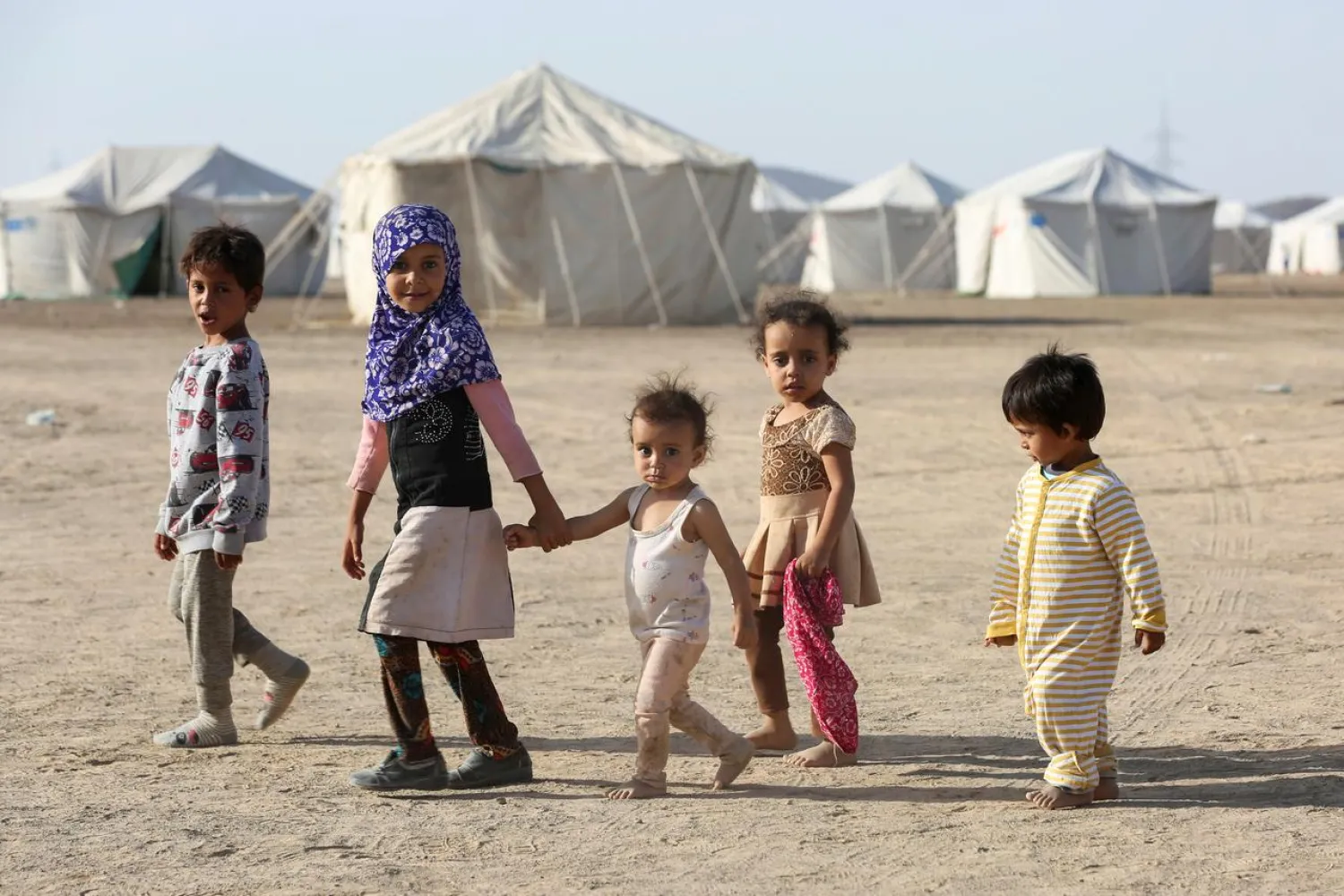
Children walk at a camp for people recently displaced by fighting in Yemen's northern province of al-Jawf between government forces and Houthis, in Marib, Yemen March 8, 2020. Picture taken March 8, 2020. REUTERS/Ali Owidha
TT

Houthi Attacks Displace 10,000 Yemenis From Marib Outskirts

Children walk at a camp for people recently displaced by fighting in Yemen's northern province of al-Jawf between government forces and Houthis, in Marib, Yemen March 8, 2020. Picture taken March 8, 2020. REUTERS/Ali Owidha

Houthi militias have not only displaced thousands of Yemenis over the past years but also targeted those displaced in the camps on the outskirts of Marib governorate with missiles, creating a new wave of displacement to Marib city.

The Government of Yemen's Executive Unit for Internally Displaced Persons issued a report on this and affirmed that more than 1,500 families, equal to 10,000 people, were forced to flee again from Mudghal district in Marib’s outskirts to its capital and other government-controlled districts as a result of Houthi attacks.

According to the report, of which Asharq Al-Awsat has obtained a copy, Raghwan district in northwestern Marib has hosted thousands of displaced people from the conflict areas in Majzar and Naham districts.

The total number of internally displaced persons has amounted to more than 20,000, the report noted.

“Due to the clashes and the intensified battles, thousands of families were forced to flee from their homes. Some were displaced for the second time and others for the third time.”

Some fled on feet and were displaced to the districts of Sirwah, Medina, and Wadi, while others were displaced to nearby locations within the directorate itself, the report indicated.

It recalled the first tragedy resulting from the torrents that swept away some camps in all directorates of the governorate, with the absence of any intervention by the humanitarian partners in the district.

It further pointed out that the meteorology department expects heavy rains in the coming days and fears a new tragedy for the displaced in the governorate directorates.

The Executive Unit’s field monitoring and evaluation team hastened to monitor the recent displacement to know the whereabouts of those displaced. It requested its partners to respond quickly to provide them with all their needs, in terms of shelter and non-food items.

It set toilets, provided water tanks and hygiene bags, and asked the Food Security Bloc to direct partners to respond rapidly and cover the needs of the displaced, including food baskets.


Meeting between al-Zaidi, Trump Raises Questions in Baghdad

Iraqi Prime Minister Ali al-Zaidi meets with US President Donald Trump in New York on September 23, 2026. (Iraqi government)
TT

Meeting between al-Zaidi, Trump Raises Questions in Baghdad

Iraqi Prime Minister Ali al-Zaidi meets with US President Donald Trump in New York on September 23, 2026. (Iraqi government)

A meeting between US President Donald Trump and Iraqi Prime Minister Ali al-Zaidi in New York has raised questions due to the complete absence of the Iraqi delegation, coming just one day after Baghdad’s announcement that it would complete the plan to impose state monopoly over arms in June 2027.

The plan was supposed to be complete by the end of September, but it was postponed to next year.

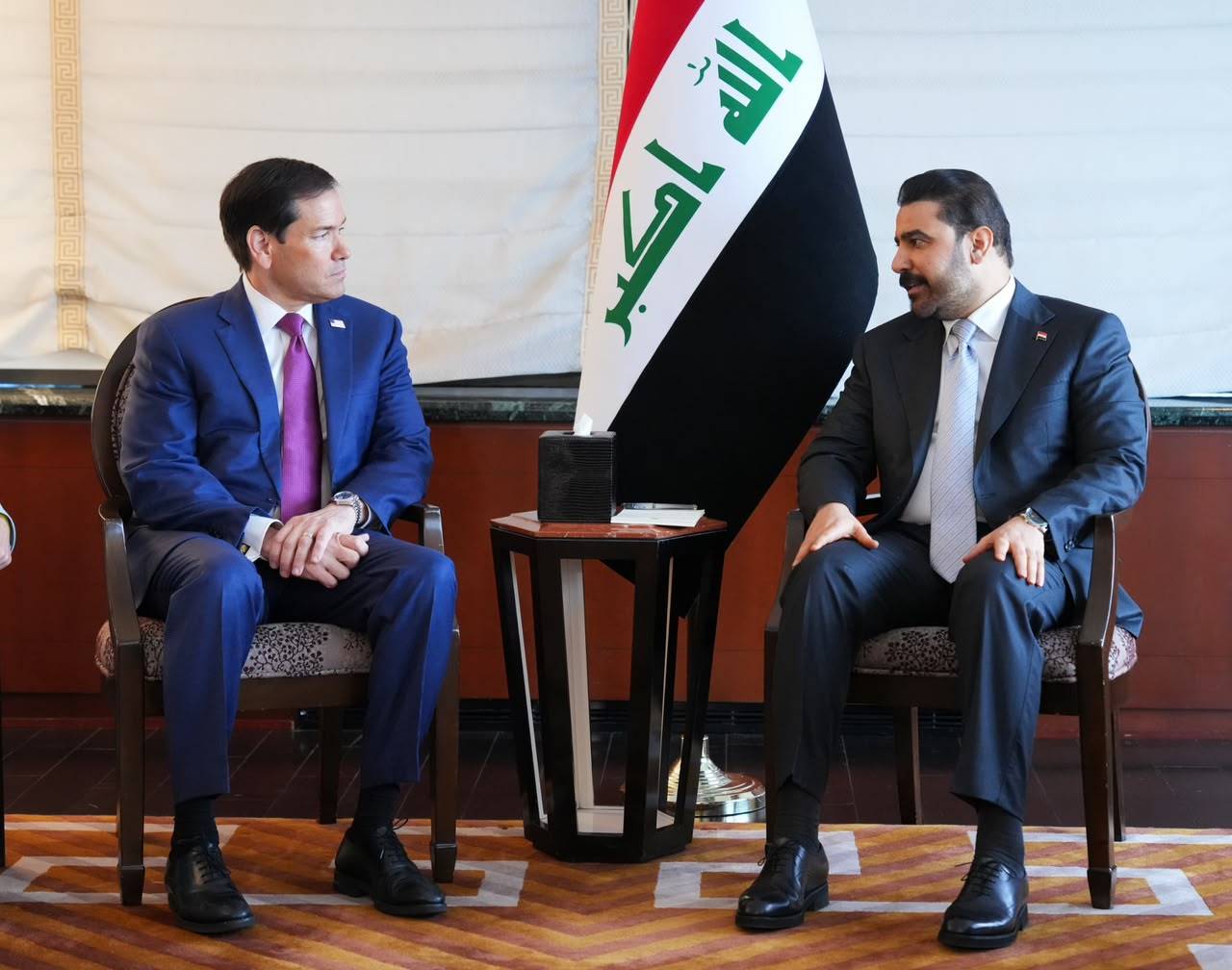
A photograph released by the Iraqi government's media office on Wednesday showed al-Zaidi alone during the meeting, which was attended by Trump alongside senior US administration officials, including US Secretary of State Marco Rubio and Treasury Secretary Scott Bessent.

Al-Zaidi's office said that he discussed with Trump efforts by Iraq and the US to boost regional and international security and stability.

The government offered no explanation about the absence of the Iraqi delegation, which included the ministers of foreign affairs, finance, and electricity, and other officials.

Iraqi observers said al-Zaidi attended the meeting alone due to American suspicions that the discussions may be leaked to other delegation members, who are members of the Iran-aligned Coordination Framework coalition.

An Iraqi politician close to the State Administration coalition said the way the meeting was held “reflects American unease, especially by Trump, over the stalled process to impose state monopoly over weapons.”

According to official statements, September 30 will not mark the completion of the arms control process, but it will instead serve as the launching point for a new phase extending until June 2027.

Iraqi Prime Minister Ali al-Zaidi meets with US Secretary of State Marco Rubio in New York. (Iraqi government)

Al-Zaidi has evidently managed to convince the Americans to grant an additional grace period for the arms control plan, particularly after the new deadline was backed by US envoy to Iraq Tom Barrack.

Independent Iraqi politician Salah al-Arbawi said it remains to be seen whether the timetable that will be announced at the end of the month will tip the balance in favor of any political parties in the dispute over the factions’ weapons.

In remarks to Asharq Al-Awsat, he said the political parties must handle the factions’ weapons “rationally and calmly.”

He noted that al-Zaidi has managed to restore his control over the plan after it encountered obstacles in recent weeks.

Experts believe that recent discussions on the amendment of the arms control plan could turn into an opportunity to improve Iraqi-American relations.

Researcher Abbas Abboud said that the Iraqi-American relationship is being “restructured” by Barrack.

Baghdad’s relations with Washington’s allies in the region hinge on “decoupling Iraq from Iran”, he told Asharq Al-Awsat.

US Secretary of State Marco Rubio had issued a direct warning to Baghdad to "disarm the militias to avoid the balkanization of Iraq."

Rubio underlined US support for al-Zaidi's government in its efforts to consolidate state authority, urging the need to dismantle armed factions.


Lebanon PM Tells Iran President Country Cannot Be Arena for Regional Wars

Lebanese Prime Minister Nawaf Salam and Iranian President Masoud Pezeshkian meet on the sidelines of the UN General Assembly in New York. (NNA)
TT

Lebanon PM Tells Iran President Country Cannot Be Arena for Regional Wars

Lebanese Prime Minister Nawaf Salam and Iranian President Masoud Pezeshkian meet on the sidelines of the UN General Assembly in New York. (NNA)

Lebanese Prime Minister Nawaf Salam told Iranian President Masoud Pezeshkian on Thursday that his country did not want to be an arena for regional wars, after Tehran-backed Hezbollah drew it into the Middle East conflict.

Lebanon has repeatedly accused Iran of interfering in its affairs, especially since the start of the latest war, saying that Tehran was using it as a "bargaining chip" in talks with the United States.

Salam's office said in a statement that he met with Pezeshkian on the sidelines of the United Nations General Assembly in New York.

Salam "stressed that Lebanon has paid a heavy price in terms of its security, stability and economy, and that it does not want to become an arena for regional conflicts or a venue for the exchange of messages between others", it said.

Hezbollah dragged Lebanon into the broader Middle East war, which began with Israeli-US strikes on Iran, by attacking Israel in support of Tehran on March 2.

Israel responded with major airstrikes and a ground invasion that killed more than 4,300 people.

The war followed a 2023-2024 conflict between Hezbollah and Israel, which started when the group attacked Israel in support of its ally Hamas in the Gaza Strip.

Violence declined following a June framework agreement between Lebanon and Israel and a wider US-Iran deal, but Israel has continued to carry out attacks on its northern neighbor.

Salam said his country looked forward "to turning a new page" in its ties with Iran.

He called for "building a sound state-to-state relationship based on mutual respect for each country's sovereignty and independence, non-interference in each other's affairs and shared interests".

Salam said the priority was for "Israel to fully withdraw from Lebanese territory and cease its attacks, and for Lebanon to move forward with extending the authority of the Lebanese state over all of its territory".

He said Lebanon needed to ensure "that weapons are held exclusively by the state", in a jab at Hezbollah, which has so far refused to lay down its arms.

In an interview with AFP last week, Lebanese President Joseph Aoun said bilateral relations "must be based on mutual respect and non-interference".


US to Hand Over Center at Baghdad Airport, Says Iraqi FM

A man walks past a billboard displaying the Iraqi flag in Baghdad's central Tahrir Square on September 22, 2026. (AFP)
TT

US to Hand Over Center at Baghdad Airport, Says Iraqi FM

A man walks past a billboard displaying the Iraqi flag in Baghdad's central Tahrir Square on September 22, 2026. (AFP)

The United States will transfer to Iraq a diplomatic and logistics hub at Baghdad airport that was repeatedly targeted by Iran-backed groups during the Middle East war, the foreign ministry said Thursday.

It said an agreement was signed with the US charge d'affaires Steven Fagin "to hand over the diplomatic support center affiliated with the US embassy at Baghdad International Airport to the Iraqi government".

The move, it added, was part of efforts to end the US-led coalition's military presence in Iraq, with the remaining troops set to complete their exit by September 30.

For years, Iran-backed armed groups that have long called for the withdrawal of foreign troops have targeted US facilities and coalition forces in Iraq.

During the Middle East war, those groups targeted US sites more than 600 times, including the Baghdad airport facility.

An Iraqi security official and a diplomatic source told AFP earlier this month that US troops have already evacuated the site.

Baghdad and Washington agreed in 2024 to end the coalition's mission against the ISIS group in Iraq.

Coalition forces are now only present at Erbil airport after having withdrawn from other bases.

The coalition's presence, especially after the defeat of ISIS, has been a persistent point of friction between Iraqi authorities and Tehran-backed factions in the country.

Since taking office this year, Prime Minister Ali al-Zaidi has pledged to reinforce the state's monopoly on arms and ensure that armed factions hand over their arms to the state.

Authorities say that ending the coalition's mission removes a key justification used by those groups to keep their weapons.
