Pandemic Turns Summer Into European Tourism's Leanest Season

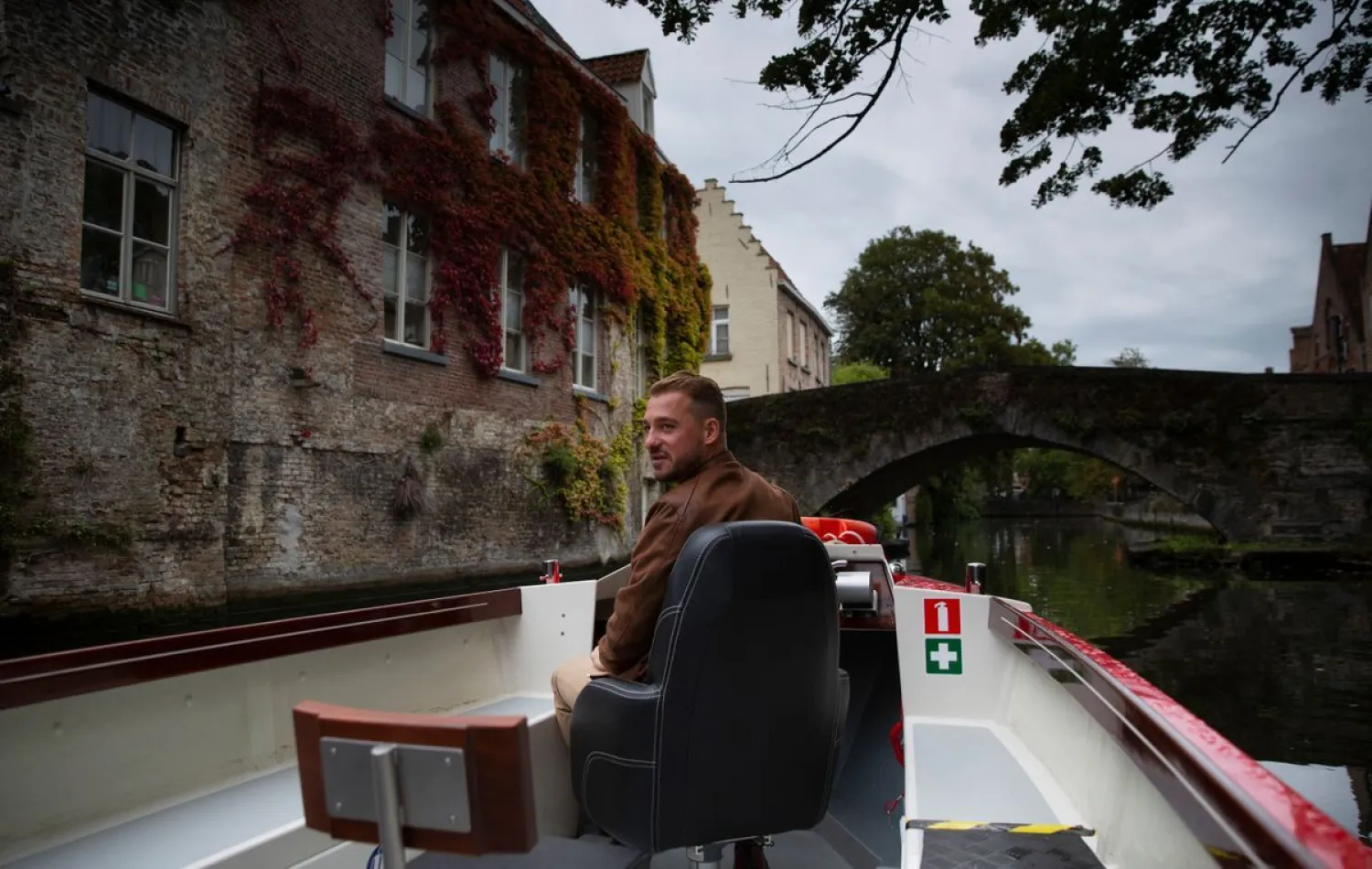
Fourth-generation tour boat operator Michiel Michielsens drives his electric boat down a canal in Bruges, Belgium, Wednesday, Sept. 2, 2020. (AP Photo/Virginia Mayo)
TT

Pandemic Turns Summer Into European Tourism's Leanest Season

Fourth-generation tour boat operator Michiel Michielsens drives his electric boat down a canal in Bruges, Belgium, Wednesday, Sept. 2, 2020. (AP Photo/Virginia Mayo)

Bruges mayor Dirk De fauw first realized something was desperately wrong with European tourism when on a brisk March morning he crossed the Burg square in front of the Gothic city hall and there was nothing but silence.

"There are always people. Always," De fauw said. That morning?

"Nothing. Nobody is on that large square" at the heart of one of Europe's most picturesque cities, he said.

Six months later, as Europe's meanest tourist summer season in history is starting to draw to a close, COVID-19 is yet to loosen its suffocating grip on the continent.

If anything the pandemic might tighten it over the coming months, with losses piling up in the tens of billions of euros across the 27-nation European Union, and the continent's vaunted government support and social security system under increasing strain to prop up the sector.

The upheaval so far, the bloc's executive European Commission said, shows that "revenue losses during the first half of 2020 for hotels, restaurants, tour operators, long-distance train operators, and airlines were roughly 85-90%." No country has been exempt in an area spanning from Greece's beaches to the trattorias in Rome and the museums of Paris.

And even now, the European Commission told The Associated Press, "bookings for September and October remain abnormally low," as dire as 10% of capacity in Bruges. It dents hopes that a brief uptick in business in July would be a harbinger of something more permanent. Over the summer, though, came fresh spikes in COVID-19 contamination, new restrictive measures, and regional color codes that spelled disaster for local tourism when they turn red.

It left the European tourism industry relying on hope more than anything else. It was all evident on a late summer's day in Bruges, when usually throngs of American and Asian tourists should have been mixing with Europeans along the cobblestone streets below gabled houses to help boost the annual visit numbers to over 8 million in the city of 110,000.

"The swans have it all to themselves," muttered Michiel Michielsens as he slowed his boat behind a bank of swans who gracefully obstructed a quick passage on the canals. On a normal day - not like the one when he had 114 customers instead of 1,200 - tourists instead of birds would rule the waters. Now a boat could be seen showing a single couple around while normally 40 people fit in one.

For tourists who can live with wearing masks for hours, there are some advantages. In Bruges, it extends to the city's famed museums where the medieval Flemish Primitives take center stage. Instead of craning over other tourists flashing smartphones, any visitor could now be alone for minutes on end to study in detail one of Jan Van Eyck's most famous pictures "Our Lady with the Child Jesus, St. George, St. Donaas and canon van der Paele."

All this is bittersweet to museum officials though. Across Europe, just about all have had to close for months early this year, and the outlook is bleak.

Attendance has now slumped to a quarter of what it was in 2019 at Bruges museums. But during the uptick in July "we had 50%."

"So it´s declining gradually. Every month we see the numbers declining," said Jonathan Nowakowski, the business director of Bruges Museums. "I can tell you that we´re looking at losses of 3.4 to 4 million euros this year," all happening despite expectations being high in a Van Eyck memorial year with special exhibits.

"We had we thought we would have had huge numbers of visitors," he said.

It all quickly trickles down to hotels, restaurants, shops, and the survival of families. For those who own the building it is more manageable than for those who rent a building, since often those monthly payments must continue to come. With reservations down for the next months, some hotels will just close down, knowing the costs will never match up to the puny revenue. Others are using the low winter rates in summer.

A great many put staff on temporary unemployment, and they acknowledge government aid has been a help. But they fear that will whittle down soon despite the 750-billion-euro recovery fund that EU recently agreed to.

"In the next few months, we will see a lot of places that will go bankrupt. A lot of people will be unemployed," said Luc Broes, co-owner of the hotel-restaurant Duc de Bourgogne, which overlooks a canal.

Social protection, he said, only goes so far.

"We also have to pay our rent for the building. We also have to pay all the staff. We have to pay the insurances. We have to - we are not protected. In the moment we can´t pay anymore, we will go bankrupt as well," Broes said.

Despite the 19th-century novel "Bruges-La-Morte" ("Bruges, the Dead City") that turned the city into a metaphor of melancholy and decay, there is a steadfast conviction that people can turn this around - that tourism will survive.

It is a feeling felt through much of the bloc and a special EU summit is already planned for early October on how to reinvigorate and reform tourism in general.

Unsure how long the pandemic will last, Bruges has already decided to forego any blockbuster exhibits. Instead, it will center on local artists who have been hart hit financially by the pandemic. It includes a photographer tasked to show the solitude that COVID-19 has spawned in the city.

"They get funds. They get paid, They can survive, and we can offer the visitors something new, something inspiring without having all the logistical difficulties that corona(virus) brings," Nowakowski said.

The question of whether there will be more lockdowns, nationwide restrictions or limits on international travel still haunts everyone.

Renowned chocolatier Dominique Persoone was lucky to survive on a big local fan base so he could do without the big cruise ship crowds that come and buy his chocolates from his shop, in the shadows of the cathedral.

"The hardest thing is that you don´t know what the future will bring. We don´t know how it´s gonna be in September, October, when the real chocolate season starts. Then it´s Halloween, Santa Claus, Christmas."

Now, winter and more uncertainty beckons.

"We thought we were safe and we had a wonderful life. And, now, this is happening," Persoone said.


Bahraini Transport Minister to Asharq Al-Awsat: Each Country to Finance Its Share of Gulf Railway Project

A conceptual rendering of the Gulf railway interconnection project. (X)
TT

Bahraini Transport Minister to Asharq Al-Awsat: Each Country to Finance Its Share of Gulf Railway Project

A conceptual rendering of the Gulf railway interconnection project. (X)

The Gulf Cooperation Council (GCC) member states took a new step toward completing the railway interconnection project by signing the project's general agreement in Bahrain on Sunday. This comes as part of efforts to establish an integrated transport network linking the six nations and boosting the movement of passengers, goods, and commercial trade among them.

Bahraini Minister of Transportation and Telecommunications Dr. Sheikh Abdulla bin Ahmed Al Khalifa told Asharq Al-Awsat that each country will fund and execute the portion of the project located within its territory.

Meanwhile, the costs, fees, and expenses associated with the shared interconnection components among member states will be determined collectively, he added.

He explained that the agreement establishes a joint framework for the project's execution and operation, while defining the obligations of member states and their coordination mechanisms.

He noted that the network, which extends some 2,117 kilometers, aims to transport 6 million passengers and 200 million tons of freight by 2030, with the figures projected to rise to more than 8 million passengers and 271 million tons of freight by 2045.

The project spans from Kuwait, passing through Saudi Arabia, Bahrain, Qatar, and the UAE, all the way to Oman, with the goal of achieving full network operations by December 2030.

According to the minister, interconnection lines between adjacent countries can become operational as soon as their components are completed, without the need to wait for the entire Gulf network to be finalized.

National financing and potential partnerships

On private sector participation, Al Khalifa said that it remains one of the viable options for financing, executing, or operating certain components of the project, depending on the outcomes of economic and financial studies. He stressed that there is no unified public-private partnership model approved across the entire network.

There are currently no pre-existing agreements with specific international partners to finance or execute the project, he said. However, the expertise of global companies in the fields of design, engineering, technology, and operating systems could be utilized based on the project's needs and its various phases.

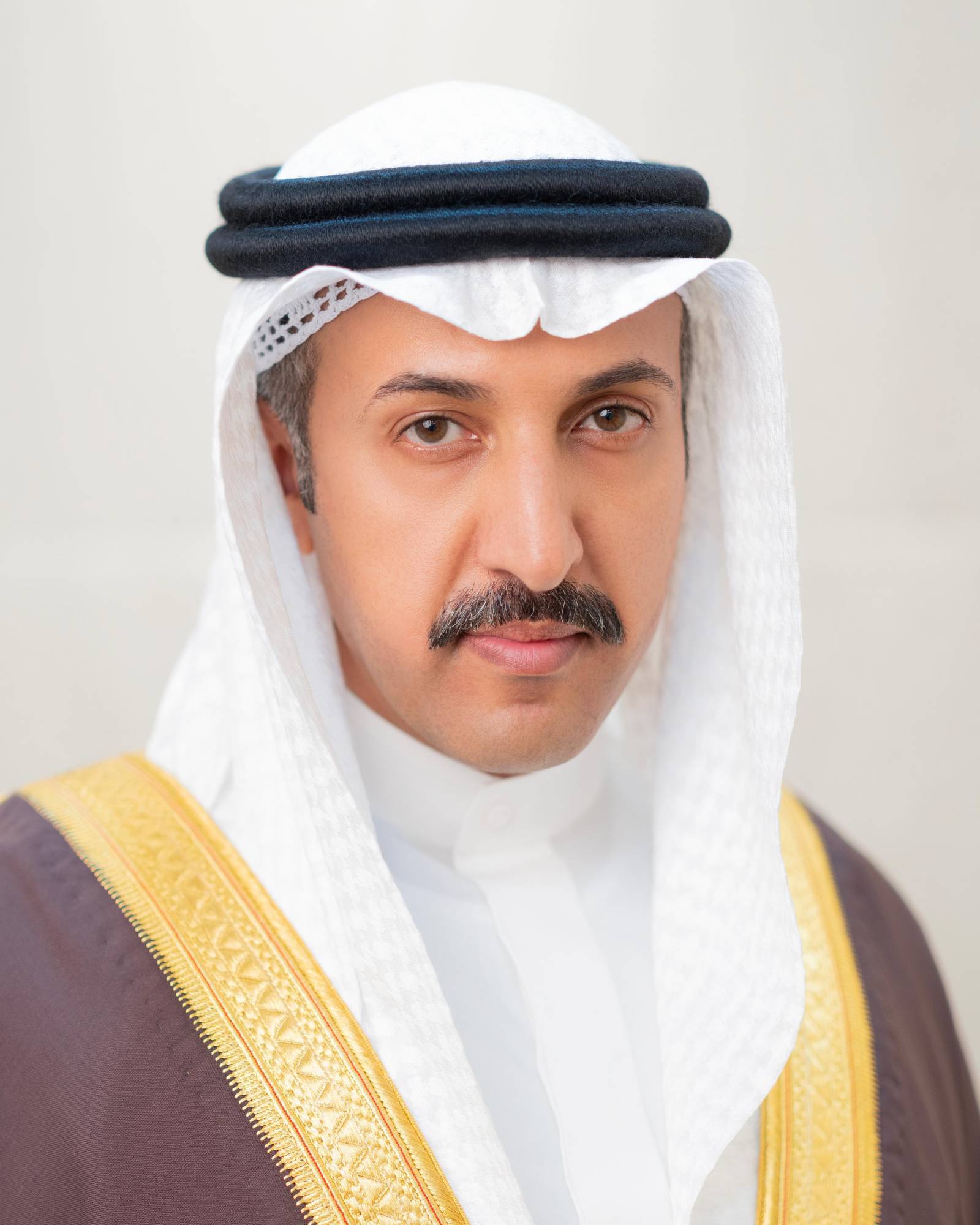
Bahraini Minister of Transportation and Telecommunications Dr. Sheikh Abdulla bin Ahmed Al Khalifa.

Concerning the project's announced completion rate, the minister explained that the 50 percent figure represents the average progress achieved across member states, and does not mean that half of the construction work for the entire Gulf network has been completed.

The project's cost estimates are currently undergoing review and updates in light of economic shifts, rising prices for materials and services, construction costs, and inflation, he revealed without specifying an updated total cost at the present time.

Returns beyond passenger and freight transport

Al Khalifa said that the economic impact of the project is not limited to facilitating passenger movement and freight transport, but extends to improving supply chain efficiency, boosting trade among GCC countries, and linking industrial centers, economic zones, and logistical hubs, as well as supporting employment and investment opportunities.

He added that determining the project's exact contribution to the gross domestic product (GDP) or estimating expected savings in time and costs remains premature, given that returns vary depending on transport routes, the nature of the cargo, and the points of origin and destination.

In light of the challenges facing maritime navigation in the region, the minister stressed that the Gulf railway network is not intended to serve as a substitute for maritime transport. Instead, it acts as a complementary route that boosts transport options and connectivity among GCC nations, increasing the resilience of supply chains against disruptions that could affect various modes of transportation.

He noted that integration between ports, roads, railways, and airports will strengthen the flexibility of the Gulf transport system, while connecting to broader international logistical corridors remains a future possibility contingent on completing studies, understandings, and coordination with the relevant countries and entities.

King Hamad Bridge to link Bahrain and Saudi Arabia

Regarding the connection between Bahrain and Saudi Arabia, Al Khalifa explained that the King Hamad Bridge project includes road lanes and railway lines, enabling the international passenger station in Bahrain to connect with the Saudi railway network and forming one of the essential components for completing the Gulf interconnection.

He added that work is underway on the privatization procedures for the King Fahd Causeway Authority, alongside completing the necessary studies and procedures to transition to the execution of the new bridge project.

Achieving the connection between Bahrain and Saudi Arabia is a fundamental requirement for operating the railway line between the two countries within the project's targeted timeframe in December 2030,e he said.


Egypt Seeks Faster Progress on Libya Gas, Refining and Power Projects

Egyptian Foreign Minister Badr Abdelatty speaks during a press conference with Minister of Information Diaa Rashwan (not pictured) in Cairo, Egypt, March 25, 2026. (Reuters)
TT

Egypt Seeks Faster Progress on Libya Gas, Refining and Power Projects

Egyptian Foreign Minister Badr Abdelatty speaks during a press conference with Minister of Information Diaa Rashwan (not pictured) in Cairo, Egypt, March 25, 2026. (Reuters)

Egypt aims to accelerate energy projects with Libya, including gas pipeline links, refining of Libyan crude in Egypt and an electricity interconnection, Egyptian Foreign Minister Badr Abdelatty said late on Saturday.

Abdelatty's comments were in ‌a ministry ‌statement after a meeting ‌with ⁠Libya’s acting oil ⁠and gas minister Khalifa Abdulsadek in Tripoli.

Abdelatty also ‌called for cooperation on petroleum products and the completion of projects to refine Libyan ‌oil in Egypt and re-export it, the statement said, ⁠adding ⁠that Abdulsadek had said that Libya would continue implementing existing projects and would visit Cairo soon to continue technical talks with Egypt’s petroleum and electricity ministers.

The statement did not provide details on costs or the status of the projects.


GCC: Railway Agreement Sets Joint Framework for Project Implementation and Operation

GCC transport ministers pose for a group photo following the 27th committee meeting in Kuwait. (GCC Railway Authority)
TT

GCC: Railway Agreement Sets Joint Framework for Project Implementation and Operation

GCC transport ministers pose for a group photo following the 27th committee meeting in Kuwait. (GCC Railway Authority)

Jasem Albudaiwi, secretary-general of the Gulf Cooperation Council (GCC), said on Sunday that the signing of the General Agreement on the GCC Railway Project marked an important step toward establishing an integrated regional transport network.

He said the network would facilitate the movement of citizens and residents, ease freight transport, boost intra-GCC trade efficiency and strengthen member states’ economic competitiveness and the region’s position in regional and international trade.

Albudaiwi's remarks came at the signing ceremony in the Bahraini capital, Manama, on Sunday, held under the patronage and in the presence of Bahrain’s Crown Prince and Prime Minister Salman bin Hamad Al Khalifa.

He said the project reflected the GCC’s shared ambition to connect member states and improve mobility and trade by linking their economic and industrial hubs, ports and logistics centers.

He added that the project would create opportunities for safe, reliable, affordable and environmentally friendly transport services that meet development needs, serve the aspirations of future generations and strengthen economic integration among GCC states.

Albudaiwi said the agreement sets a common framework for member states to implement and operate the project in coordination with their national railway networks, while establishing mechanisms and a timetable to accelerate its completion.

Albudaiwi praised GCC leaders and transport ministers for their support of strategic regional projects, thanking Bahrain’s crown prince and prime minister for hosting the signing ceremony and officials for advancing the railway project.