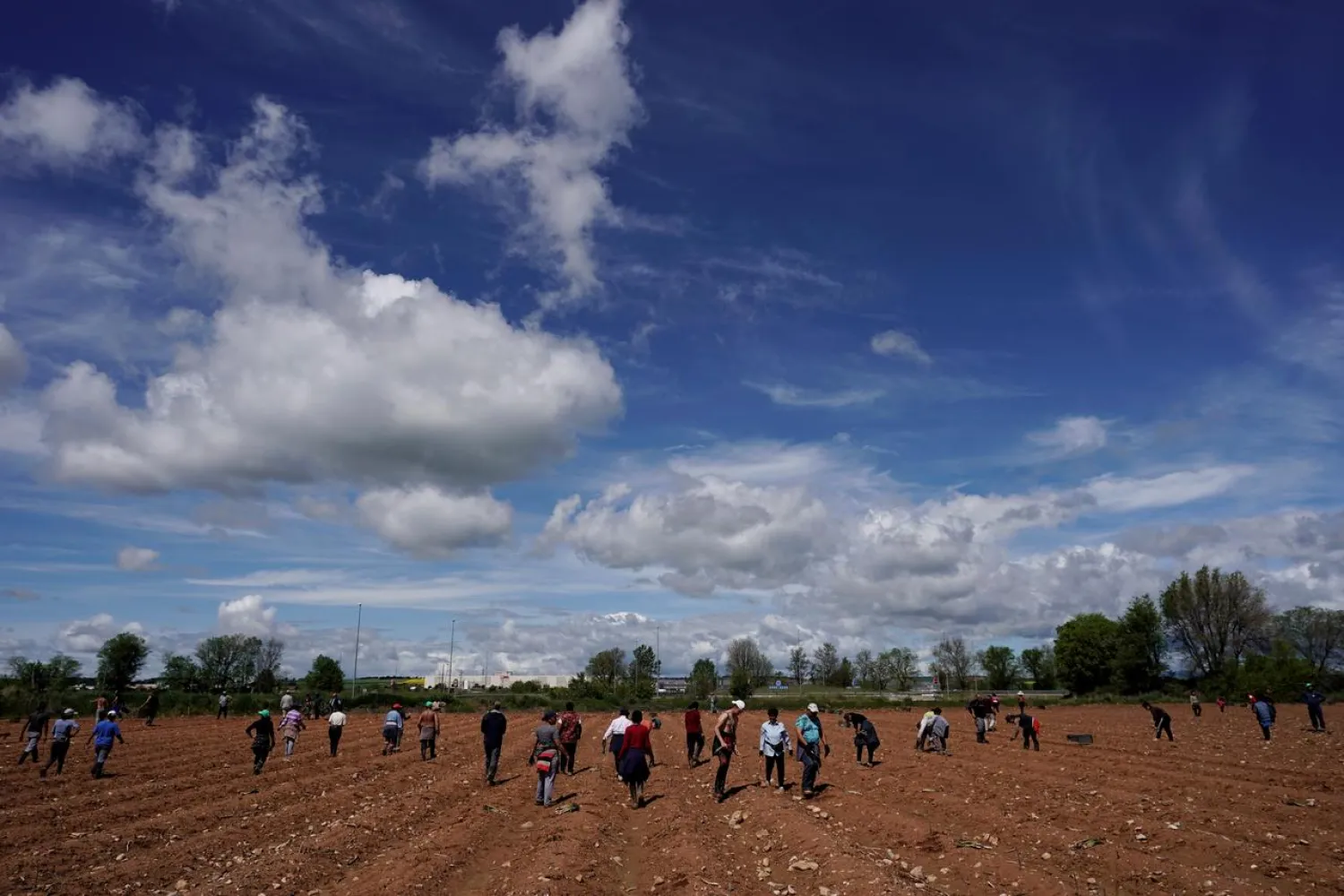

Moroccan fruit-picker Abdelhak el Yakoubi was dizzy and aching when he arrived at La Manreana, a farm school in Spain that has been turned into a quarantine center for agricultural workers with COVID-19.
But less than a week later, the burly 46-year-old was back on his feet and preparing to be reunited with his family. He credited his speedy recovery to fresh air, peace and quiet and the chance to unwind with a kickabout or a game of ping-pong.
"I'm outside all day until 10 at night, relaxing in the fresh air, it's really great," he told Reuters from the other side of a fence dividing infected and infection-free areas of the farm.
"When I first arrived, I was really aching on one side, had a very dry throat and felt dizzy, but now I feel a lot better," he said, still noticeably short of breath.
El Yakoubi was among 21 seasonal farm workers who tested positive for coronavirus who were self-isolating at the farm recently after being referred by local health authorities.
Some were sent because they are homeless, while others did not have enough room to self-isolate at home. All of them had only mild symptoms of the respiratory disease.
Mostly men, the majority are from Senegal, but some come from Algeria, Morocco, Ivory Coast, Bolivia and elsewhere.
La Manreana, which normally hosts groups of school children learning about farm animals and helping to make cheese and milk, lies in Lleida province, a COVID-19 hotspot in the northeastern region of Catalonia.
Spain's three-month lockdown was lifted in June, but new isolated outbreaks among farm workers at two localities in Lleida have led the regional government to impose localized lockdowns since then.
About 25,000 migrants from Africa, Latin America and Eastern Europe arrive between April and November for annual harvesting season in Lleida, a fruit-growing region that produces apples, pears and peaches.
The farm, centered on a rustic early 20th Century farmhouse, is an idyllic spot, with wide views stretching over a plateau and a pretty approach lined by apple and pear trees.
Animals roam in an area divided off from where the patients spend their days, but those convalescing have access to a football field, ping-pong tables and large grassy areas.
The freedom enjoyed by patients and their proximity to nature at La Manreana is a world apart from the hotel rooms that are mainly used to isolate fruit-pickers with the virus in Lleida, said Jaume Graus, manager of the farm school.
According to Reuters, human rights campaigners say many migrant fruit-pickers have been in Spain for years, hopping from province to province in time for each harvesting season.