


Iraq Reforms Stymied by Shadowy Groups' Wave of Attacks

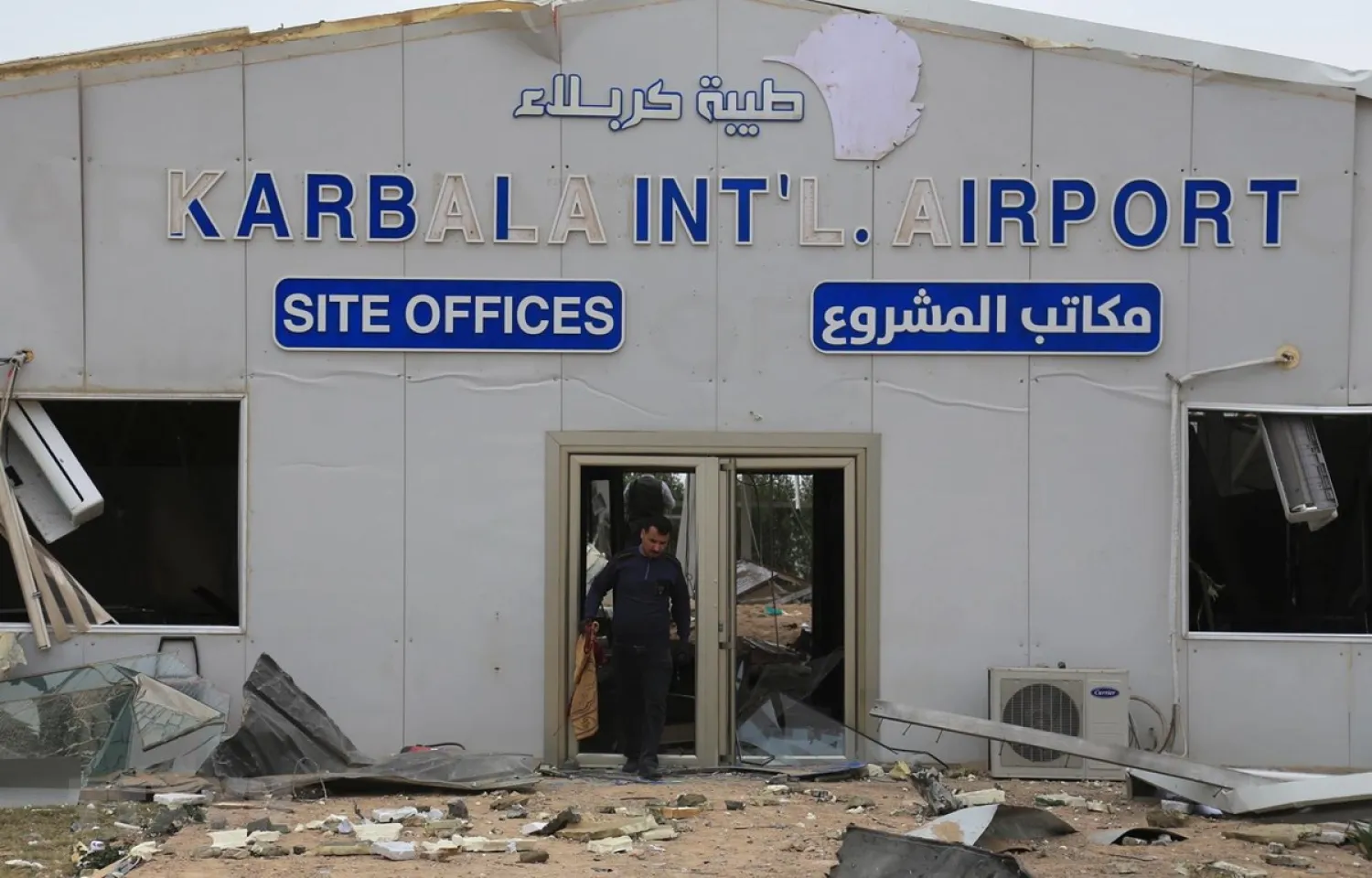
Destruction at Karbala airport in the Iraqi city, an area targeted by US military airstrikes in March against a pro-Iranian group in Iraq following the deaths of two Americans and a Briton in a rocket attack on a US base in Taji, north of Baghdad | AFP
TT

Iraq Reforms Stymied by Shadowy Groups' Wave of Attacks

Destruction at Karbala airport in the Iraqi city, an area targeted by US military airstrikes in March against a pro-Iranian group in Iraq following the deaths of two Americans and a Briton in a rocket attack on a US base in Taji, north of Baghdad | AFP

War-scarred Iraq hopes to launch reforms and revive its battered economy, but the drive is being derailed by a wave of violence blamed largely on shadowy pro-Iranian groups.

Since Prime Minister Mustafa al-Kadhimi took office in May, he has promised to rein in rogue militias, fight corruption, and roll out long-awaited restructuring after years of war and insurgency.

But the closer his government gets to its stated aims, the more armed actors with suspected links to Washington's arch-enemy Tehran are lashing out, AFP quoted top Iraqi officials and analysts as saying.

"Every time these groups see us getting close to their military or economic interests, they either launch rockets or propaganda campaigns to distract us," said one senior government official.

Violence, already rising before Kadhemi met US President Donald Trump in Washington in mid-August, has only flared further.

On September 3, an attack targeted the Baghdad headquarters of British-American security company G4S. One intelligence official told AFP a drone had dropped a small explosive charge on the building.

No faction claimed responsibility, but Tehran-backed groups had accused G4S of complicity in January's US drone strike that killed Iran's top general Qasem Soleimani in Baghdad.

Days earlier, a UN worker was wounded when an improvised explosive device detonated underneath an aid convoy in the northern city of Mosul.

A faction identifying itself as part of the "Islamic resistance" -- a catch-all phrase for pro-Iran factions -- took responsibility, accusing the UN of using its convoys to transport American spies.

"Your vehicles will burn in the streets of Iraq," it threatened online.

- Smokescreen -

A half-dozen previously unheard-of such factions have made similar threats in recent months under the "Islamic resistance" banner, but officials say they are a smokescreen.

"Five groups, including Kataeb Hezbollah, Asaib Ahl al-Haq and others, are behind the recent instability across the country," an Iraqi intelligence officer said.

These hardline groups are members of Iraq's Hashed al-Shaabi (Popular Mobilization Forces), a state-sponsored network dominated by factions close to Iran and wary of the United States.

US officials have made similar accusations, naming Kataeb Hezbollah and Asaib Ahl al-Haq as the real perpetrators of rocket attacks on American installations in Iraq.

"They declared a unified front after Soleimani's killing and began working under pseudonyms, which allowed the government of PM Adel Abdel Mahdi to save face as they were nominally under his command," the Iraqi official said.

The same groups had accused Kadhimi of plotting against Soleimani when the former was Iraq's top intelligence official and were furious when he rose to become premier.

They have understood Kadhimi's pledges to reign in armed groups as an attempt to clip their wings, officials and experts have told AFP.

Beyond escalating rocket attacks, the groups have also ramped up pressure through unconventional media outlets.

Anonymous channels on messaging application Telegram publish taunting warnings of attacks on military convoys well before they happen, deepening a sense of impunity.

The same forums have targeted Iraqi television channels critical of Iran.

Dijla TV was torched last week after the Telegram channels turned on them, and a new wave of threats have targeted Sunni-owned UTV.

The campaign began after the US government seized the website domains of Al-Etejah, an Iraqi television station linked to Kataeb Hezbollah.

- 'Putting out fires' -

The government is not looking for a direct confrontation with these groups, said Kadhimi's spokesman Ahmad Mulla.

"Instead, we are looking to dry up their funding resources by targeting border crossings," used for lucrative smuggling from Iran, Mulla told AFP.

Officials knew this could be dangerous. When the PM launched a sweeping anti-corruption campaign on Iraq's porous borders, they braced for the worst.

"They will blackmail officials, threaten their families, mobilize the tribes and maybe even commit assassinations," one senior official told AFP in July.

Indeed, two anti-government activists were gunned down weeks later in the southern port city of Basra, and tribal violence erupted north of Baghdad.

"We are constantly putting out fires, so we can't properly focus on the bigger strategy," another Iraqi official said, about Baghdad's efforts to reform the state and revitalize an economy hit by the Covid-19 pandemic and low oil prices.

A third official told AFP that Iraq's Finance Minister Ali Allawi missed his August 24 deadline to submit an economic reform plan to parliament because of the recent tumult.

Last week, Kadhimi set up an anti-corruption council, authorizing the elite troops of the Counter-Terrorism Service to arrest officials usually considered too senior to touch.

His forces also carried out search operations in Basra and Baghdad to seize unlicensed arms, but few have turned up.

Iraqi security expert Fadel Abou Raghif said the situation was "dangerous".

"Ultimately, Kadhimi should open a real dialogue with the spiritual leaders of these groups to avoid a clash."



Protesters Block Beirut Roads after Cabinet Approves New Taxes that Raise Fuel Prices

Taxi drivers, foreground, block a main highway with their cars during a protest against the increased taxes and gasoline prices issued by the Lebanese Cabinet on Monday, in Beirut, Lebanon, Tuesday, Feb. 17, 2026. (AP Photo/Hussein Malla)
TT

Protesters Block Beirut Roads after Cabinet Approves New Taxes that Raise Fuel Prices

Taxi drivers, foreground, block a main highway with their cars during a protest against the increased taxes and gasoline prices issued by the Lebanese Cabinet on Monday, in Beirut, Lebanon, Tuesday, Feb. 17, 2026. (AP Photo/Hussein Malla)

Protesters blocked main roads in and around Beirut on Tuesday after Lebanon’s Cabinet approved new taxes that raise fuel prices and other products to fund public pay hikes.

The Cabinet approved a tax of 300,000 Lebanese pounds (about $3.30) on every 20 liters (5.3 gallons) of gasoline on Monday. Diesel fuel was exempted from the new tax, as most in Lebanon depend on it to run private generators to make up for severe shortages in state electricity.

The government also agreed to increase the value-added tax on all products already subject to the levy from 11 to 12%, which the parliament still has to approve, The Associated Press said.

The tax increases are to support raises and pension boosts of public employees, after wages lost value in the 2019 currency collapse, giving them the equivalent of an additional six months’ salary. Information Minister Paul Morcos said the pay increases were estimated to cost about $800 million.

Though the Mediterranean country sits on one of the largest gold reserves in the Middle East, it suffers ongoing inflation and widespread corruption. The cash-strapped country also suffered about $11 billion in damages in the 2024 war between Israel and the Hezbollah militant group.

Anger over fuel hike Ghayath Saadeh, one of a group of taxi drivers who blocked a main road leading into downtown Beirut, said the country’s leaders “consider us taxi drivers to be garbage.”

“Everything is getting more expensive, food and drinks, and Ramadan is coming,” he said. “We will block all the roads, God willing, if they don’t respond to us.”

When the Lebanese government proposed new taxes in 2019, including a $6 monthly fee for using internet calls through services such as WhatsApp, mass protests broke out that paralyzed the country for months. Demonstrators called for the country’s leaders to step down over widespread corruption, government paralysis and failing infrastructure, and for an end to the country’s sectarian power-sharing system.

Lebanon has been under international pressure to make financial reforms for years, but has so far made little progress.

Weapons plan discussed

Also Monday, the cabinet received a report from the Lebanese army on its progress on a plan to disarm non-state militant groups in the country, including Hezbollah.

Last month, the army announced it had completed the first phase of the plan, covering the area south of the Litani River, near the border with Israel. The second phase of the plan will cover segments of southern Lebanon between the Litani and the Awali rivers, which includes the port city of Sidon.

Morcos, the information minister, said following the cabinet session that the second stage is expected to take four months but could be extended “depending on the available resources, the continuation of Israeli attacks and the obstacles on the ground.”

The disarmament plan comes after a US-brokered ceasefire nominally ended a war between Hezbollah and Israel in November 2024. Since then, Israel has accused Hezbollah of rebuilding and has continued to launch near-daily strikes in Lebanon and to occupy several hilltop points on the Lebanese side of the border.

Hezbollah has insisted that the ceasefire deal only requires it to disarm south of the Litani and that it will not discuss disarming in the rest of the country until Israel stops its strikes and withdraws from all Lebanese territory.


Under Israeli Cover, Gaza Gangs Kill and Abduct Palestinians in Hamas-Controlled Areas 

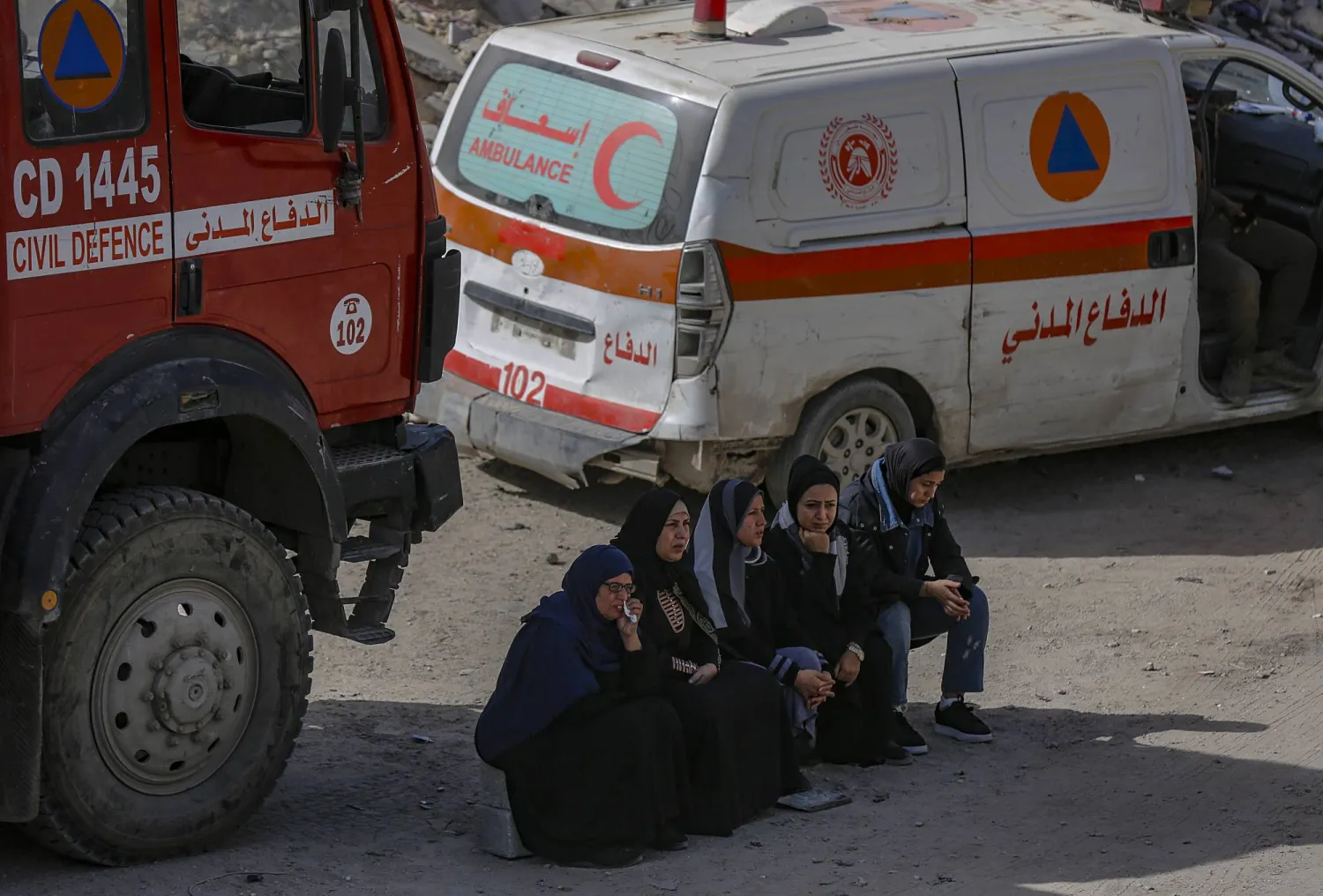
A group of women wait for news as Palestinian civil defense teams work to recover the remains of 67 members of the Abu Nasr family from beneath the rubble of their home after it was destroyed in an Israeli airstrike in Beit Lahiya, north of Gaza City, 15 February 2026. (EPA)
TT

Under Israeli Cover, Gaza Gangs Kill and Abduct Palestinians in Hamas-Controlled Areas 

A group of women wait for news as Palestinian civil defense teams work to recover the remains of 67 members of the Abu Nasr family from beneath the rubble of their home after it was destroyed in an Israeli airstrike in Beit Lahiya, north of Gaza City, 15 February 2026. (EPA)

Amid heavy Israeli airstrikes across Gaza, armed gangs carried out kidnappings and executions of Palestinians on Monday in areas controlled by Hamas, west of the so-called “yellow line” separating Israeli forces from the Palestinian movement.

According to local sources, Sunday’s strikes against Hamas and other armed factions deployed along the separating line resulted in security breaches that allowed armed gangs operating in Israeli-controlled zones to infiltrate areas west of the yellow line.

In response, Palestinian factions expanded their deployment, under what they termed “Operation Ribat”, to prevent the infiltration of collaborators with Israel into their areas. However, the Israeli strikes hit those fighters, killing several.

Before dawn on Monday, gunmen affiliated with the Rami Helles gang, which is active in eastern Gaza City, raided homes on the western outskirts of the Shujaiya neighborhood, just meters from Salah al-Din Road and more than 150 meters from the yellow line.

Field sources and affected families told Asharq Al-Awsat that the gunmen abducted several residents from their homes and interrogated them on the spot amid intense Israeli drone activity. Quad-copter drones were reportedly providing “security cover” for the attackers and opening fire in the surrounding area.

The sources said the gunmen shot and killed Hussam al-Jaabari, 31, after he refused to answer their questions. His body was left at the scene before the attackers withdrew, releasing others who had been detained. Al-Jaabari was later pronounced dead at Al-Maamadani (Al-Ahli Arab) Hospital.

In a separate incident, gunmen linked to the Ashraf al-Mansi gang, which is active in Jabalia and Beit Lahiya in northern Gaza, stormed Abu Tammam School in Beit Lahiya that shelters dozens of displaced families, also under Israeli drone surveillance.

Several young men were abducted and taken to a gang-controlled location, and they haven’t been heard of since. Three families of women and children were briefly detained and later released.

Sources in the Palestinian armed factions denied that any of the abducted individuals or the victim of the killing were members of their groups.

Meanwhile, Hamas’ Ezzedine al-Qassam Brigades froze deployments near the yellow line after Israeli airstrikes killed 10 of its members in two raids in Khan Younis and Jabalia on Sunday.

A Hamas source said the move was temporary and could be reversed once Israeli strikes subside.

Israel said it targeted Qassam fighters after gunmen emerged from a tunnel in Beit Hanoun, a claim it has used to justify strikes on faction targets and the assassination of senior operatives.

On Monday, the army announced it had killed a group of gunmen in Rafah, raising fears of further escalation.

Separately, dozens of families of missing Palestinians held a protest in Khan Younis, demanding information about relatives who disappeared during the war. UN estimates put the number of missing in Gaza at between 8,000 and 11,000, with their fate still unknown.


Lawyers in Sanaa Under Houthi Repression

Part of previous consultative meetings for Yemeni lawyers in Sanaa (Facebook)
TT

Lawyers in Sanaa Under Houthi Repression

Part of previous consultative meetings for Yemeni lawyers in Sanaa (Facebook)

In areas controlled by the Houthi group in Yemen, there is an increasing number of violations targeting lawyers, raising widespread concerns about the future of justice and the rule of law.

Recent reports from local human rights organizations have revealed a recurring pattern of systematic restrictions on the practice of law profession, including arbitrary arrests, prolonged detentions, and direct threats.

The legal environment in Sanaa and other Houthi-controlled cities no longer provides professional environment for lawyers who themselves are now subject to questioning or targeted for defending their clients, especially in cases of a political or human rights nature.

Observers believe that this reality not only affects lawyers but also threatens the foundation of the judicial system as a whole.

Widespread Violations

The Daoo Yemen Rights and Development organization documented in its report more than 382 Houthi violations against lawyers in Sanaa from January 2023 to December 2025.

These included arbitrary arrests, prolonged detention without legal justification, threats of murder and assault, prevention from practicing the profession, and restrictions on the right to defense in cases of a political or human rights nature.

The report monitored more than 159 Houthi violations against lawyers during 2025, compared to 135 violations in 2023, and 88 violations in 2024, describing this targeting as a “systematic pattern” that affects human rights defenders and undermines what remains of the justice system and the rule of law.

Human Rights Calls

Calls from local and international human rights organizations have escalated for urgent steps to be taken to protect lawyers and ensure the independence of their profession, stressing the need to release lawyers detained for their professional activities and to stop all forms of intimidation or restrictions targeting them.

Human rights activists believe that protecting lawyers is a prerequisite for maintaining any future reform or political path because the absence of an independent defense means the absence of justice itself.