


World Wildlife Plummets More Than Two-Thirds in 50 Years: Index

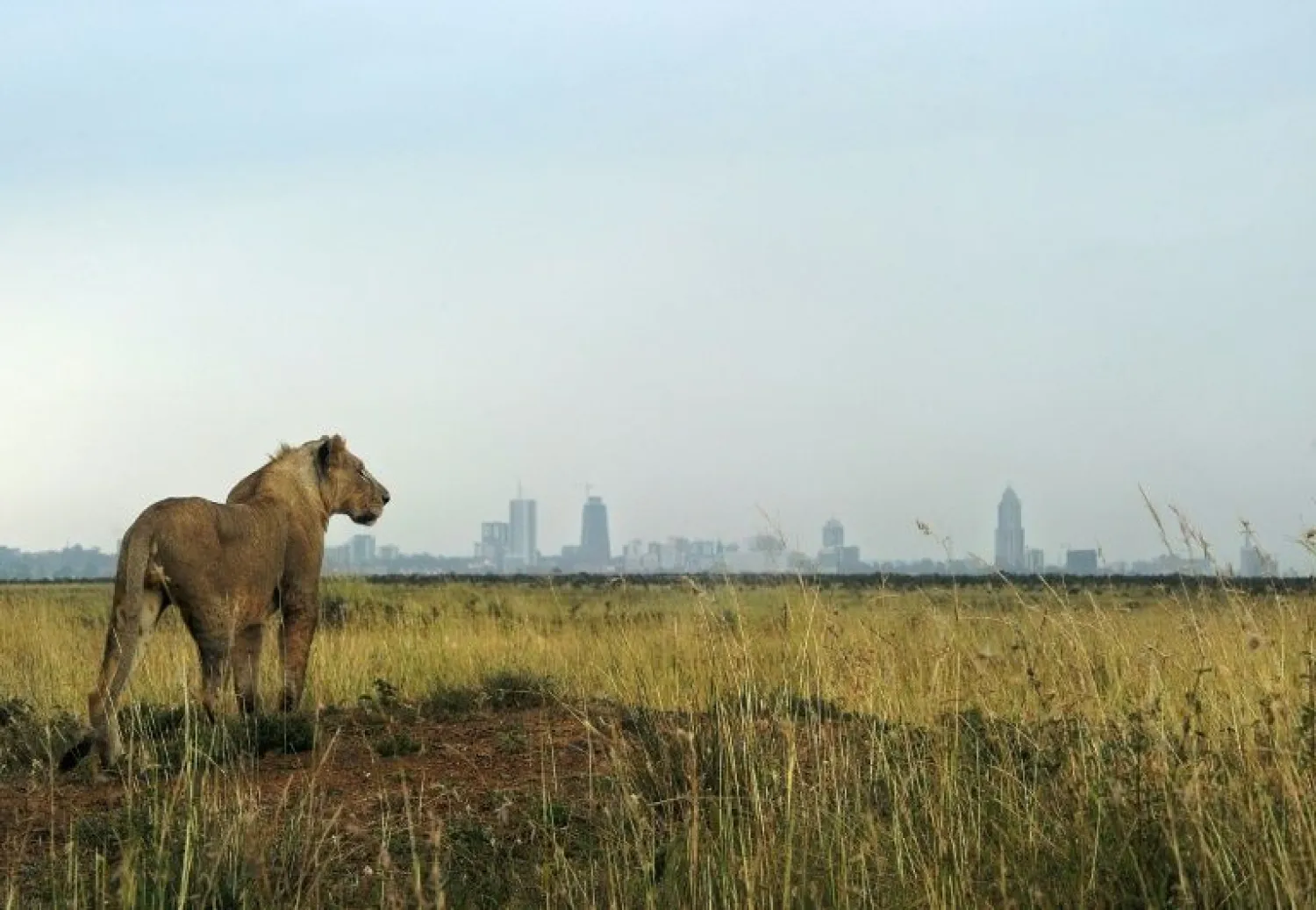
A lion looks towards the Nairobi skyline - the Living Planet Index warns that continued natural habitat loss increased the risk of future pandemics as humans expand their presence into ever closer contact with wild animals | AFP
TT

World Wildlife Plummets More Than Two-Thirds in 50 Years: Index

A lion looks towards the Nairobi skyline - the Living Planet Index warns that continued natural habitat loss increased the risk of future pandemics as humans expand their presence into ever closer contact with wild animals | AFP

Global animal, bird, and fish populations have plummeted more than two-thirds in less than 50 years due to rampant over-consumption, experts said Thursday in a stark warning to save nature in order to save ourselves.

Human activity has severely degraded three quarters of all land and 40 percent of Earth's oceans, and our quickening destruction of nature is likely to have untold consequences on our health and livelihoods.

The Living Planet Index, which tracks more than 4,000 species of vertebrates, warned that increasing deforestation and agricultural expansion were the key drivers behind a 68 percent average decline in populations between 1970 and 2016.

It warned that continued natural habitat loss increased the risk of future pandemics as humans expand their presence into ever closer contact with wild animals.

2020's Living Planet Report, a collaboration between WWF International and the Zoological Society of London, is the 13th edition of the biennial publication tracking wildlife populations around the world.

WWF International director general Marco Lambertini told AFP of the staggering loss of Earth's biodiversity since 1970.

"It's an accelerating decrease that we've been monitoring for 30 years and it continues to go in the wrong direction," he said.

"In 2016 we documented a 60 percent decline, now we have a 70 percent decline.

"All this is in a blink of an eye compared to the millions of years that many species have been living on the planet," Lambertini added.

- 'Staggering' fall -

The last half-decade has seen unprecedented economic growth underpinned by an explosion in global consumption of natural resources.

Whereas until 1970, humanity's ecological footprint was smaller than the Earth's capacity to regenerate resources, the WWF now calculates we are overusing the planet's capacity by more than half.

While aided by factors such as invasive species and pollution, the biggest single driver of species lost is land-use changes: normally, industry converting forests or grasslands into farms.

This takes an immense toll on wild species, who lose their homes.

But it also requires unsustainable levels of resources to uphold: one third of all land mass and three quarters of all freshwater are now dedicated to producing food.

The picture is equally dire in the ocean, where 75 percent of fish stocks are over exploited.

And while wildlife is declining rapidly, species are disappearing faster in some places than others.

The index showed that the tropical regions of Central and South America had seen a 94 percent fall in species since 1970.

"It is staggering. It is ultimately an indicator of our impact on the natural world," said Lambertini.

- 'From sad to worried' -

The Living Planet update comes alongside a study co-authored by more than 40 NGOs and academic institutions, which lays out ways of arresting and reversing the losses human consumption has inflicted.

The research, published in the journal Nature, suggests that reducing food waste and favoring healthier and more environmentally friendly diets could help to "bend the curve" of degradation.

Coupled with radical conservation efforts, these measures could avert more than two-thirds of future biodiversity loss, the authors suggested.

"We need to act now. Rates of biodiversity recovery are typically much slower than those of recent biodiversity loss," said lead study author David Leclere, research scholar at the International Institute of Applied System Analysis.

"This implies that any delay in action will allow further biodiversity losses that might take decades to restore."

Leclere also warned of "irreversible" losses to biodiversity, such as when a species goes extinct.

Lambertini said that, like public discourse on climate change, societies are increasingly concerned about the links between the health of the planet and human well-being.

"From being sad about losing nature, people are beginning to actually get worried," he said.

"We still have a moral duty to co-exist with life on the planet, but there's now this new element of impact on our society, our economy and, of course, our health.




Encouraging Trial Results for AstraZeneca's New Weight-Loss Pill

The logo for AstraZeneca is seen outside its North America headquarters in Wilmington, Delaware, US, March 22, 2021. (Reuters)
TT

Encouraging Trial Results for AstraZeneca's New Weight-Loss Pill

The logo for AstraZeneca is seen outside its North America headquarters in Wilmington, Delaware, US, March 22, 2021. (Reuters)

A new pill developed by the British pharma firm AstraZeneca appears to help people lose a similar amount of weight to other GLP-1 oral drugs, trial results showed Monday.

If confirmed by further research, the pill could mark AstraZeneca's entrance into the massively lucrative weight-loss drug market currently dominated by Denmark's Novo Nordisk and American giant Eli Lilly.

The astronomical popularity of the appetite suppressing injectable drugs called GLP-1 agonists has kicked off a race to produce tablet versions that easier to take.

AstraZeneca's new pill, called elecoglipron, resulted in weight loss "comparable to that reported for other oral" GLP-1 drugs, according to phase 2 trial results published in the Lancet medical journal.

Side effects recorded during the randomized trial, which had 310 participants, were also similar to those seen for other GLP-1 pills, with nausea being the most common.

For overweight or obese adults without diabetes, the pill resulted in "average weight reductions of up to 10.5 percent at 26 weeks and 11.8 percent at 36 weeks in the highest-dose group," said Marie Spreckley of the University of Cambridge.

But the weight management researcher -- who was not involved in the study -- emphasized the phase 2 trial was not mainly designed to compare the pill to other anti-obesity drugs.

"Larger and longer phase 3 trials will therefore be needed to confirm the durability of these effects, establish longer-term safety and tolerability, and determine its place within the growing range of obesity and diabetes treatments," she explained.

AstraZeneca will face stiff competition -- Novo Nordisk and Eli Lilly have already developed pill versions of their hugely successful drugs.

The oral form of Eli Lilly's popular Mounjaro GLP-1 drug was approved in April in the United States, where it is sold under the brand name Foundayo.

The pill version of Novo Nordisk's blockbuster drug Wegovy is already available in the US and was given the green light by European Union health authorities last month.


Wild Black Bear in Japan Captured After Multi-Day Hunt Captures the Nation’s Attention

 Police officers with shields and sticks search for a bear at a residential area after a black bear was spotted in Utsunomiya, Tochigi Prefecture, Japan, June 9, 2026. (Reuters)
Police officers with shields and sticks search for a bear at a residential area after a black bear was spotted in Utsunomiya, Tochigi Prefecture, Japan, June 9, 2026. (Reuters)
TT

Wild Black Bear in Japan Captured After Multi-Day Hunt Captures the Nation’s Attention

 Police officers with shields and sticks search for a bear at a residential area after a black bear was spotted in Utsunomiya, Tochigi Prefecture, Japan, June 9, 2026. (Reuters)
Police officers with shields and sticks search for a bear at a residential area after a black bear was spotted in Utsunomiya, Tochigi Prefecture, Japan, June 9, 2026. (Reuters)

The Japanese city of Utsunomiya captured a wild black bear on Tuesday after a dramatic multi-day search that gripped the nation, as local schools closed and residents were urged to stay indoors. 

The city closed all 94 municipal primary and middle schools for a second straight day on Tuesday after its first-ever bear sighting on Saturday evening.  

Authorities decided to keep schools closed again on Wednesday due to a report of a possible second bear roaming the city, an official said. 

Bear attacks have spiked in Japan, including ‌in urban areas, prompting ‌the government to set up a task ‌force ⁠this year to reduce ⁠incidents. In fiscal 2025, the country reported a record 238 casualties, including 13 deaths, according to the environment ministry. 

With about 500,000 residents, Utsunomiya, in Tochigi Prefecture, is part of the Greater Tokyo Metropolitan region, about 100 km (60 miles) north of the capital. 

When the bear resurfaced in a residential area early on Tuesday afternoon, police cars and other vehicles involved ⁠in the search promptly blocked off the vicinity. ‌For more than an hour, police officers ‌milled about, with some holding long sticks and others metal shields, as some ‌national broadcasters aired live footage filmed from helicopters. 

The adult bear, which ‌was estimated to weigh about 100 kg (220 lbs), was eventually shot with a tranquilizer gun, loaded onto a cage on a truck and driven away. The city has yet to decide what to do with it, an ‌official said. 

Around 100 km to the northeast, Iwaki, in Fukushima Prefecture, also suspended classes at three ⁠schools on Tuesday in ⁠a neighborhood where a black bear was spotted a day earlier. 

Last week, a bear attack in Fukushima city left at least four people injured, with security footage in one incident showing the animal chasing a man and throwing him to the ground. 

Asiatic black bears are listed as a vulnerable species globally, but their numbers are estimated to have tripled in Japan since 2012, aided by a decline in hunting. 

Experts say climate change has reduced harvests of natural bear food like acorns and beechnuts, while the depopulation of rural areas and the proliferation of abandoned farmland have emboldened them to seek nourishment near human settlements. 


Italian Commuters Find a Moment of Peace on a Cable-Guided Ferry Sketched by Leonardo Da Vinci

 Commuters board the “Da Vinci Ferry,” a hand-operated ferry of a type sketched by Leonardo da Vinci in the 15th century, on the Adda River between the provinces of Lecco and Bergamo, in Imbersago, Italy, Thursday, June 4, 2026. (AP)
Commuters board the “Da Vinci Ferry,” a hand-operated ferry of a type sketched by Leonardo da Vinci in the 15th century, on the Adda River between the provinces of Lecco and Bergamo, in Imbersago, Italy, Thursday, June 4, 2026. (AP)
TT

Italian Commuters Find a Moment of Peace on a Cable-Guided Ferry Sketched by Leonardo Da Vinci

 Commuters board the “Da Vinci Ferry,” a hand-operated ferry of a type sketched by Leonardo da Vinci in the 15th century, on the Adda River between the provinces of Lecco and Bergamo, in Imbersago, Italy, Thursday, June 4, 2026. (AP)
Commuters board the “Da Vinci Ferry,” a hand-operated ferry of a type sketched by Leonardo da Vinci in the 15th century, on the Adda River between the provinces of Lecco and Bergamo, in Imbersago, Italy, Thursday, June 4, 2026. (AP)

The ferry glides from one bank of northern Italy's Adda River to the other, guided by a cable and pulled by currents, offering harried commuters five minutes of serenity and an alternate route now that a bridge closure has backed up traffic.

Called “Leonardo’s Ferry,” the mechanism of the so-called reaction ferry was designed five centuries ago and immortalized by the Renaissance genius himself in a drawing preserved in Windsor Castle's Royal Collection outside of London.

It is the last remaining of its kind along the Adda River, which extends from the Alps to the Po River in the Lombardy region.

“This is a mean of transport that has been here for 500 years and has always connected the two banks of the Adda,” said Massimo Zoia, one of the volunteer ferrymen who operates the vessel. “And now it has returned to its original purpose: connecting two populations living on different banks of a river."

Despite its name, it remains unclear whether Leonardo himself actually designed the ferry. What is certain, however, is that he sketched it in 1513, as part of his famed studies of waterways, including Milan's canal system.

Leonardo was one of history’s greatest polymaths, filling notebooks with designs across a range of disciplines, including flying machines that wouldn't be realized for centuries.

The ferry’s operating principle is as simple as it is ingenious, and entirely environmentally friendly.

“The river pushes us downstream. We have a cable that binds us, and by breaking down the forces, according to the parallelogram rule, which we study in high school, the force is broken down and one part becomes resistance and the other we use for lateral movement,” Zoia said.

“The rudder is used to adjust the inclination of the ferry so that it better absorbs the stream that hits us and makes us move,” he said.

The ferry is run by the town of Imbersago, and runs to the town of Villa d’Adda on the other side. It came close to disappearing in 2023, when its operator gave up the concession. Determined to save it, Imbersago Mayor Fabio Vergani obtained a ferryman’s license himself and, together with the local tourism association, assembled a team of volunteers.

Since 2024, they have primarily transported weekend visitors from one bank of the Adda to the other.

But they added commuter service this spring after a nearby bridge was closed for maintenance to help ease traffic congestion. It now runs from 7 a.m.-7 p.m., with a two-hour lunch break at noon. Passengers pay 1.50 euros (about $1.75) if they are on foot, 2 euros ($2.30) with a bicycle, 2.50 euros ($2.88) with a motorbike and 3.50 (around $4) for a car.

Gianpaolo Graffagnino lives in Villa d’Adda and works on the other side of the river. He has started biking to work, using the ferry as a shortcut.

“Right now this is the fastest system, but above all the nicest because you get three minutes of peace,” he said.

Mauro Carnati drove his Maserati onto the ferry to bring his daughter to school on the other side, avoiding a long detour caused by the bridge closure.

“It’s true that we spend a little money, and it’s not possible every day, but the romance and added value of the Adda and the ferry are truly amazing. It makes for a better start to the day,” he said.